


or some, there are items that just make our hearts beat a little faster and we feel a little happier to have these items around us. Then somehow become five, twelve, or an entire cabinet full. That is part of the fun. The things we collect bring personality to our homes and tell a little story about what catches our eye.
Finding the pieces is usually the easy part. Figuring out how to display them is where things get tricky. A collection can look scattered, get lost on shelves that are too large, or stay packed away simply because there is no obvious place to put it.
The right display can make even the smallest collection feel special. The key is choosing a location and display piece that suit the size, shape, and number of items you have.
Decide How Much of the Collection to Display
You don’t have to display every piece you own at the same time. A collection often looks more special when you choose a smaller group of favorites and give them enough room to stand out.
Start with the pieces you love most, then consider the space where you plan to display them. Let the available space determine how many pieces you show. A small shelf might hold only three or four objects comfortably, while a cabinet can handle a larger grouping.
If your collection has grown beyond the available space, rotate pieces occasionally instead of squeezing everything in.
Keep the Collection Together
A collection makes the biggest impact when the pieces are grouped together rather than spread throughout the home. When grouped together:
- The individual pieces are easier to notice because they aren’t lost among unrelated objects.
- The connection between the pieces becomes clear, so the display reads as a collection rather than a scattering of similar items.
- The arrangement looks more organized and cohesive.
A larger collection doesn’t have to sit in one tight cluster. It might fill a cabinet, cover one wall, or be divided into a few smaller groupings within the same room. The goal is to give the collection a defined home.
Choose the Right Location
A collection usually looks best in a room where it makes sense. Transferware feels at home in a dining room, antique kitchen tools work naturally in a kitchen, and old books are an easy fit in a living room, library, or office.
When choosing a spot, think about:
- Will you actually see and enjoy it? A collection tucked into a room you rarely use is easy to forget.
- Does it suit the room? The connection does not have to be overly literal, but the collection should feel comfortable in its surroundings.
- Is the location practical? Direct sunlight, moisture, kitchen grease, children, and pets can all affect where delicate or valuable pieces should go.
The best location is one where the collection feels like it belongs and can actually be appreciated.
Match the Display Method to the Collection
The best way to display a collection depends on what you’re collecting. Plates can become wall art, pottery feels right at home on open shelves, and delicate pieces are often better protected behind glass.
Before choosing a display, look at the size, shape, and number of pieces in the collection.
- Some collections are made for the wall. Plates, baskets, framed textiles, architectural fragments, and antique tools can all be displayed as art.
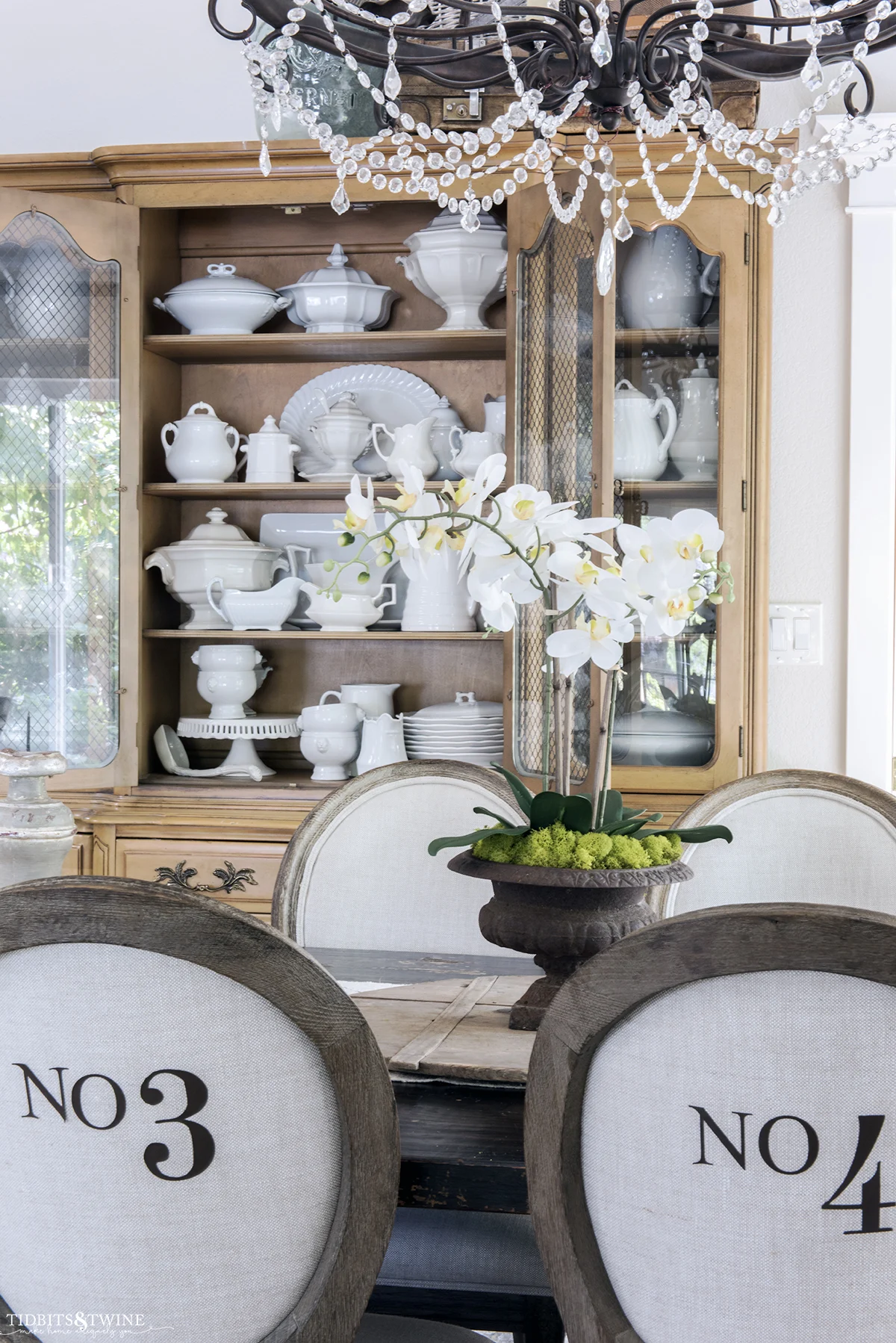
- Larger pieces usually need shelves or furniture. Pottery, ironstone, books, and sculptural objects work well in a hutch, bookcase, cabinet, or on open shelving.
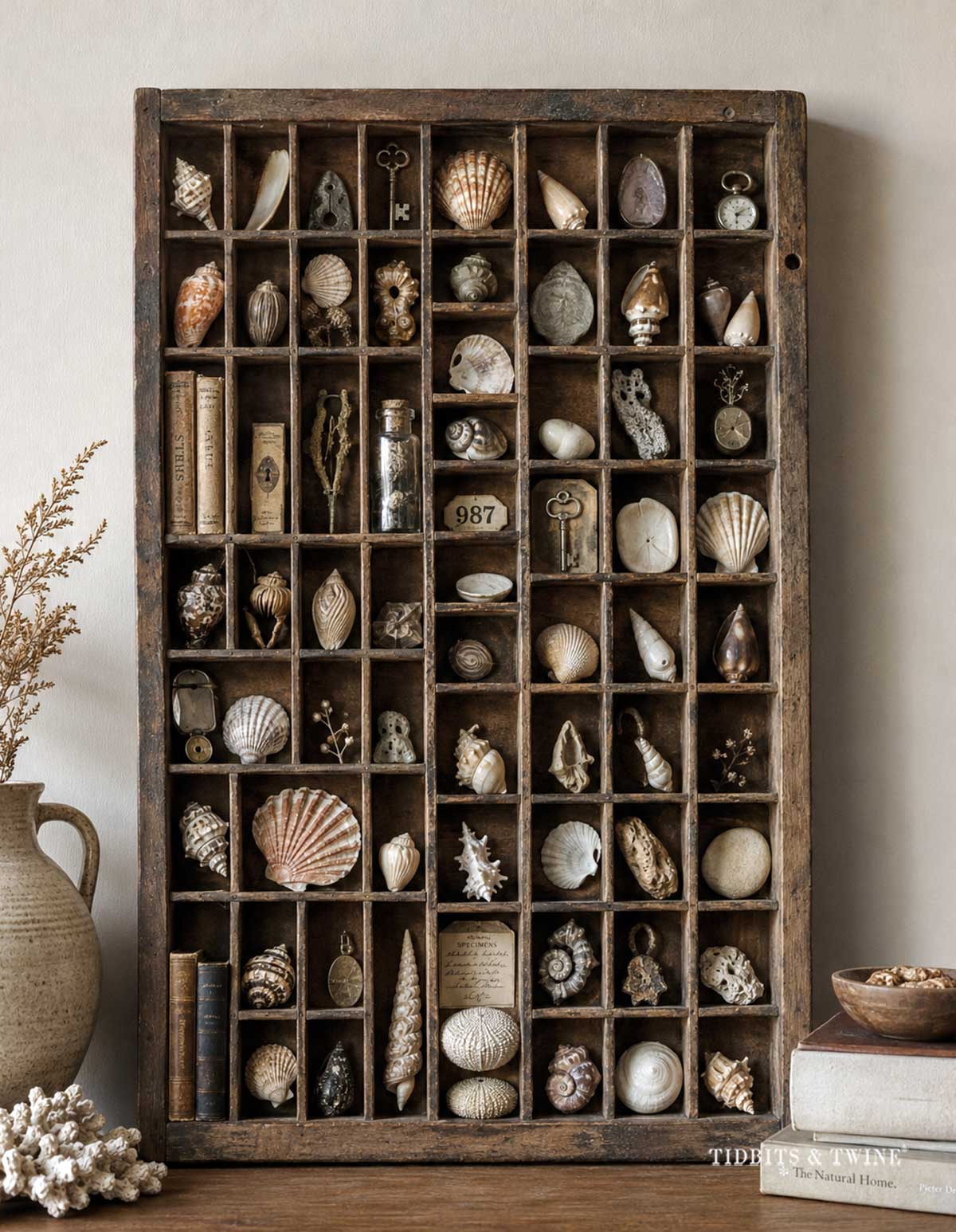
- Small pieces often need a more defined space. Shells can fill the compartments of a printer’s tray, miniature objects can sit inside a curio box, and a glass box can turn a group of tiny collectibles into one noticeable display.
- Delicate pieces may be better behind glass. A glass-front cabinet, display case, or cloche keeps the collection visible while offering some protection from dust, pets, and curious hands.
The goal is to choose a display that helps the collection stand out, rather than using whatever empty shelf or tabletop happens to be available.
Choose a Display Piece That Fits the Scale of the Collection
The display piece should suit the scale of the objects, not simply be large enough to hold them. A display piece that is too large can make tiny collectibles disappear, while one that is too small or delicate can make larger objects look crowded or top-heavy.
- Small collections need a closer frame around them. Miniatures, tiny boxes, small figurines, and other little objects can easily get lost on deep bookshelves or large tabletops. A curio box, cloche, glass case, or small cabinet gives them a more defined space.
- Large pieces need something with enough visual weight to support them. Oversized pottery, crocks, baskets, architectural fragments, and large platters usually work best on substantial shelving, a sturdy cabinet, a wide tabletop, or even directly on the floor.
- Pay attention to the space around the collection. The pieces need enough room to be seen clearly, but not so much that they look stranded inside the display piece.
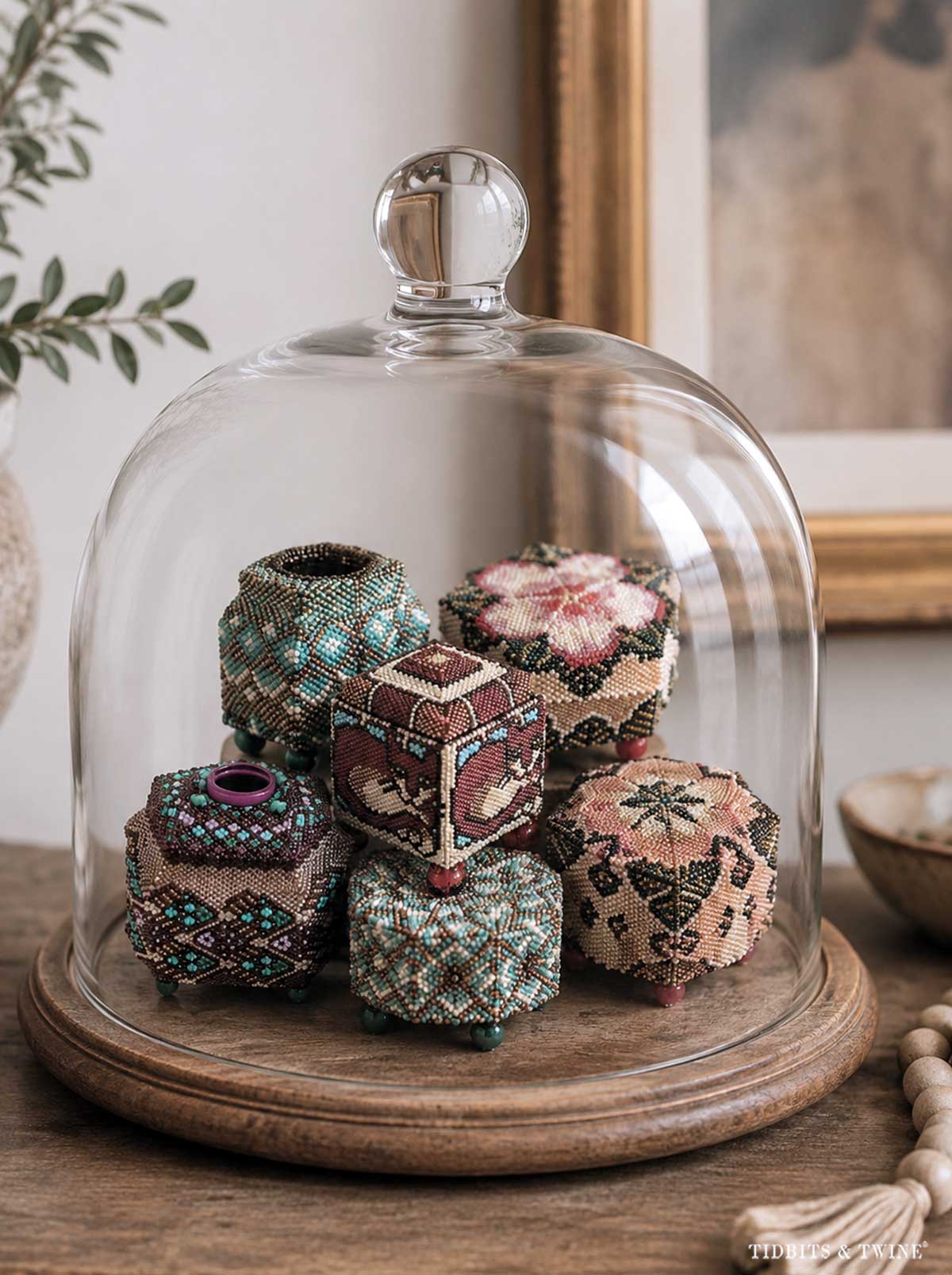
My mom makes miniature beaded boxes and now has quite a collection, but their small size makes them surprisingly difficult to showcase. They get lost on a bookshelf, and simply grouping them on a coffee table doesn’t give them enough presence.
A tray might seem like the obvious solution, but most trays are much larger than the boxes themselves. The eye notices the tray first, which makes the boxes look even smaller.
The best options were a small curio cabinet or a cloche. She chose the cloche, which gathers several boxes into one compact display without competing with all of their intricate details.
Furniture and Accessories for Displaying Collections
When looking for something to display your collection, look beyond a typical shelf or bookcase. An old piece made for an entirely different purpose can sometimes be a much better fit.
Printer’s Trays and Typesetter’s Drawers
The small compartments are perfect for displaying shallow objects such as shells, keys, buttons, cameos, or antique hardware. Because most are not very deep, they work best for pieces that won’t project too far when the tray is hung on the wall.
Curio Boxes and Wall-Mounted Cubby Shelves
The deeper compartments make these a better choice for miniature figurines, tiny pottery, small boxes, and other three-dimensional objects. You also don’t have to fill every opening. Leaving a few spaces empty can help each piece stand out.
Glass Boxes, Cubes, and Cloches
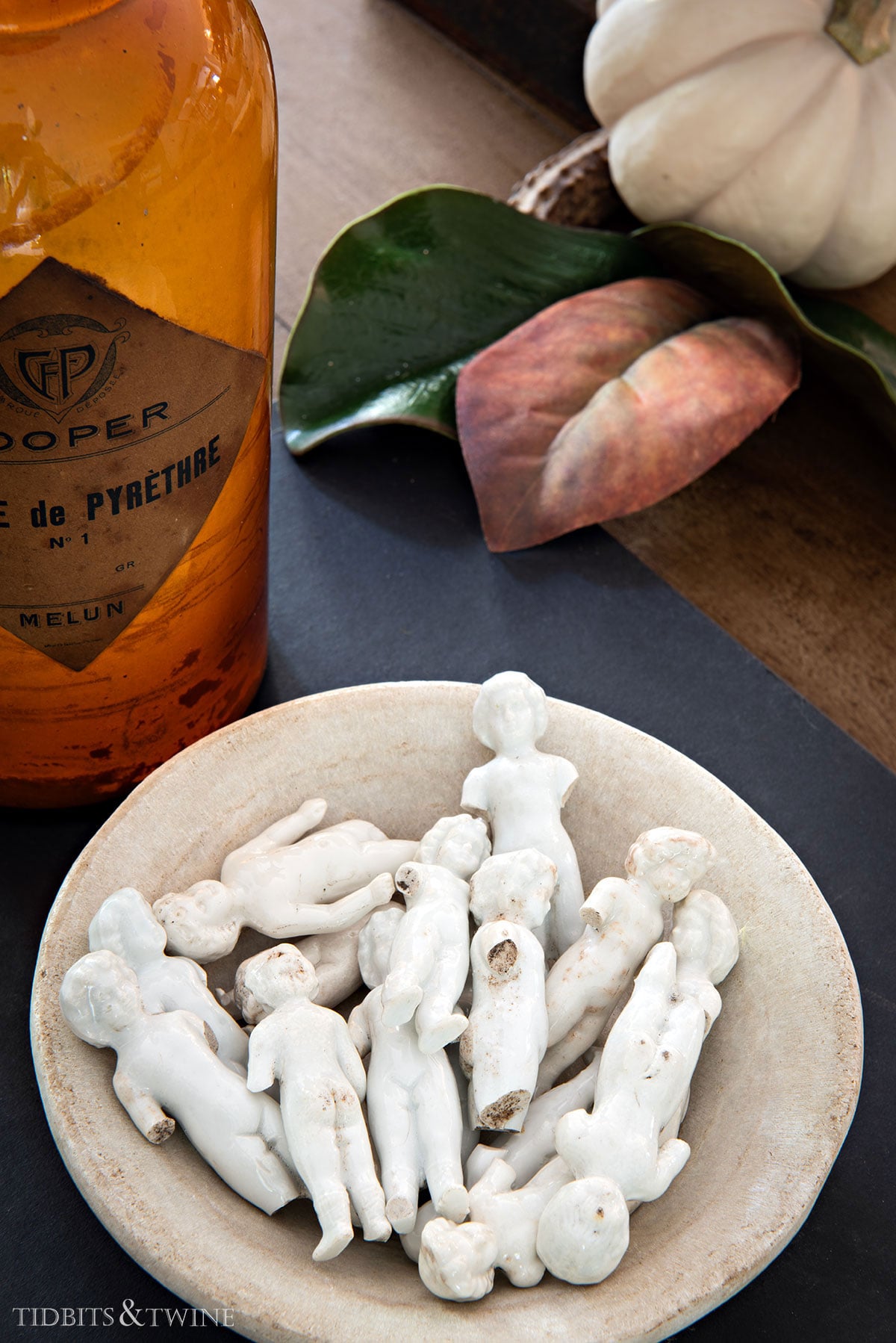
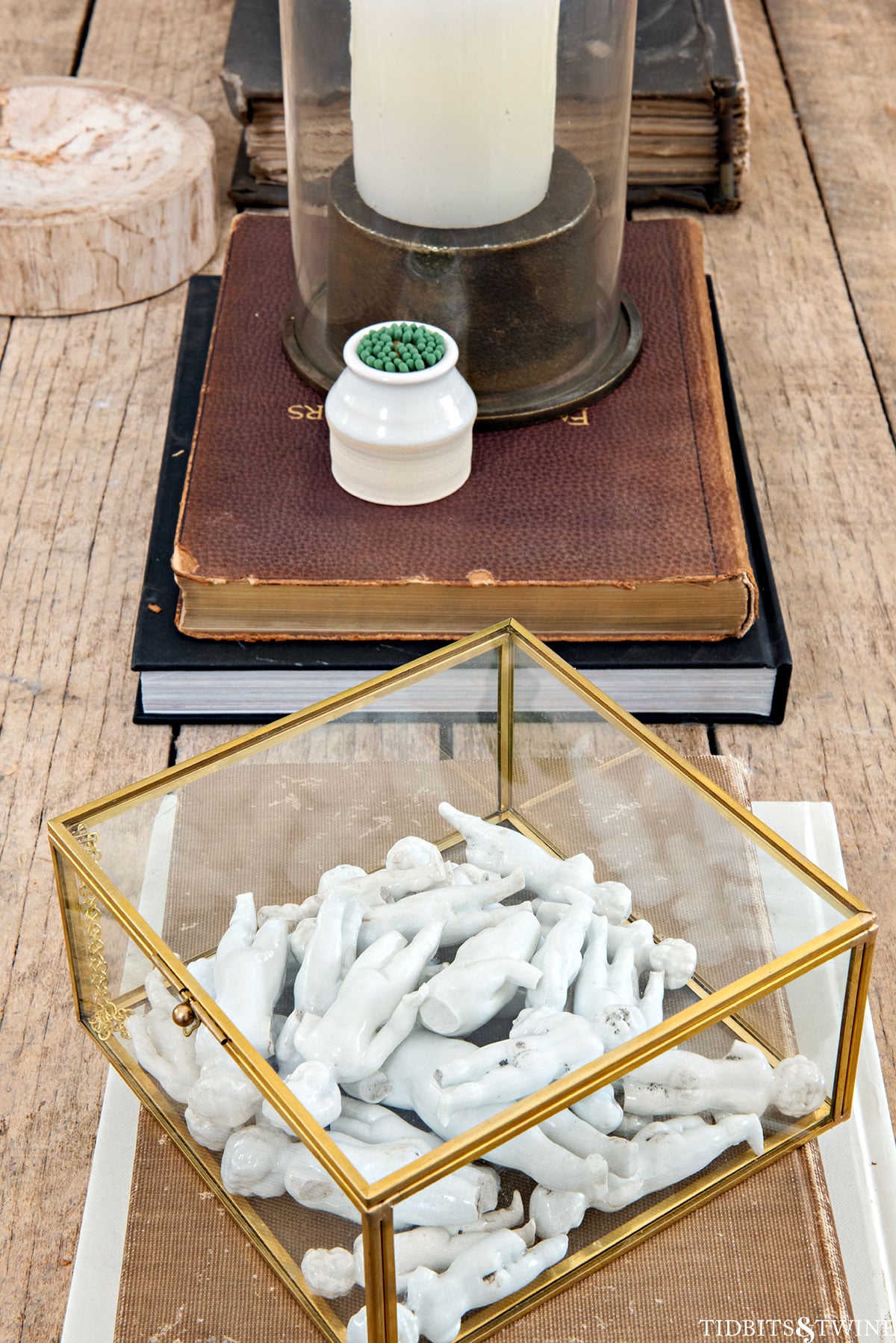
Glass keeps small collections together without blocking them from view. I keep my Frozen Charlottes in a glass cube, which gives all those tiny dolls much more presence than they would have scattered across a shelf.
A cloche works well for an even smaller grouping, especially when the pieces are detailed and deserve a closer look.
Trays, Bowls, Jars, and Tureens
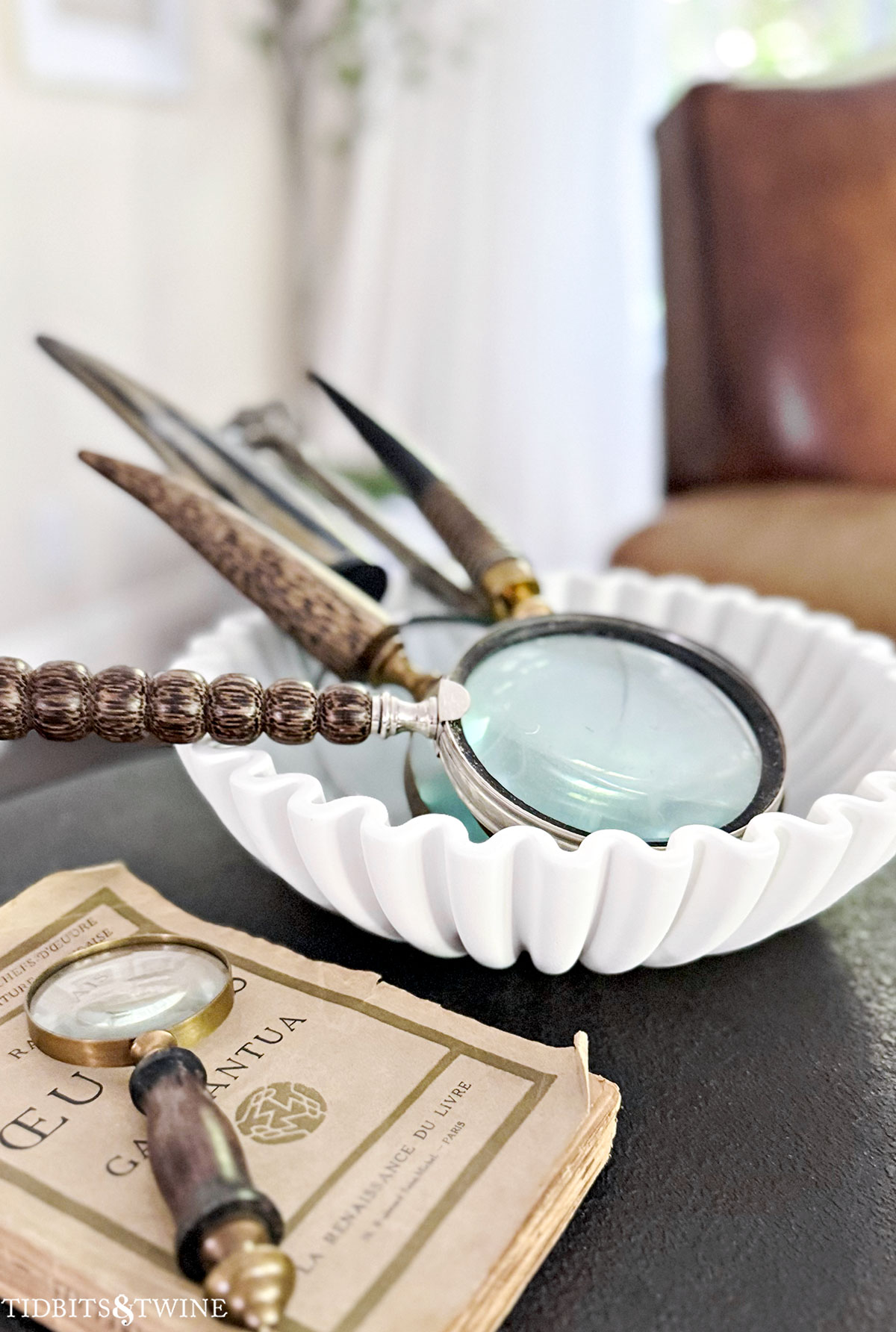
These work well for collections that don’t need to stand upright or be viewed individually. Think shells in a bowl, matchbooks in a glass jar, old keys in a tureen, or small desk objects gathered on a tray.
Just be sure the container suits the scale of the collection so it doesn’t become the first thing you notice.
Glass-Front Cabinets and Hutches
Larger collections such as pottery, ironstone, silver, antique books, or glassware often need more room. A cabinet or hutch gives the collection a defined home and, if it has glass doors, offers some protection from dust.
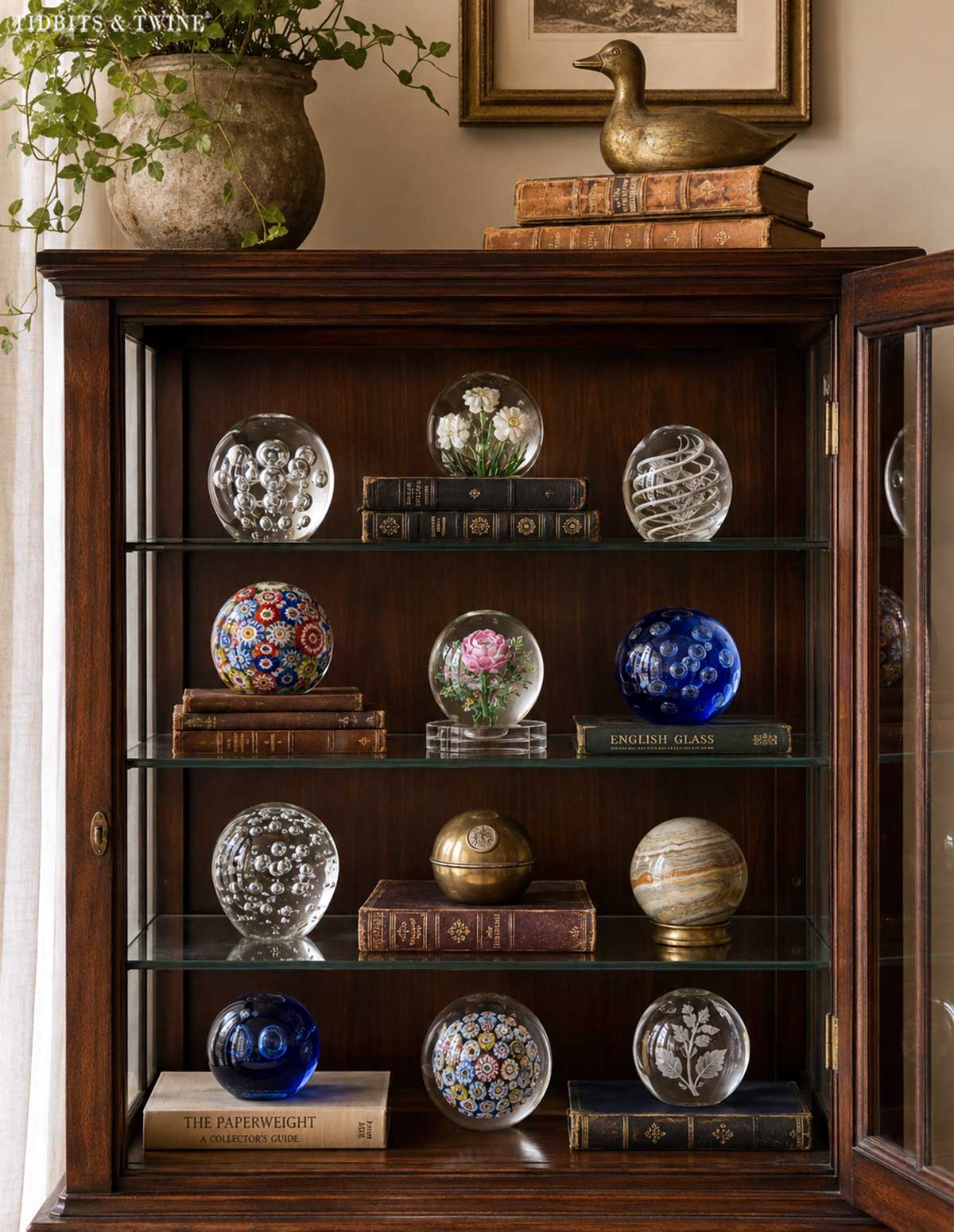
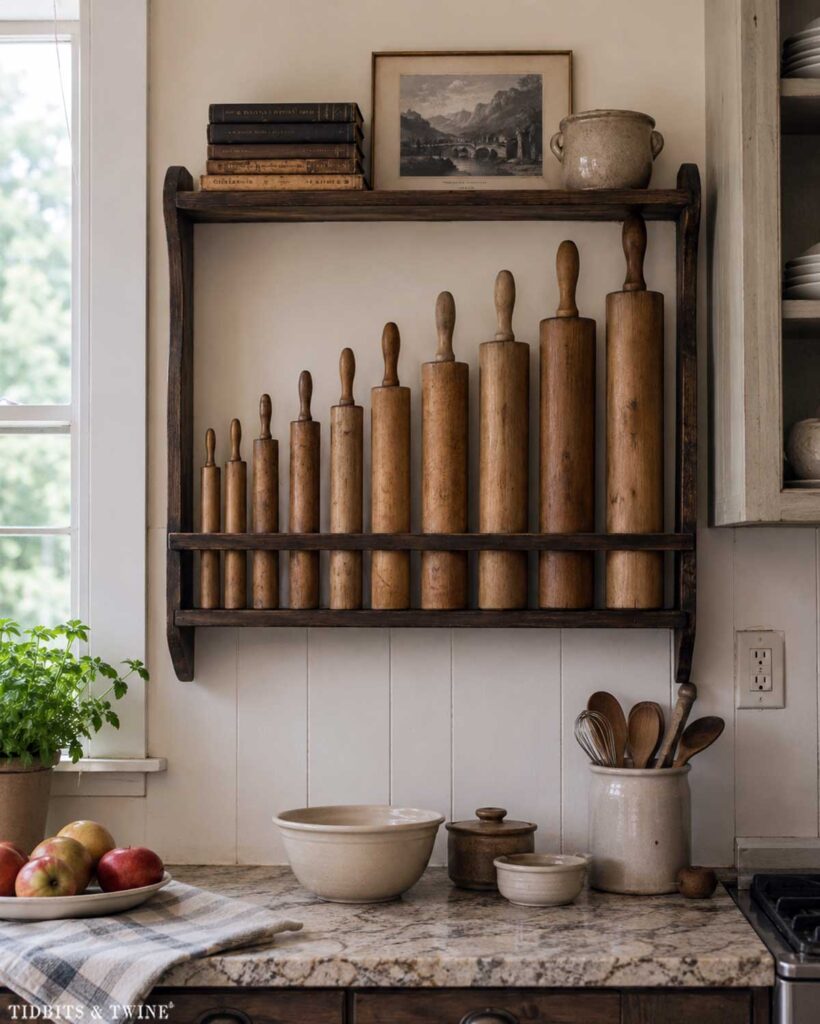
Plate Racks, Peg Rails, and Wall Displays
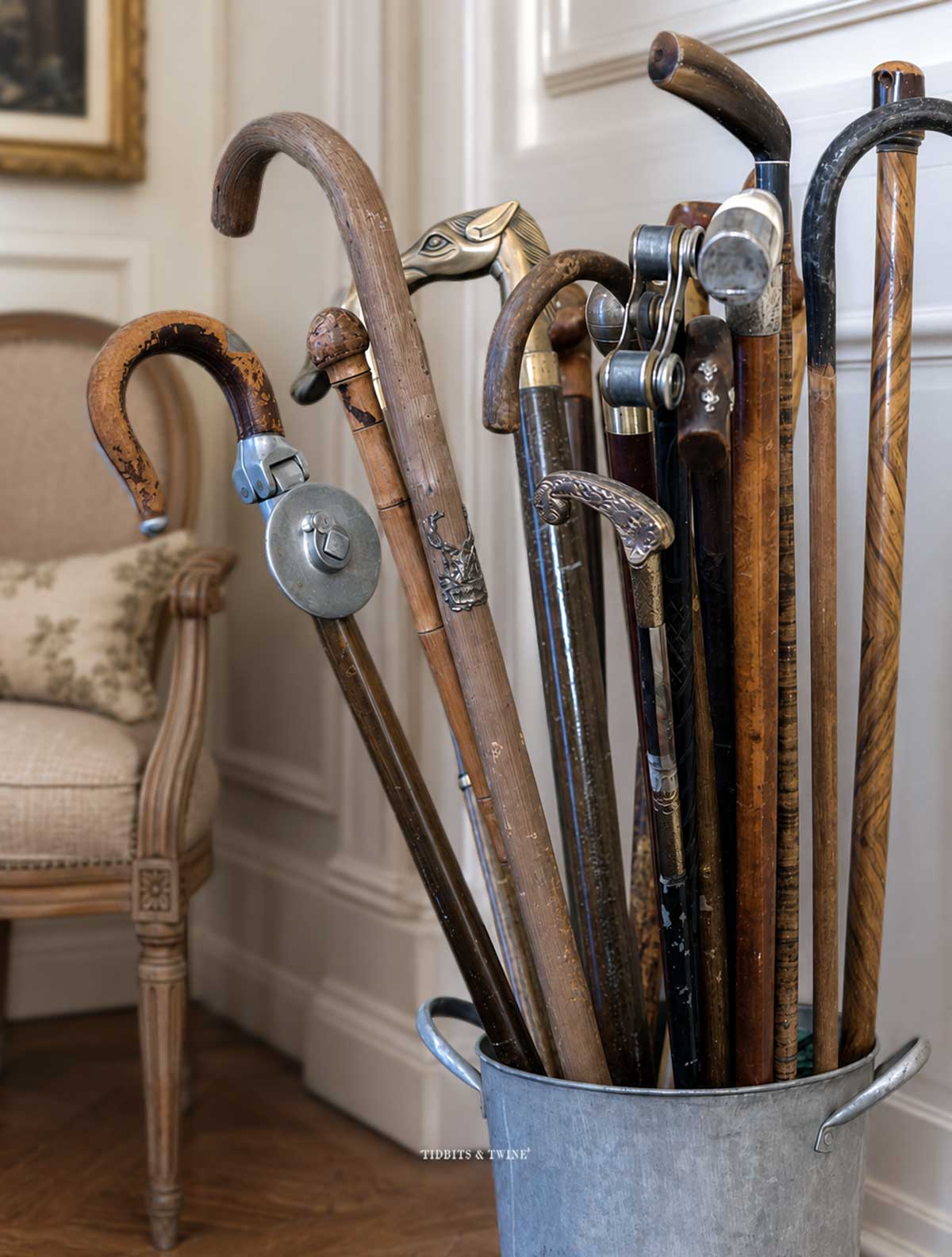
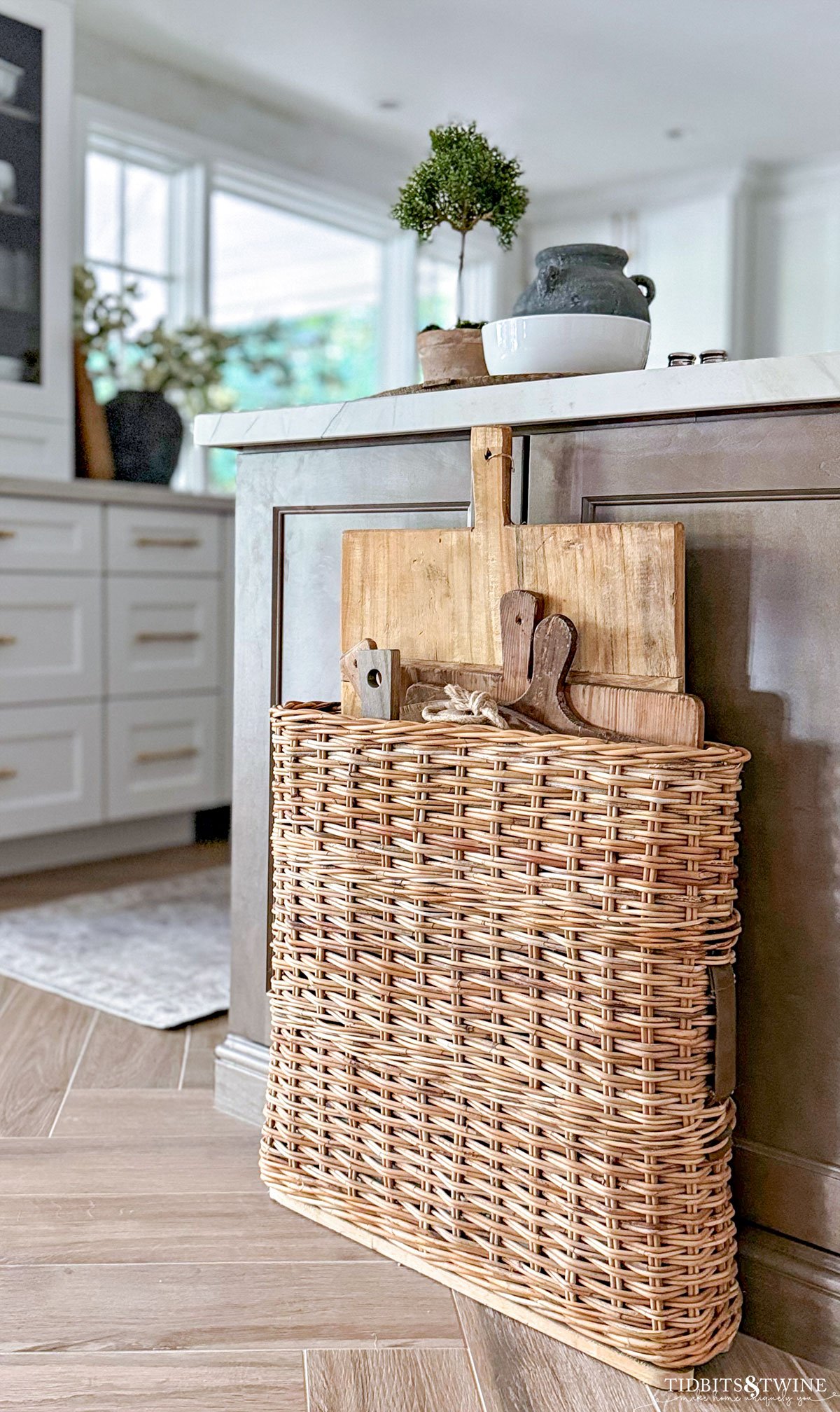
Plates, cutting boards, baskets, small paintings, and other pieces that can be hung or propped don’t have to take up tabletop space. These displays also make good use of an empty wall.
Organize the Collection
Once you know how you’ll display your collection, give some thought to how you arrange the pieces within it. A little order helps the eye understand what it’s looking at, but that doesn’t mean everything has to be lined up perfectly.
Organize by Color
Grouping pieces by color can help tie together a collection with a lot of variation. You might keep similar colors together, arrange them from light to dark, or repeat the same colors throughout the display.
A colored backdrop can also help unify a mixed collection. Just make sure the background helps the objects stand out rather than competing with them.
Organize by Size
Arranging pieces by size gives the display a natural sense of order. You can move from smallest to largest, place the tallest pieces toward the back, or use a larger object to anchor several smaller ones.
Seashells are a great example because separating them by size can turn one large collection into several smaller displays.
Organize by Shape
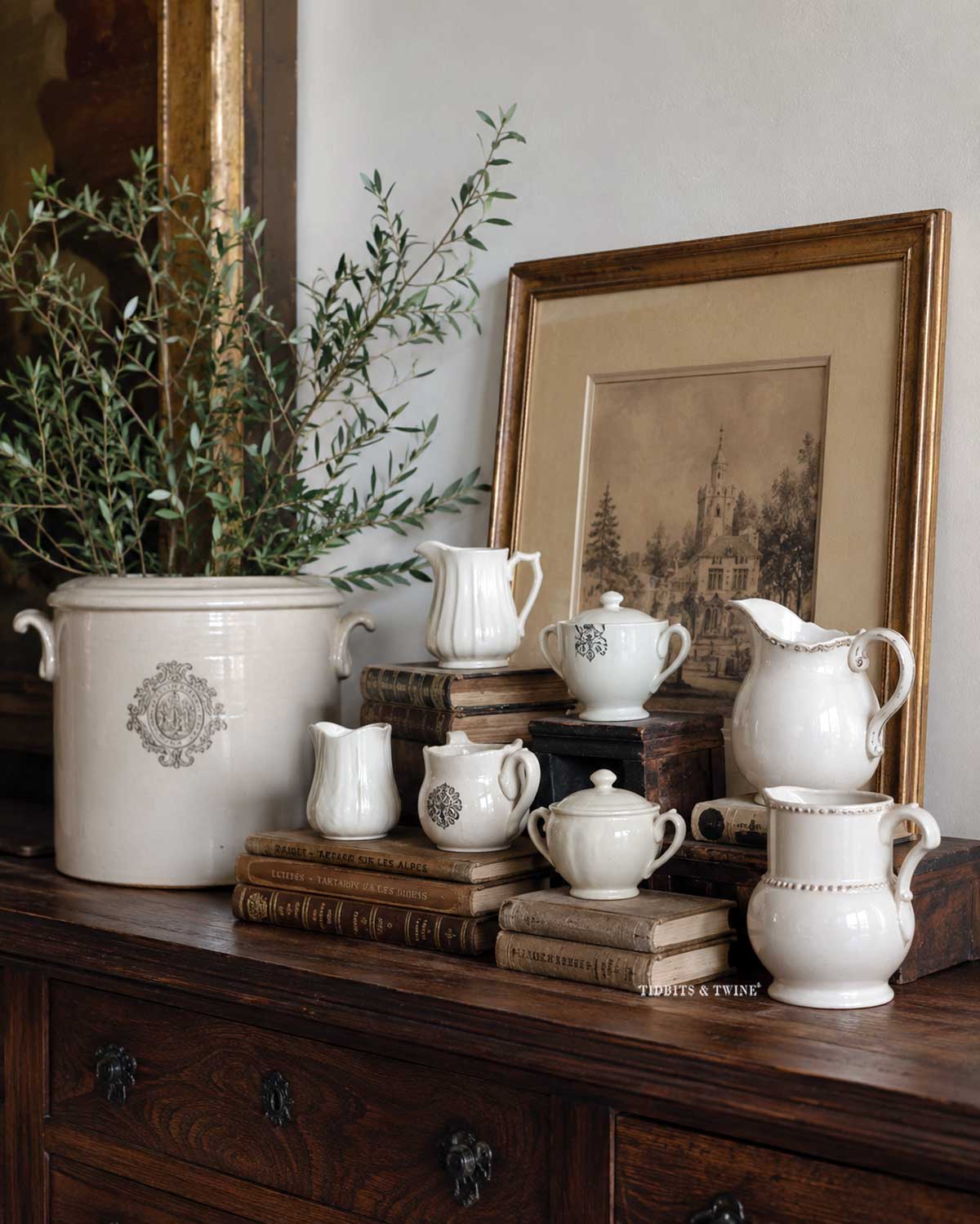
A repeated shape creates a connection between pieces, even when their colors, sizes, or materials are different. Round baskets, pitchers with similar silhouettes, or objects arranged in a loose grid will naturally look more cohesive.
The organization doesn’t need to be obvious or overly precise. It just needs to give the collection enough structure that the individual pieces work together.
Add Height and Visual Weight
Collections made up of several small or similarly sized pieces can sometimes look flat. Varying the height helps the eye move through the display and makes each piece easier to notice.
Use stacks of books, small risers, boxes, or pedestals to lift a few pieces above the others. A larger object behind the collection can also give the smaller pieces something to relate to. For example, a group of tiny figurines might need a framed picture, a stack of books, or a taller vessel nearby so the display has enough presence.
Just be careful not to add so many supporting pieces that they start competing with the collection. The books, risers, and background objects should help showcase what you collect, not become a second collection of their own.
Leave Space Around the Collection
A collection needs enough room around it to be seen. When every bit of space is filled, the eye has nowhere to rest and the individual pieces start to blend together.
That might mean leaving part of a shelf empty, removing unrelated accessories, or spreading the collection across two shelves instead of squeezing everything onto one. The goal isn’t to make the display sparse. It’s to give the pieces enough breathing room to stand out.
This is especially important with detailed or unusual objects. The more intricate the collection, the less competition it usually needs around it.
Rotate What You Display
You don’t have to display every piece you own all the time. Rotating a collection lets you enjoy more of it without trying to fit everything into one display.
You might switch pieces with the seasons, bring out a few favorites every few months, or simply change the arrangement when it starts to feel stale. The pieces that aren’t currently displayed can be stored safely until you’re ready to use them again.
Rotating a collection also makes familiar pieces feel special again. Sometimes putting something away for a while is all it takes to notice it when it comes back out.

Looking for a specific antique?
Browse the Antique Object Guide
Explore 20+ antique objects with identification tips, decorating ideas, and links to detailed posts about each piece.

How would you display a collection of, say, Breyer horses?
Hi Holly! I had to google those because I’d never heard of them but they are beautiful! They look relatively small to me, which makes them tricky for displaying. Personally, I would probably display them in a cabinet but mixed in with larger objects that are visually heavier. So maybe a large stack of books and next to it, a grouping of 5 horses. And then elsewhere, maybe a basket and next to it another grouping of horses. Does that make sense? And I don’t know about collecting them and their value, but if it wouldn’t ruin them, I think a cloche full of horses on in the cabinet would be beautiful too!
:) Kim
What did you use to attach the spoons ?
I attached spoons to cardboard covered with clothe by using clear plastic thread. I came across this idea from someone who used clear fishing line.
JP
THANK YOU SO MUCH <3
Thanks for finally writing about >Beautiful Ways
to Display & Organize Collections <Loved it!
I really like the example where everything is ordered by size. If I were to arrange a wall of collectibles I would probably want to start with the bigger stuff and work my up the wall with the smaller collectibles. I’ll have to keep your tips in mind if I ever reorganize my house.
I adore the idea of displaying the cups on the wall. I think I’m going to try that in my house. I liked several of your organizational ideas, as a matter of fact. Many thanks for sharing your great ideas.
I love this! Such great ideas and beautiful pictures as well.