



You get the bed in, add the nightstands and lamps, maybe a dresser, and it’s easy to think the room is basically done. But there’s one spot that often gets overlooked: the foot of the bed.
If you have the space, it can be a great place to add seating, storage, or another piece that helps balance out the room. A bench might be the first thing that comes to mind, but it’s definitely not the only option. A trunk, settee, small dresser, pair of stools, or even nothing at all can work.
Not every bedroom needs something there, though. It really comes down to how much room you have, what would be useful, and what looks proportional to the bed. So let’s talk about what you can put at the foot of the bed, how to choose the right option, and when leaving it empty makes more sense.
First, Make Sure You Have Room
Before you decide what to put at the foot of your bed, grab a tape measure. You might technically have room for a bench or chest, but if you have to squeeze around it every morning, it probably isn’t worth adding.
Try to leave about 30 to 36 inches of walking space beyond whatever you put there. In a tighter room, you may be able to get by with a little less, but also look at what’s across from the bed. A dresser drawer, closet door, or bedroom door still needs room to open.
Don’t Forget About Height
How much floor space you have isn’t the only thing to consider. The height of whatever you put at the foot of the bed matters too.
For pieces with a flat top, like a bench, trunk, desk, dresser, or cabinet, the top usually looks best at or slightly below the top of the mattress. If it comes up much higher, it can start to look like a barrier across the bed instead of something that belongs with it.
Chairs, settees, and small sofas are different. Their backs can extend above the mattress, since they visually look like seating rather than one solid horizontal line across the bed. You still want to avoid anything so tall or bulky that it hides too much of the bed.
If your bed has a footboard, I’d also generally keep a flat-topped piece below the top of the footboard so the bed still remains the dominant piece.
If You’re Adding a Bench
Since a bench is one of the most common choices for the foot of the bed, there are a few more specific measurements that can help.
A bench around 15 to 20 inches deep is a good place to start. For width, I wouldn’t worry about hitting an exact percentage. It usually looks best a little narrower than the bed, with roughly 6 to 8 inches of the bed showing on each side.
For width, I wouldn’t worry about hitting an exact percentage. A bench generally looks best a little narrower than the bed, with roughly 6 to 8 inches of the bed showing on each side.
These bench measurements are starting points, not hard rules. An open-leg bench can often be a little wider without looking bulky, while a solid trunk or cabinet can feel much more substantial at the exact same size.
The 30 to 36 inches of walking space is the measurement to keep in mind no matter what you put at the foot of the bed.

What to Put at the Foot of the Bed
Once you know you have the room, think about what you want the space to do.
The foot of the bed can give you extra seating, storage, a work surface, a spot for your dog, or simply remain open.
Here are nine ideas to help you figure out what makes the most sense for your bedroom.
1. Add a Bench
A bench is probably the most obvious choice for the foot of the bed, and for good reason. It gives you a place to sit while putting on shoes, somewhere to set extra pillows at night, and another opportunity to bring in a different material or texture.
An upholstered bench will feel softer and be more comfortable for sitting, while a wood or antique bench can bring in some age and character. If the room already has a lot of upholstery, I’d especially consider one with open legs or a wood frame so you’re not adding another heavy upholstered piece across the end of the bed.
Best for: Extra seating without taking up a lot of room
Space needed: Low to moderate
Sizing: About 15 to 20 inches deep, at or slightly below mattress height, and a little narrower than the bed

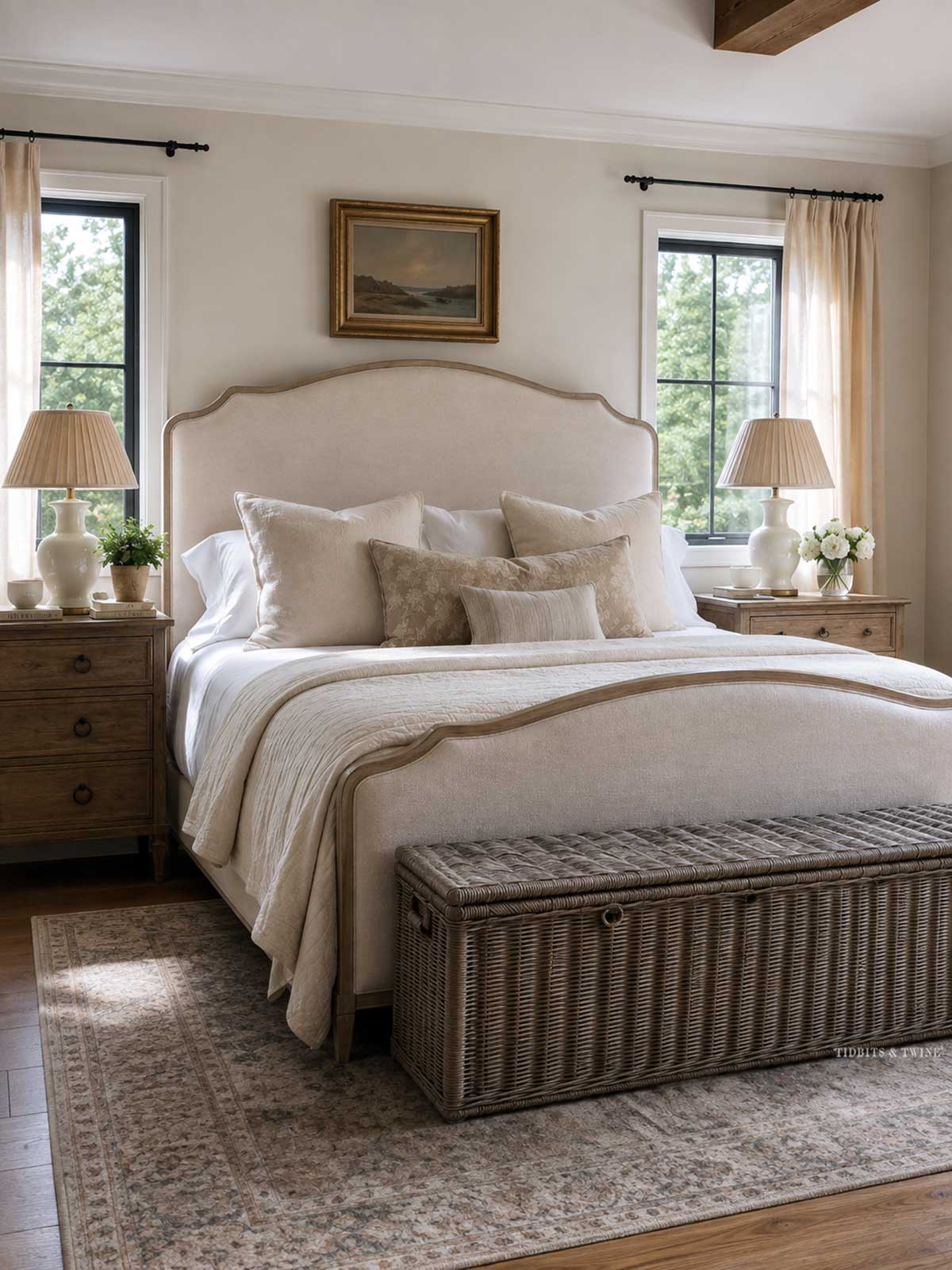
2. Use a Trunk or Blanket Chest
If storage is high on your list, a trunk or blanket chest is a really practical choice for the foot of the bed.
It’s especially handy for extra blankets, quilts, pillows, or seasonal bedding since everything is stored right where you use it.
An antique trunk can also add some character, especially if most of the furniture in the room is newer.
Just make sure you can open the lid comfortably. And if you plan to use it as a seat too, check that it’s sturdy enough for that.
Best for: Hidden storage, especially extra bedding
Space needed: Low to moderate, depending on depth
Sizing: Keep it narrower than the bed. Something around two-thirds to three-quarters of the bed’s width can be a useful starting point, but a smaller antique trunk can work beautifully too. Leave enough room for the lid to open.
If you like the idea of storage but want something lighter-looking, a luggage rack with a large basket underneath can work too. The basket gives you a spot for extra blankets or pillows, and in a guest room, the rack itself gives visitors a convenient place to set a suitcase without putting it on the bed or floor.

3. Add a Settee or Small Sofa
A settee or small sofa at the foot of the bed can make a bedroom feel a little more luxurious, but it really does need enough room around it to work.
Unlike a bench, it gives you a comfortable place to sit for a while, whether you’re reading, putting on shoes, or talking with someone at the end of the day.
Because it has a back and is usually deeper than a bench, it takes up more visual and physical space. I’d save this option for a larger bedroom.
And if you have a TV across from the bed, check the height of the sofa back before you buy. You don’t want to discover afterward that it blocks the view from bed.
Best for: Comfortable seating you’ll actually use
Space needed: High
Sizing: Look at the total depth carefully. You still want comfortable walking space beyond the settee, and keep the back low enough that it doesn’t overwhelm the bed or block your view.

4. Use Two Chairs
Instead of a sofa or settee, you can use two chairs at the foot of the bed, with or without a small table between them.
This works especially well if you want comfortable seating but don’t want one large piece stretching across the bed.
If the room is really large, you can also turn the chairs perpendicular to the bed and create more of a separate seating area.
Just make sure there’s still plenty of room to walk around them. Once you add a table between two chairs, this arrangement can take up quite a bit more floor space than you might expect.
Best for: Creating a separate seating area
Space needed: Moderate to high
Sizing: Compact chairs placed fairly close together may take less depth than a sofa. Angled chairs or a table between them will require more floor space and circulation.

5. Use a Desk
If you’re short on wall space, the foot of the bed can be a surprisingly good spot for a small writing desk.
I’d look for something fairly shallow and visually light so it doesn’t make the room feel crowded. A writing desk or narrow antique table works much better here than a deep office desk.
Also make sure the chair can tuck underneath when you’re not using it. Otherwise, you’re really adding the depth of both the desk and chair to the end of the bed.
I’d only use a desk here if you really need one. Otherwise, there are better ways to use the space.
Best for: Adding a workspace when wall space is limited
Space needed: Moderate
Sizing: A writing desk is typically around 28 to 30 inches high. Look for a fairly shallow one, often around 18 to 24 inches deep, and make sure the chair can tuck underneath

6. Try a Pair of Stools or Ottomans
If a bench feels too expected or too heavy for the room, try a pair of stools or ottomans instead.
They still give you an extra place to sit, and stools can also work as a spot to set something down. The space between the two pieces keeps the end of the bed looking lighter than one long piece of furniture.
They’re also easy to move somewhere else when you need an extra seat.
I especially like this look with antique stools, small upholstered ottomans, or woven pieces, depending on the room.
Best for: Flexible seating and a lighter look
Space needed: Low
Sizing: Keep the pair visually narrower than the bed and shallow enough that you still have comfortable walking space beyond them

7. Use a Low Dresser or Cabinet
If you need more storage, a low dresser or cabinet can make good use of the space at the foot of the bed.
This is a heavier option than a bench or trunk, so it works best when you have a fairly roomy bedroom.
A lower piece will usually work best here, ideally around mattress height or below, so it doesn’t create a visual wall at the end of the bed.
And don’t forget about the drawers or cabinet doors. You need enough room beyond the piece to actually open them comfortably.
I’d also keep the top pretty simple. Since it sits directly in front of the bed, too much on top can make that whole area look busy very quickly.
Best for: Maximum storage
Space needed: Moderate to high
Sizing: Choose a relatively low piece and account for both its depth and the additional space needed to fully open drawers or doors

8. Add a Pet Bed
If your dog sleeps in the bedroom, the foot of the bed can be a really practical spot for a pet bed.
It keeps them close without taking up space along the side of the bed, and it gives the pet bed a spot that feels like it belongs in the room instead of looking randomly parked somewhere.
Just make sure you still have enough room to walk comfortably around it, especially if it’s a larger bed.
Best for: Giving your pet a defined sleeping spot close to the bed
Space needed: Low to moderate, depending on the size of your pet
Sizing: Keep it out of the main walkway and maintain as much clear circulation beyond it as you can

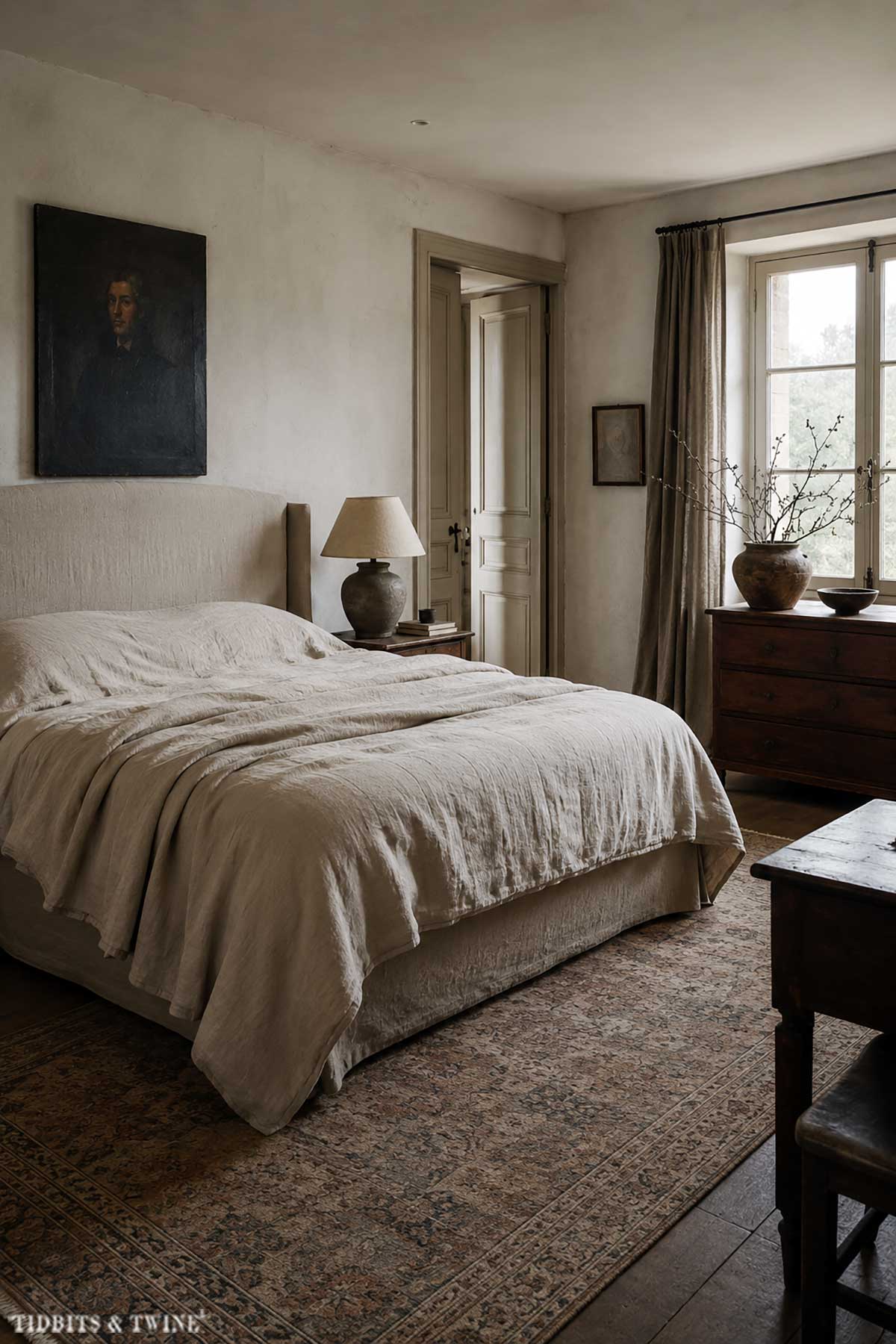
9. Leave It Empty
And sometimes the best thing to put at the foot of the bed is nothing at all.
If the room is small, the foot of the bed is part of the main walkway, or another piece would make the room feel crowded, leave it open.
You also don’t need to add something there just because you think the space looks empty. Sometimes leaving that area open makes the room look better proportioned and keeps the bed from being surrounded by furniture on every side.
I’d especially skip adding anything if you have a substantial footboard or if there isn’t enough clearance to walk around comfortably.
Best for: Smaller bedrooms, substantial footboards, or rooms that already have plenty of furniture
Space needed: None!
Good rule: If adding something means sacrificing comfortable circulation just to fill an empty spot, leave it empty
How to Choose What Goes at the Foot of Your Bed
At this point, the choice really comes down to what fits + what you need.
Need Seating?
- Less space: Bench or stools
- More space: Settee or small sofa
- Lots of space: Two chairs and possibly a small table
Need Storage?
- Less space: Shallow trunk or blanket chest
- More space: Low dresser or cabinet
Remember that storage pieces also need room to open lids, drawers, or doors.
Need a Workspace?
A shallow desk can work if you have enough room for the chair to tuck underneath and still maintain a comfortable walkway.
Not Sure You Need Anything?
Leave it empty.
You don’t have to fill the foot of the bed just because there’s open floor space there.
One More Thing: Visual Weight
Size isn’t the only thing that determines whether a piece feels too large.
Visually lighter: Open-leg bench, stools, chairs, narrow writing desk
Visually heavier: Solid trunk, dresser, cabinet, upholstered sofa
Two pieces can have almost identical dimensions and still feel completely different in the room.
So before you buy anything, ask yourself:
Does it fit comfortably? Does it serve a purpose? And does it look proportional to the bed and the rest of the room?
If the answer to all three is yes, you’ve probably found the right option.
Need another decorating measurement?
Browse all of my guides for furniture spacing, artwork, lighting, rugs, window treatments, and more.

Hello! Really nice article, thank you very much to share with us.