




Have you ever looked at your coffee table and thought something about it just didn’t look quite right, but you couldn’t figure out why? Or maybe you were hanging a light fixture above a table and suddenly realized you had no idea how high it should go.
Decorating is part creativity and part know-how. You get to choose the colors, the furniture, and the overall look of a room, but there are also a handful of tried-and-true measurements that help everything feel balanced.
A coffee table that’s slightly too tall, artwork that’s hung a little too high, or curtains that stop just short of the floor can make a room feel not quite right, even when everything else looks good.
The reason designers seem to get these details right so often is because they rely on a few standard decorating measurements. Once you know them, decorating becomes a lot easier.
Think of the list below as a cheat sheet of measurements that help rooms look polished and well-proportioned.
Why Decorating Measurements Matter
When something in a room feels off, it’s often not the furniture or the decor itself. It’s the proportion or spacing between things.
A rug that’s too small can make a seating area feel disconnected. Artwork that’s hung too high can make the wall feel awkwardly empty. And a chandelier that’s the wrong size can throw off the balance of the entire room.
These little details may seem minor, but they make a big difference in how a space feels.
Designers rely on a handful of standard decorating measurements to help rooms look balanced and comfortable. They’re not strict rules, and every home is a little different, but they’re incredibly helpful guidelines when you’re trying to figure out placement, spacing, or scale.
Once you know these measurements, decorating becomes a lot less guesswork and a lot more confidence.
Living Room Decorating Measurements
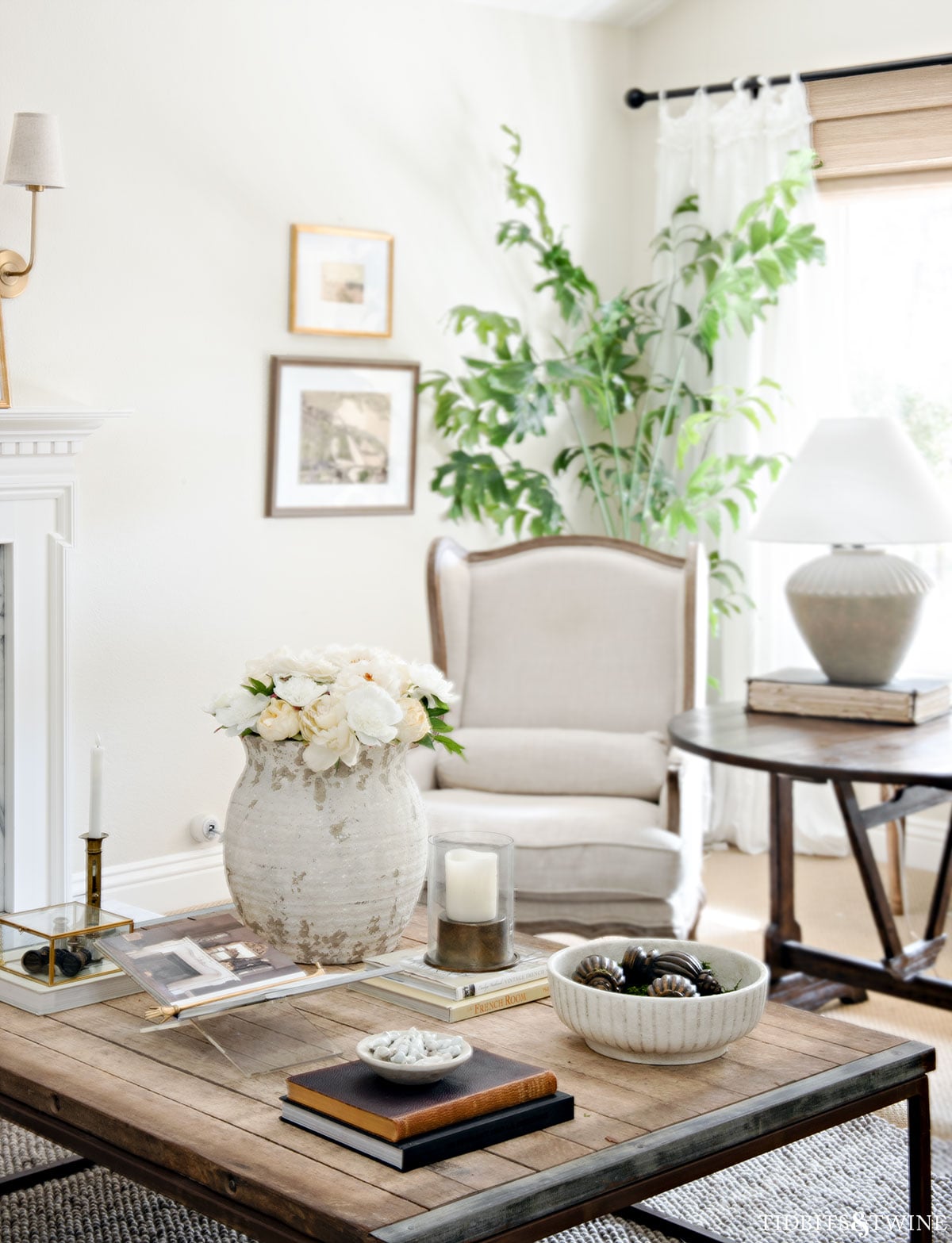
The living room is one of the places where decorating measurements really matter because there’s usually a lot of furniture and wall space to fill. Coffee tables, side tables, rugs, and seating all need to be the right size and spacing for the furniture around them, and even small differences in height or spacing can change how the room feels.
Here are a few helpful measurements that designers commonly use when planning a living room.
• Walkways: Leave 30″–36″ for a comfortable pathway through a room, or 36″–48″ if you want the space to feel more open and airy.
• Area rugs: In a living room, the rug should anchor the seating area, usually with at least the front legs of the sofa and chairs sitting on the rug. If the rug fills most of the room, leave about 12″–18″ of floor visible between the rug and the wall (or 8″–12″ in smaller rooms).
• Side tables: Choose tables about the same height or up to 2″ lower than the sofa arm so they’re easy to reach.
• Coffee tables: A coffee table should be about the same height or 1″–2″ lower than the sofa seat cushion.
• Coffee table spacing: Leave 14″–18″ between the sofa and the coffee table so people can walk through comfortably.
• Coffee table size: Ideally a coffee table should be about ½ to ⅔ the length of the sofa.

Not sure what size coffee table to buy? See my full guide to choosing the right coffee table size for easy measurements and layout tips.
Wall Decor Measurements
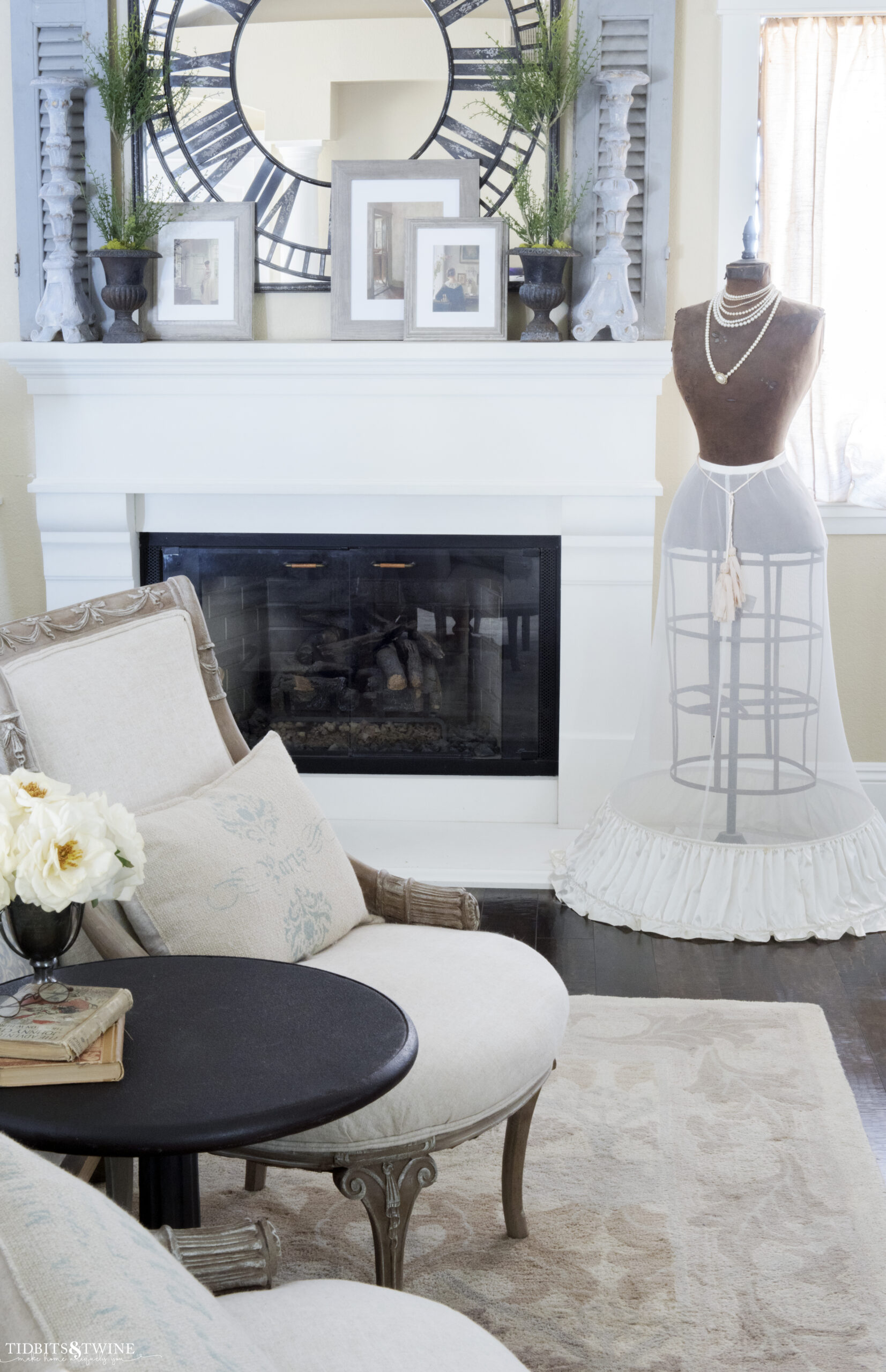
Wall decor can be surprisingly tricky. A piece of art that’s slightly too small or hung just a little too high can make a wall feel awkward even if the artwork itself is beautiful. These measurements help keep artwork looking balanced with the furniture and walls around it.
• Artwork height: In most rooms, artwork looks best when the center of the piece is placed about 57″–60″ from the floor.
• Artwork above furniture: When hanging art above a sofa, console, or dresser, leave about 6″–10″ between the bottom of the artwork and the top of the furniture.
• Artwork width above furniture: Artwork above a sofa or console should generally be about 60%–75% of the width of the furniture below it.
• Gallery wall spacing: When grouping multiple pieces of artwork together, leave 1½”–2″ between frames so the arrangement feels cohesive.
Wondering exactly how high to hang pictures?
See my full guide on how to hang artwork at the right height for step-by-step guidance and examples.
Dining Room Measurements
Dining rooms have their own set of measurements that help everything feel comfortable and balanced. Table height, seating space, lighting placement, and wall details all play a role in how the room functions and looks.
Here are a few helpful guidelines to keep in mind when planning a dining room.
• Dining table height: Standard dining tables are usually about 30″ high.
• Table clearance: Leave 36″–48″ between the edge of the table and the wall or other furniture so chairs can slide out comfortably.
• Dining chair height: Dining seating is typically 16″–18″ from the floor to the top of the seat.
• Table space per person: Allow about 18″ of table width per person so everyone has enough elbow room.
• Chair spacing: Leave about 24″–30″ between the centers of dining chairs so guests can sit and move comfortably.
• Table length: As a general guide, a 48″ table can seat about 4-6 people, 72″ can seat 6-8, and 96″ can seat 8-10, depending on chair size.
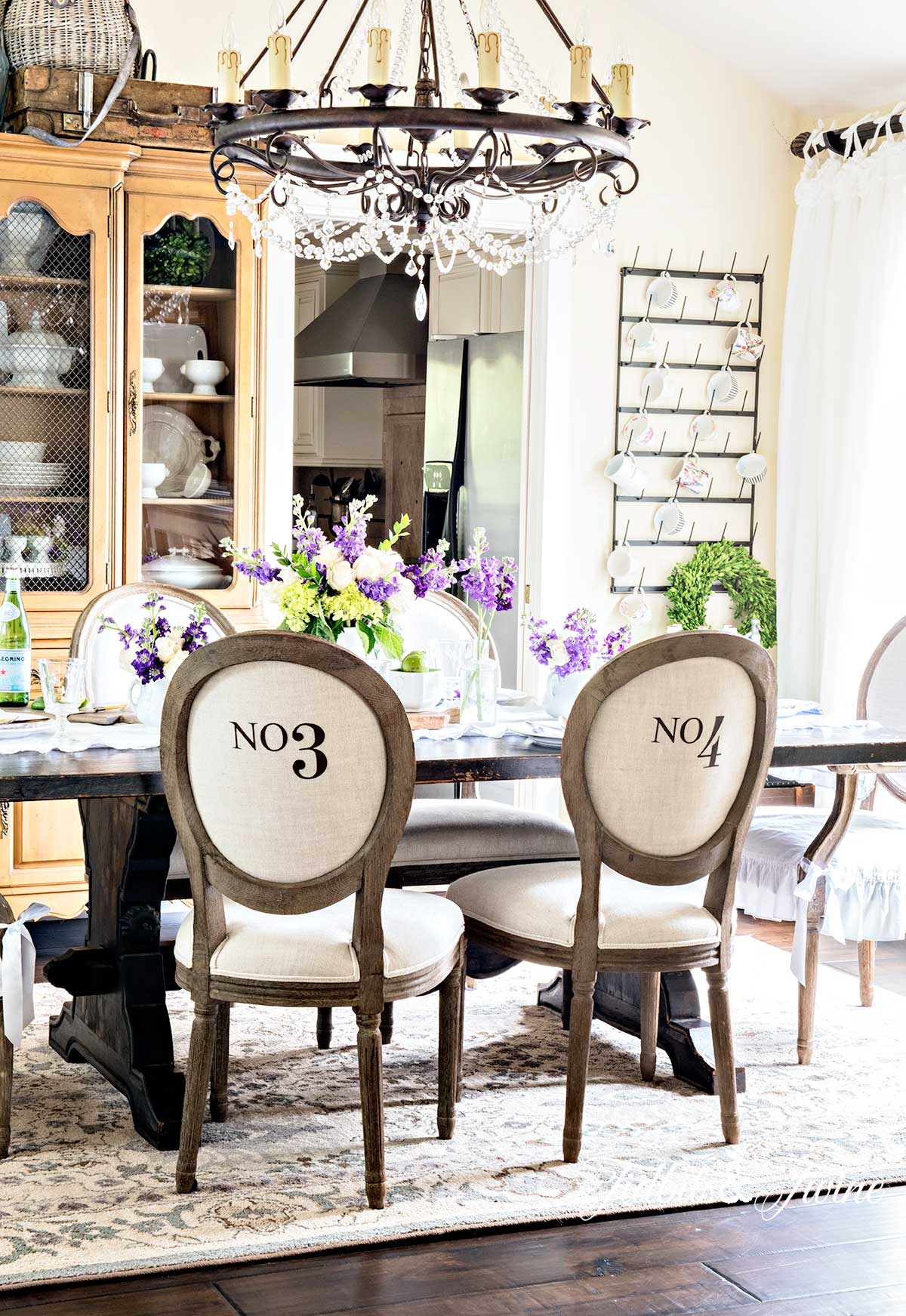
• Chandelier size: To estimate chandelier diameter, you can either divide the width of the dining table by two or add the room’s length and width in feet to get the chandelier diameter in inches.
• Chandelier height: Chandeliers should typically hang 30″–36″ above the dining table surface. Click HERE for more details.
• Chair rail height: Chair rails are usually installed 34″–36″ above the floor.
• Wainscoting height: Wainscoting is often installed 36″–48″ above the finished floor, depending on ceiling height and room proportions.
• Wall sconces: In most rooms, center the sconce backplate 60″–64″ above the floor.
Bedroom Decorating Measurements
Bedrooms are usually simpler to plan than living rooms, but a few measurements can make the space feel much more comfortable. Nightstand height, lighting placement, and rug size all play a role in how balanced and functional the room feels.
Here are some helpful bedroom measurements to keep in mind.
• Nightstand height: For most beds, 24″–27″ is an ideal nightstand height, or roughly the same height as the top of the mattress.
• Nightstand width: For a king-size bed, nightstands should generally be at least 36″ wide so they don’t look undersized next to the bed.
• Bedside table lamps: The bottom of the lampshade should be about 20″ above the top of the mattress so the light falls comfortably for reading.
• Swing-arm bedside lamps: Mount swing-arm lamps no more than 3″ out from the edge of the headboard, with the bottom of the shade about 20″ above the mattress.
• Headboard height: Use a 47″ headboard if you don’t want much of it visible above the pillows, or 52″ or taller if you want more headboard showing.
• Benches or trunks at the foot of the bed: These should be slightly lower than the height of the bed and typically 15″–21″ deep.
• Area rugs under beds: Rugs should extend 6″–12″ beyond the outer edges of the nightstands and the foot of the bed.
Window Treatment Measurements
Curtains can dramatically change how large a window appears. Hanging them higher and wider than the window frame helps elongate the wall and makes the room feel more finished.
Here are a few helpful measurements to keep in mind when choosing curtains and curtain rods.
• Curtain fullness: Curtain panels should be at least twice the width of the window for proper fullness. In more modern rooms, 1¾ times the window width can create a sleeker look.
• Curtain rod width: Extend the curtain rod 6″–8″ past the outer edge of the window trim on each side so the curtains frame the window instead of covering the glass.
• Curtain rod height: Hang curtain rods as close to the ceiling line as possible to visually elongate the window.
• Curtain length: Curtains should typically just touch the floor or hover about ½” above it. For a more dramatic look, allow 2″–8″ of extra length so the fabric gently puddles.
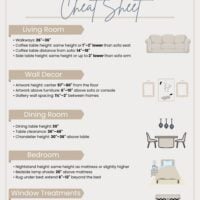
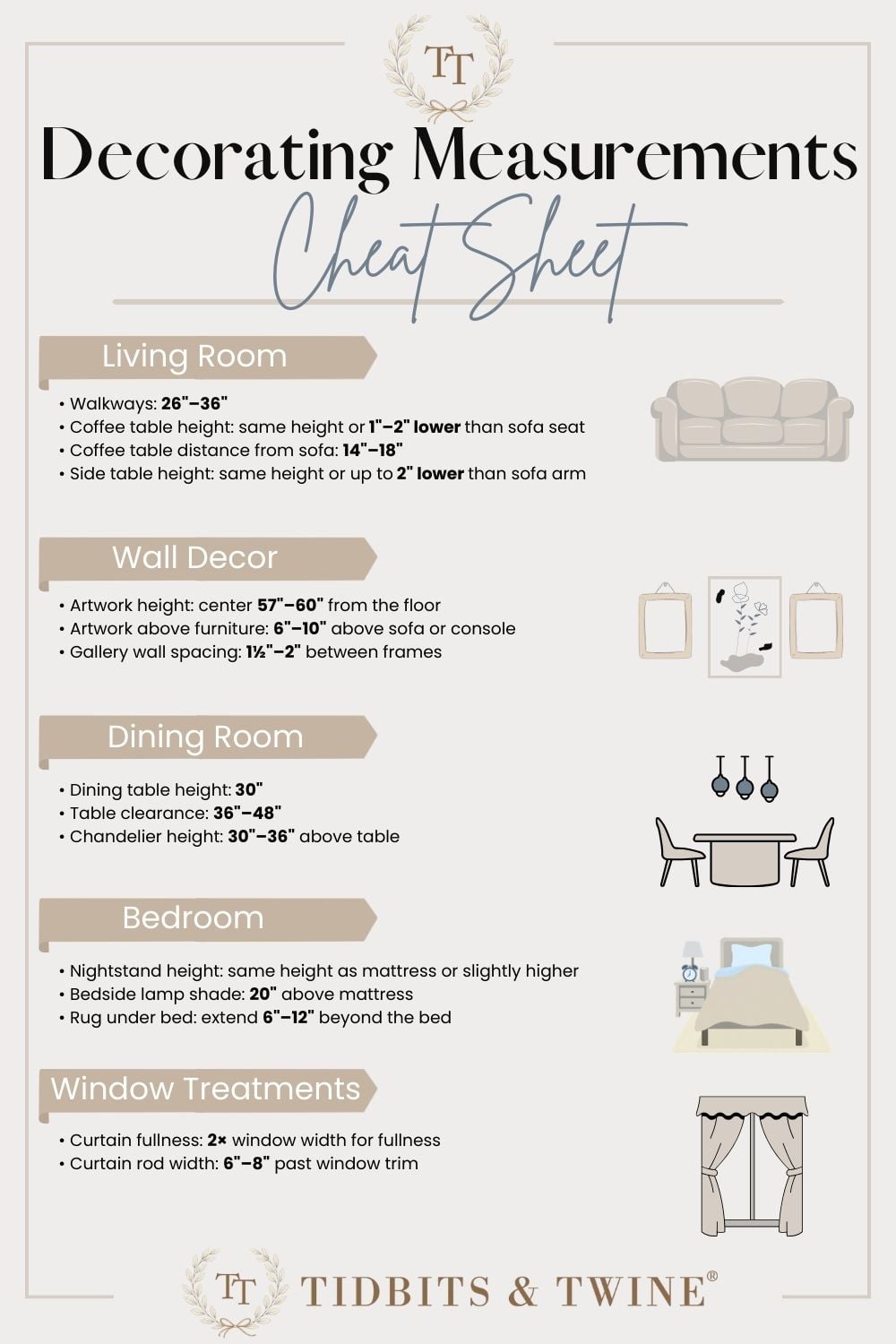
Decorating Measurement Cheat Sheet
If you want a quick reference, here are some of the most common decorating measurements designers rely on.
More Decorating Measurements
Looking for more decorating measurements? I also have guides for bathroom layouts, lighting placement, and rug sizing that walk through additional rules designers use.
- How to choose the right coffee table size – for coffee table proportions, spacing, and sizing guidelines
- How high to hang pictures – for artwork height, spacing, and placement above furniture
- How high to hang a chandelier – for chandelier height and dining room lighting placement
- Nightstand dimensions – for choosing the right nightstand height and width
- How to choose the right rug size – for living room, dining room, and bedroom rug guidelines
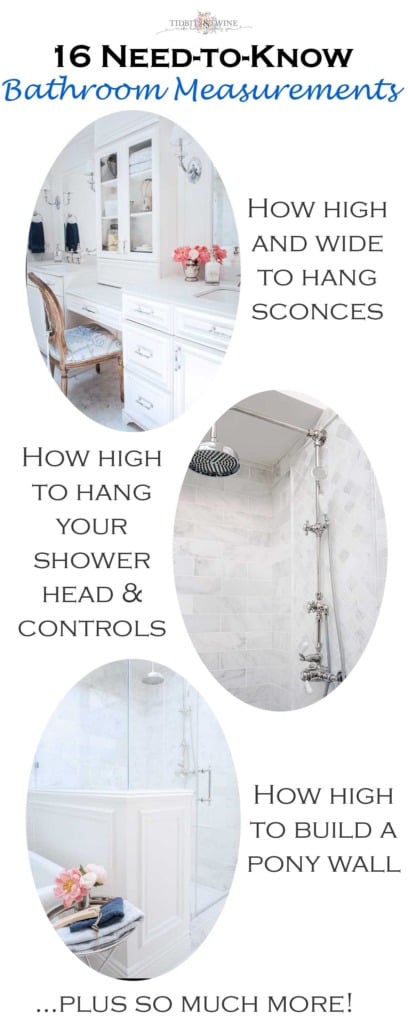
- Bathroom measurements guide – including how high to hang a shower head and the right spacing for sconces
So does this mean that if you aren’t following these decorating measurements your design is wrong? Of course not! If it feels good to you and you like how it looks, that’s all that matters. But if you’re unsure as to where to begin, these measurements provide a good starting point.
I hope you find these decorating measurement guidelines as useful as I have!

Like this? Then you might also like:
Really Nice Post
Nice post… It is also very good to read, thanks!
We have started construction on a new home. The master is 14’8″ x 21′. The head of our 76″ king size bed will be on the 14′ wall (no windows planed on this wall at this time) and opposite that wall are french doors. On one of the 21′ walls, we will have triple windows. My deliema is this: Do I add windows on either side of the bed, and if so where do I place them in relation to the bed? Most of the windows in the house are 72″, so should these be that tall as well or go with shorter ones?
I have to make a decision on windows or no windows in a week. Thank you!
Susan