

I’ll admit it. I’m a self-professed sheet snob.
Not because I only buy expensive sheets, but because I have very specific expectations for my bed. I like what I like, and I’m not willing to compromise when it comes to sleep.
Over the years, I’ve researched and tried a LOT of sheets because some sound amazing in the package…and then absolutely aren’t. Others start out great and fall apart after a few washes. One thing I’ve learned is to ignore a lot of the marketing promises because it’s more important to understand what sheets are made of and how they’re constructed than whatever sales pitch is printed on the label.
And there are a lot of misconceptions when it comes to sheets, too. A friend of mine was recently so excited about buying 1,000 thread count sheets because they felt incredibly soft. And yes, they probably are soft. But ultra-high thread counts can also mean thinner threads that may not hold up as well over time. Thread count is only one piece of the puzzle.
So today, I’m sharing everything I’ve learned about buying sheets, including materials, weaves, thread count, cooling fabrics, and what actually matters before you spend your money.
To give you a sneak peek, here’s what you need to know when buying sheets:
- Size
- Your sleep preferences
- Material
- Weave
- Thread count
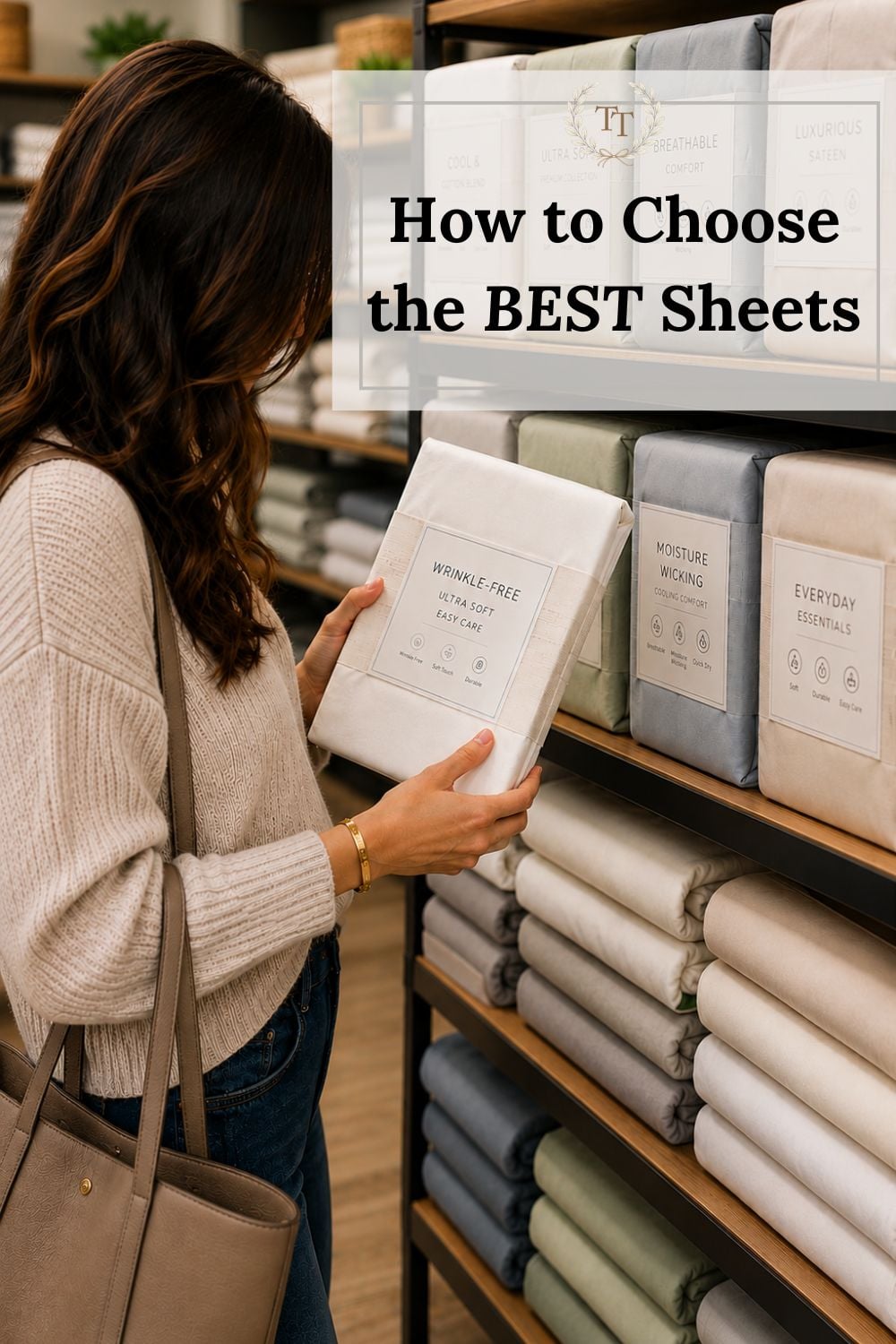
1. First, Know Your Bed Size and Mattress Depth
Before you even start comparing materials, thread count, or cooling claims, make sure you’re buying the right size sheets for your actual mattress.
And yes, I know that sounds obvious. But this is exactly how people end up wrestling with fitted sheets that pop off the corners every night.
Standard mattress sizes are only part of the equation now because mattress depth matters too. Pillow-top mattresses, foam mattresses, mattress toppers, and adjustable beds can all change how deep your fitted sheet needs to be.
If your sheets constantly slide off, feel too tight, or bunch awkwardly at the corners, there’s a good chance the pocket depth is wrong for your mattress.
Most sheet packaging will list:
- Twin
- Twin XL
- Full
- Queen
- King
- California King
But you’ll also want to check for:
- standard pockets
- deep pockets
- extra deep pockets
As a general rule:
- Standard pockets fit mattresses around 7–14 inches deep
- Deep pockets fit mattresses around 15–18 inches deep
- Extra deep pockets are designed for especially tall mattresses or thick toppers
The easiest way to check? Measure the height of your mattress before buying sheets. It takes about 30 seconds and can save you from a lot of frustration later.
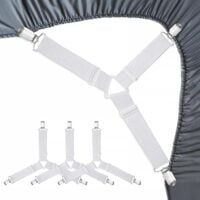
TIP: if you move around a lot in your sleep like I do, those elastic sheet straps that clip underneath the mattress corners actually work really well. I started using them because I was constantly pulling fitted sheets back onto the bed, and they make a huge difference in keeping everything in place overnight.
2. Decide What’s Most Important to You
Before you start comparing materials, thread counts, or cooling claims, it helps to think about what you actually want from your sheets.
Because the “best” sheets for one person can be completely wrong for someone else.
For example:
- Do you sleep hot?
- Do you want sheets that feel cool when you first get into bed?
- Do you prefer crisp sheets or silky ones?
- Do wrinkles bother you?
- Do you care more about softness or durability?
- Do you wake up sweaty during the night?
- Do you hate when sheets cling to your legs?
- Do you sleep with pets and need something durable?
- Do you want sheets that soften over time or stay crisp?
- Do you like that crisp luxury hotel feeling?
I originally thought I liked silky sheets until I realized what I actually hated was sheets bunching around my feet while I slept. Once I figured that out, shopping for sheets got a whole lot easier.
Because here’s the thing: most sheet packaging focuses on marketing words instead of helping you understand how the sheets are actually going to feel after eight hours in bed.
3. Choosing the Right Sheet Material
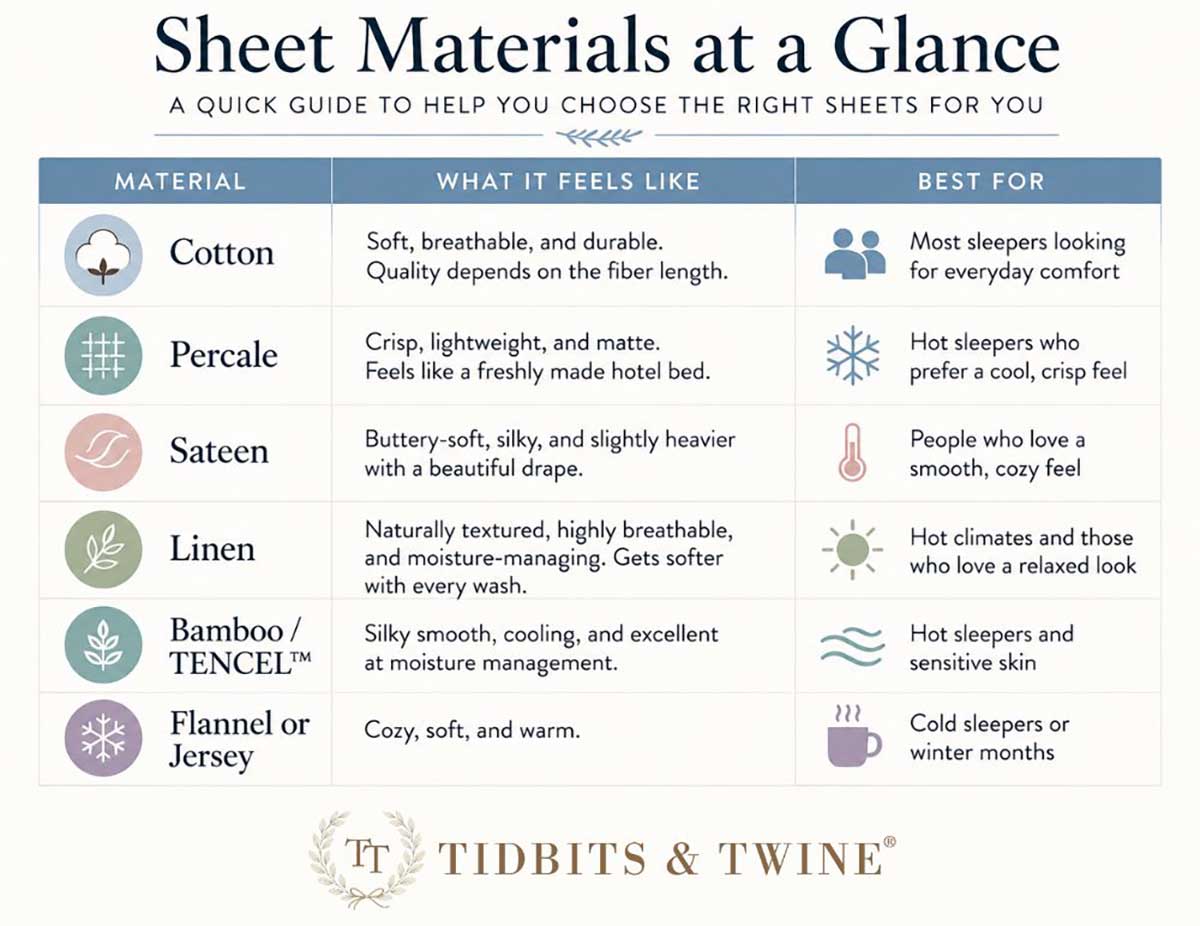
Now that you’ve figured out what’s important to you, let’s talk about sheet materials.
This is where most people get stuck because there are so many choices. But instead of focusing on what the material is, focus on how it feels and performs.
Cotton Sheets
Best for: Most people
Cotton sheets are often:
- breathable
- durable
- easy to care for
- available in a wide range of price points
If you’ve always bought cotton sheets, there’s a good reason. They’re versatile and work well for most sleepers.
This is where a lot of people get confused, though. Cotton is the material, but weave is what determines whether those cotton sheets feel crisp, silky, lightweight, or heavy.
We’ll talk more about weave in the next section.
Linen Sheets
Best for: People who want an airy, relaxed look
Linen sheets are often:
- breathable
- lightweight
- moisture-wicking
- textured
- relaxed-looking
If you’ve ever admired those casually rumpled European beds in magazines, chances are they were made with linen.
Just know that linen wrinkles. A lot. For some people that’s part of the charm but for others it’s a deal breaker. Linen also tends to get softer with every wash.
TENCEL™, Lyocell, and Eucalyptus Sheets
Best for: Hot sleepers who want softness
These sheets are often:
- cool-to-the-touch
- soft
- smooth
- lightweight
- moisture-wicking
This is the material many people are looking for when they say they want cooling sheets.
The tradeoff is that some can feel more drapey and fluid than traditional cotton.
Bamboo Sheets
Best for: People who like silky-soft sheets
Bamboo sheets are often:
- soft
- smooth
- cooling
- moisture-wicking
- silky-feeling
Many people love how soft bamboo sheets feel right out of the package.
Just be aware that some can feel slippery or clingy, depending on the weave and quality.
Microfiber and Polyester Sheets
Best for: Budget-friendly bedding
These sheets are often:
- inexpensive
- wrinkle-resistant
- easy to care for
- soft at first touch
The downside is that they tend to be less breathable than natural fibers and can sleep warmer.
What About Blends?
Many sheets combine two materials together.
For example:
- Cotton + polyester
- Cotton + TENCEL
- Cotton + linen
Blends are designed to combine the benefits of each material.
For example:
- fewer wrinkles
- lower cost
- added softness
- improved durability
Just remember that every blend is a compromise. You’re usually gaining something and giving up something else.
4. Understanding Sheet Weaves
When I started researching sheets, I knew about thread count and cotton. What I didn’t know was that sheet weave can completely change how a set of sheets feels.
In fact, two sets of 100% cotton sheets can feel completely different simply because they’re woven differently.
The good news? For most shoppers, you only need to know two weaves: percale and sateen.
Percale Weave
Best for: People who like crisp, cool sheets
Percale sheets are often:
- crisp
- lightweight
- breathable
- airy
- less clingy
If you’ve ever stayed in a nice hotel and loved the sheets, there’s a good chance they were percale.
Percale tends to feel cooler and lighter against your body. It also doesn’t drape or cling as much as other weaves.
The downside? It can wrinkle more easily and may not feel as silky-soft right out of the package.
Sateen Weave
Best for: People who like soft, silky sheets
Sateen sheets are often:
- smoother
- silkier
- heavier
- drapier
- warmer
These are the sheets people often describe as buttery soft.
Because sateen has more weight and drape, it tends to feel cozier and more wrapped around your body.
The downside? Some people find sateen sleeps warmer or bunches more during the night.
Which Weave Is Right for You?
Personally, I spent years assuming I liked silky sheets because they felt soft in the package. Then I realized what I actually preferred was a cooler, crisper sheet that didn’t bunch around my feet while I slept.
That’s why understanding weave matters. Sometimes the problem isn’t the material at all. It’s the weave.
5. Understanding Thread Count
If there’s one thing most people know about sheets, it’s thread count.
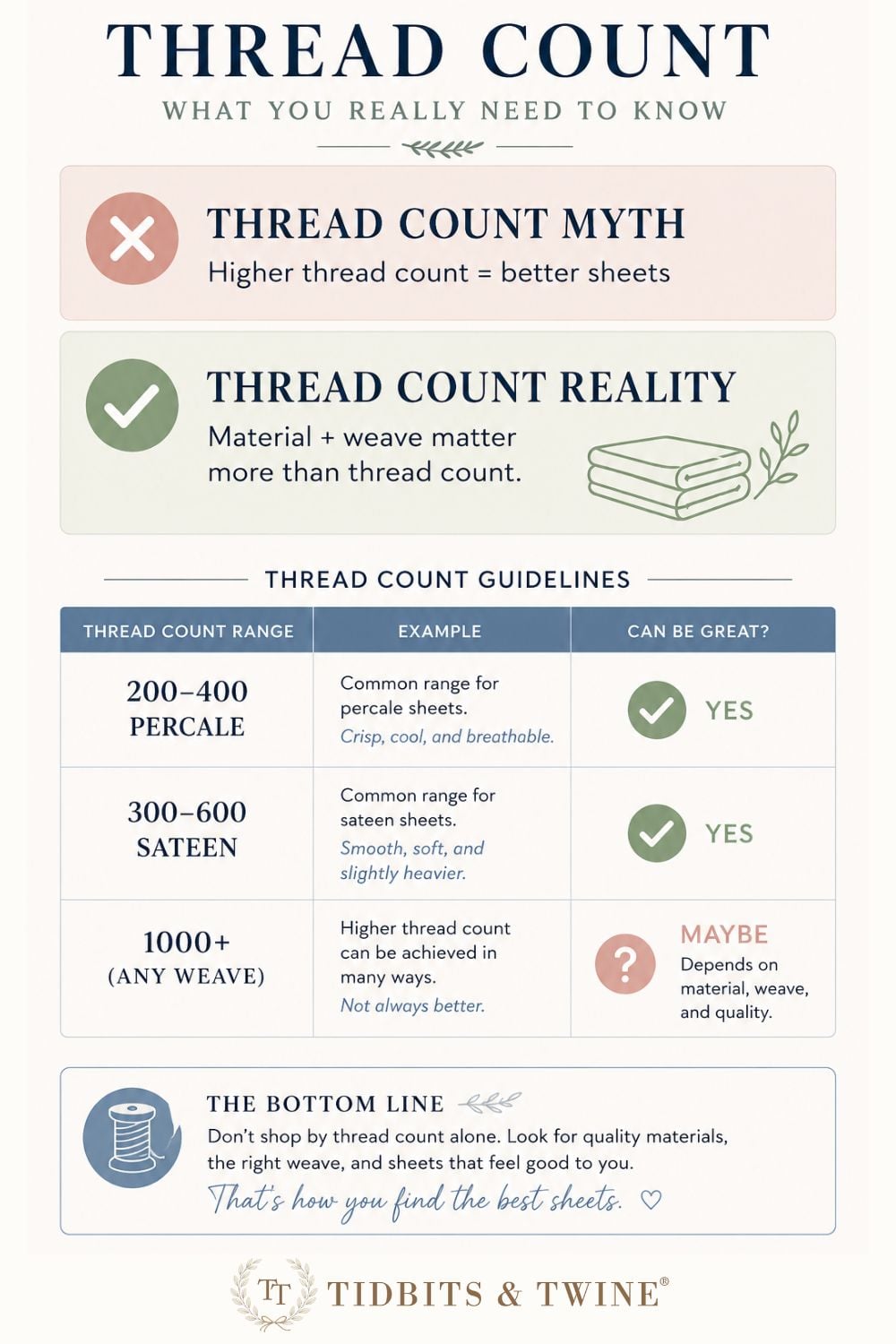
For years, we were told that higher thread count automatically meant better sheets. So naturally, people started looking for 800, 1000, or even higher thread counts thinking that meant luxury.
But here’s what I’ve learned: thread count is only one piece of the puzzle.
A higher thread count doesn’t automatically mean:
- softer sheets
- cooler sheets
- more breathable sheets
- longer-lasting sheets
- better-quality sheets
In fact, some ultra-high thread counts are achieved by using thinner multi-ply threads to increase the number.
That’s why I think it’s more helpful to focus on:
- How you want your sheets to feel
- The material
- The weave
- Thread count
In other words, thread count should probably be the last thing you look at, not the first.
As a general rule:
- Percale sheets are often around 200–400 thread count
- Sateen sheets are often around 300–600 thread count
So if you find a set of 300-thread-count sheets that feels perfect, don’t automatically assume you need to keep shopping for a higher number.
Sometimes the best sheets for you aren’t the ones with the highest thread count. They’re the ones with the right material and weave.
6. Cooling, Breathable, and Moisture-Wicking Aren’t the Same Thing
One thing that surprised me while researching sheets is that bedding companies often use the words cooling, breathable, and moisture-wicking as if they all mean the same thing.
They don’t.
Cooling
Cooling fabrics actually feel cool against your skin when you get into bed.
If you’ve ever flipped your pillow over looking for the cool side, you already understand the appeal.
Breathable
Breathable fabrics allow air to circulate more easily.
They may not feel cool when you first climb into bed, but they can help prevent heat from building up throughout the night.
Moisture-Wicking
Moisture-wicking fabrics help pull sweat away from your skin.
This can be especially helpful for hot sleepers or anyone who deals with night sweats.
Why This Matters
Many people shop for “cooling sheets” when what they really want is breathable sheets.
Others buy breathable sheets expecting them to feel cool-to-the-touch and end up disappointed.
That’s why it helps to think about what’s actually bothering you.
- If you feel hot when you first get into bed, look for cooling fabrics.
- If you wake up overheated during the night, breathability may be more important.
- If you wake up sweaty, moisture-wicking properties may help.
Understanding the difference makes it much easier to choose sheets that solve your specific problem.
7. Putting It All Together
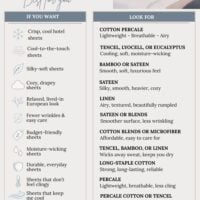
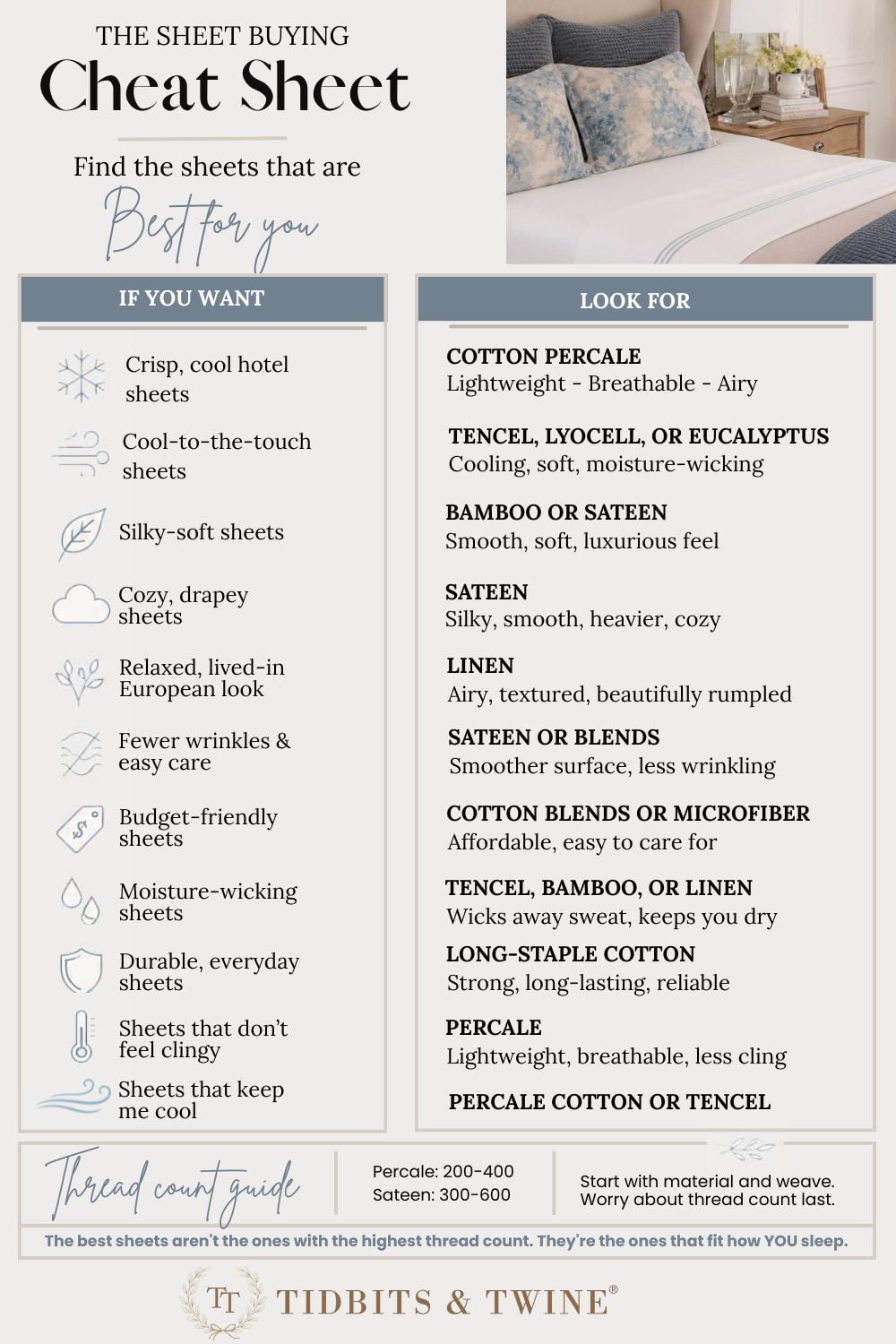
At this point, sheet shopping should feel a lot less confusing. If you’re standing in a store trying to decide between dozens of options, use this cheat sheet as a quick guide.
Final Thoughts
For me, this whole deep dive started because I was trying to find sheets that would help me sleep cooler.
After all of this research, I’ve landed on a TENCEL fitted sheet and a cotton top sheet, but I’m still deciding whether they’re the right combination for me. I’ll report back after I’ve slept on them a bit longer.
If you have sheets that you love, please send me your recommendations!
More Decorating Tips
- Nightstand Decorating: The Simple Formula
- A Warm White Kitchen – Remodel Reveal
- Learn How to Decorate a Mantel in 3 Simple Steps

DECORATING MADE EASY
Get my free 5-day decorating course and learn how to define your style, make better decisions, and create a home that feels like you.
After the course, you’ll receive my latest decorating tips, antique finds, and new posts.