



My home was built in 1989 and has a completely open floor plan. We actually chose it because of that. At the time, I had a toddler and loved being able to see him no matter where I was. Kitchen, living room, dining area—it was all one big sightline, and it felt perfect.
Fast forward a few years, and that same open floor plan isn’t quite as charming. Now when the teenagers come over, I’m politely (or not so politely) banished to my bedroom so I don’t cramp their style. Apparently, an open floor plan works better for toddlers than teens. (Eye roll)
What I didn’t realize at the time is how much that layout would influence how the house needed to be decorated. When spaces are open to one another, cohesion really matters. You see everything at once, so rooms can’t compete or feel disconnected. They need to relate.
And even if your home isn’t open concept, cohesion still plays a huge role. Moving from room to room should feel natural, balanced, and easy on the eye.
Today, I want to talk about how to create that sense of cohesion so each room feels like its own space, but still clearly part of the same home.
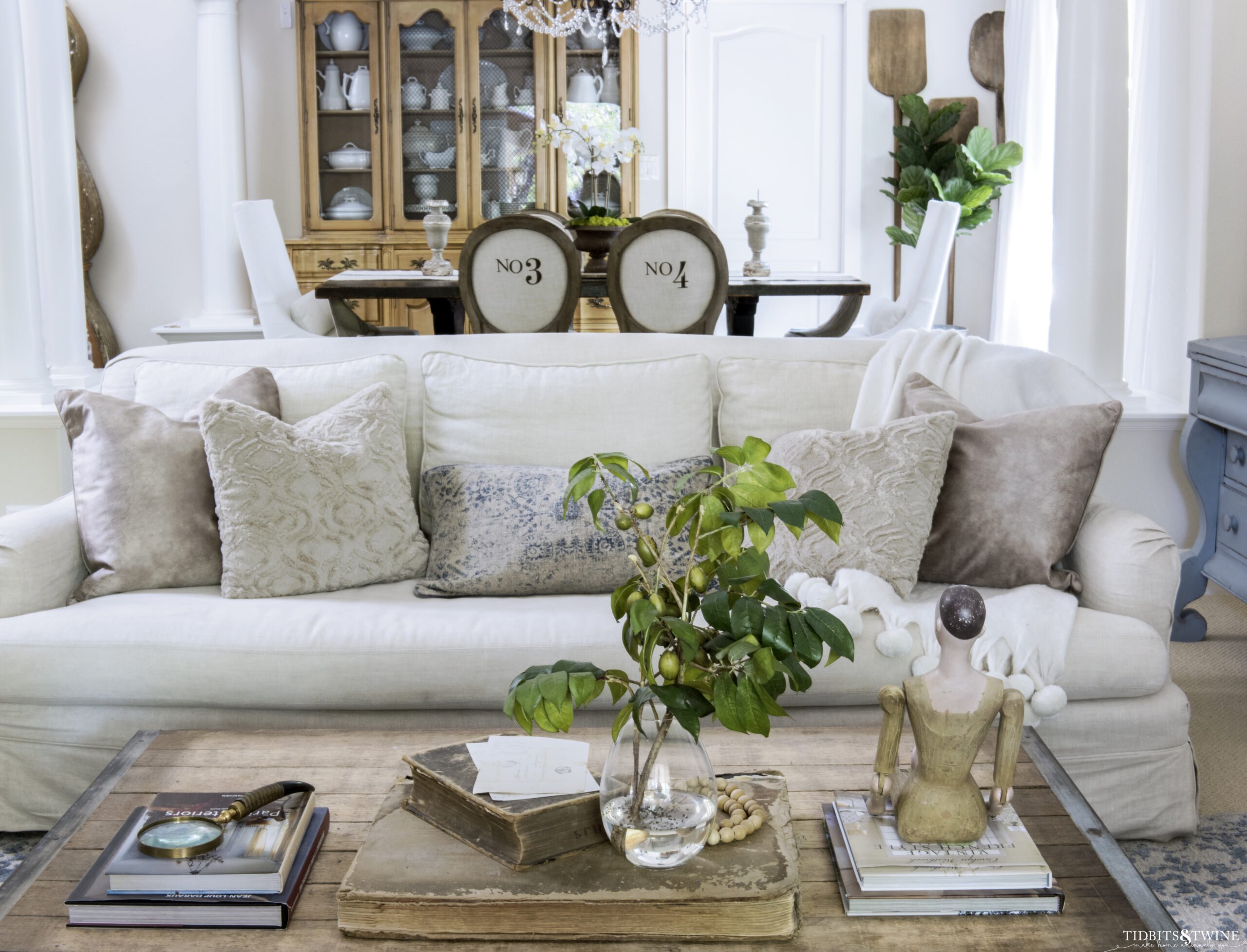
Think Connection, Not Matching
When people think about creating a cohesive home, they often jump straight to matching. Same paint color everywhere. Same rug style and same furniture finish room after room. And while that might sound like an easy solution, it usually does the opposite of what you want.
Matching rooms tend to feel flat. Worse, they can feel a little forced, like everything was ordered at once and dropped into place.
Cohesion isn’t about making every space look the same. It’s about making the rooms feel related.
A cohesive home still has variety. Different rooms can serve different purposes and have their own personality. A dining room doesn’t need to look like your living room, and your bedroom shouldn’t feel like an extension of the kitchen. What matters is that the spaces don’t compete with each other as you move through the house.
Think of your home like a book. Each room is its own chapter. The chapters don’t repeat the same story, but they belong to the same book and move together naturally. When that’s working, your home feels more intentional and easier to live in—even if every room isn’t finished.
So if cohesion isn’t about matching, the next question is how you actually create it. Well, keep reading to find out…
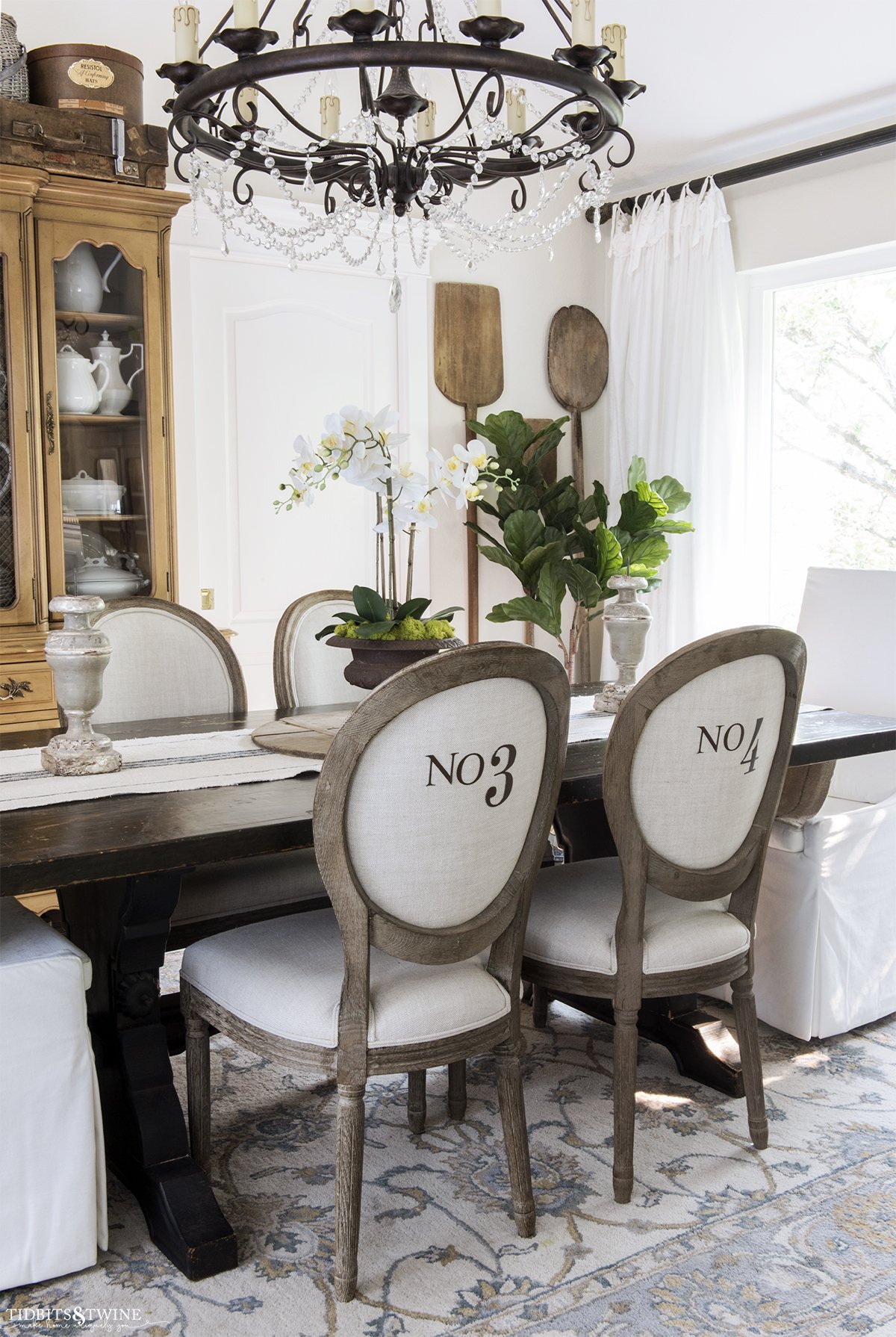
Start with Style
Most people think decorating starts with wall color, but that’s not the best starting point. Before you start stressing over paint colors or accent shades, it helps to step back and think about your decorating style first. I’ve learned this the hard way. If the style doesn’t feel connected from room to room, no paint color is going to magically pull things together.
One simple way to do that is to think in descriptive words, not design labels. How do you want the room to feel when you’re in it? Cozy. Elegant. Relaxed. Energetic. Grounded. Polished. Those kinds of words are often more helpful than trying to decide whether a space is traditional, modern, or something in between. The post Design a Room in 4 Easy Steps will walk you through how to figure out the overall direction
And this doesn’t mean you need to pick one decorating style and stay in that lane forever. Most homes don’t work that way. Mine certainly doesn’t. A room can be a mix of traditional and European, for example, and still work beautifully. The key is that the rooms you see together reflect that same mix, so nothing feels out of place as you move through the house.
Starting with style as your foundation gives you a great starting point. Each room can still have it’s own personality but still feel like part of the same home.

Use Color to Create Flow
Once you’ve settled on the overall style, color choices will be much easier. This is where cohesion often breaks down, not because people choose the wrong colors, but because they mix approaches without realizing it.
There are two reliable ways to create color flow between rooms:
1. Use one main color and vary the shades
This might look like softer and deeper versions of the same color as you move from space to space. The color stays familiar, but it doesn’t feel repetitive.
2. Use different colors that share the same undertones
In simple terms, don’t mix warm and cool undertones in rooms that connect visually. Warm colors tend to work well together, and cooler tones do the same. Problems usually show up when one space feels warm and the next suddenly feels cool, especially in open floor plans where you see both at the same time.
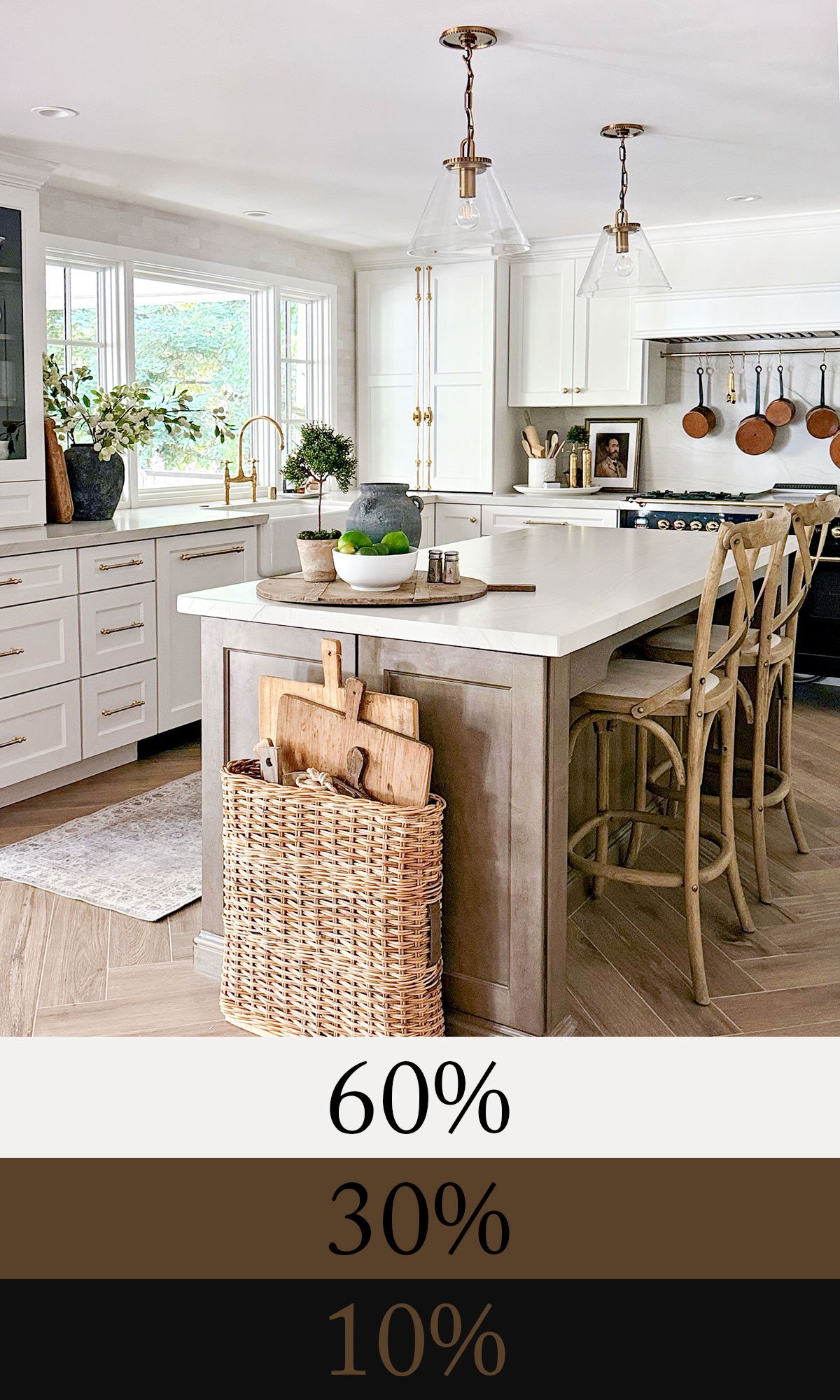
If it helps to have a simple guideline for using color within each room, this is where the 60-30-10 rule comes in:
- 60% is the dominant color (walls, large furniture, rugs)
- 30% is the secondary color (upholstery, window treatments, larger accents)
- 10% is the accent color (pillows, art, accessories)
You don’t have to follow this perfectly, but it’s a helpful way to keep one room balanced while still letting color show up in a controlled way.
If you want to go deeper into how this works (and when to bend it), you can read more about it HERE.
One caveat. This is also where people worry they’re breaking the “rules.” You can absolutely have a mostly neutral home and still paint a powder room black or navy. The difference is that the style stays consistent, even if the drama changes. The finishes, lighting, and details still feel like they belong in the same house—one space is just willing to be bolder than the others.
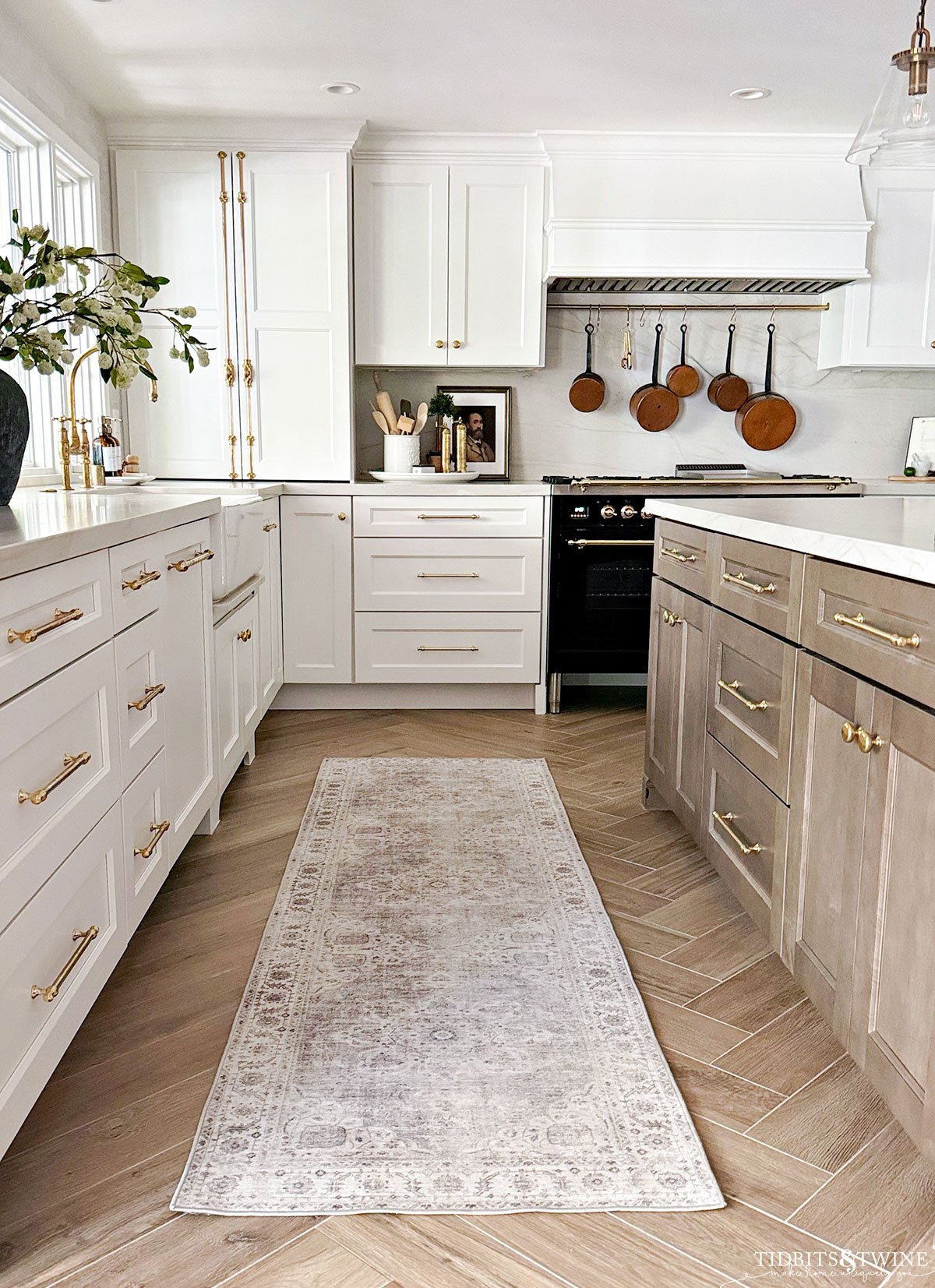
Repeat Materials, Finishes, and Details
Repetition is one of the ways rooms can feel connected without looking the same. Think of it less as a decorating rule and more as noticing what already shows up in your home, then letting those elements appear again in simple ways.
The things that tend to matter most are:
- Materials
Wood tones, stone, ceramics, woven elements. These don’t need to match exactly, but staying within a similar family helps rooms relate to one another. For example, warm woods showing up in furniture, frames, or accents throughout the house. - Texture
Texture is about how things feel visually and physically. Soft fabrics, woven materials, aged finishes, smoother surfaces. When similar types of texture show up from room to room, spaces tend to relate more easily, even when the colors or pieces are different. - Finishes
Metal finishes are often the easiest place to start. If you’re using brass, black, or polished nickel, letting that finish appear in lighting, hardware, or frames helps spaces feel connected. - Architectural Details
Trim style, door profiles, wall treatments, ceiling details, and built-ins all play a role. When these stay consistent, the house feels cohesive even when the decor changes from room to room. - Decorative Pieces
This isn’t about repeating the same objects, but about familiarity. Pottery, books, framed art, baskets — when similar types of decorative pieces show up in different spaces, the rooms relate to each other naturally. - Shapes and Lines
Pay attention to the overall feel of the pieces you’re drawn to. If your home leans more tailored, you might see straighter lines in furniture, frames, and lighting. If it leans softer, you might notice more rounded tables, curved mirrors, or arched details repeating throughout. It’s not about choosing one over the other — it’s about letting that same visual language show up again and again. - Scale and Proportion
Pay attention to how large or small pieces feel from room to room. A space with oversized furniture next to another filled with much smaller, delicate pieces can feel jarring, even if the styles are similar. Rooms don’t need the same furniture, but the overall sense of scale should feel compatible as you move through the house.
And don’t forget lighting color. Moving from very warm light in one room to cool, white light in the next can feel just as jarring as clashing colors, especially in open floor plans. I break this down more in my post on bulb temperature HERE.
Edit to Make Everything Work
This is the part that often gets overlooked. You can have the right style and colors in place and still have a room feel off if it hasn’t been edited.
When I’m editing a space, I usually pause and ask myself things like:
- Does this actually belong here, or is it just filling space?
- If I took this out, would the room feel calmer or worse?
- Is this competing with something that should matter more?
- Does this make sense next to what I see in the next room?
- Does the furniture layout help the room flow, or am I working around it?
Editing isn’t about stripping a room bare. It’s about deciding what doesn’t need to be there. And the best part is that editing isn’t permanent. You can always add something back later. But stepping back and taking a few things away is often what lets everything else work better.
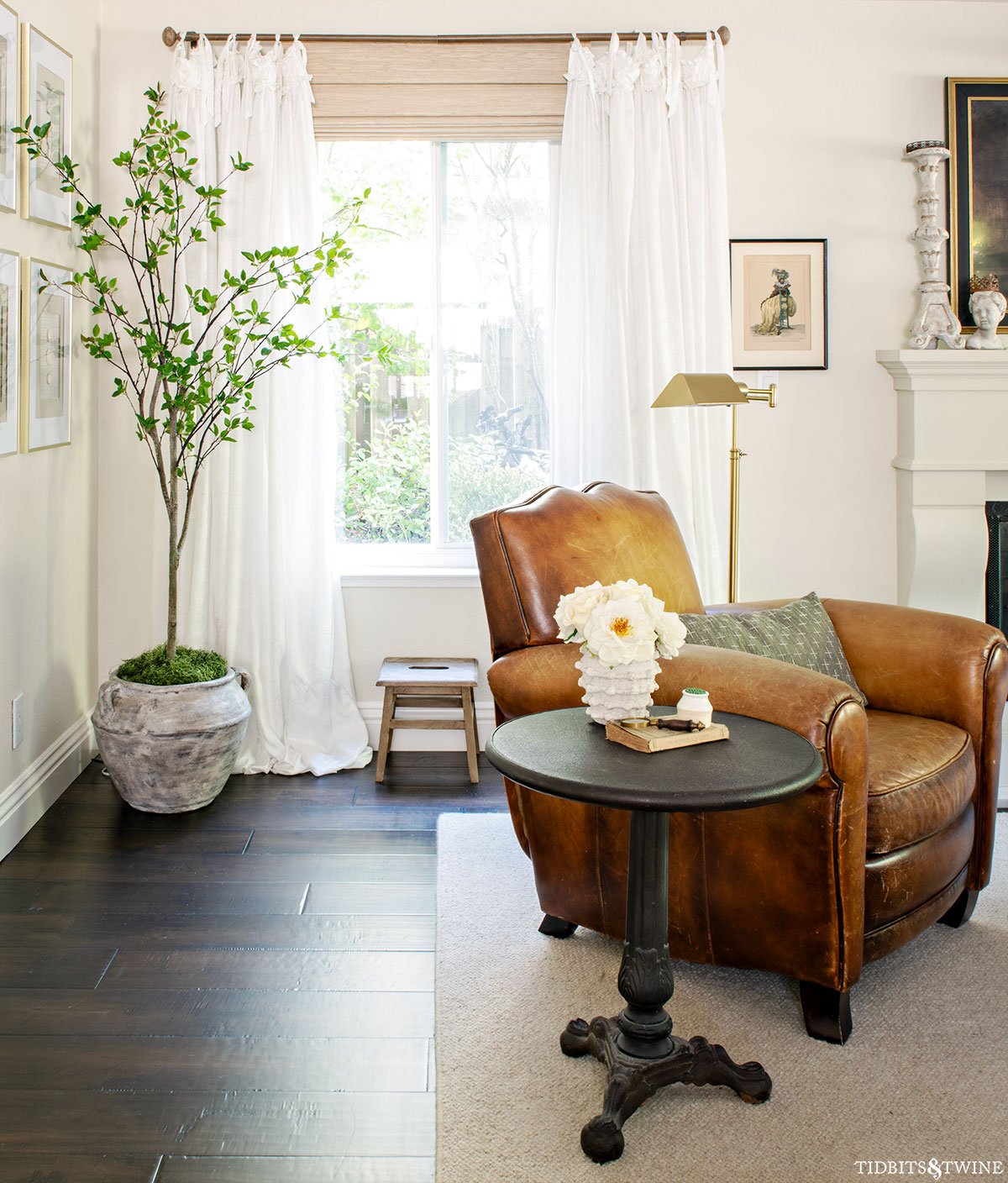
At the end of the day, a cohesive home isn’t about matching furniture sets or getting every decision “right.” It’s about whether the rooms make sense together when you move through them.
That might mean starting with style instead of paint. Letting color do some of the work. Repeating a few things that already show up naturally. And every so often, stepping back and editing when a space starts to feel a little crowded or off.
This matters a lot in open floor plans, where you see everything at once. But it matters just as much in homes with separate rooms. Each space can still have its own personality — even its own level of drama — as long as it feels like it belongs in the same house.
And the good news is, none of this has to be perfect. Cohesion usually comes from paying attention, making small adjustments, and giving yourself permission to change things over time.
When it’s working, your home just feels easier to be in. Not because everything matches, but because it all fits together.

DECORATING MADE EASY
Get my free 5-day decorating course and learn how to define your style, make better decisions, and create a home that feels like you.
After the course, you’ll receive my latest decorating tips, antique finds, and new posts.