


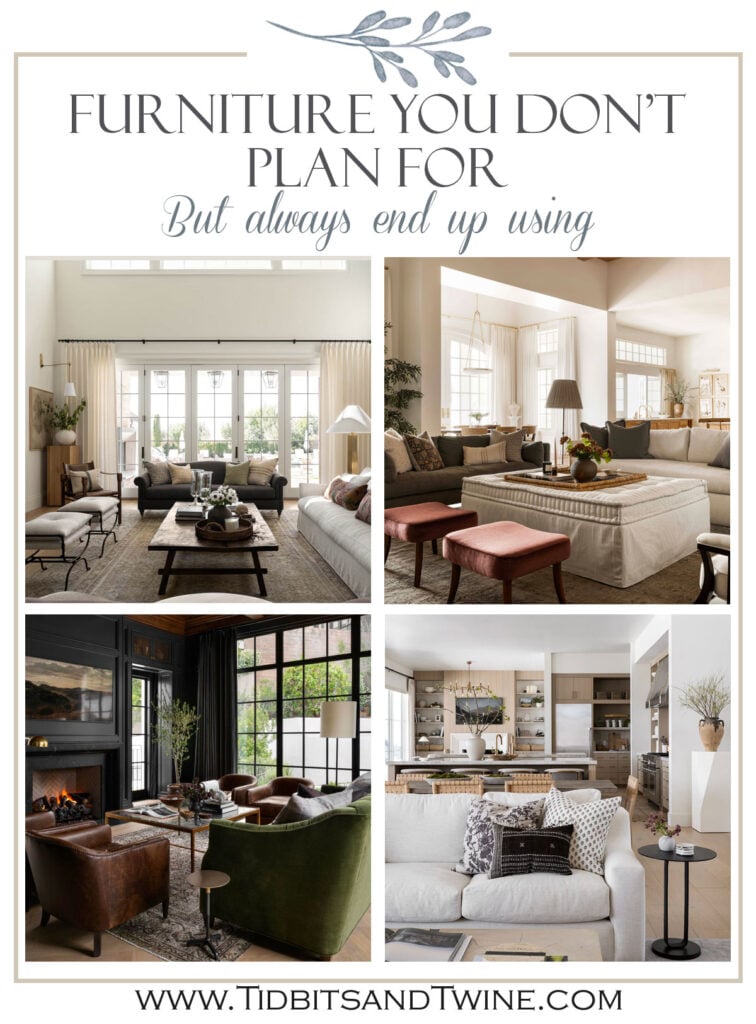
Lately, a lot of the talk around 2026 home trends has been about comfort. Spaces that feel lived in, flexible, and easy to use rather than overly styled or locked into one perfect setup. And the more I think about it, the more I realize that comfort usually isn’t coming from the big pieces.
It’s coming from the furniture you don’t really plan for. The pieces you add later. The ones that get moved around, used every day, and end up doing a lot of the work in a living room once real life kicks in.
These aren’t the pieces you design a living room around from the start. They’re not the sofa or the rug or the coffee table. They’re the furniture you add as you actually use the room and start to notice what you need. A place to set something down. An extra seat when someone joins you. A piece that makes the space work a little better day to day.
Flexible Furniture and Surfaces
So today, let’s talk about the hardest-working pieces of furniture in a living room. This isn’t a checklist, and it’s not about adding furniture just to add furniture. It’s really just a look at the pieces that end up being used the most once you start living in the space.
You wouldn’t use all of these in one room, and you might not need any of them right now. But they’re the kinds of pieces people tend to add over time because they make everyday life in a living room a little easier.
Accent Stool
This is one of those pieces people don’t usually plan for, but almost always end up using. An accent stool moves easily, doesn’t take up much visual space, and somehow always finds a role in the room.
It might start out next to a chair, then get pulled over when someone needs a seat. Sometimes it holds a drink. Sometimes a book. Sometimes nothing at all, and that’s fine too. It ends up being useful more often than you expect.
What makes a stool so appealing is that it doesn’t lock you into a layout. You’re not committing to another chair or another table. You’re just adding something flexible that can shift around as the room gets used.
It’s one of those pieces that earns its place without feeling like more furniture.
Ottoman
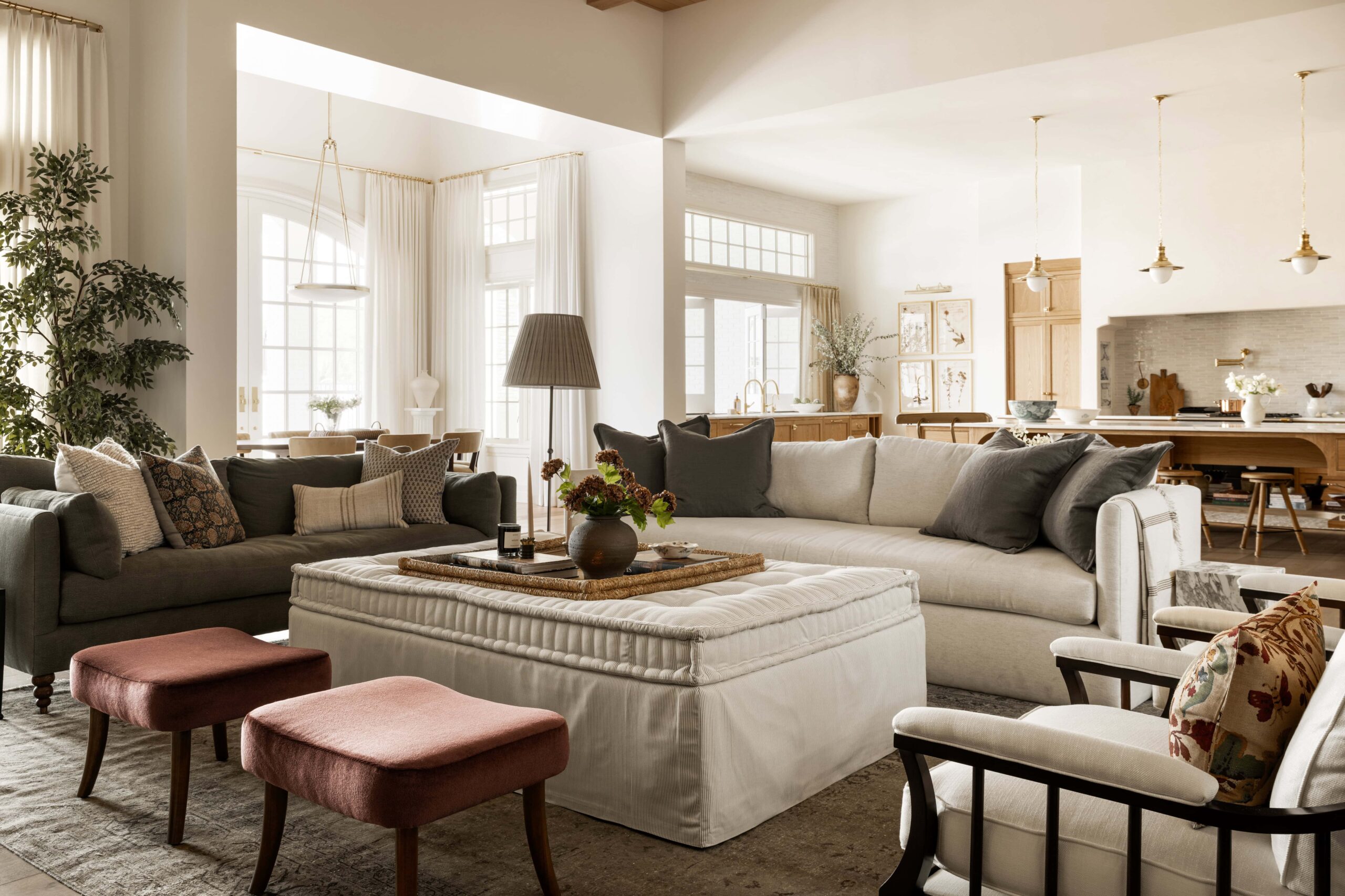
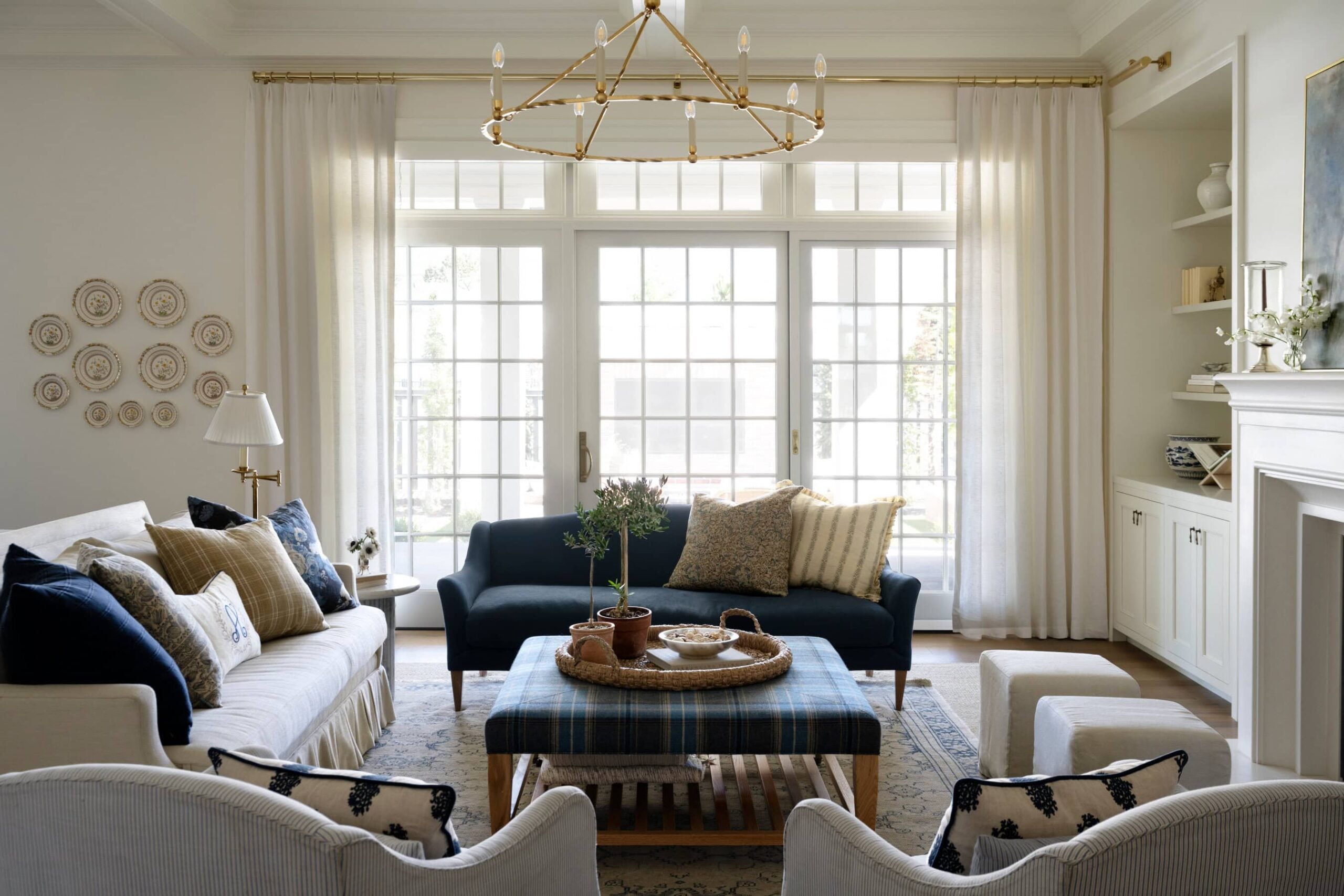
While they can look similar to a stool, an ottoman works a little differently in a living room. It’s usually larger, more substantial, and often designed to do more. Many ottomans include storage inside, which is a big reason they earn a permanent spot in the seating area.
An ottoman also tends to stay in one spot, unlike a stool that gets moved around as needed. Feet go up on it. Someone sits on it when there’s no room on the sofa. And if you add a tray, it can handle drinks or a book just fine. That’s why a lot of living rooms end up with both a coffee table and an ottoman. They serve different purposes.
A coffee table gives you surface space. An ottoman adds comfort and flexibility, and sometimes hidden storage too. Having both helps the room work better day to day without changing the layout.
Drinks Table (Martini Table)
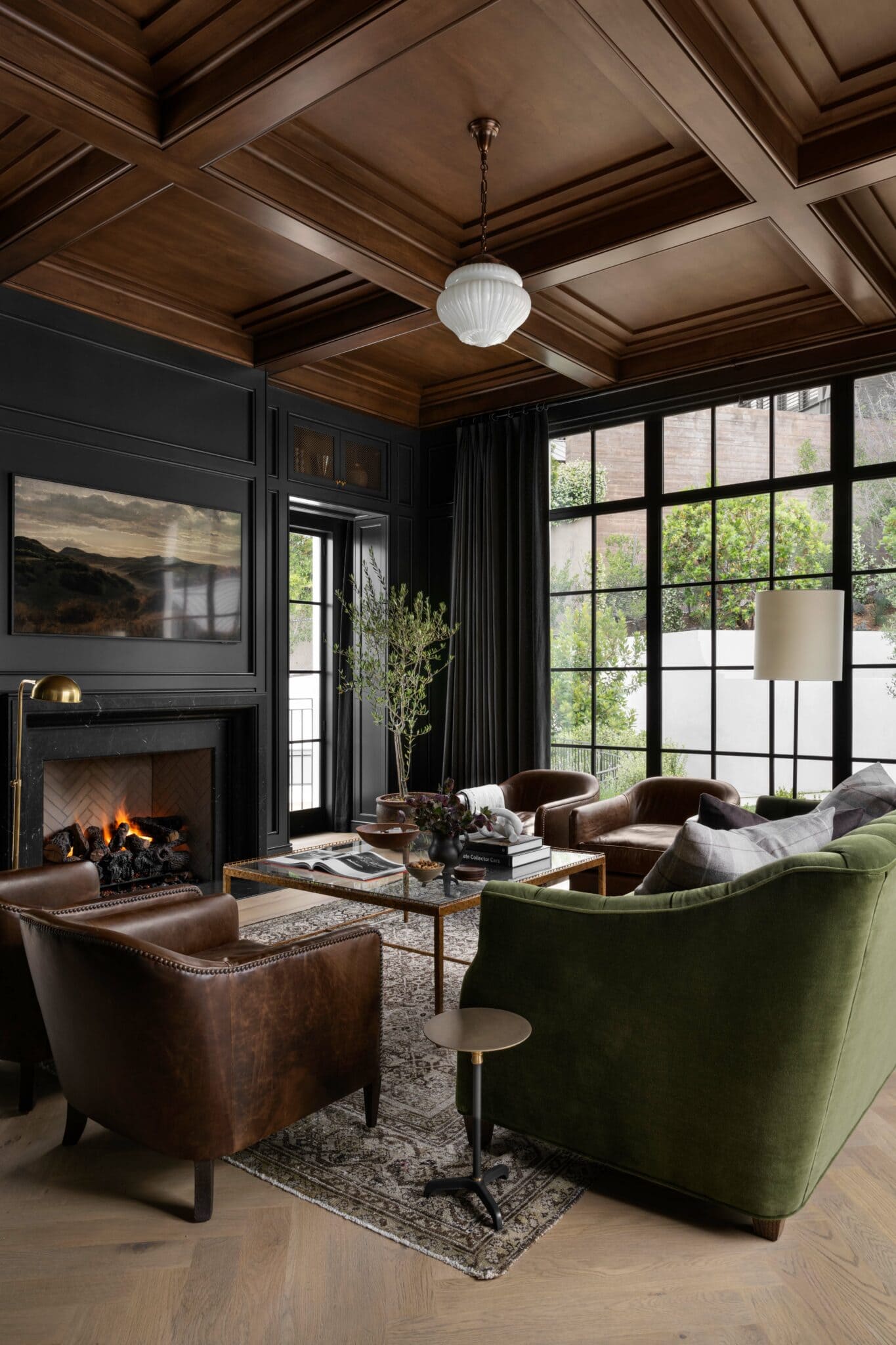
A drinks table is exactly what it sounds like. It’s that small table you slide next to a chair or sofa when you want a place to set a drink, a book, or your phone. It’s usually narrow, often round, and easy to tuck in without rearranging the room.
A lot of people call these martini tables, which is really just a more specific name for the same idea. I’ve shared more about them before in my post on European-Inspired Martini Tables, since they’re one of those pieces that work in so many different spaces.
What makes a drinks table so useful is how little commitment it requires. You don’t need a matching pair. You don’t need a big surface. You just need a spot where things can land comfortably. Once you add one, you’ll notice how often it gets used.
They’re especially helpful in seating areas where a full side table would feel like too much. One chair, one small table, and the space works.
Narrow Console or Cabinet
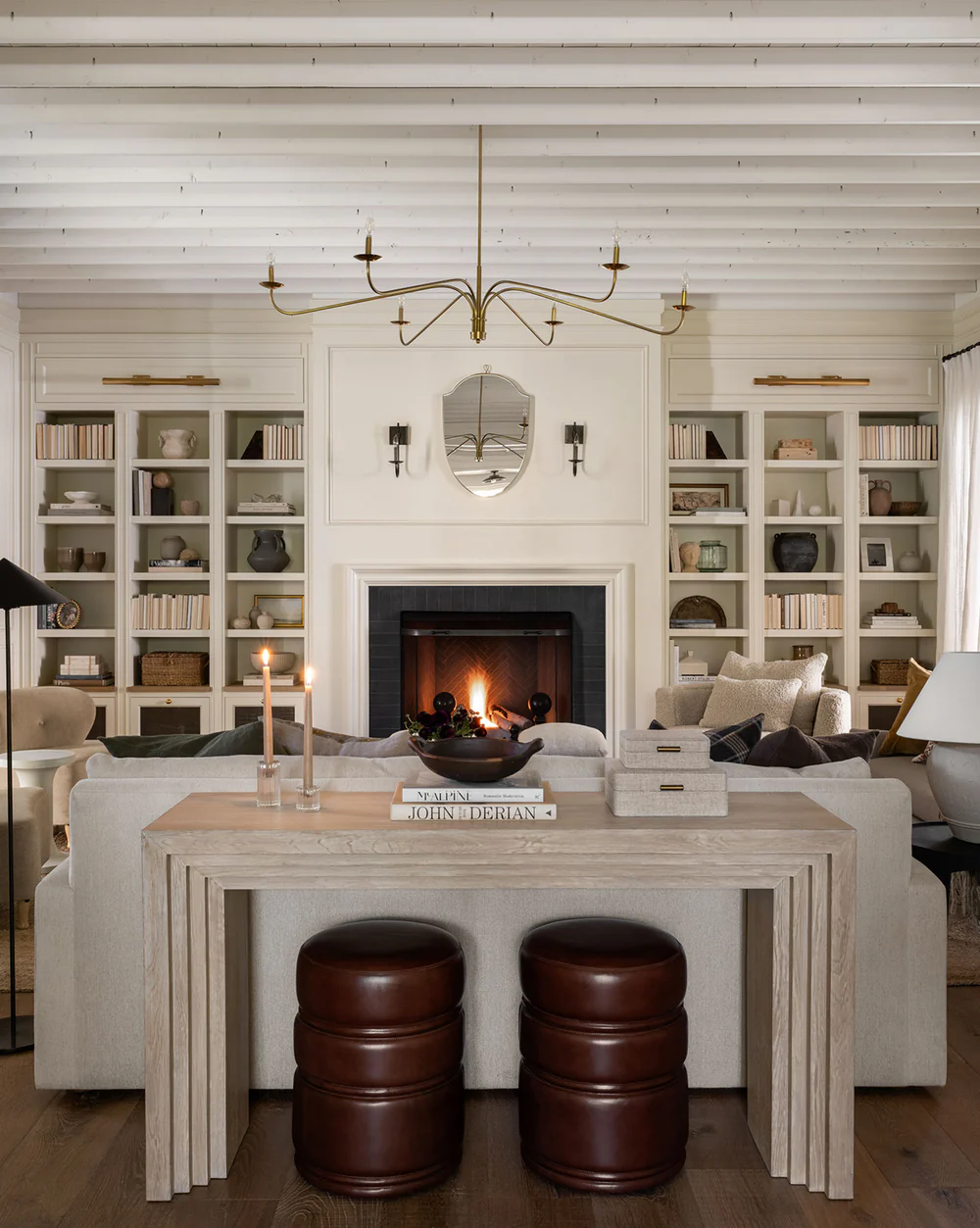
In a living room, a narrow console or cabinet is useful because it gives you a surface where you need one without taking up much space. Both work well behind a sofa, along a wall, or anywhere a deeper piece would feel in the way.
A console is usually open and simple. A cabinet does the same job but adds storage. Either way, they tend to hold the same things. A lamp, maybe a bowl, a few books. The difference is whether you want everything visible or prefer to tuck a few things away.
What these pieces do well is support the layout without changing how the room functions. You’re not adding more seating or another surface in the middle of the space. You’re just filling a spot that often needs something practical.
These are pieces people usually add after living in the room for a while, once it’s clear where a surface or a little extra storage would actually help.
Bench
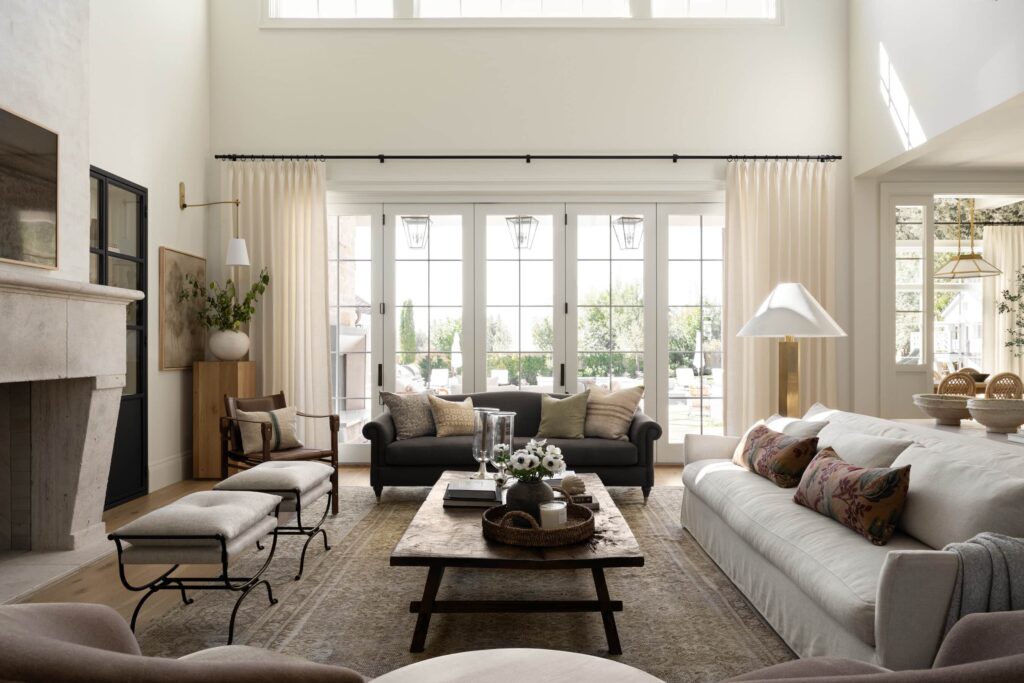
A bench is one of those pieces people don’t always think of for a living room, but it ends up being surprisingly useful. It adds seating without feeling bulky and doesn’t interrupt the flow of the room the way another chair sometimes can.
In a living room, a bench might sit along a wall, behind a sofa, or under a window (like mine below!). It gives you a place to sit when people are over, a spot to set something down for a minute, or just extra seating that doesn’t permanently take up space.
It’s a good example of furniture that earns its keep! I put mine under my front window so my two fur babies have a lookout spot. Lol!

Curated Finds
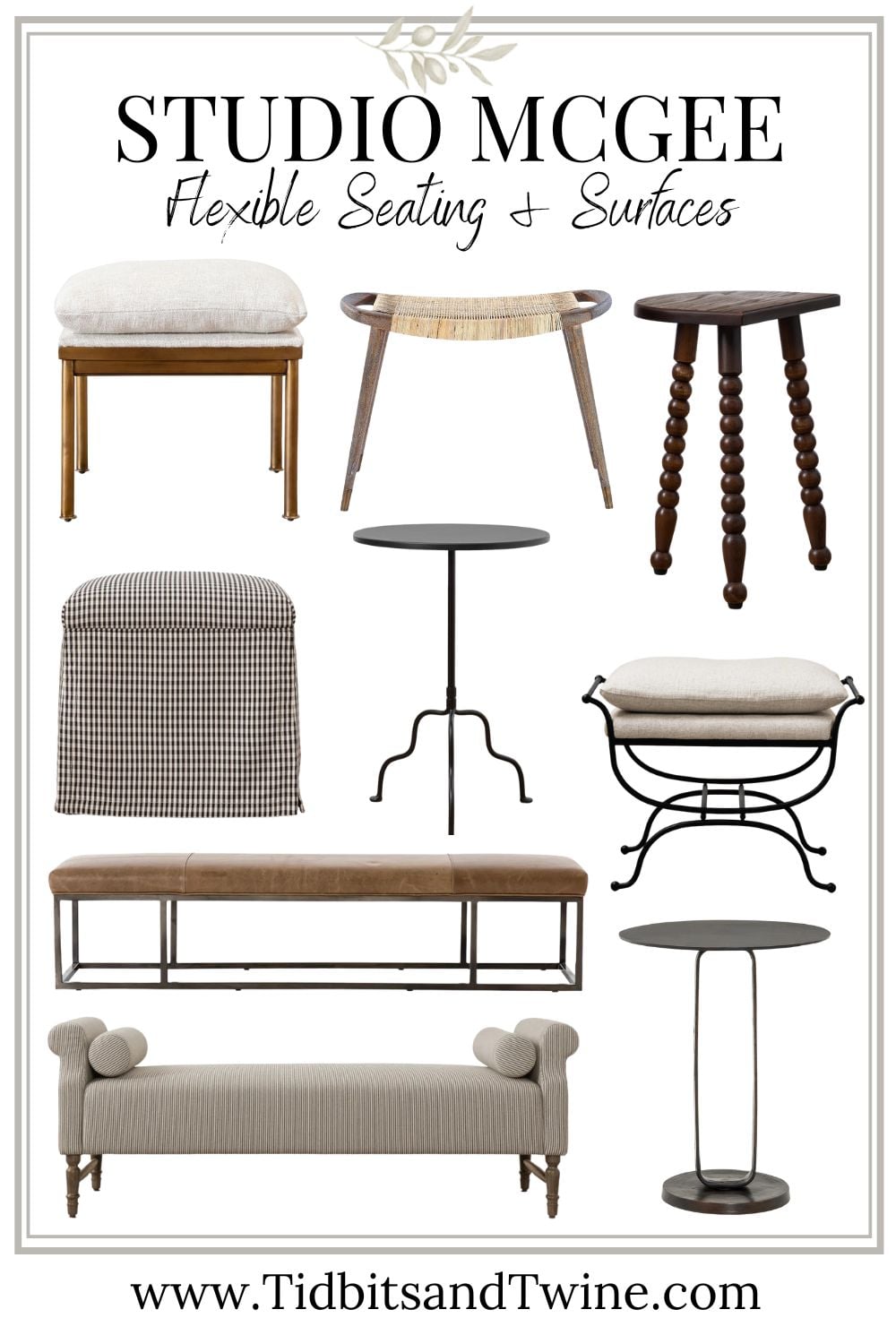
You might have noticed that I used Studio McGee pieces for the images in this post. I chose their rooms because they do a really good job with this category of furniture. Their pieces tend to work across a lot of different decorating styles, which makes it easier to see how these kinds of hardworking pieces could fit into your own living room.
I’ve rounded up some of my favorite picks from the Studio McGee line and linked them below

Most of the time, the furniture that lasts isn’t the stuff you planned perfectly from the beginning. It’s the pieces you add once you’ve lived in the room for a while and figured out what you actually need.
Those are the pieces that stick around. They get used. They move when they need to. They make the room easier to live in without you having to think about them too much. And once they’re there, it’s hard to imagine the living room without them.

DECORATING MADE EASY
Get my free 5-day decorating course and learn how to define your style, make better decisions, and create a home that feels like you.
After the course, you’ll receive my latest decorating tips, antique finds, and new posts.