


I’ve mentioned before that when we bought our home, an open floor plan was high on my list. At the time, my son was just a baby and I worked from home. I loved the idea of being able to keep an eye on him no matter where he wandered in the house. Open floor plan for the win!
Fast forward to the teen years and let’s just say the kids weren’t quite as thrilled with that setup. Apparently, teenagers don’t like feeling spied on.
But another issue kept coming up again and again over the years: how do you decorate an open floor plan and still make each space feel like its own room?
Without walls, furniture tends to float. The living room blends into the dining room and into the kitchen and, if you’re not careful, you suddenly have one giant room.
After a lot of trial and error over the years, I’ve finally figured out the tricks that actually work.
If you’re trying to decorate an open floor plan and make each area feel distinct (even without interior walls), these are the strategies that make the biggest difference.
Why Open Floor Plans Are Harder to Decorate
In traditional homes, walls naturally divide the space. The living room feels separate from the dining room, which feels separate from the kitchen. Even without much effort, each room has a clear purpose.
Open floor plans remove those boundaries.
Instead, you’re working with one large space that has to act like several rooms at once. Without a little structure, furniture can start to feel like it’s floating and the different areas blur together.
That’s why decorating an open floor plan isn’t really about filling the space. It’s about creating subtle ways to separate each area so it feels organized and distinct.
Once you start thinking about the space this way, the decorating decisions become much easier.
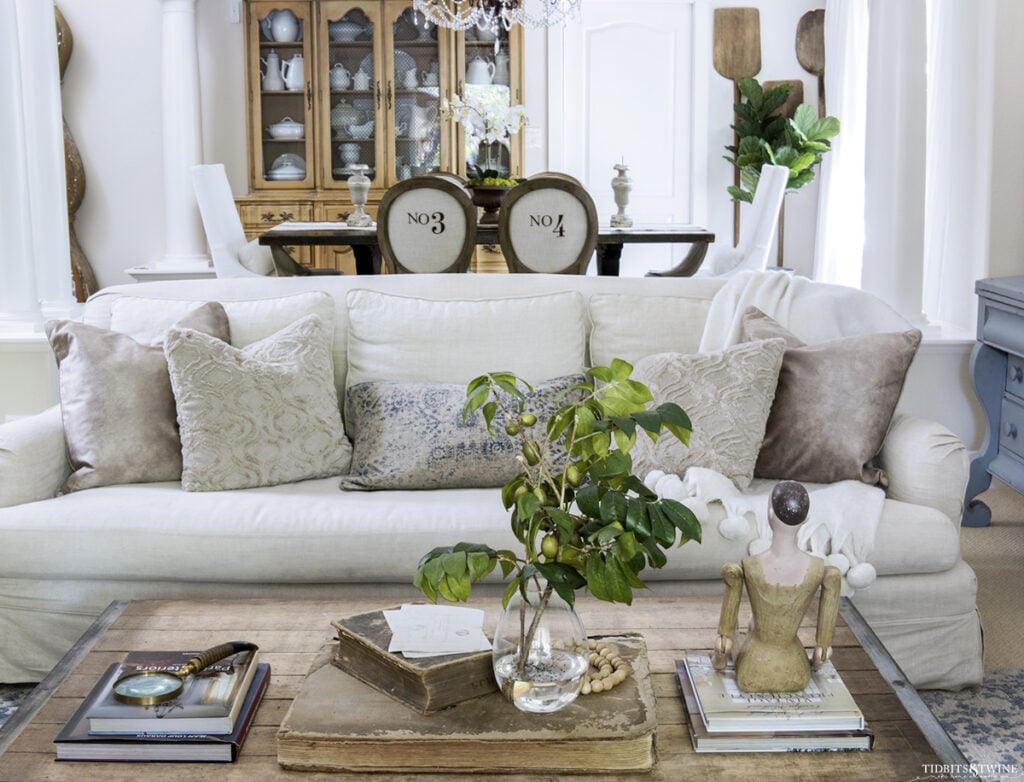
How to Define Spaces in an Open Floor Plan
After a lot of experimenting, I realized a few simple things make a huge difference. When you use them together, each part of the room starts to feel more defined. Here are the ones that work best.
1. Create Clear Zones Within the Space
Before choosing rugs, furniture, or decor, it helps to step back and think about how the space actually needs to function.
Most open floor plans include several different living areas within the same room. For example, you might have a living room, a dining space, and the kitchen all sharing one large footprint.
The key is to treat each of these areas like its own room.
That doesn’t mean adding walls. It simply means arranging furniture and decor so it’s clear where one space ends and another begins.
For example:
• the living room seating should feel grouped together
• the dining table should have its own defined area
• the kitchen should feel like its own workspace
Once those zones are established, everything else, from rugs to lighting to furniture placement, starts to fall into place.
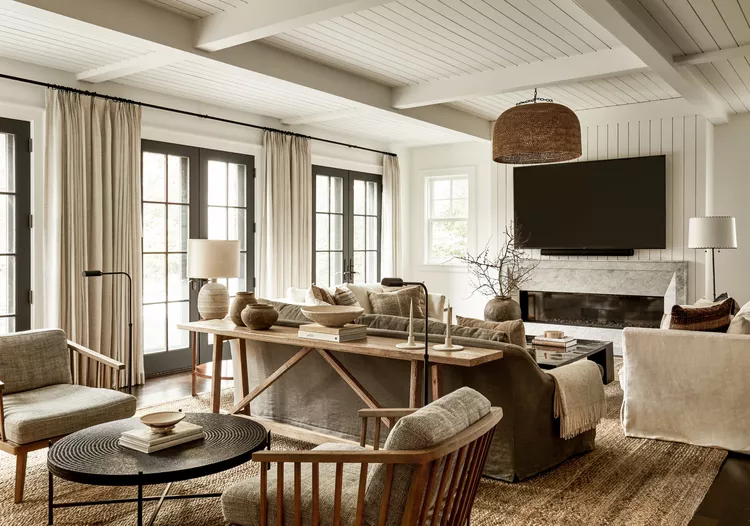
2. Use Rugs to Define Each Area
Rugs are one of the easiest ways to define spaces in an open floor plan.
A rug instantly helps show where one area begins and another ends. In an open layout, that visual boundary makes a big difference.
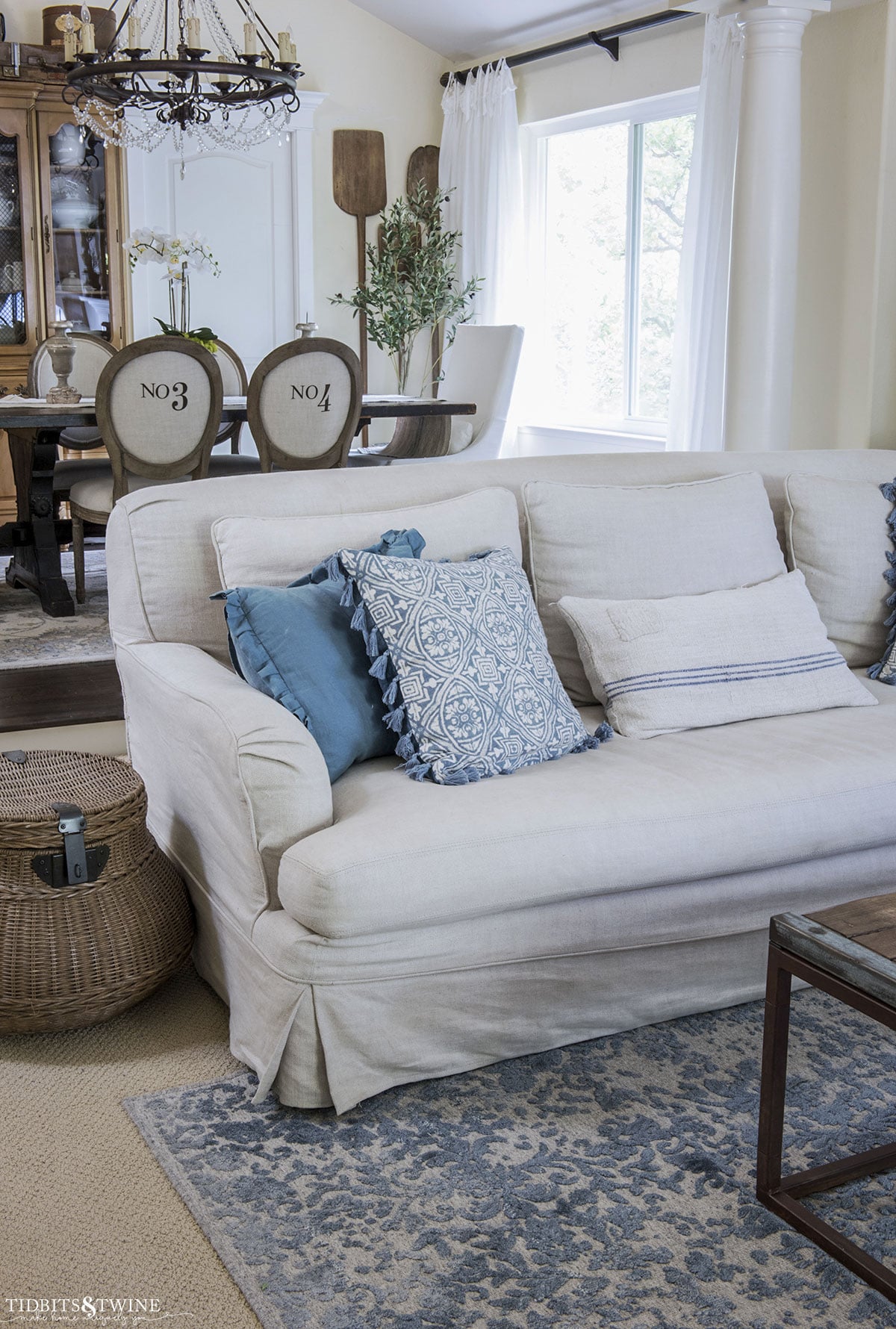
For example, a large rug can anchor the living room seating area, while a separate rug defines the dining space. Even though the rooms are connected, the rugs help each area feel separate.
Without a rug, furniture in an open space can easily feel like it’s floating in the middle of the room.
Rugs also help soften sound, which can make a big difference in an open floor plan. With fewer walls to absorb noise, large open spaces can sometimes feel a little echoey. Adding rugs helps absorb some of that sound and makes the room feel quieter and more comfortable.

Decorating Tip: Rug size matters. If you’re unsure what size works best, I share simple diagrams and guidelines in my guide to choosing the right rug size.
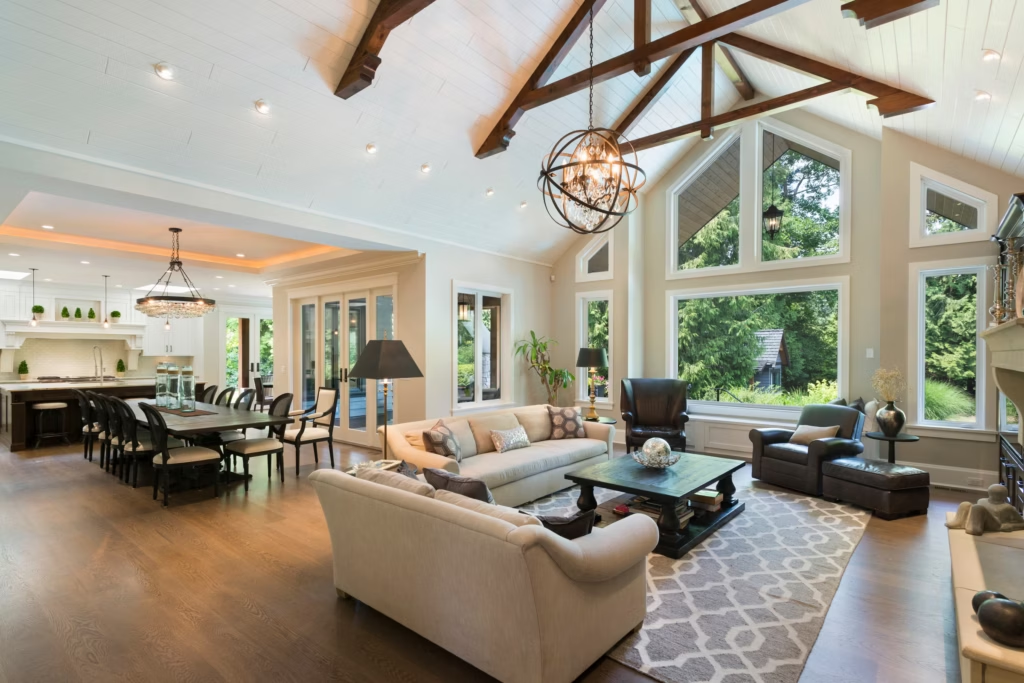
3. Use Furniture to Separate Spaces
In an open floor plan, furniture often ends up doing the job that walls normally would.
Instead of pushing everything against the perimeter of the room, use furniture to help define the different areas.
For example:
• a sofa can act as a natural divider between the living room and dining space
• a console table behind the sofa strengthens that separation
• a sideboard anchors the dining area
• a pair of chairs can create a conversation zone within the living room
Arranging furniture this way helps each part of the open floor plan feel intentional.
Even though the space is still open, the layout naturally signals where one area ends and another begins.
[houzz=https://www.houzz.com/photos/modern-montecito-danville-ca-transitional-living-room-san-francisco-phvw-vp~204127655]
4. Repeat Colors and Materials Throughout the Space
Even though each area of an open floor plan should feel defined, the whole space still needs to feel connected.
One of the easiest ways to do that is by repeating a few colors or materials throughout the room.
For example:
• repeat similar wood tones in different furniture pieces
• use the same metal finishes in lighting and decor
• carry a few accent colors from the living room into the dining area
These small repetitions help the different spaces relate to each other so the room feels cohesive rather than like several unrelated areas pushed together. If you’re trying to create a home that flows well from room to room, this idea of decorating with cohesion makes a big difference.
You don’t have to match everything exactly. Just repeating a few elements across the space helps the entire open floor plan feel more unified.
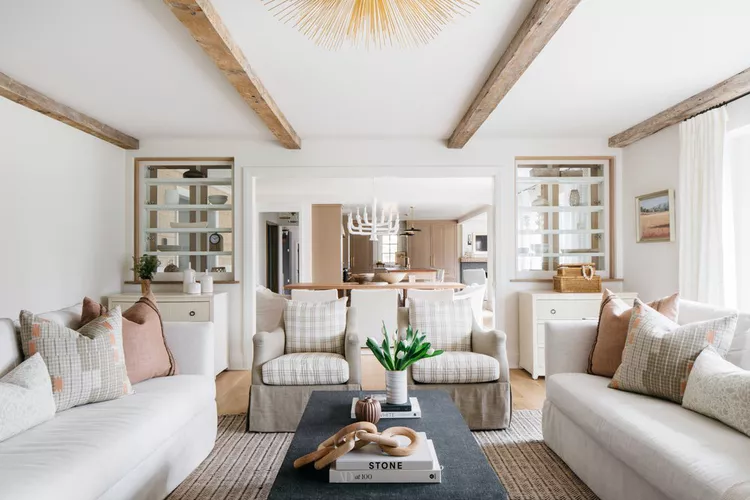
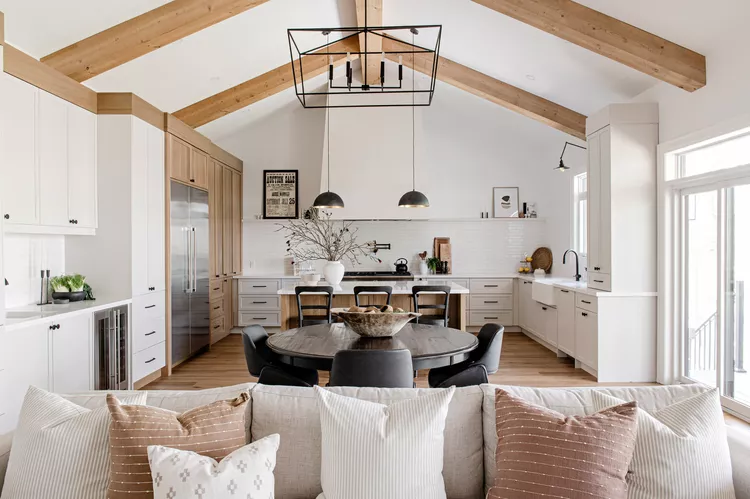
5. Use Art, Lamps, and Plants to Finish Each Zone
Once your zones are established, each area still needs a few elements that help it feel complete.
This is where artwork, lamps, and plants come in.
These pieces visually anchor each section of the room so it doesn’t feel like furniture is just sitting in an empty space.
For example:
• artwork above a console reinforces the boundary of a living area
• a floor lamp beside a chair creates a cozy reading corner
In an open floor plan, these vertical elements help finish each zone so it feels intentional and defined.
6. Keep Walkways Clear for Better Flow
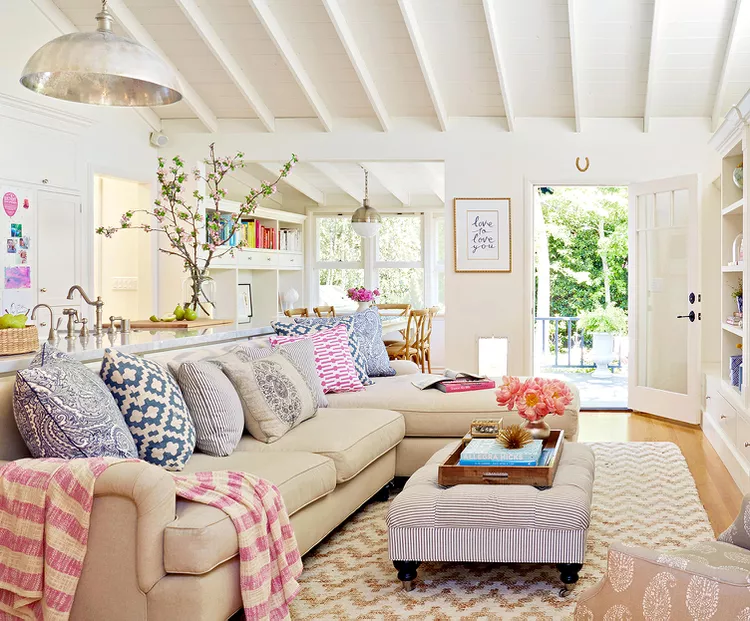
Open floor plans often serve as the main traffic path through the home, which means people are constantly moving between spaces.
Because of that, it’s important to keep clear walkways between zones.
For example:
• leave space to walk between the living room and dining area
• allow room to move around the dining table
• keep a path open between the kitchen and living space
When furniture blocks those natural pathways, the room can start to feel cramped or awkward, even if the space itself is large.
Leaving a little breathing room between furniture pieces helps maintain easy movement through the room, which makes the entire space feel more comfortable and functional.
7. Use Lighting to Reinforce Each Zone
Lighting can also help define the different areas within an open floor plan.
Instead of relying on one central light source, try using different types of lighting for each zone.
For example:
• a chandelier or pendant light anchors the dining table
• table lamps or floor lamps define the living room seating area
• pendant lights over a kitchen island signal the cooking zone
Even though everything is part of one large room, lighting helps visually separate each space and gives each area its own sense of purpose.
Common Mistakes When Decorating an Open Floor Plan
Even when you understand the basics, a few common decorating mistakes can make an open floor plan feel awkward.
Because everything is visible at once, small layout issues tend to stand out more than they would in a traditional room with walls.
Using Rugs That Are Too Small
When a rug doesn’t properly anchor the furniture around it, the seating area can feel disconnected and unfinished.
In a living space, at least the front legs of the sofa and chairs should sit on the rug so the furniture feels grouped together. You can find of the rug sizing guidelines HERE.
Solution: Choose a rug large enough to anchor the seating area so the furniture feels visually connected.
Pushing All the Furniture Against the Walls
In an open layout, pushing furniture against the perimeter often leaves the middle of the room feeling empty.
Designers sometimes call this the “bowling alley effect.” Everything lines the walls while the center of the room becomes one long open lane.
Solution: Float furniture slightly away from the walls so pieces like sofas and chairs help define each zone.
Mixing Too Many Styles or Colors
Because an open floor plan is one continuous view, too many unrelated styles or color schemes can make the space feel chaotic.
Solution: Repeat a few colors, materials, or finishes throughout the space to help the different areas feel connected.
Blocking Natural Walkways
Pay attention to the paths people naturally take through the room.
When furniture interrupts those walkways, even a large space can start to feel cramped or awkward to move through.
Solution: Leave clear pathways between zones so people can move comfortably through the space.
Changing Flooring Between Areas
In an open floor plan, switching flooring between spaces can break up the visual flow of the room.
Because everything is visible at once, different flooring materials can make the space feel choppy instead of connected.
Solution: Keep flooring consistent throughout the space and use rugs to define each area instead.
Pro Tip: When Your Open Floor Plan Doesn’t Have Enough Wall Space
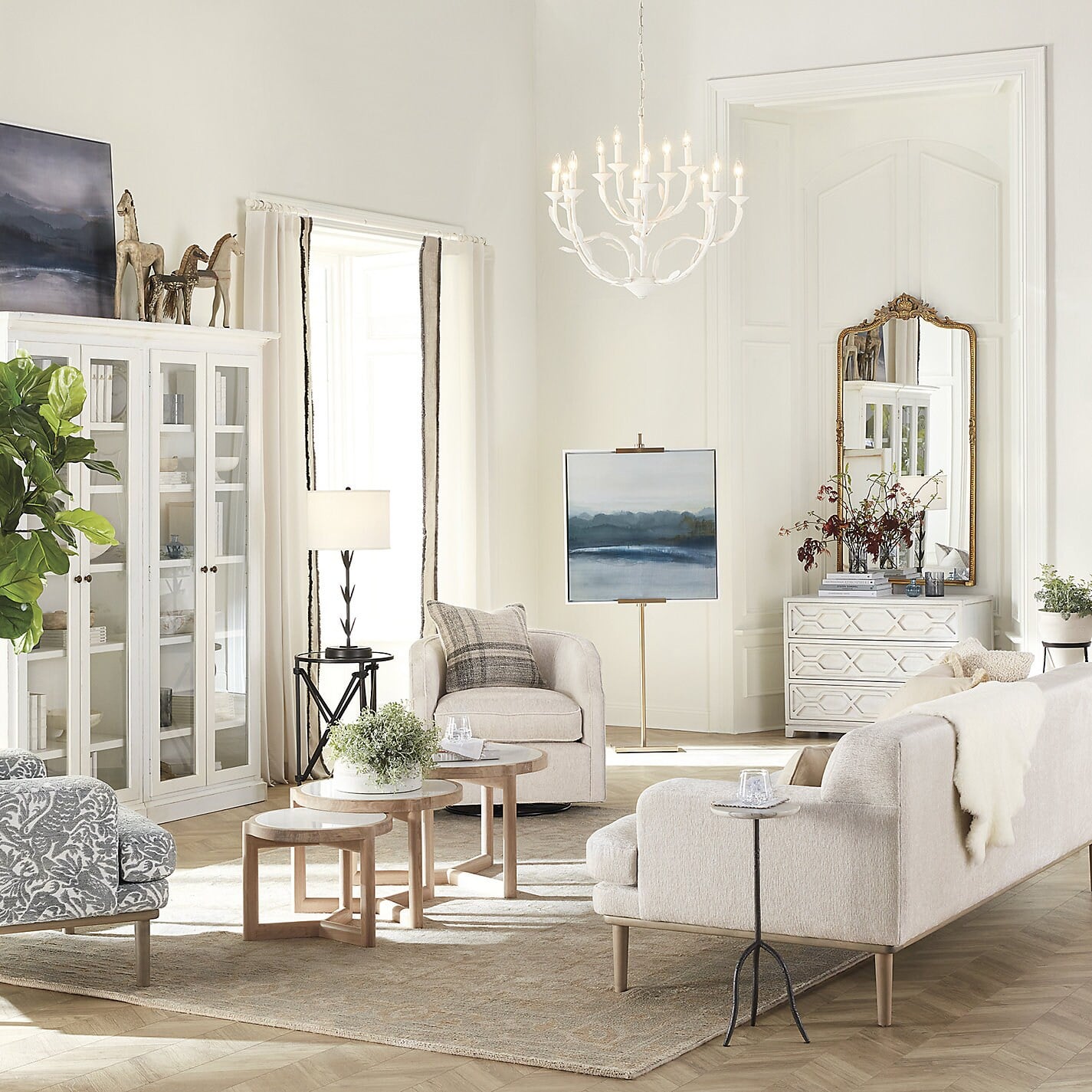
One challenge I’ve run into with our open floor plan is that there are very few interior walls. Most of our walls are exterior, which means there’s actually less wall space than you might expect for hanging art or mirrors.
One solution that works surprisingly well is using a tall decorative easel to display artwork. It lets you showcase art without needing wall space and adds a little height and interest to the room at the same time.
It also made me realize how valuable spaces like hallways and stairway walls can be. In an open floor plan, those areas often become the best places to create gallery walls or display larger pieces of art.
Final Thoughts on How to Decorate an Open Floor Plan
Decorating an open floor plan can feel tricky at first because you’re essentially designing several rooms within one large space.
The key is focusing on definition.
When each area has its own rug, furniture grouping, lighting, and a few finishing touches, the space naturally begins to organize itself.
Once you start thinking about your open floor plan this way, it becomes much easier to decorate a space that feels comfortable, cohesive, and truly finished.
More Decorating Ideas

DECORATING MADE EASY
Get my free 5-day decorating course and learn how to define your style, make better decisions, and create a home that feels like you.
After the course, you’ll receive my latest decorating tips, antique finds, and new posts.