

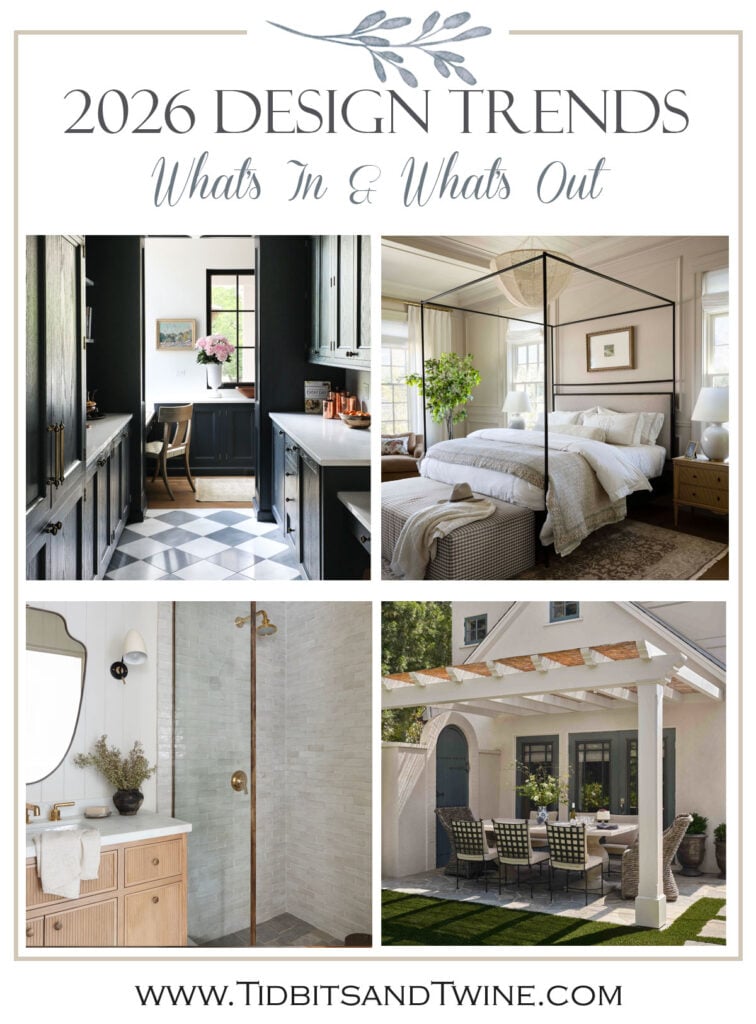
Every year, I like to look at the expert predictions for upcoming decorating trends. After all, why not? It’s fun to see what’s new and “in” and what will be showing up in stores and showrooms throughout the year.
But not everything that’s trending is worth paying attention to. I always filter things through one simple question: Will this still look good years from now? The trends I share tend to lean more timeless than trendy so that you can minimize buyer regret and your home looks “current” for years to come.
And honestly, a lot of what’s showing up for 2026 isn’t brand new. Many ideas that picked up steam in 2023, 2024, and 2025 are still going strong — they’re just settling in and evolving. That’s a good thing. It means design isn’t constantly chasing the next shiny object.
So today, we’ll look at what’s still trending from recent years, what I think is actually worth paying attention to in 2026, and what’s starting to feel a little tired.
Here’s my take on the interior design trends for 2026. Use the Table of Contents below to jump to whatever catches your eye.
Wondering what your style is? Take my design quiz and find out!
Still Trending from 2025 and earlier
First, let’s look at a few things I mentioned in last year’s post that continue to show up as part of 2026 decorating trends. They’re not new for this year but have changed and evolved a bit.
Color drenching
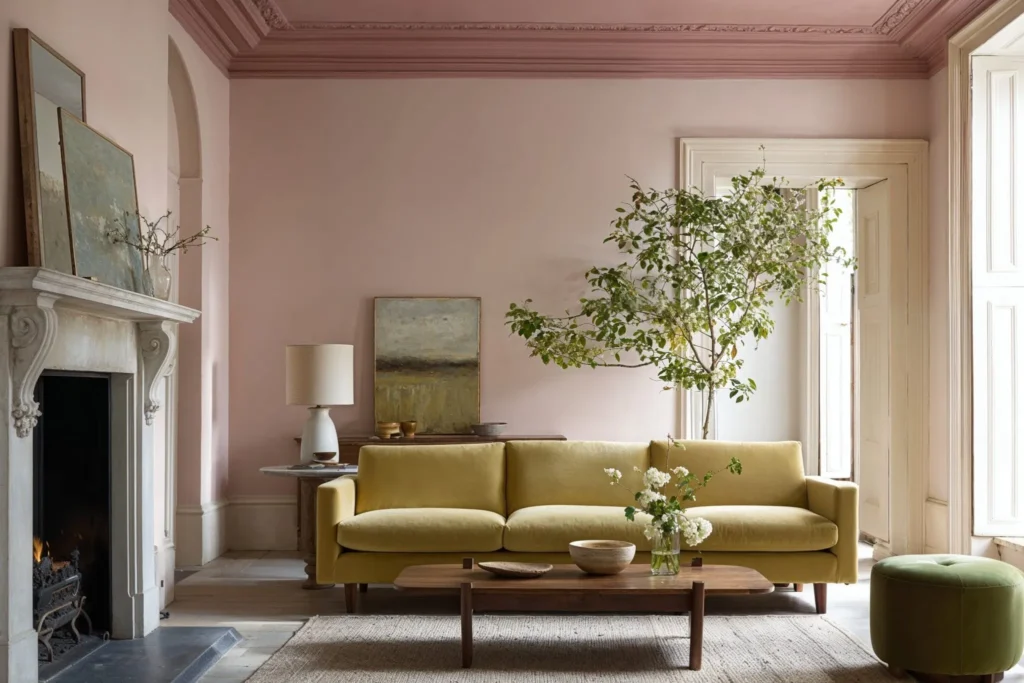
Still trending, but it’s evolved for 2026. Instead of fully saturating an entire room, color drenching is showing up in more restrained, architectural ways.
For 2026, this often looks like color capping, which involves using two shades of the same color — typically one on the walls and a slightly different (often deeper or softer) version on the ceiling — to add depth.
This approach keeps the spirit of color drenching but feels easier to live with long term. It adds interest and definition while allowing the rest of the room to stay lighter and more flexible.
Pattern drenching
This is sticking around, especially in smaller spaces like powder rooms and bedrooms. The versions that feel most current lean toward heritage patterns and softer repetition rather than anything over-the-top.
Curved furniture
Curves are no longer a statement trend — they’re just part of the furniture mix. Softer silhouettes and gentle curves continue to feel comfortable and inviting, but in a more subtle, livable way.
Warm neutrals replacing gray
The shift away from cool gray is firmly established. Warm whites, stone, mushroom, taupe, and soft beige tones remain the go-to foundation for most interiors.
Maximalism (the quieter version)
Maximalism hasn’t disappeared, but it’s matured. Instead of filling every surface, the focus is on collected layers, meaningful pieces, and spaces that feel personal rather than styled all at once.
2026 Decorating Trends
Trends don’t disappear overnight. Many of the ideas we saw in 2025 — and even earlier — are still influencing how we decorate today.
When it comes to 2026 decorating trends, the common thread is a continued move toward warmth, comfort, and homes that feel personal, not overly styled.
This year’s list includes trends that are still going strong, along with a handful of newer directions designers are talking about right now. Some of these feel like they’ll be timeless, others are just fun to know about. I’ll call that out as we go so you can decide what actually works for your home.
From rich, earthy color palettes and lived-in, comfortable interiors to natural materials, nostalgic details, and outdoor spaces that function like real rooms, these trends all lean toward creating homes that feel welcoming and easy to live in. And in the What’s Out in 2026 section, I’ll share which looks are starting to lose momentum as tastes continue to shift.
Whether you’re planning a full refresh or just curious about what’s shaping interiors right now, these are the 2026 decorating trends I think are worth paying attention to.
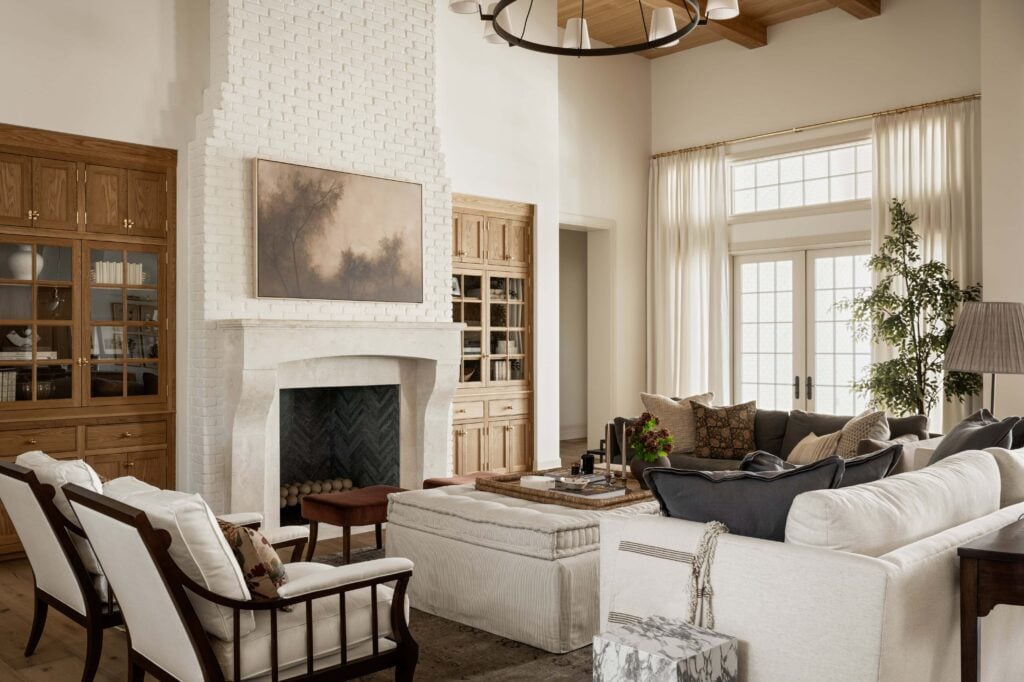
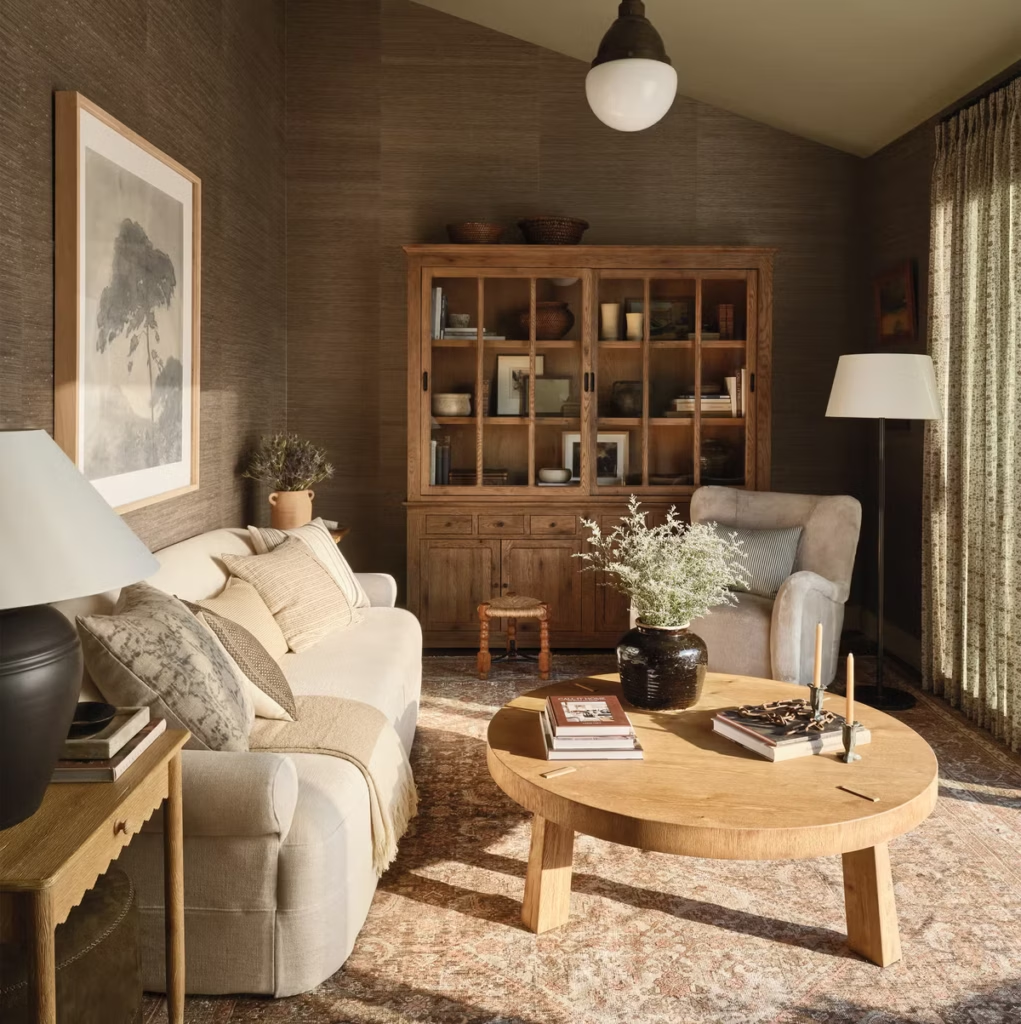
Warm earthy and rich color palettes
Earth tones are still very much in for 2026, but the flat, one-note versions are fading. What’s taking their place are warmer, richer palettes with depth — colors that feel grounded but not boring. Think clay, rust, olive, moss, espresso, camel, and deep browns layered together rather than beige-on-beige rooms that fall flat.
One of the biggest shifts within this trend is the return of natural and raw wood cabinetry, especially in kitchens. Lighter, natural finishes and warmer woods are replacing stark painted cabinets, bringing warmth and texture back into spaces that had started to feel a little too polished. These palettes pair beautifully with warm metals, stone, and plaster finishes and feel easy to live with long-term.
The common thread here isn’t color for color’s sake — it’s warmth. These hues create rooms that feel cozy, welcoming, and timeless rather than trendy, which is why I think this direction has real staying power.
Warm Yellow Accents
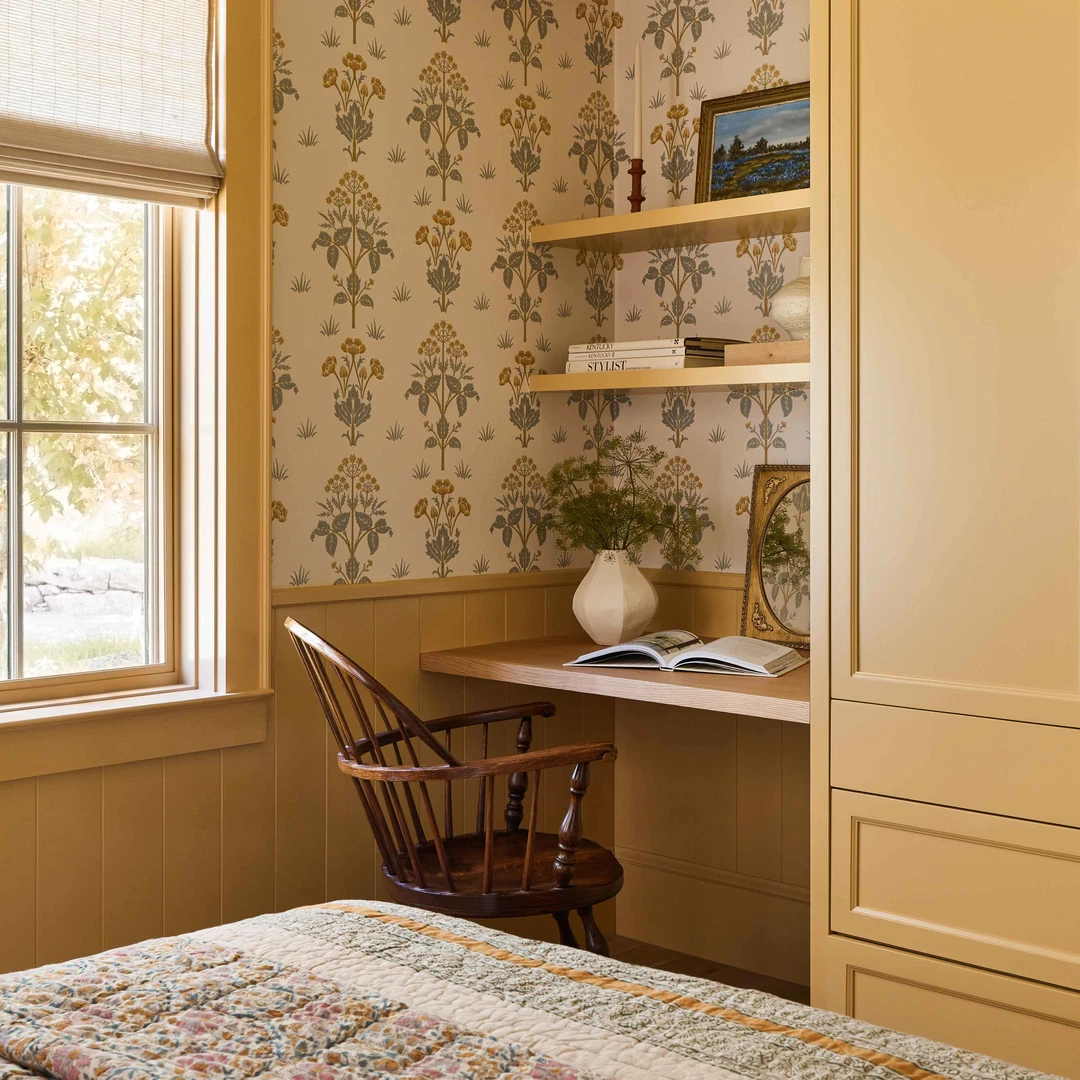
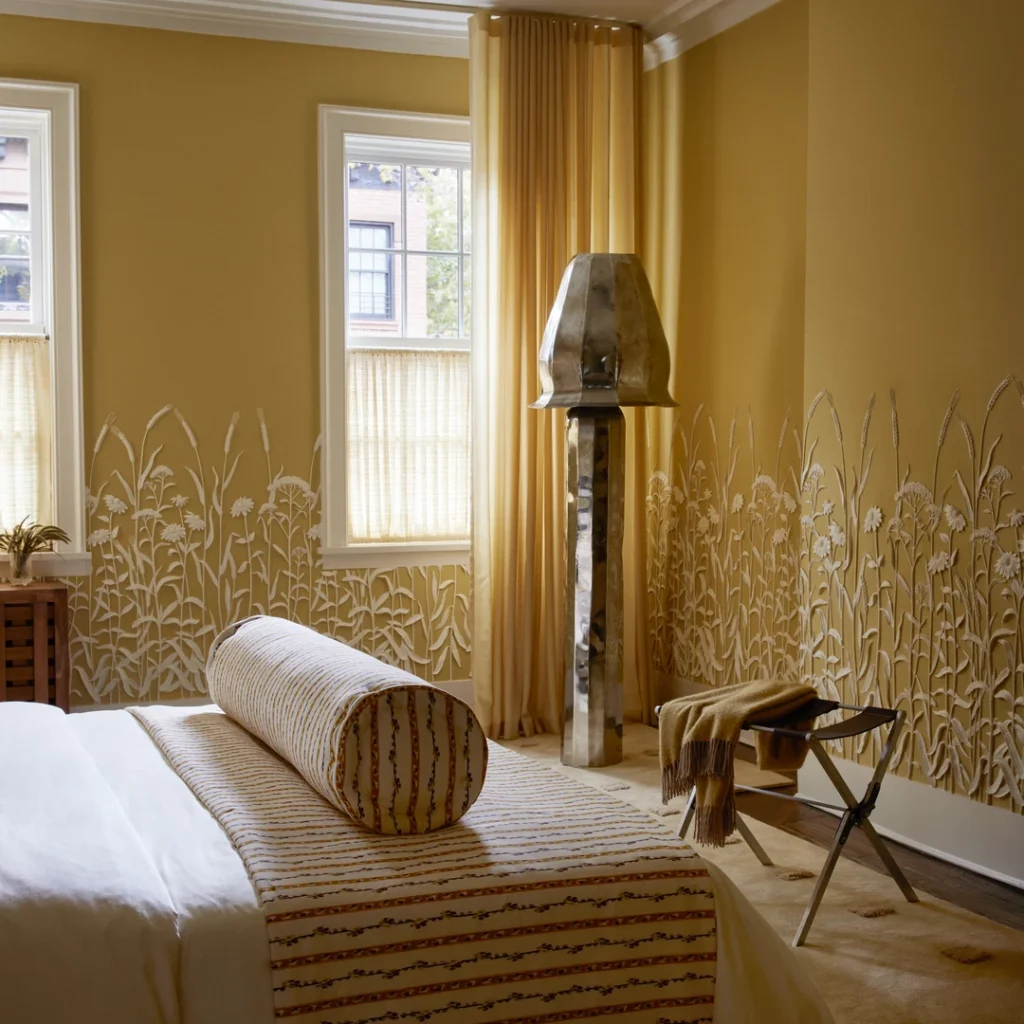
Yellow is making a quiet comeback for 2026, but not in the way you might be picturing. This isn’t bright, primary yellow or anything that feels loud. The versions that feel current are warm, earthy yellows — buttery tones, soft ochre, muted gold, and wheat-like hues that add warmth without taking over a room.
If yellow gives you early-2000s Tuscan flashbacks, you’re not wrong. Back then, it was often used heavily and paired with dark woods and themed finishes, which made it feel overpowering. The 2026 version is much more restrained. Yellow shows up as an accent rather than a main event — in textiles, artwork, lampshades, ceramics, or even a soft paint color used sparingly.
It also helps that many of the 2026 Color of the Year picks lean creamy and warm rather than crisp or cool. That shift toward softer whites makes room for gentle yellow accents to feel natural instead of jarring. When your base is warm, a touch of yellow feels layered and intentional — not like a throwback.
All that said, this is a trend where the shade really matters. Softer, warm yellows tend to feel more livable and age better over time. Brighter, sunshine-yellow versions are much more of-the-moment and less likely to stand the test of time, especially if you commit to them in a big way.
Lived-in Comfortable Interiors
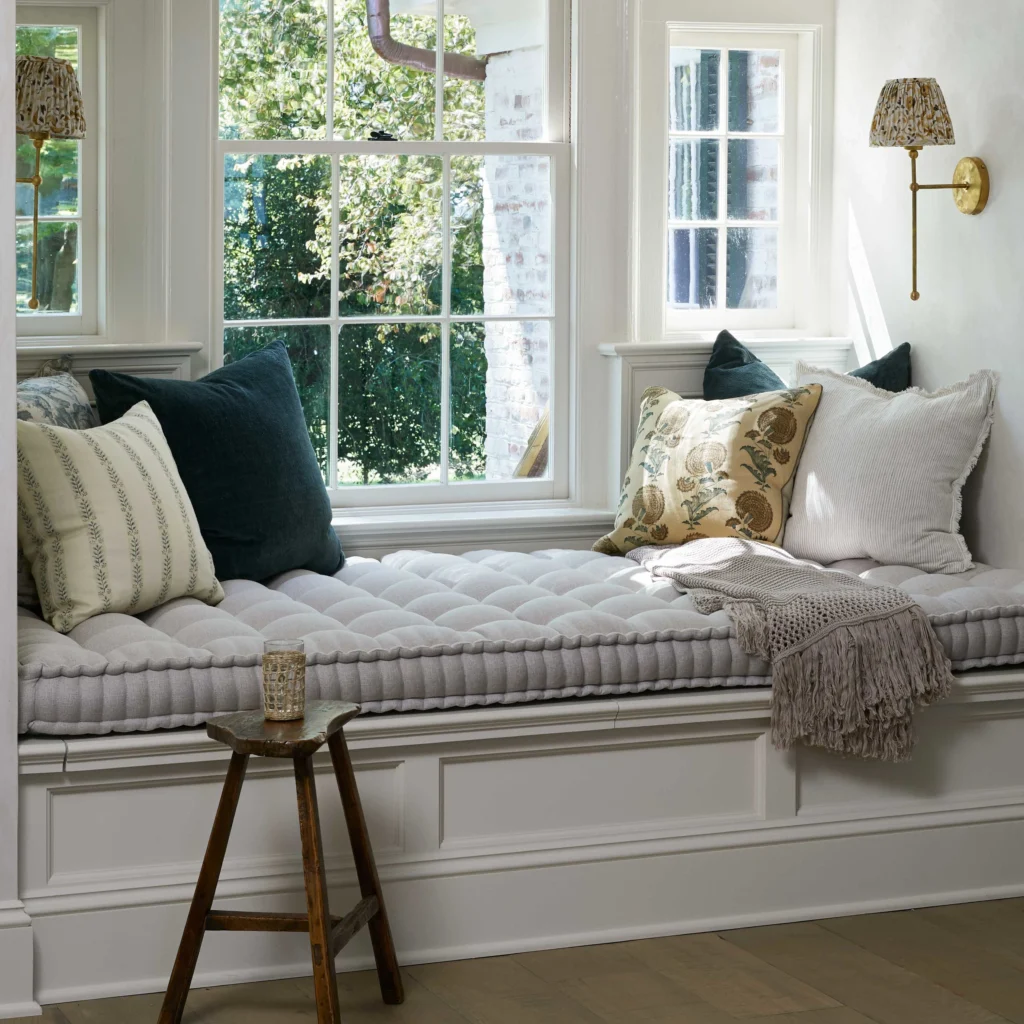
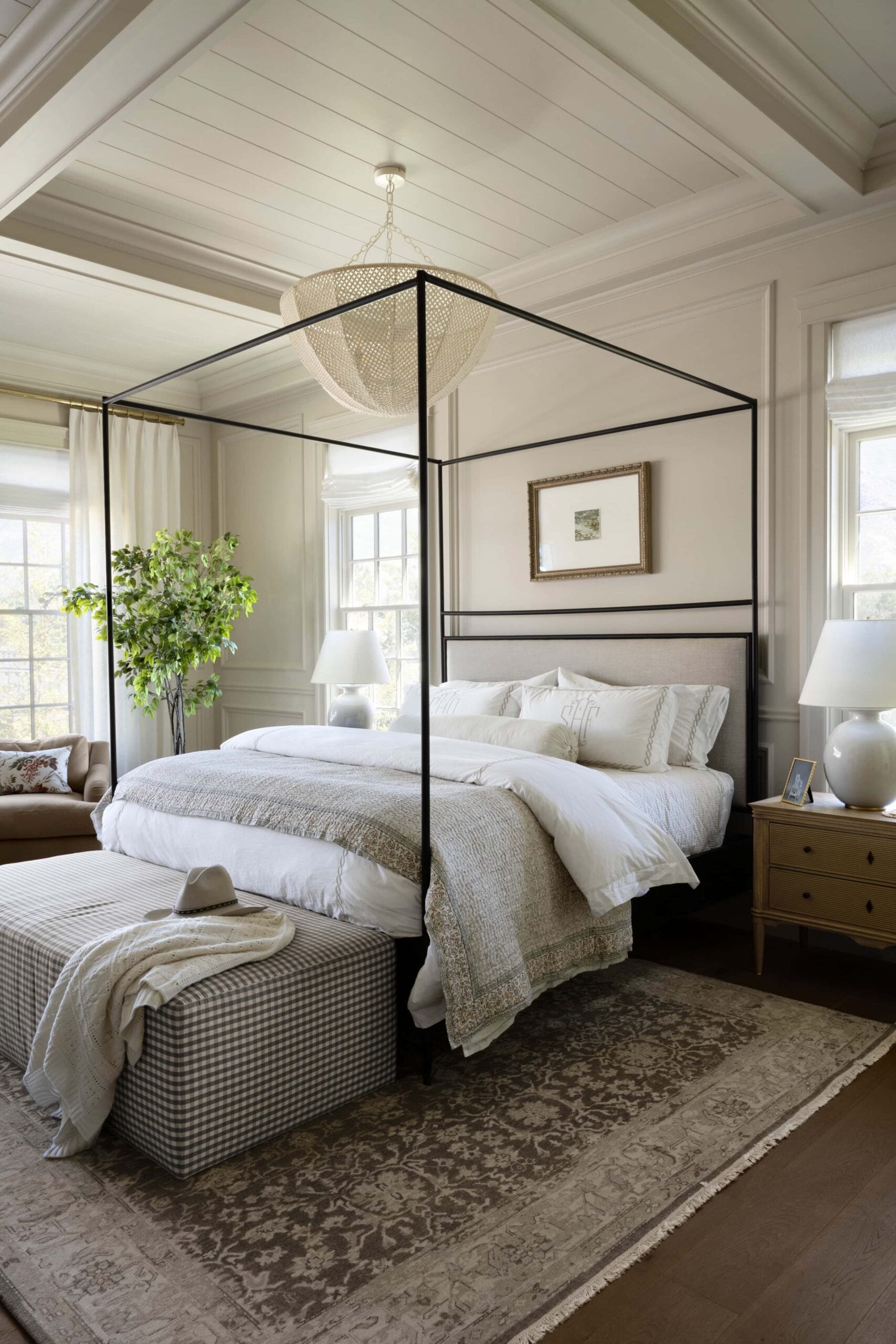
One of the biggest shifts in 2026 decorating trends is the move away from spaces that look perfect on day one. Homes are starting to feel more relaxed and personal — less styled, more lived in. Comfort is taking priority over polish, and that shows up in everything from furniture choices to how rooms are layered.
Sofas are deeper, fabrics feel softer, and rooms are designed around how people actually use them. Pieces don’t need to match or feel brand new to belong. In fact, a little wear, patina, or imperfection often makes a space feel better, not worse (this is good news for antique-lovers like me!).
This trend also shows up in how rooms are styled. Instead of perfectly arranged vignettes, there’s more flexibility and ease. Books look read, chairs look sat in, and rooms feel like they’ve been put together over time rather than all at once. The result is a home that feels welcoming and comfortable — not like you’re afraid to touch anything.
In spaces where warmth and comfort are the priority, you’ll also see hints of what’s being called modern cottage — pared-down palettes, well-worn wood, soft textiles, and relaxed proportions. It feels cozy and familiar, but still clean and current, and it shows how these comfort-driven trends are actually being lived out in real homes.
Natural Materials and Craftsmanship
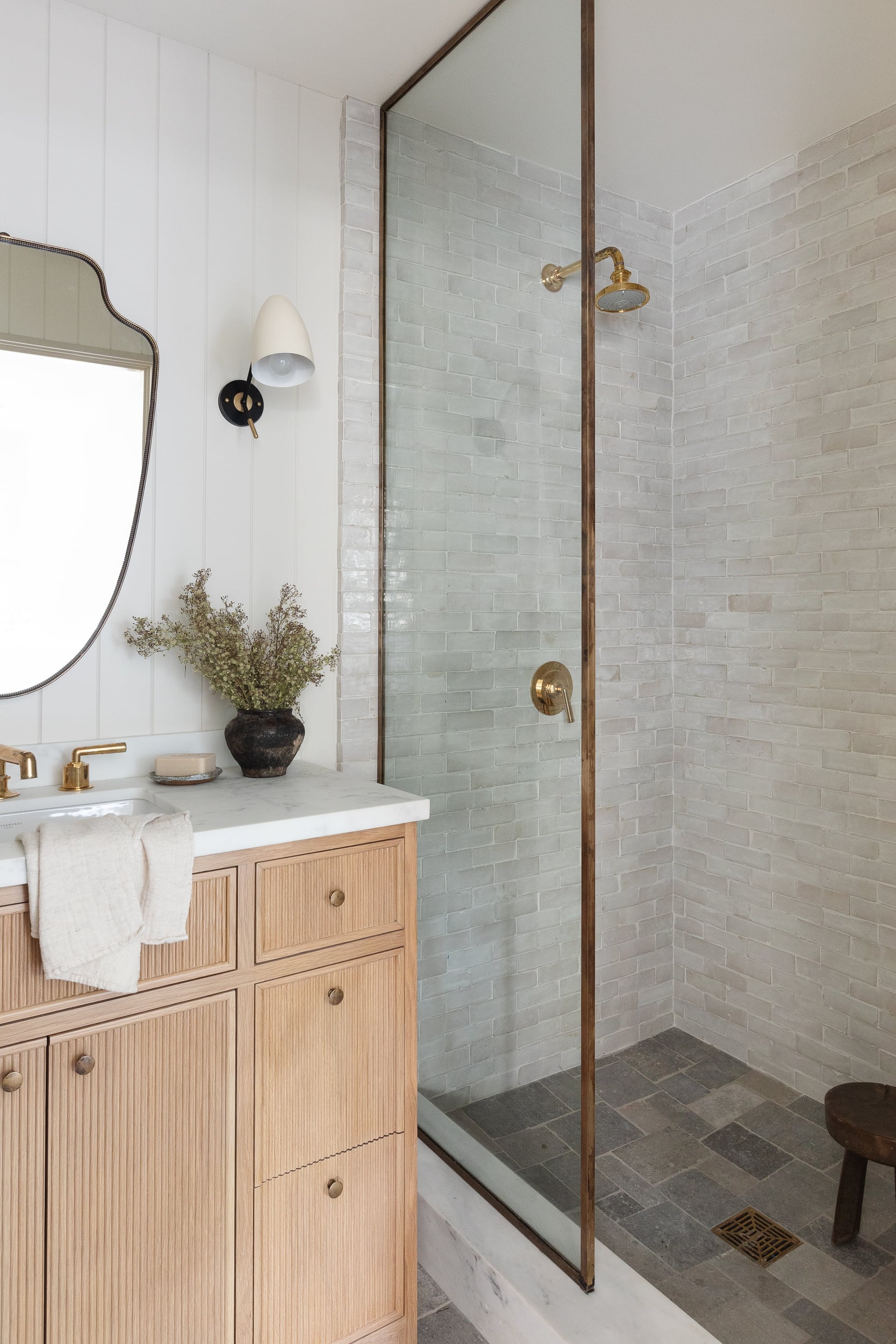
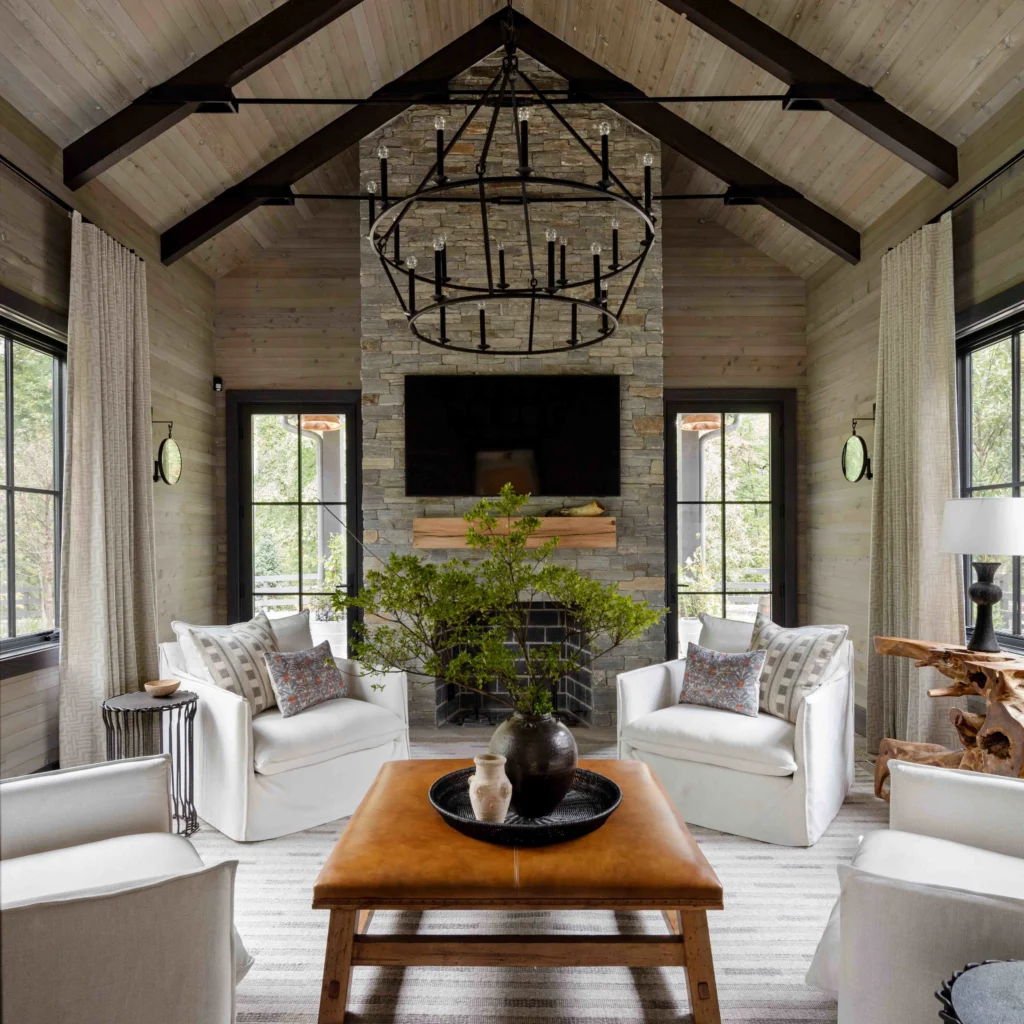
Natural materials continue to be a big part of 2026 decorating trends, but the focus is shifting more toward craftsmanship and authenticity rather than just checking a box. It’s less about having something that looks “organic” and more about choosing materials that actually feel real, substantial, and well made.
Wood, stone, linen, wool, clay, and ceramic surfaces are showing up in more natural, unpolished ways with visible grain, texture, and variation. Hand-thrown pottery, woven textiles, and pieces that show subtle imperfections are part of what makes a space feel grounded and warm. Perfection isn’t the goal here. Character is.
This also ties into a broader move away from mass-produced decor. Fewer pieces, chosen more carefully, often have more impact than filling a room with things that all look the same.
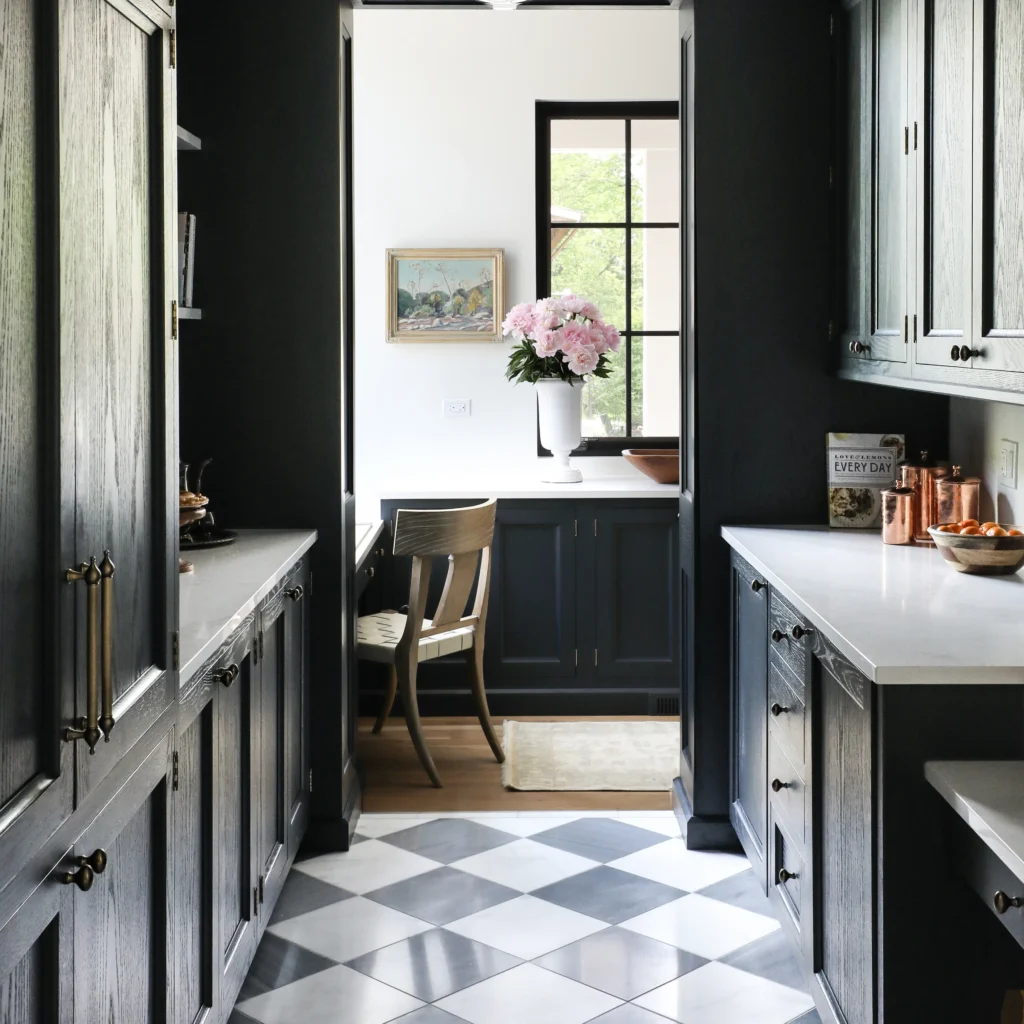
Nostalgic and historic materials
Alongside the push for natural materials, there’s a growing appreciation for things that feel rooted in history. In 2026 decorating trends, materials with a sense of age or heritage are showing up more often, not in a themed way, but as subtle layers that add depth and character.
This can look like classic tile patterns, aged stone, unlacquered metals, traditional wood finishes, or architectural details that reference older homes. Even when pieces are new, they’re often inspired by historic forms or finishes that feel familiar and comforting rather than ultra-modern.
What makes this trend work is restraint. It’s not about recreating a specific era or style, but about mixing old and new so spaces feel collected over time. When historic materials are used thoughtfully, they ground a room and keep it from feeling too trendy or tied to a single moment.
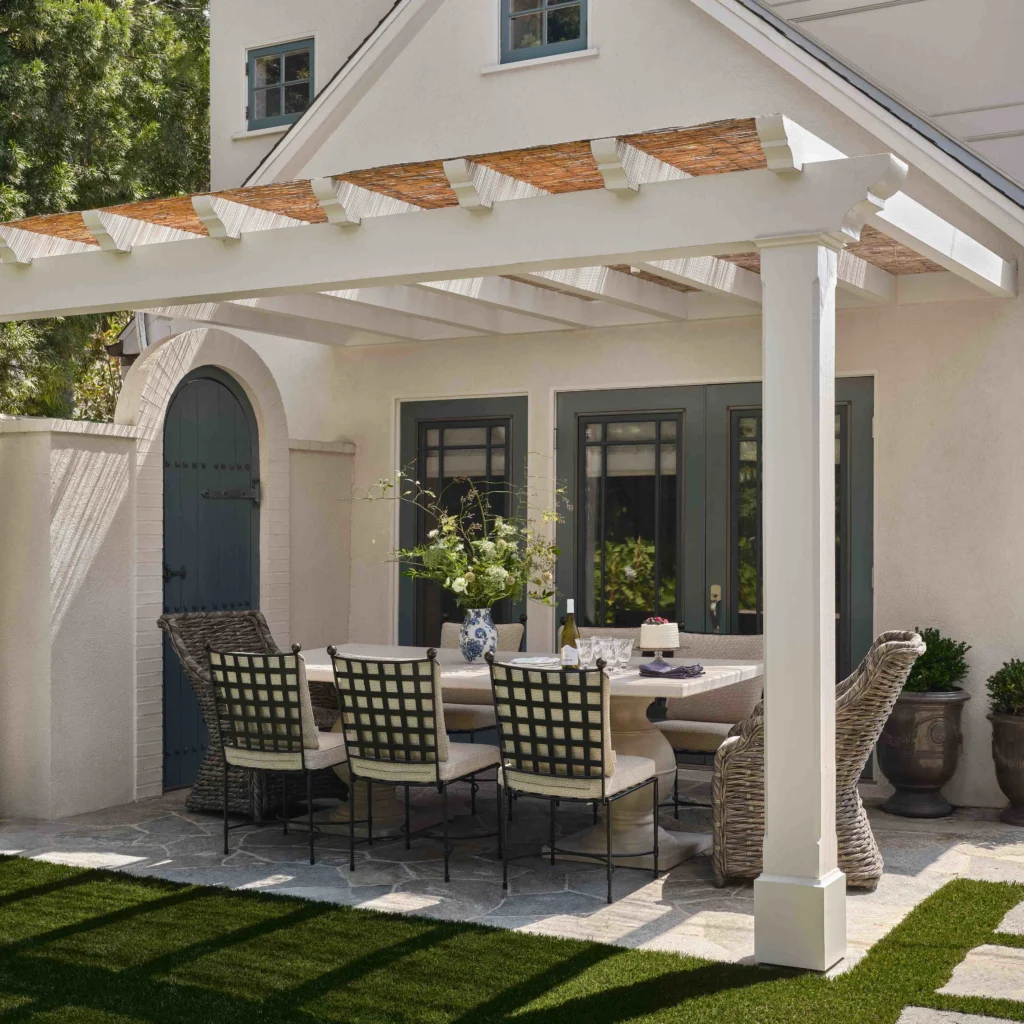
Outdoor living as rooms
Outdoor spaces are being treated much more like extensions of the home in 2026 decorating trends. Instead of feeling like an afterthought, patios, porches, and backyards are being designed as real rooms — places you actually want to spend time, not just pass through.
This shows up in more comfortable seating, layered lighting, rugs, and furniture that feels closer to what you’d use indoors. The goal isn’t to create a perfectly styled outdoor “moment,” but to make these spaces feel welcoming and functional for everyday use.
This is something we’ve done in our own home, and it’s still one of my favorite projects we’ve ever completed. We turned our covered deck into a true extension of the house (part living room and part dining room) instead of treating it like a separate outdoor space. Once it was furnished and styled the same way we’d approach an indoor room, it completely changed how we used it.
Warm metals taking over (bronze over brass)
Brass isn’t gone, but it’s no longer the default. In 2026 decorating trends, warmer, deeper metals are getting more attention — especially bronze, antiqued finishes, and softer, aged-looking metals that feel a little quieter and more timeless.
These finishes have more depth than shiny brass and tend to blend in rather than stand out. They work especially well with earthy color palettes, natural wood, stone, and historic materials, which is why they’re showing up more often across lighting, hardware, and furniture accents.
Bronze and other warm metals don’t stand out the way shiny brass does. They just make a room feel warmer and more grounded, which is why they tend to hold up over time.
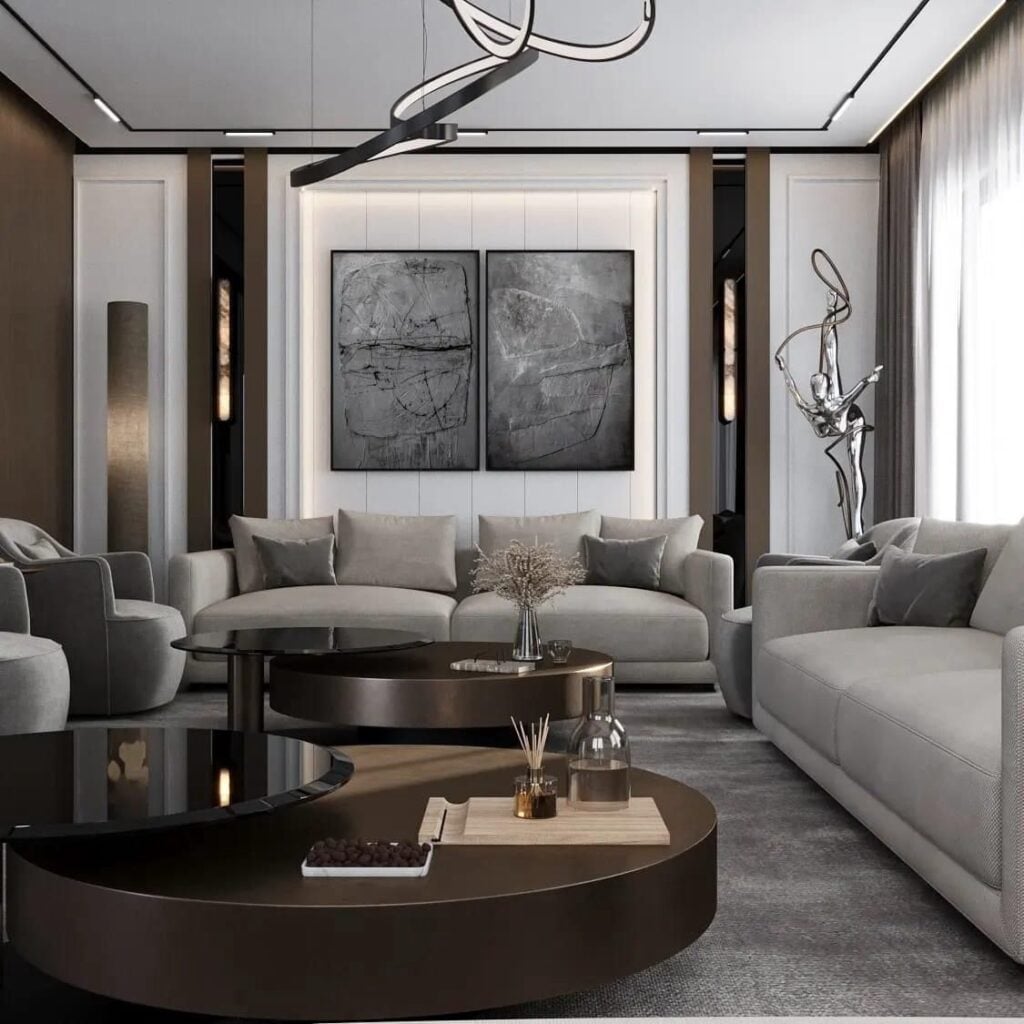
What’s Out in 2026
These are trends that are starting to feel tired or overused in 2026. That doesn’t mean they’re “wrong,” but they’re losing momentum and aren’t where design energy is headed right now.
Waterfall kitchen islands
Once a go-to luxury detail, waterfall islands are starting to feel predictable and a little cold, especially when paired with sleek, modern kitchens that lack warmth or texture.
All-white kitchens
Kitchens that rely entirely on white — cabinets, counters, backsplashes, and walls — can feel flat and sterile. Warmer tones, wood, and contrast are taking their place.
Flat, earth tone rooms
Earth tones aren’t out, but rooms that lean heavily on beige or brown without contrast or texture are starting to feel dated.
Bouclé as the star fabric everywhere
Bouclé still works as a texture, but seeing it on every chair, bench, and headboard has made it feel overdone.
Accent walls
Single painted or wallpapered walls often feel disconnected. Full-room color or more integrated treatments feel more intentional.
Open shelving everywhere
Open shelves can be beautiful in small doses, but relying on them for major storage is losing appeal as people prioritize function again.
Matchy furniture sets
Spaces that look like they were purchased all at once from the same collection feel less personal than layered, collected rooms.
Modern farmhouse as a default style
Heavily themed farmhouse spaces — especially lots of shiplap and signage — are starting to feel stuck in the past.
Overly minimal, cold interiors
Rooms that feel sparse, stark, or untouchable are being replaced by warmer, more inviting spaces.
Overhead-only lighting
Relying on one central ceiling light leaves rooms feeling flat. Layered lighting is becoming the expectation, not the upgrade.
Should you follow the trends?
The short answer is: no — you should decorate in a way that feels right for you. Trends are fun to look at, but they shouldn’t dictate how you live in your home.
The longer answer is that trends do shape what we see and what we like, whether we realize it or not. They can give us ideas we wouldn’t have had otherwise — a fresh way to use color, a material you haven’t tried, or a detail that makes your space feel more personal. Those small touches can help your home feel current and reflect how you’ve evolved.
Personally, I only lean into trends that I think you’ll still love years from now — unless it’s something inexpensive or easy to swap out. So whether I purchase a yellow pillow this year remains to be seen!
More Decorating Tips
- How to Keep Your Neutrals from Being a Snoozefest
- Luxury Kitchen Decor – Give Your Kitchen an Instant Upgrade!
- Best Traditional Brass Wall Sconces
DECORATING MADE EASY
Get my free 5-day decorating course and learn how to define your style, make better decisions, and create a home that feels like you.
After the course, you’ll receive my latest decorating tips, antique finds, and new posts.