



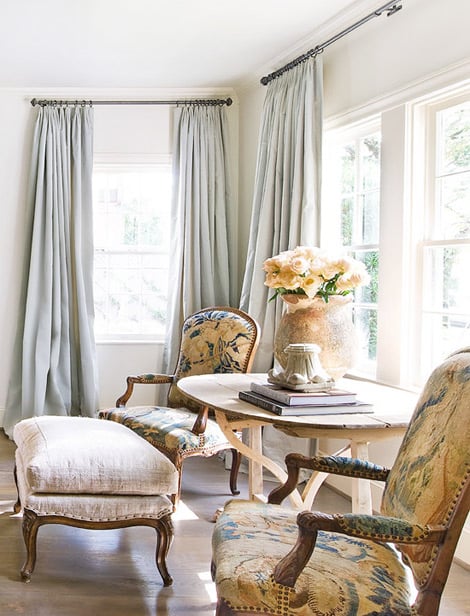
The April 2012 cover of Traditional Home stopped me in my tracks. I fell completely in love with that seating area — the kind of space that makes you want to curl up with a cup of coffee and stay all morning. It was elegant but relaxed, layered yet effortless. I loved the way the curtains puddled on the floor, the oversized vase on the oversized table, and everything about that image.
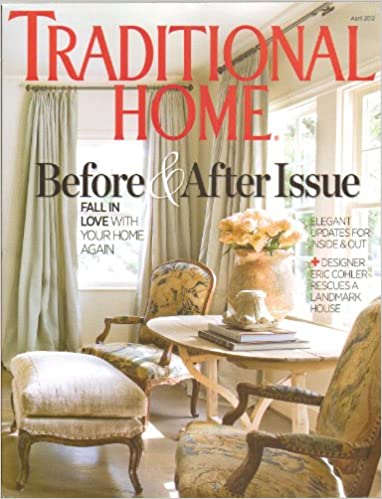
But that table… what was it?
Discovering the Wine Tasting Table
A little research led me to antique French wine tasting tables — pieces once used by vintners to sample their wines right in the vineyards. You know I love a unique piece with a story, and this one stole my heart. It’s the kind of find that instantly adds character and history — the hallmark of a truly curated home.
But when I realized prices ranged anywhere from $500 to $5,000, depending on age and quality, I knew one probably wasn’t in my budget.
So you can imagine how my heart skipped a beat when, years later, I spotted one at my local consignment store. I literally ran over, hoping someone hadn’t realized what it was and priced it for a steal. I can’t remember exactly what I paid, but I do remember realizing it was from Pottery Barn — not an antique, but close enough. It had the same beautiful look, just more attainable. Needless to say, it came home with me that very day.
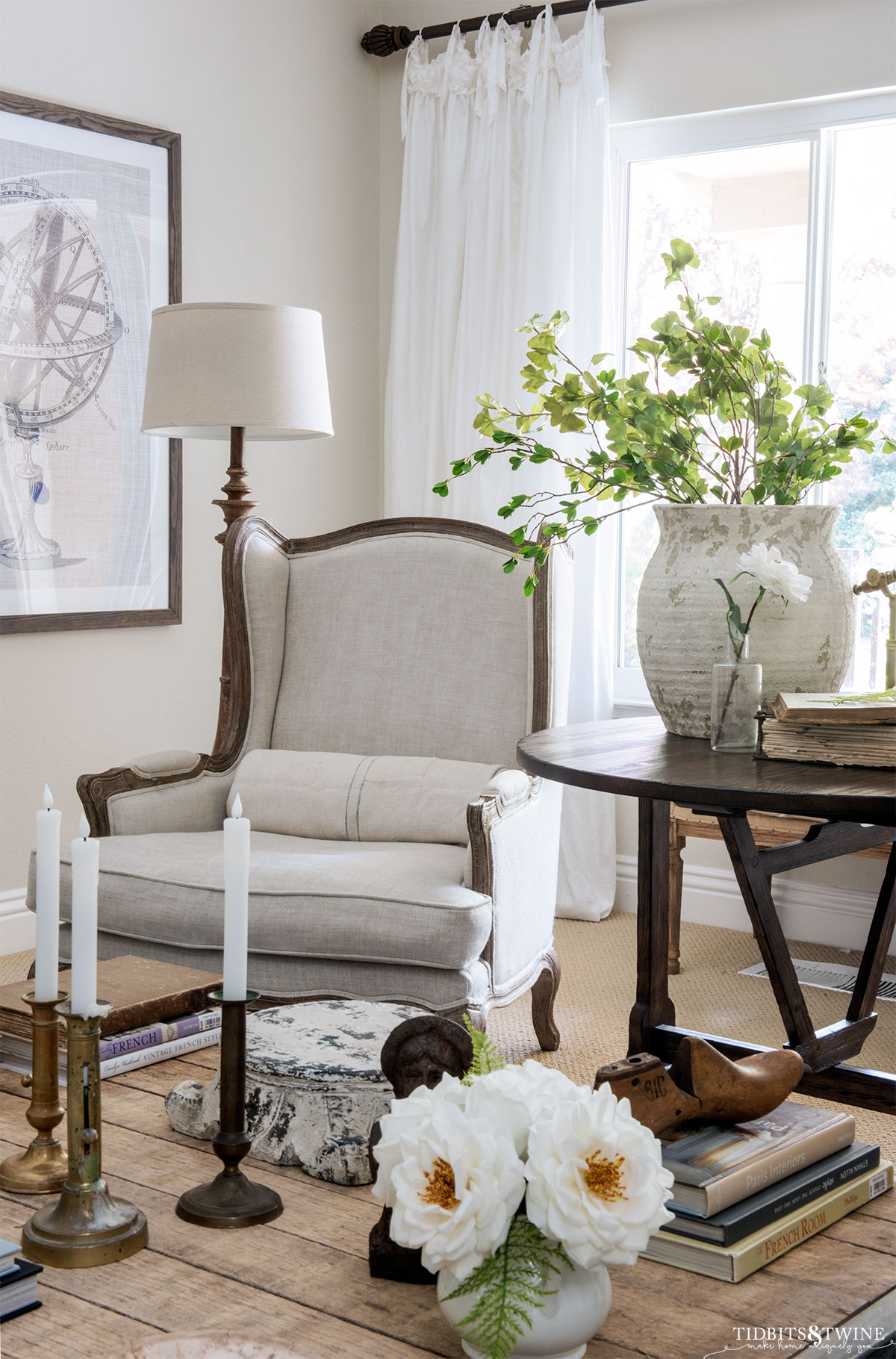
After spending a little time on my back porch, the table eventually found its forever home in my living room, where it still sits today — a small nod to that Eleanor Cummings design I fell in love with all those years ago.
Funny enough, I recently spotted the exact same Pottery Barn table on Facebook Marketplace for about $150 — proof that these pieces still pop up if you keep an eye out! I almost messaged the seller just to tell them how much I love mine.


Ever since then, I’ve had a soft spot for these old tables. What started as a practical tool for winemakers has become one of those timeless pieces that feels just as at home in a vineyard as it does in a living room. There’s something about the mix of function and beauty that makes them so interesting. So today, let’s take a closer look at where wine tasting tables came from and why they’ve become such favorites among collectors and decorators.
The Origins of the Wine Tasting Table
The wine tasting table — or table de vendange, as it’s called in France — was born out of need. In the late 1700s and 1800s, French winemakers needed a portable surface to hold their glasses and bottles while sampling wine, either in the cellars or out among the vines. The table didn’t need to be fancy — just sturdy, easy to move, and simple to tuck away when the work was done.
Structurally, the wine tasting table is a close cousin of the trestle table. It has two end supports joined by a crossbar for stability. But what makes it special is the tilting top. A wooden hinge or peg lets the tabletop pivot upright when it’s not in use, so it can rest flat against a wall. This clever design saved space — easy to move, easy to store, and always ready for the next tasting.
Most were made from solid oak, walnut, or cherry. These woods handled the damp air of wine cellars and years of use. You’ll often see faint rings, scratches, or uneven edges — signs of a hardworking life rather than flaws. These tables were never meant to be perfect; they were meant to be practical. And maybe that’s exactly what makes them so beautiful today.
From Vineyard to Home
As winemaking modernized and cellars became larger, these little tables gradually disappeared from everyday use. But the design was too practical — and too charming — to vanish completely. The same qualities that once made them essential in the vineyards now make them incredibly versatile in the home.
Today, original tables de vendange are highly sought after by collectors and decorators alike. Their smaller size makes them perfect as dining tables for cozy spaces, or as an extra surface that can easily be moved and stored when needed. Folded upright, they add sculptural warmth to a room — part furniture, part conversation piece.
Even modern versions capture that same magic. The one in my own home came from Pottery Barn years ago, a reproduction that still manages to feel authentic and timeless. I might not have found an antique, but the design itself is so good, it doesn’t matter. Whether old or new, these tables prove that great design — especially when it starts with purpose — never goes out of style.
How to Spot a Wine Tasting Table
If you ever come across one while antiquing, you might not recognize it right away — especially when the top is folded upright against the base. Here’s how to tell if you’ve found a wine tasting table:
- Look for the tilt. The tabletop pivots on a small wooden hinge or peg so it can stand vertically when not in use. That simple hinge is the giveaway.
- Check the base. True tables de vendange use a trestle-style base with two supports connected by a crossbar. The design keeps the table steady, even on uneven cellar floors.
- Notice the height. Winemakers built the originals for standing tastings, so they sit lower than a dining table — usually around 25 to 29 inches tall. Modern reproductions often stand a bit higher to fit everyday use.
- Pay attention to the wood. Look for oak or walnut in older versions and cherry in later ones. Age marks like gentle warping, faint rings, or softened edges show that the table has lived a long, useful life.
- Test the hinge. When you tilt the top, it should move smoothly and feel solid. A hinge that wobbles or shines too much usually signals a repair.
Even if you find a reproduction rather than an antique, the beauty of a wine tasting table lies in its character and practicality. It’s one of those pieces that feels just as charming in a French vineyard as it does in a cozy living room.

My Curated Finds
I get asked all the time where to find pieces like mine, so I’ve rounded up a few favorites that capture the same look. Whether you love true antiques or new versions inspired by the originals, these tables bring that collected, Old World feel that makes a home feel layered and personal.

Frequently Asked Questions
French winemakers originally used tables de vendange as portable surfaces for sampling and blending wine right in the vineyards or cellars. Today, people use them as space-saving dining tables or charming accent pieces.
Most antique tables measure around 25–29 inches tall — a bit shorter than a standard dining table since winemakers designed them for standing tastings. Modern reproductions often come taller to suit everyday use.
You’ll typically find them in oak, walnut, or cherry. Oak was the workhorse — strong, durable, and able to handle the damp air of wine cellars.
Absolutely. Many furniture makers — even Pottery Barn and smaller European brands — have created beautiful reproductions that capture the same timeless design. They’re practical, elegant, and much easier to find than an authentic antique.

Looking for a specific antique?
Browse the Antique Object Guide
Explore 20+ antique objects with identification tips, decorating ideas, and links to detailed posts about each piece.
Final Thoughts
What I love most about wine tasting tables is how they prove that good design can be simple. Something created out of pure necessity centuries ago still fits beautifully into modern life — proof that practical and pretty can happily coexist. Whether you find an antique table de vendange or a modern reproduction, it’s a piece that instantly adds warmth, charm, and a touch of history to your home.

DECORATING MADE EASY
Get my free 5-day decorating course and learn how to define your style, make better decisions, and create a home that feels like you.
After the course, you’ll receive my latest decorating tips, antique finds, and new posts.