



I became a Yankee Candle lover while living on the East Coast during college. Back then, Yankee Candle stores were everywhere and walking into one in the fall felt like entering some magical world of apples, cinnamon, pumpkins, leaves, cider, and pie. Their fall scents completely sucked me in, especially the apple ones.
So last fall, when I spotted a Yankee Candle at Target that smelled incredible in the jar, I grabbed it immediately without even thinking twice.
To say I was disappointed is an understatement.
Sure, it smelled amazing standing there in the aisle with the lid off. But once I got it home and lit it? Almost nothing. I kept waiting for the scent to kick in…and it never really did. Unless I was standing directly over the candle, I could barely smell it at all.
That’s when I started going down the candle rabbit hole trying to figure out why some candles can fill an entire house with scent while others somehow smell like absolutely nothing once they’re lit.
So today, I’m sharing what I’ve learned and what to actually look for when buying a candle so you have the best chance of bringing home one that smells just as amazing burning in your house as it did sitting open on the store shelf.
There are definitely technical things that affect candle performance, like wick placement, fragrance load, and wax blends. But most of us aren’t standing in Target analyzing candle engineering, right?
So instead, let’s talk about the practical clues shoppers can actually use when trying to figure out whether a candle will smell amazing once it’s burning at home.
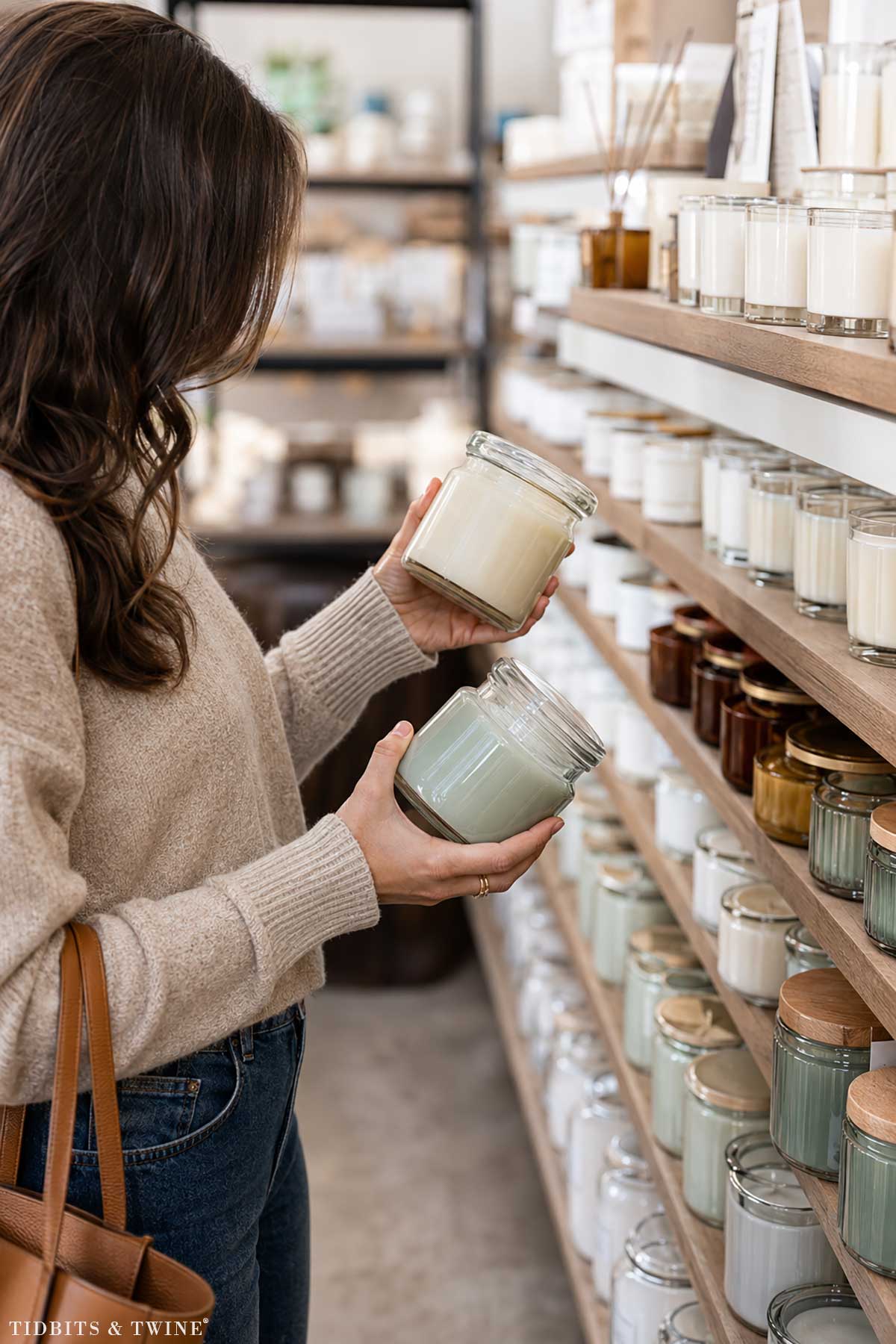
What Is Cold Throw vs. Hot Throw?
As I started reading reviews and researching candles, I kept seeing people use the terms cold throw and hot throw.
At first I thought this only matter if I was making candles. Turns out, those terms actually matter as a candle buyer, too!
Cold throw is how a candle smells before it’s lit. Basically, the scent you smell standing in the store with the lid off.
Hot throw is how strong the candle smells once it’s actually burning in your home.
So it’s possible that a candle can have an amazing cold throw and still have a disappointing hot throw.
That’s exactly what happened with my disappointing Yankee Candle from Target. The cold throw was incredible. The hot throw? Practically nonexistent.
1. Don’t Judge a Candle by Cold Throw Alone
This was probably the biggest lesson I learned through all of this.
Just because a candle smells incredibly strong sitting open on a store shelf does not mean it’s going to perform the same way once it’s burning in your house.
In fact, sometimes the strongest-smelling candles in the jar end up having surprisingly weak hot throw.
And stores can honestly be a little misleading in general because:
- candles are displayed in concentrated groups
- lids are constantly being opened
- fragrance builds up in the air over time
So part of what you’re smelling may actually be the entire candle section, not necessarily that one specific candle.
Now, that doesn’t mean cold throw is useless. I still absolutely smell candles before buying them. If I can barely smell a candle cold in the jar, I’m usually not taking it home.
But I no longer assume that a strong cold throw automatically guarantees a strong hot throw.
At this point, I pay much more attention to the combination of:
- wax type
- candle size
- number of wicks
- reviews
- and brand reputation
Because honestly, those things have turned out to be much better predictors of performance than simply sniffing a candle in the middle of a store aisle for five seconds.
2. Pay Attention to the Wax Type
One of the first things I started noticing while candle shopping was that wax type actually does seem to affect how strongly a candle throws scent.
Now before the candle experts come for me, yes…I know there are exceptions. Wick placement, fragrance load, wax quality, and about 47 other things also affect how a candle performs.
But since most of us aren’t standing in the middle of a store aisle conducting a candle science experiment, let’s stick to the practical things shoppers can actually identify while buying a candle.
And wax type is one of them.
Natural waxes like soy, beeswax, and coconut wax are often preferred by people looking for a cleaner burn, while paraffin candles are usually known for stronger scent throw.
Paraffin Wax
Paraffin candles tend to throw scent more strongly, which is why many of those “I can smell this throughout the entire house” candles use paraffin or paraffin blends.
If you’ve ever lit a candle and could smell it halfway down the hallway within twenty minutes, there’s a good chance paraffin was involved somewhere in the formula.
Soy Wax
Soy candles have become really popular over the last several years, especially with brands marketing themselves as cleaner or more natural.
They also tend to burn a little slower and softer.
The downside? Pure soy candles often have a more subtle hot throw. In smaller spaces that can feel cozy and pleasant. But in a large open-concept room, some soy candles can end up feeling a little…underwhelming.
That doesn’t make soy candles “better” or “worse.” It really depends on what matters most to you: stronger scent throw, cleaner ingredients, slower burn time, or a combination of all three.
Beeswax Candles
Beeswax candles are usually more about ambiance than powerhouse scent throw. They naturally have a faint honey-like smell, but unless additional fragrance oils are added, they typically won’t fill your home with fragrance the way heavily scented candles do.
Coconut Wax and Wax Blends
Coconut wax and coconut blends have become especially popular in higher-end candles. Many people feel they offer a nice middle ground: smoother burning than paraffin with better scent throw than some pure soy candles.
And honestly, blends in general often perform better than ultra-pure single waxes because brands are trying to balance burn quality, scent throw, and appearance all at once.
At this point, I’ve personally learned that if I want a candle to really fill a larger room, a tiny pure soy candle probably isn’t my safest bet.

3. Consider the Size of the Candle and the Size of Your Room
This was another thing I didn’t fully appreciate until I started paying attention to hot throw.
Sometimes the problem isn’t that a candle is weak. Sometimes the candle is simply too small for the space you’re trying to scent.
A tiny single-wick candle might work beautifully in:
- a bathroom
- bedroom
- office
- small sitting area
But place that same candle in a large open-concept living room with tall ceilings and airflow from the kitchen, and the scent can disappear pretty quickly.
And honestly, I think this is where a lot of people get disappointed with candles.
We smell a candle in a small store environment and assume it’s going to perform the exact same way once we bring it home. But stores are packed with fragrance in the air already, and most homes have much larger spaces and better airflow.
Now when I’m shopping for candles, I pay much more attention to:
- candle size
- number of wicks
- and where I’ll actually be burning it
If I’m trying to scent a larger room, I almost always reach for a larger multi-wick candle instead of a tiny single wick.
4. Pay Attention to the Number of Wicks
I never used to think much about wicks beyond trimming them occasionally. But after enough disappointing candles, I started noticing that wick count can make a pretty big difference in how well a candle throws scent.
Generally speaking, multiple wicks help create:
- a larger melt pool
- more even burning
- and stronger scent distribution
That’s especially important in larger candles. If a candle is really wide but only has one tiny wick in the center, there’s a decent chance it may struggle to throw scent effectively across the entire surface.
Now to be fair, wick placement and wick quality matter too. But those aren’t exactly things most of us can realistically evaluate while standing in a store aisle holding a candle next to a throw pillow and a bag of dog food from Target.
So from a practical shopping standpoint, I mostly look for balance:
- larger candles usually perform better with multiple wicks
- very wide candles with one small wick can sometimes be a red flag
- smaller single-wick candles tend to work best in smaller rooms
Once I started paying attention to wick count alongside wax type and reviews, I got much better at predicting which candles would actually fill a room with scent once I brought them home.

5. Read Reviews for Hot Throw Specifically
At this point, reviews have honestly become one of the biggest things I rely on before buying a candle online.
Because once you understand the difference between cold throw and hot throw, you start realizing that a lot of candle reviews are actually talking about completely different things.
Some people are reviewing:
- how the candle smells in the jar
- how pretty the packaging is
- whether it burns evenly
- how long it lasts
But what I really want to know is:
Can you actually smell it once it’s lit?
So now I specifically look for phrases like:
- “fills the room”
- “strong hot throw”
- “could smell it throughout the house”
- “lingers after blowing it out”
- “barely smelled anything”
- “only noticeable in a small room”
Those kinds of comments usually tell me far more than the product description itself.
I also pay attention when multiple reviewers say the same thing. If dozens of people mention weak hot throw, I tend to believe them, even if the candle smells amazing cold in the jar.
And honestly, this is where you start noticing that some brands develop reputations for either consistently strong or consistently subtle scent throw.
6. Some Candle Brands Are Simply Known for Better Hot Throw
At some point, I stopped randomly gambling on candles and started paying attention to which brands people consistently mentioned when talking about good hot throw.
Because brand reputation really does seem to matter.
Some companies are simply more consistent when it comes to how their candles perform once they’re lit. And once you find a few brands that consistently work well in your home, you start becoming pretty loyal to them.
That said, I also learned something important from my disappointing Yankee Candle experience at Target: not every candle sold under the same brand name necessarily performs the same.
Some brands create:
- retailer-exclusive collections
- lower-priced versions for mass retail stores
- or different wax blends and formulas depending on where the candle is sold
So the candle you buy at a big-box retailer may not perform exactly like the one sold directly through the brand’s own stores or website.
That’s why my Target Yankee Candle experience caught me so off guard. I had memories of those incredibly strong fall candles from the actual Yankee Candle stores back East, so I assumed this one would perform similarly. It definitely did not.
I’ve also noticed that some brands are better at maintaining the same fragrance experience from cold throw to hot throw. In other words, the candle you smell in the jar is much closer to what you actually get once it’s burning.
That doesn’t always mean the candle will be overwhelmingly strong. Some luxury candles are intentionally more refined or layered. But many higher-end brands do tend to deliver a more consistent fragrance experience overall once lit.
Brands people frequently mention for strong or reliable hot throw include:
- Bath & Body Works
- Voluspa
- NEST New York
- Goose Creek
- Village Candle
- Yankee Candle
And brands like Diptyque, Le Labo, Jo Malone, and Byredo are often praised for creating more refined fragrance experiences that stay true to the scent you smelled in the jar once the candle is burning.Yankee candles I remember from their actual stores were significantly stronger.
Brands That Tend to Be More Subtle or Atmospheric
- Le Labo
- Diptyque
- Jo Malone
- Byredo
These brands often focus more on layered, refined scents rather than maximum intensity.
So if you buy one expecting your entire house to smell like a luxury hotel lobby within five minutes, you might end up disappointed. But if you prefer softer background fragrance, you may actually love that more understated approach.
And then there are brands like Anthropologie candles, which can vary a lot depending on the collection since they carry multiple manufacturers and private-label lines. Some have excellent hot throw. Others seem more decorative than powerful.
7. Fragrance Load Matters Too
Another thing that affects hot throw is something called fragrance load, which basically refers to how much fragrance oil is blended into the wax.
In general, candles with a higher fragrance load tend to throw scent more strongly once they’re lit. But it’s not quite as simple as “more fragrance equals better candle.” Too much oil can actually affect how well a candle burns.
And unfortunately, fragrance load usually isn’t something shoppers can easily evaluate standing in a store holding a candle. Most brands don’t list it on the label.
Still, I wanted to mention it because it absolutely plays a role in why some candles fill a room with scent while others barely seem noticeable once lit.
I’ve also learned that some fragrance types are naturally stronger than others.
For example:
- bakery scents
- cinnamon
- pumpkin
- apple
- vanilla
- pine
- tobacco
- amber
- musk
often throw very strongly.
Meanwhile, lighter fragrances like:
- linen
- soft florals
- sea salt
- clean cotton
- delicate citrus
may naturally feel more subtle, even in a well-made candle.
So sometimes a candle isn’t actually performing poorly. The fragrance itself may just be designed to create a softer effect.
That’s also part of why certain homes, hotels, and even stores develop such memorable signature scents. Some fragrance families naturally create a stronger emotional and sensory impact than others.
If you’ve ever wondered how to choose a scent that fits the mood and personality of your home, I share more about that in my post on choosing a signature home scent.
Candle Care Tips & Tidbits
- Trim your wick before each burn. Long wicks can create oversized flames, excess soot, and uneven burning.
- Let the wax melt all the way to the edges during the first burn. This helps prevent tunneling later on.
- Don’t burn candles in drafty areas. Fans, vents, and open windows can affect both scent throw and even burning.
- Use larger candles in larger rooms. Tiny single-wick candles often struggle in open-concept spaces.
- Your nose adapts to scents over time. Sometimes a candle hasn’t actually faded, your brain has simply adjusted to the smell after prolonged exposure. That’s why guests may notice a candle immediately even when you barely smell it anymore.
- Keep the lid on when not in use. Candles can lose fragrance over time if left uncovered constantly.
- Wood wicks usually need extra maintenance. They often work best trimmed shorter than cotton wicks.
- If a candle starts tunneling, don’t panic immediately. Sometimes a longer burn session or creating a foil tent can help reset the melt pool.
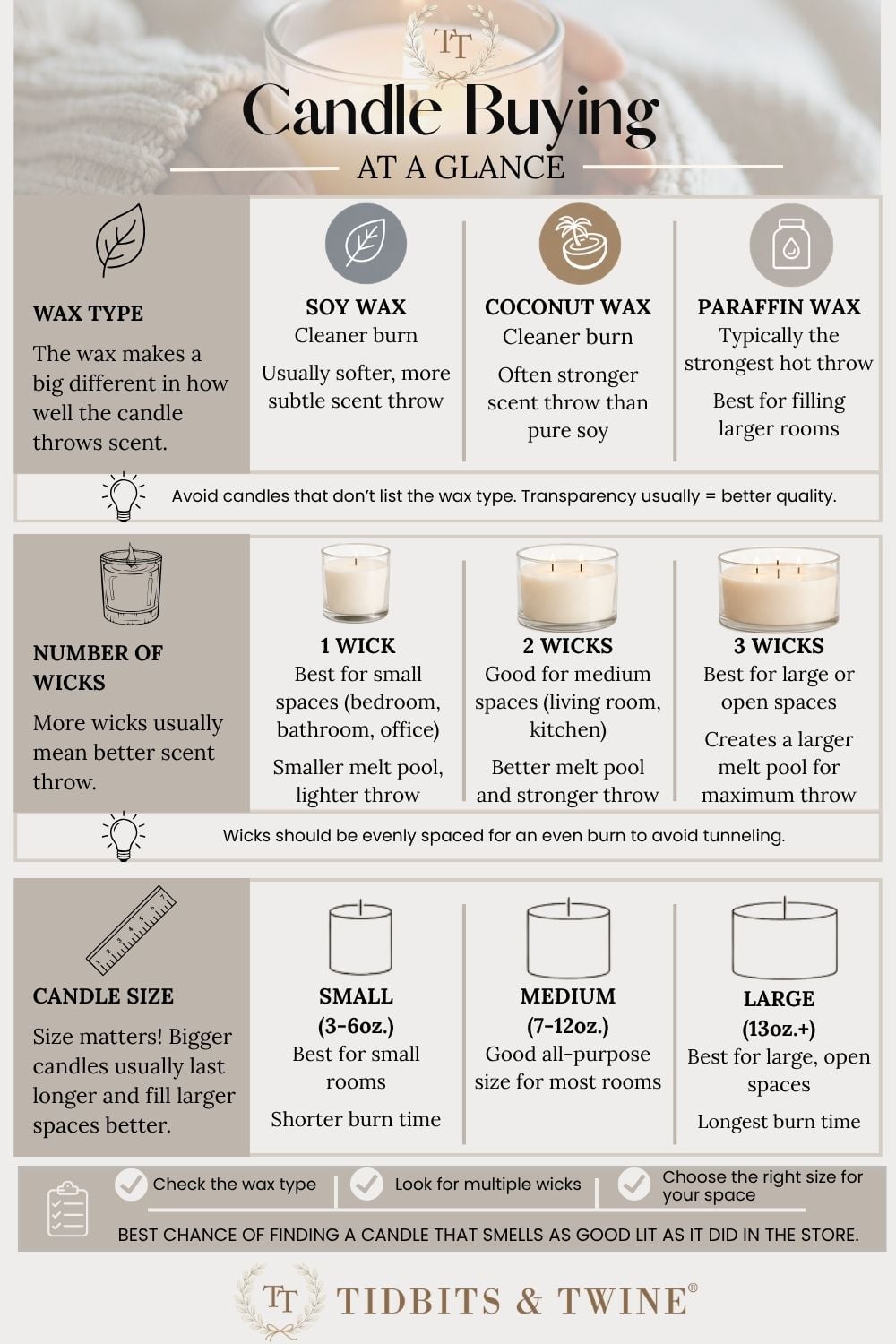
Final Thoughts
So next time you’re standing in HomeGoods sniffing a candle that smells absolutely incredible in the jar, don’t automatically assume it’s going to smell that good once you light it at home.
Instead, pay attention to things like:
- wax type
- candle size
- number of wicks
- reviews mentioning hot throw
- and brand reputation
None of those things are perfect guarantees. But they’ll give you a much better chance of bringing home a candle that actually fills your space with scent instead of one that disappears the second you light it.
More Decorating Tips
- The Best Fake Flowers That Look Real
- Choosing a Signature Home Scent
- 7 Decorating Mistakes That Ruin French Style

DECORATING MADE EASY
Get my free 5-day decorating course and learn how to define your style, make better decisions, and create a home that feels like you.
After the course, you’ll receive my latest decorating tips, antique finds, and new posts.