



When I first fell in love with French style, I’ll admit… I didn’t quite understand it yet.
At the time, I owned pillows that said Paris and had pictures of the Eiffel Tower on them. In my mind, that was exactly what French decorating looked like. And while most of those pieces have long since disappeared, one of those Paris pillows is still hanging around because apparently I refuse to part with it…
Over time, though, I started to realize that these kinds of literal items aren’t really the key to creating a French look.
Like a lot of decorating styles, it’s easy to get caught up in the excitement and fall down the rabbit hole of creating a theme. I wrote more about the difference between the two in my post about decorating style vs. theme, but the short version is this: a theme relies on obvious symbols, while a style captures the overall feeling of something.
I’ve been fortunate enough to travel throughout France and stay in a few apartments along the way, and I can tell you this: I’ve yet to see a single Paris pillow or Eiffel Tower candy dish.
French style isn’t about decorating with Eiffel Towers or fleur-de-lis. It’s about soft colors, natural materials, antiques, and rooms that feel relaxed and collected over time.
If what you want is a French-inspired style, not a theme, here are seven decorating mistakes I’ve seen happen again and again—and what to do instead.
What Actually Defines French Style?
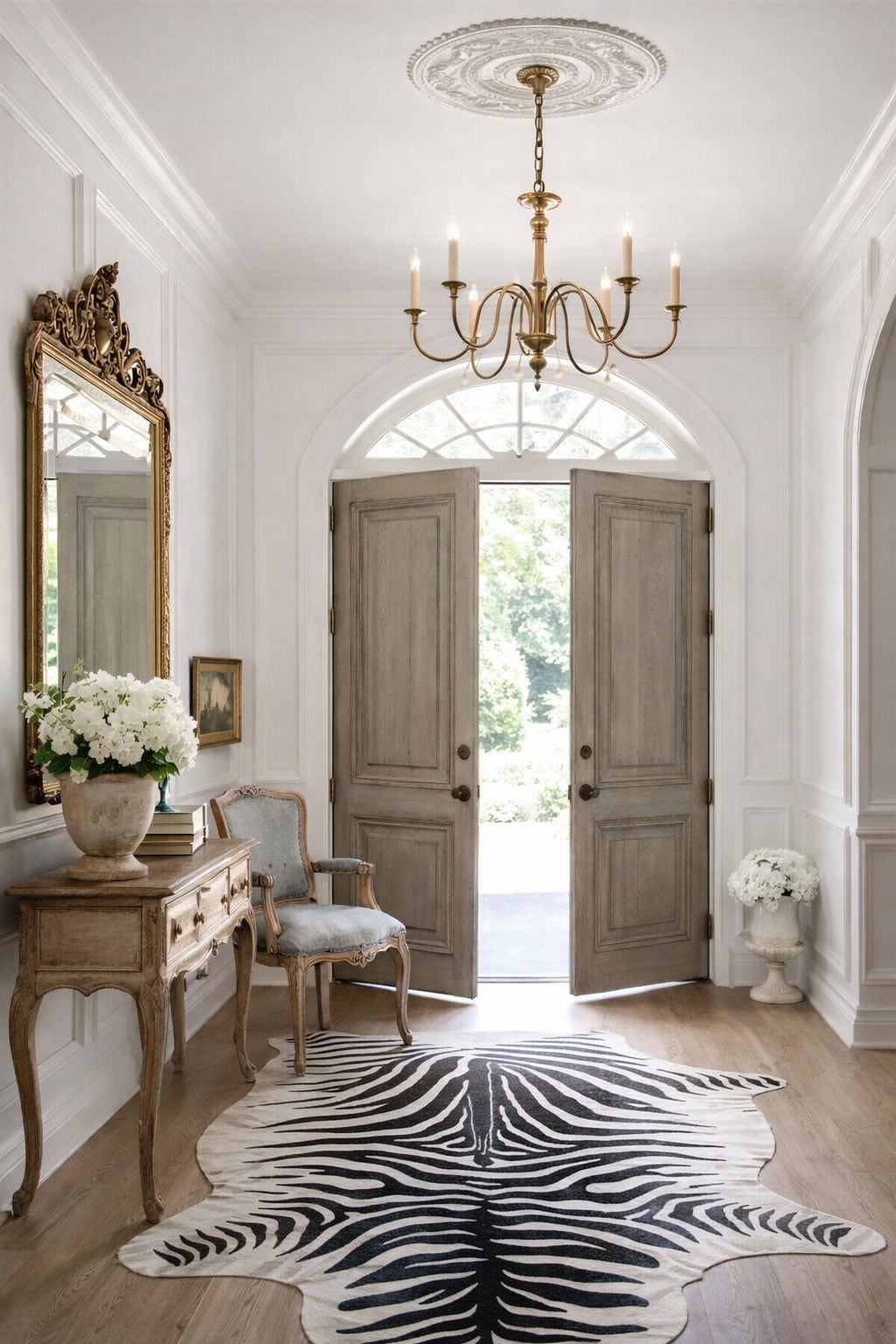
Before we talk about the mistakes, it helps to understand what usually defines French style in the first place. French interiors tend to feel relaxed, layered, and a little imperfect. Instead of relying on obvious symbols, the look comes from a handful of elements that show up again and again.
You’ll often see things like:
- Soft, muted color palettes like warm whites, dusty blues, pale greens, and faded neutrals
- Natural materials such as wood, linen, stone, iron, and aged metals
- Antiques or vintage pieces that bring history and patina into the room
- A mix of refined and rustic elements rather than everything feeling overly formal
- Rooms that feel collected over time, not purchased all at once
- Relaxed, lived-in details like rumpled linen, worn wood, and slightly mismatched chairs
When these elements are present, a room starts to feel naturally French. But when they’re replaced with literal motifs or overly staged decor, the look can quickly drift toward a theme instead of a style.
That’s where these common mistakes come in.
Mistake #1: Decorating with Obvious French Symbols
One of the most common ways French style accidentally turns into a theme is through literal symbols.
Things like Eiffel Towers, fleur-de-lis patterns, Paris signs, or anything that tries a little too hard to say oo-la-la might seem like an easy way to create a French look. But in reality, these kinds of items tend to make a space feel more like a souvenir shop than a home.
If you look at real French interiors, you’ll notice something interesting: they rarely rely on these kinds of decorative motifs. Instead, the French feeling comes from materials, age, and atmosphere rather than symbols.
• Wood furniture with beautiful patina
• Linen fabrics
• Iron or brass accents
• Vintage mirrors or artwork
Those elements create a much more authentic French look than anything with a literal Eiffel Tower on it.
What to do instead:
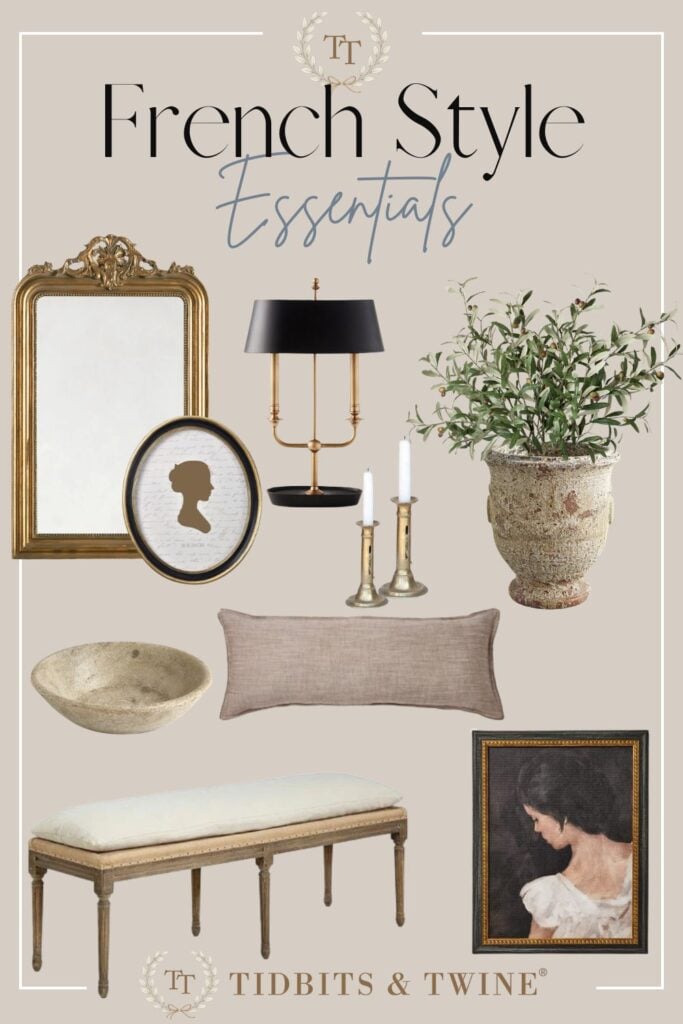
Focus on pieces that suggest French style without spelling it out. Look for natural materials, antiques or vintage finds, and classic shapes. When the materials and textures are right, the room will naturally start to feel French without needing obvious symbols.
I’ve found a mix of old and new French-style decor in this LTK post. Click the image below to explore the pieces.
Mistake #2: Using Bright, High-Contrast Colors
Another common mistake is assuming French style means bold, dramatic color.
While color certainly exists in French interiors, it rarely appears in the bright, high-contrast way we often see in modern decorating. Instead, the palette tends to feel softer and slightly faded, as if it has mellowed over time.
Think about colors like dusty blue, pale sage, warm white, soft gray, and muted neutrals. Even deeper tones—like blue or green—usually have a subdued, softened quality rather than feeling crisp or saturated.
That softer palette is one of the reasons French interiors feel so calm and effortless.
What to do instead:
If you love color, choose tones that feel muted, aged, or softened rather than bright and punchy. Soft blues, mossy greens, warm neutrals, and gently faded finishes tend to create a much more natural French atmosphere than high-contrast color schemes.
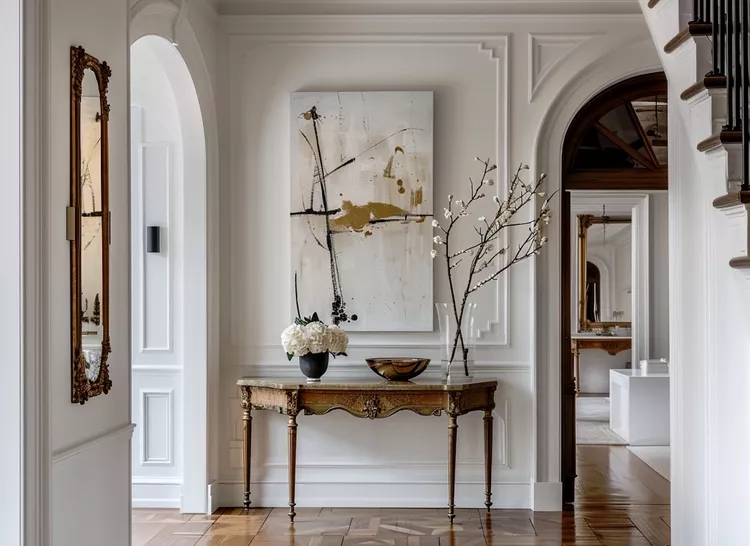
Mistake #3: Buying Everything New (or Perfectly Matching)
Another common mistake is filling a room with brand-new pieces that all match perfectly.
Furniture sets might feel like the easiest way to decorate a space, but they tend to make a room look more like a showroom than a home. And that’s the opposite of what you usually see in French interiors.
French homes often feel like they’ve been assembled slowly over time. A dining table might be antique while the chairs are newer. A vintage cabinet might sit next to a more modern sofa. Different woods, finishes, and eras often live comfortably in the same room.
That mix is what gives the space its collected and layered feeling.
What to do instead:
Instead of buying everything at once, try mixing pieces from different sources, time periods, and materials. Add in antique or vintage furniture whenever possible, even if it’s just one piece. That contrast between old and new is one of the easiest ways to create a room that feels naturally French rather than overly coordinated.
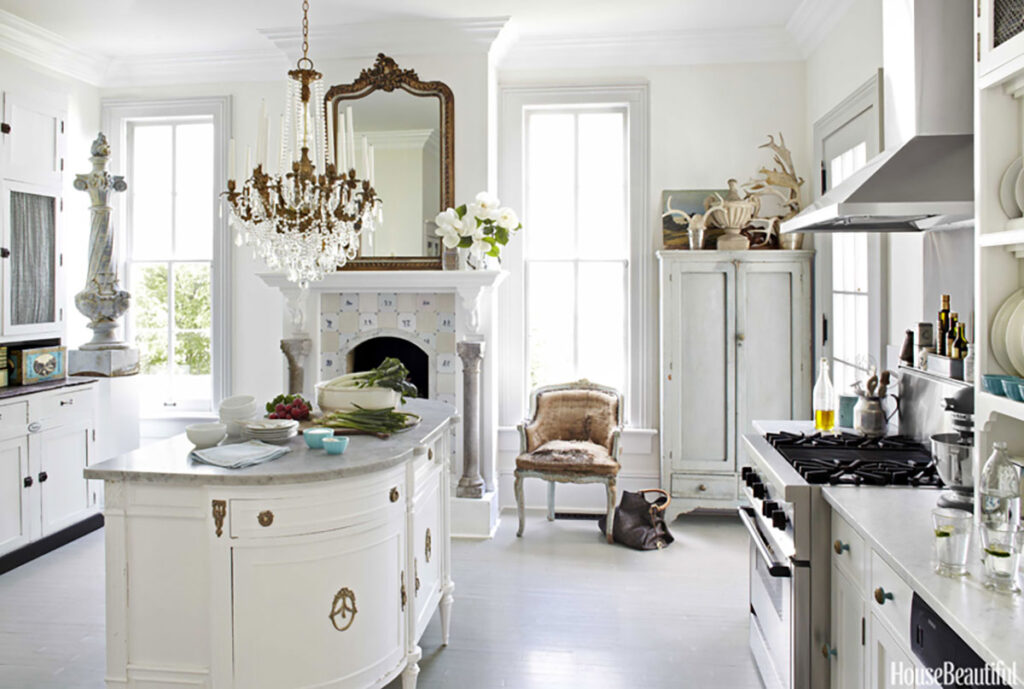
Mistake #4: Using Faux Finishes
French interiors tend to celebrate real materials and natural patina.
Wood shows its grain. Stone shows its texture. Metals develop a soft, aged finish over time. These small imperfections are part of what makes French interiors feel authentic and relaxed.
Faux finishes, on the other hand, often try to imitate those materials in a way that can feel a little forced. Artificial distressing, printed stone patterns, or overly “aged” paint treatments can quickly start to look less like patina and more like a decorating effect.
What to do instead:
Whenever possible, choose simple, honest materials rather than imitations. Real wood, natural fibers like linen, aged brass, stone, and vintage pieces all bring the kind of natural character and texture that French interiors are known for.
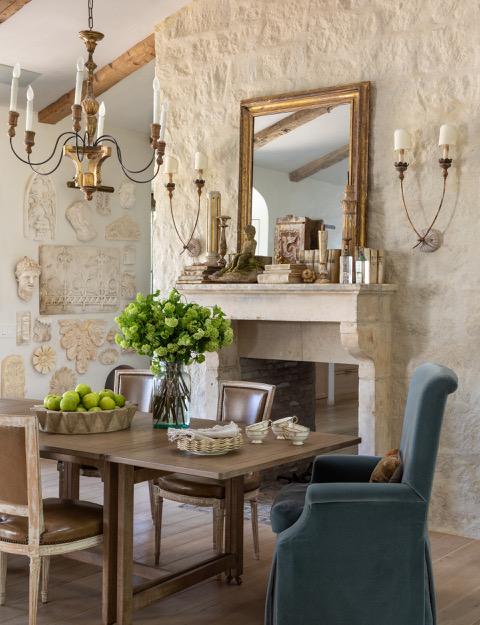
Mistake #5: Forgetting Something Old
One of the easiest ways to lose the French look is by filling a room with only new pieces.
French interiors almost always include something with history and age. An antique cabinet, a vintage mirror, worn books, old pottery, or a timeworn table can instantly add depth to a space.
Without at least one piece that shows a little patina, a room can start to feel more like a showroom than a home.
What to do instead:
Look for ways to introduce something old into the room. Even one antique or vintage piece can anchor the space and make everything around it feel more layered and interesting.
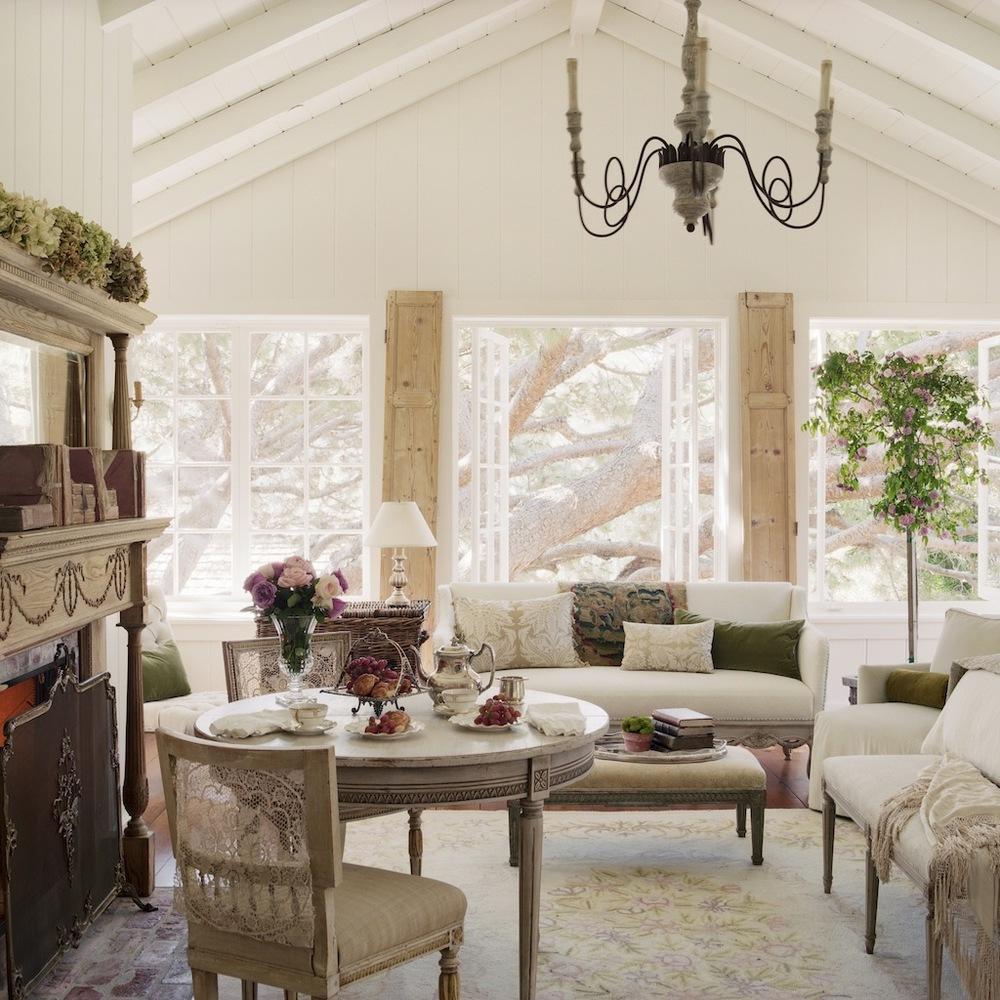
Mistake #6: Aiming for Perfection
French interiors rarely feel overly polished or perfectly styled.
Instead, they tend to feel relaxed and lived-in. You might see slightly rumpled linen, casually stacked books, or furniture that doesn’t match exactly but still feels harmonious together.
That small amount of imperfection is part of what gives French interiors their effortless charm.
What to do instead:
Allow your spaces to feel a little relaxed and natural rather than overly styled. Leave room for imperfection, mix pieces that weren’t designed as a set, and let the room evolve over time.
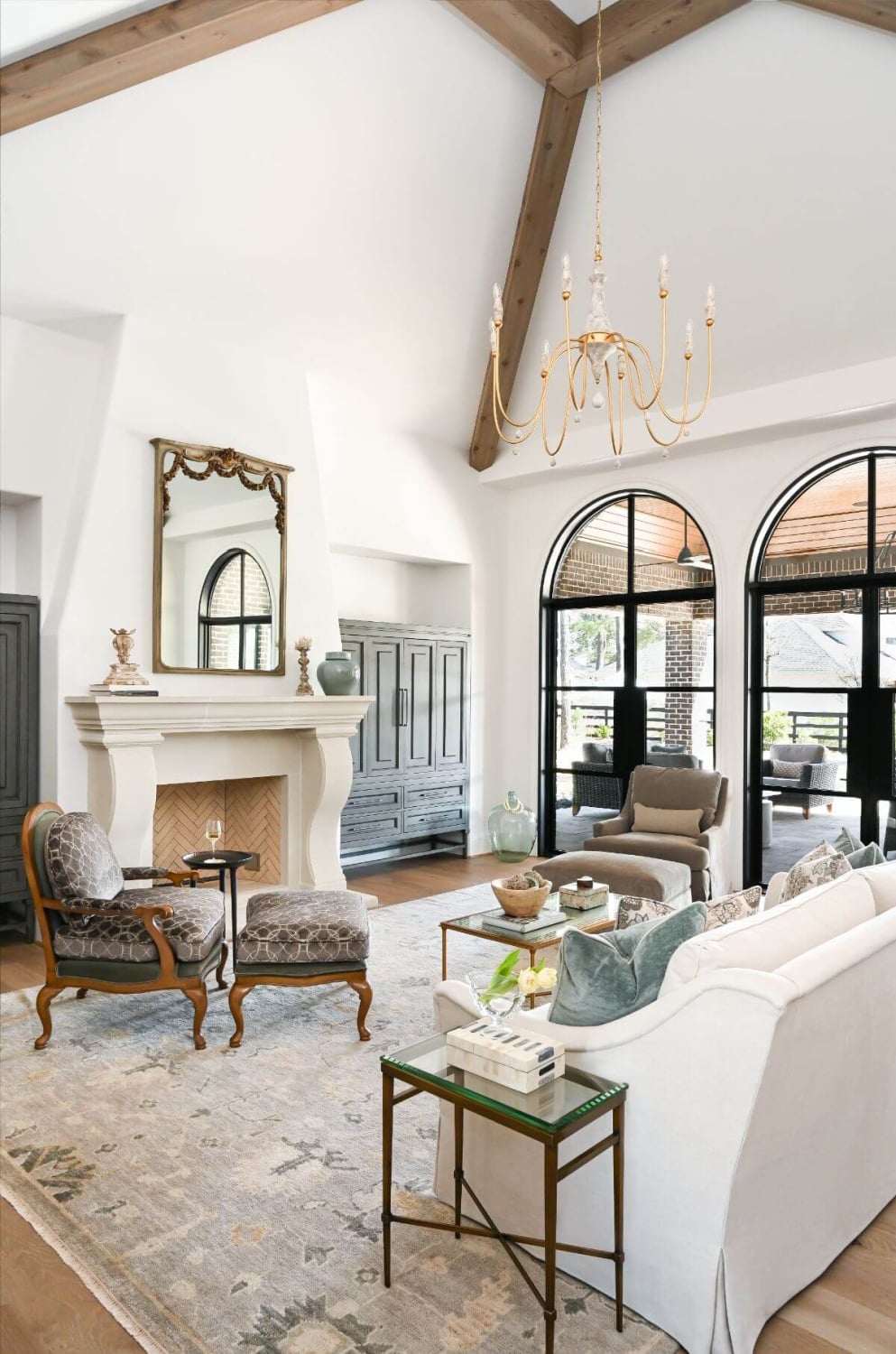
Mistake #7: Overdoing Distressing
When people think of French style, they sometimes assume everything needs to look heavily aged or distressed.
While French interiors do include plenty of patina, it usually comes from natural wear over time, not exaggerated distressing. Furniture often shows subtle signs of age rather than dramatic scraping, chipping, or overly weathered finishes.
Too much distressing can quickly start to feel like a decorating effect rather than genuine character.
What to do instead:
Look for pieces with authentic wear and gentle patina instead of heavily distressed finishes. Subtle aging tends to feel far more natural and in keeping with the relaxed elegance of French interiors.
Final Thoughts
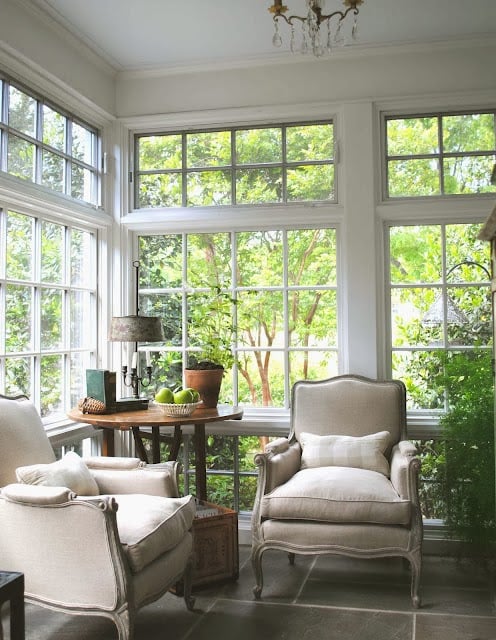
French style isn’t really about specific objects. It’s about how a room feels.
Instead of relying on symbols or perfectly matched pieces, French interiors tend to use muted colors, natural materials, antiques, and rooms that feel collected over time. The result is a space that feels relaxed, layered, and comfortably lived in.
Focus on materials, patina, and atmosphere, and you’ll naturally create a room that captures the spirit of French style—without needing anything that tries too hard to say oo-la-la.
More Decorating Tips
- 8 Common Decorating Mistakes and How to Fix Them
- The Best Fake Flowers That Look Real – Tried and Tested!
- Decorating Measurement Cheat Sheet: 30+ Designer Rules

DECORATING MADE EASY
Get my free 5-day decorating course and learn how to define your style, make better decisions, and create a home that feels like you.
After the course, you’ll receive my latest decorating tips, antique finds, and new posts.