
For someone who grew up with exclusively real Christmas trees, I’ve somehow become quite the expert on artificial ones in adulthood. I now own more Christmas trees than any one person reasonably needs, but all that trial and error has taught me a lot.
After years of researching hundreds of trees for my annual artificial Christmas tree guide, buying and decorating them, and seeing plenty in person, I’ve learned that not all artificial Christmas trees are created equal. And while there’s often a good reason one tree costs $200 and another costs $1,200…sometimes there really isn’t.
You start out thinking you’ll just find a tree you like, and the next thing you know you’re down the rabbit hole of PE percentages, tip counts, light counts, branch construction, lighting functions, and tree widths.
The good news is, I’ve figured out which specs actually make a difference, which ones can be misleading, and which ones you really don’t need to stress over.
So before you spend hundreds, or even thousands, of dollars on a tree, here are the 9 things I think are actually worth comparing before you buy.
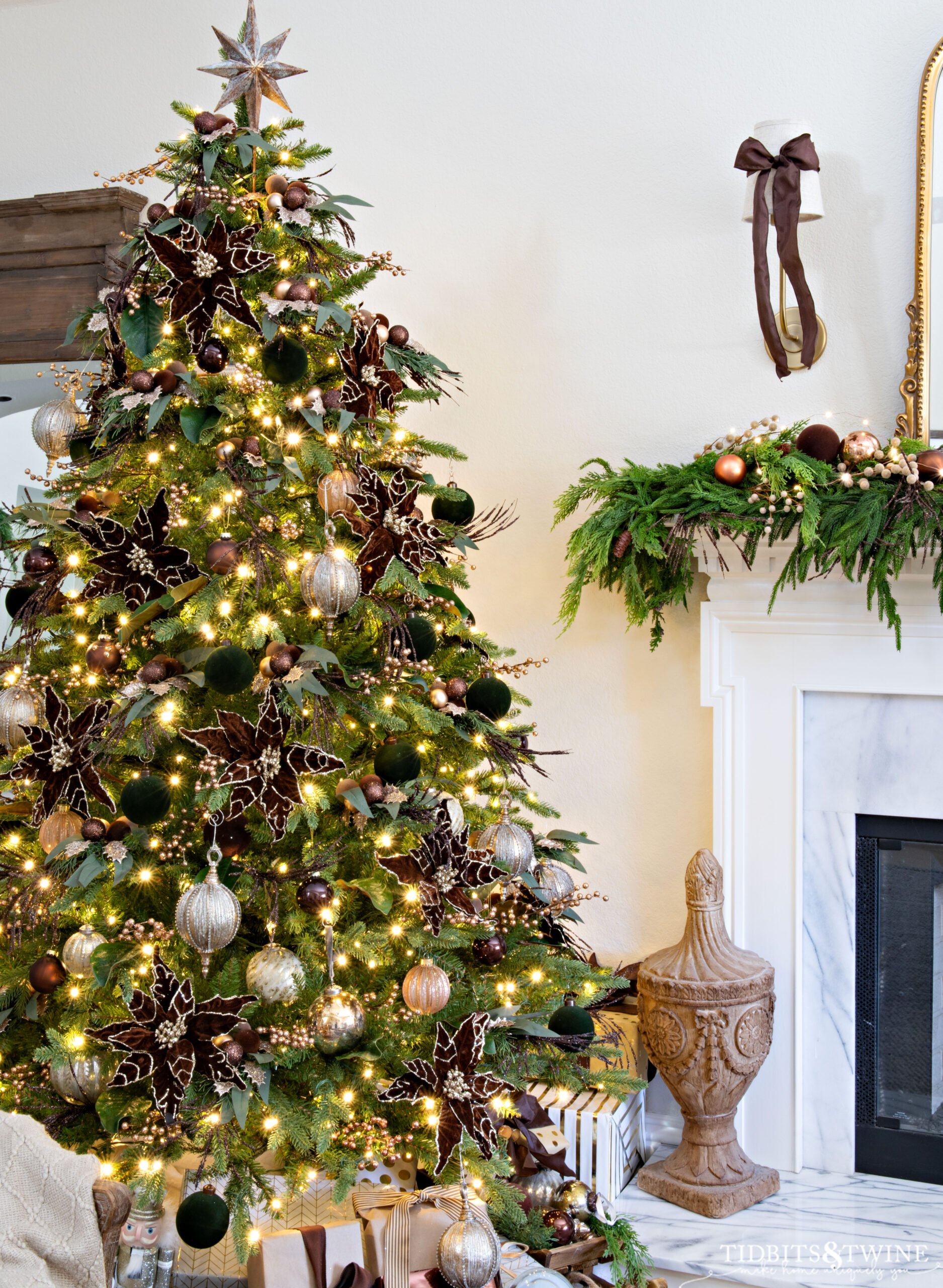
1. Size and Shape
Before you compare needles, lights, and tip counts, make sure the tree will actually fit your room.
Height is the obvious place to start, but width is just as important. A 7.5-foot tree can range from fairly slim to more than 60 inches wide, and that difference is huge once it’s sitting in your living room.
Measure your ceiling height, leaving enough room for a topper, then check the tree’s listed diameter. If you’re having trouble visualizing the footprint, use painter’s tape to mark it on the floor. A 60-inch tree sounds reasonable until you realize that means five feet across.03
You’ll also want to choose the shape that works best for your room:
- Full: Classic, traditional shape with the largest footprint.
- Slim or narrow: A good option for tighter rooms without looking overly skinny.
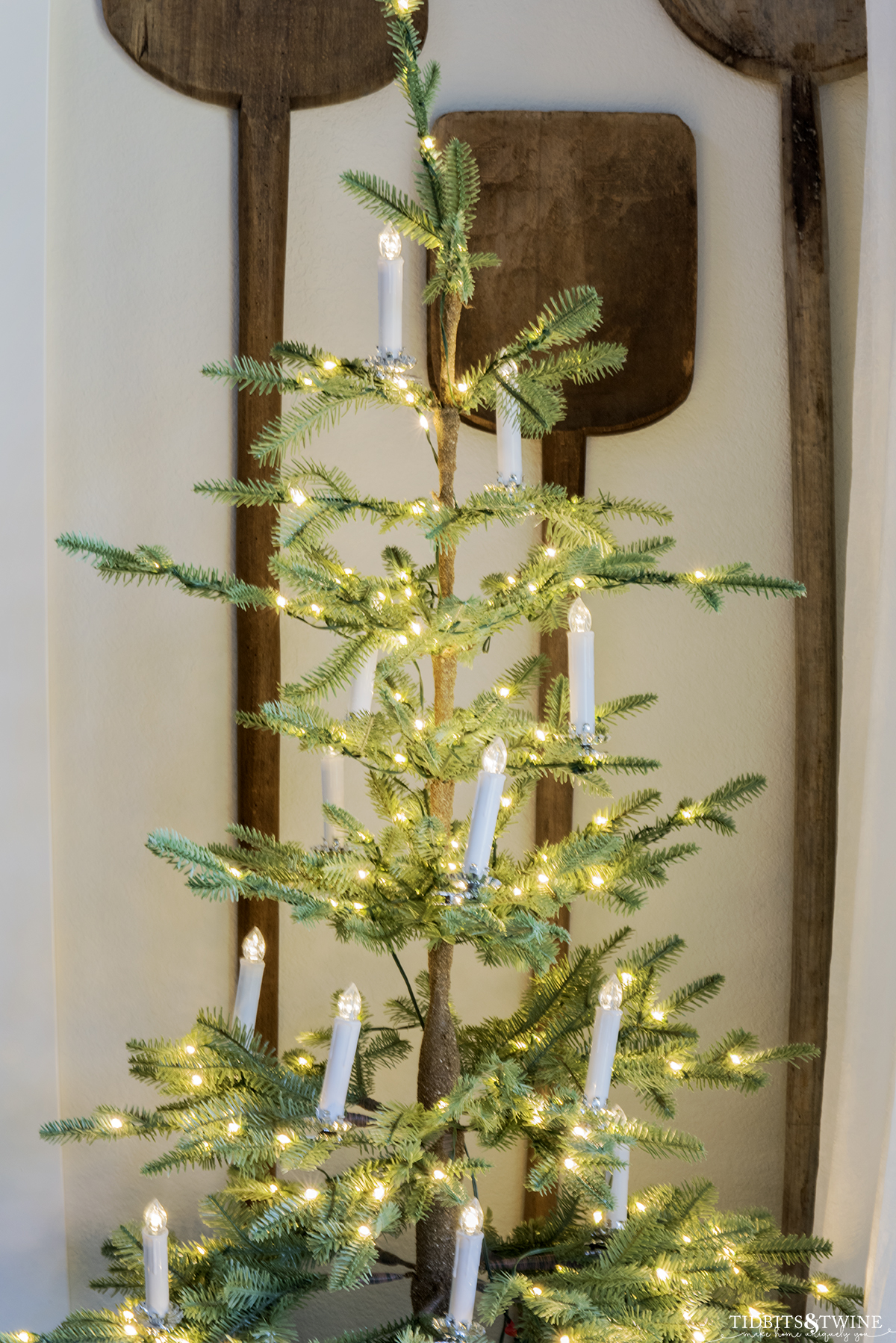
- Sparse or airy: More space between branches for a natural, open look.
- Pencil: The smallest footprint and best for very tight spaces.
The best tree size isn’t necessarily the biggest one your ceiling can handle. I’d rather have a slightly smaller tree that fits the room beautifully than one that forces you to rearrange half the furniture every December.autifully than a giant one that makes you rearrange half the room every December.
2. PE vs. PVC Needles
If you only learn one artificial Christmas tree term, make it this one.
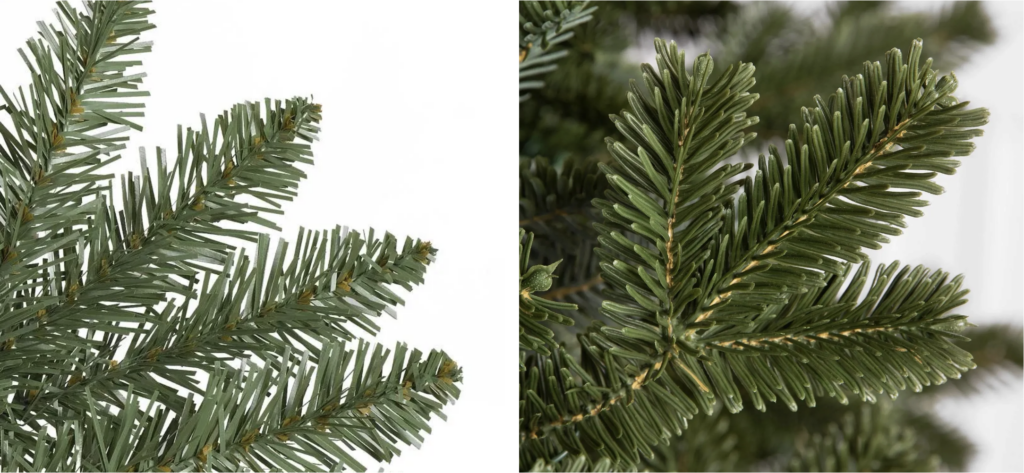
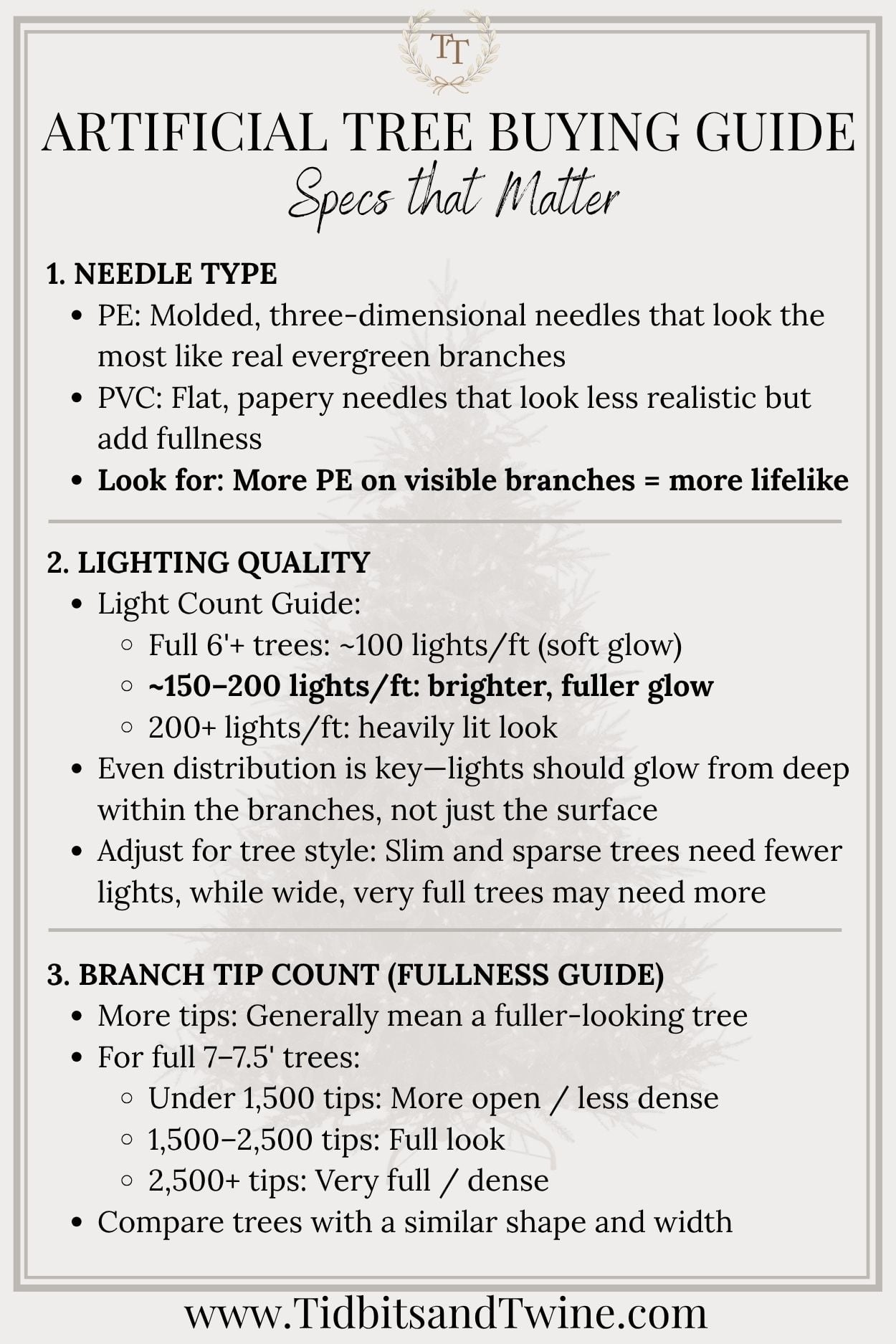
PE needles are molded from real tree branches, so they have more texture, depth, and dimension. They’re what give an artificial tree that more realistic look.
PVC needles are the flatter, more papery-looking needles you probably remember from older artificial trees. They’re made from thin strips of material and don’t have the same dimension as molded PE.
But a tree that uses both PE and PVC isn’t necessarily lower quality.
Many good artificial trees use realistic PE foliage on the visible outer branches and PVC closer to the trunk to add fullness and hide the interior structure. I actually like this combination on some trees because you get realistic-looking branches without sacrificing that lush, full shape.
An all-PE tree can look incredibly realistic, but it may also have a more open or natural silhouette depending on the design.
One other thing to watch for: if you use heavy ornaments, check reviews for comments about branch strength. Some soft or drooping branches look beautiful bare but can be frustrating to decorate.

My take: Don’t dismiss a tree just because it contains PVC. What matters more is how much PE it uses and where that PE foliage is placed.
Does PE Percentage Matter?
You may also see a PE percentage listed in the specifications. In general, a higher percentage means more of the tree is made with realistic molded foliage, but I wouldn’t choose a tree based on that number alone.
A tree with a lower PE percentage can still look very realistic if the PE is used on the visible outer branches and the PVC is tucked deeper inside for fullness.
My take: A higher PE percentage is a nice clue, but where the PE is placed and how the finished tree looks matter more than the percentage itself.
3. Branch Tip Count
Tip count is the number of individual branch tips on a tree, and in general, more tips usually mean a fuller-looking tree.
But a higher tip count does not automatically mean a better or more realistic tree. A tree with fewer well-shaped PE branches can look better than one with thousands of flatter PVC tips.
Tip count is most useful when you’re comparing trees that are similar in height, width, and shape. If one 7.5-foot full tree has 2,000 tips and another has 5,000, that difference is worth noticing.
My take: Think of tip count as a clue about fullness, not a quality score.
4. Light Count
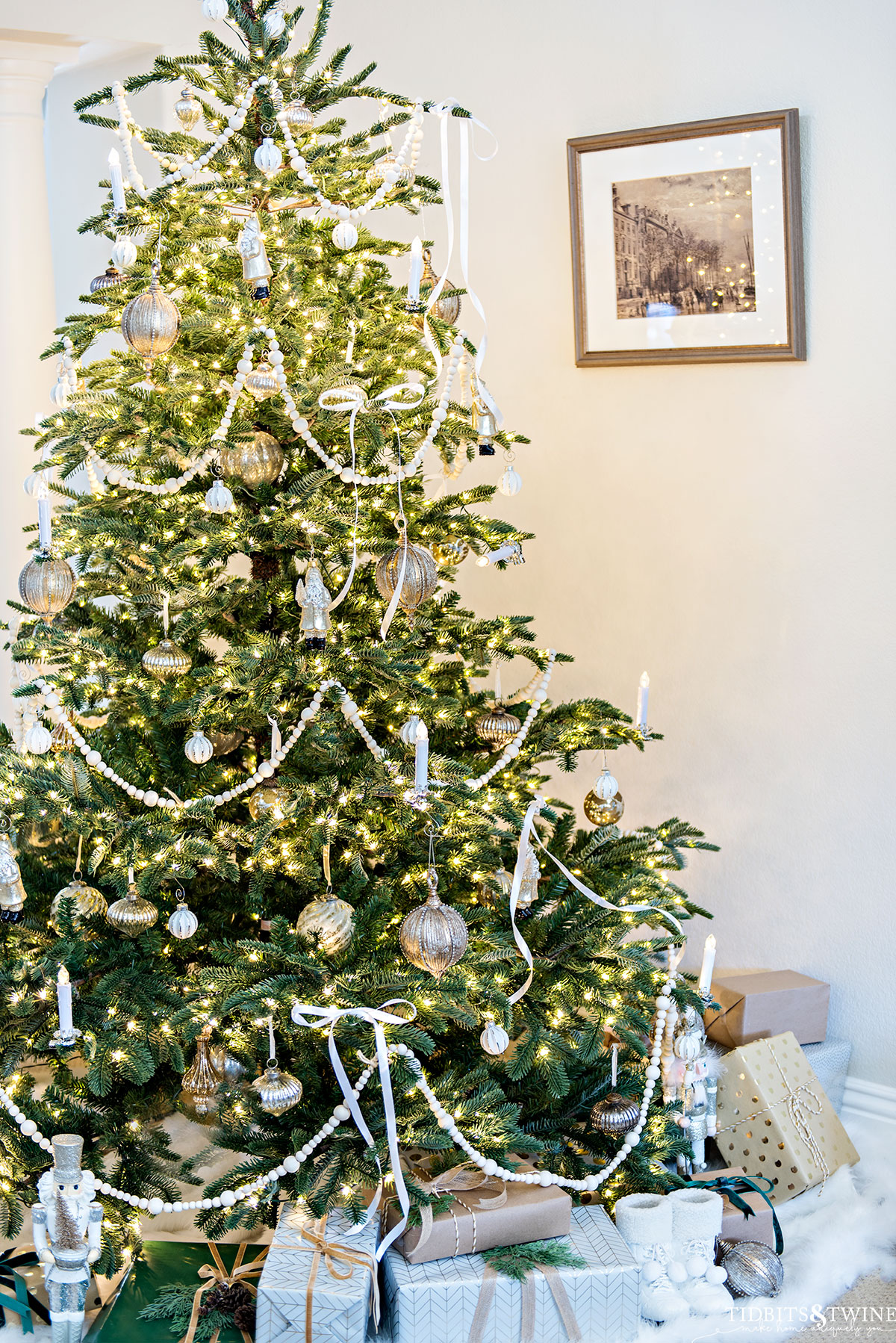
Light count is one spec I do pay attention to because it has such a big impact on how a tree looks once it’s lit.
For a standard full-size tree, roughly 6 feet and taller, about 100 lights per foot is a useful starting point, while 150–200 lights per foot creates a much brighter, more heavily lit look. Smaller, slimmer, or sparse trees generally need fewer lights.
On a 7.5-foot tree, roughly 750 lights gives you a more traditional glow, while 1,100–1,500 lights will look noticeably brighter. Some trees go well beyond that, with 2,000 lights or more.
But the number isn’t everything. Lights tucked deeper into the branches create more of a glow from within, while lights concentrated on the outer tips can look more dotted.
My take: Compare light count, but also look at photos of the tree lit. Placement can make just as much difference as the number of bulbs.
5. Light Color and Type
“Warm white” can mean very different things from one tree to another. Some lights have a soft, creamy glow, while others look much more yellow or even slightly greenish. If light color matters to you, customer photos and videos can be more helpful than the product description.
Also check whether the tree is warm white only or can switch between white and multicolor. Some trees also offer dimming, twinkle, fade, and other lighting effects.
The type of light matters too. Traditional mini LEDs have a larger bulb shape, while micro or fairy LEDs are much smaller and can create that heavily twinkled look you see on many newer trees. Incandescent-style mini lights have a softer, more traditional appearance but are much less common on new pre-lit trees.
My take: Don’t stop at “pre-lit.” Look at the actual light color, bulb style, and effects because those can completely change the look of the tree.
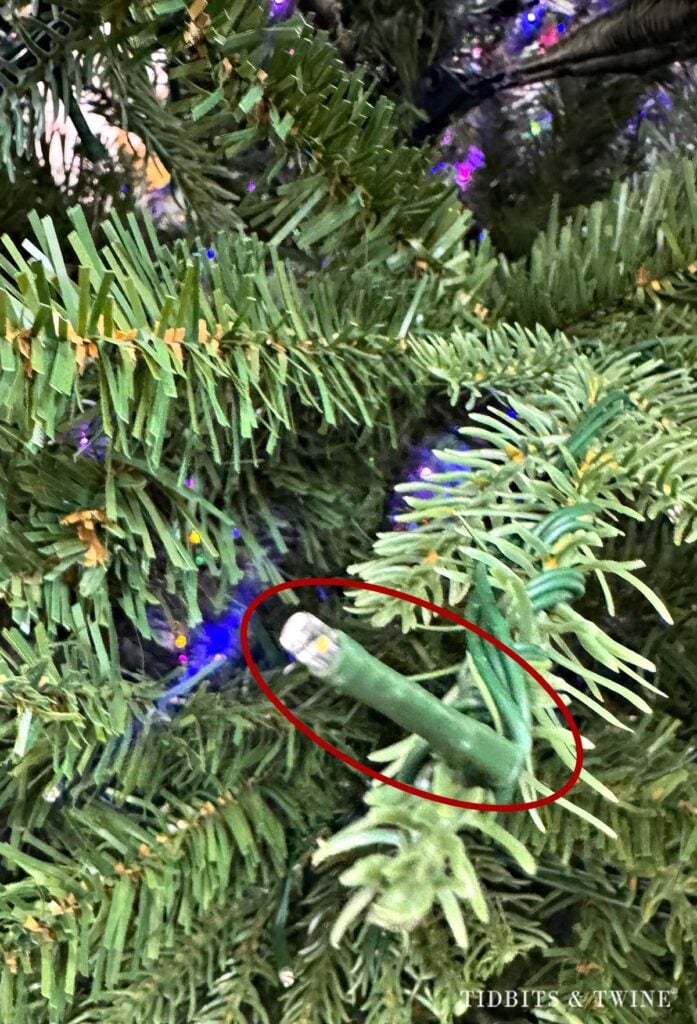 MiniLED Lights
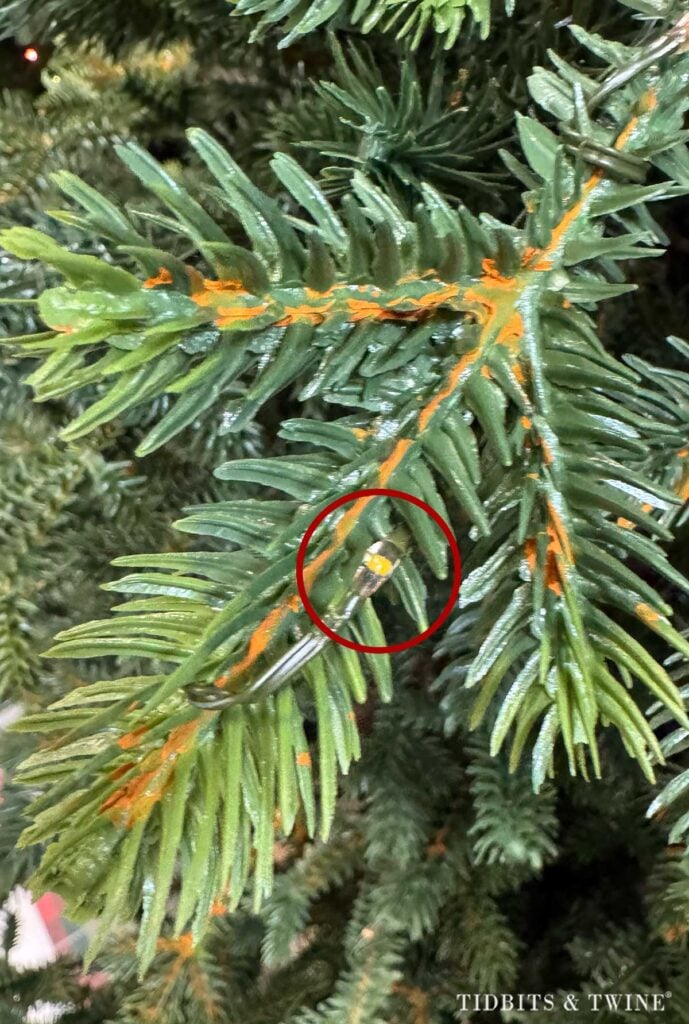 Micro/Fairy Lights
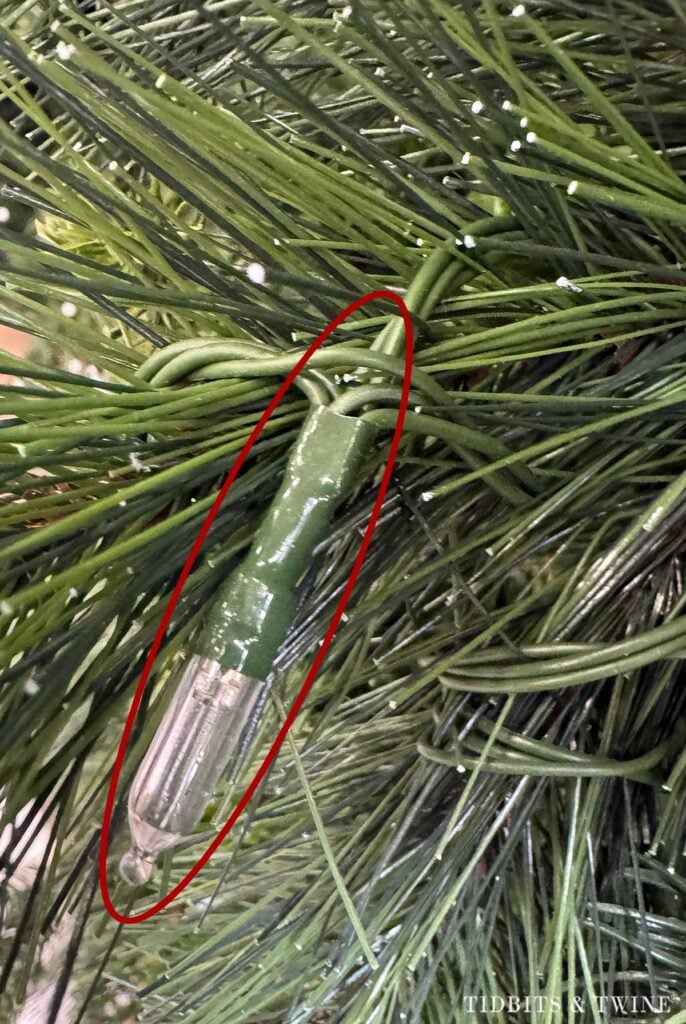 Incandescent Lights
6. Setup Features
Once you get beyond appearance, setup features are where one artificial tree can feel easier to live with than another.
One of the biggest conveniences is pole-connect lighting, where the tree lights automatically as you stack the sections. No crawling around underneath trying to figure out which plug connects to which.
Other features you may see include:
- Hinged branches that fall into place instead of attaching individually
- Memory-wire branches that hold their shape and require less fluffing
- Foot pedals or remotes for easy on/off control
- Timers and dimmers
- App controls for schedules and lighting effects
- Flip-tree designs that can make setup easier, especially with large, heavy trees
These features are convenient, but I wouldn’t choose a tree because of them. I’d prioritize the foliage, shape, and lighting first and consider easier setup a bonus.
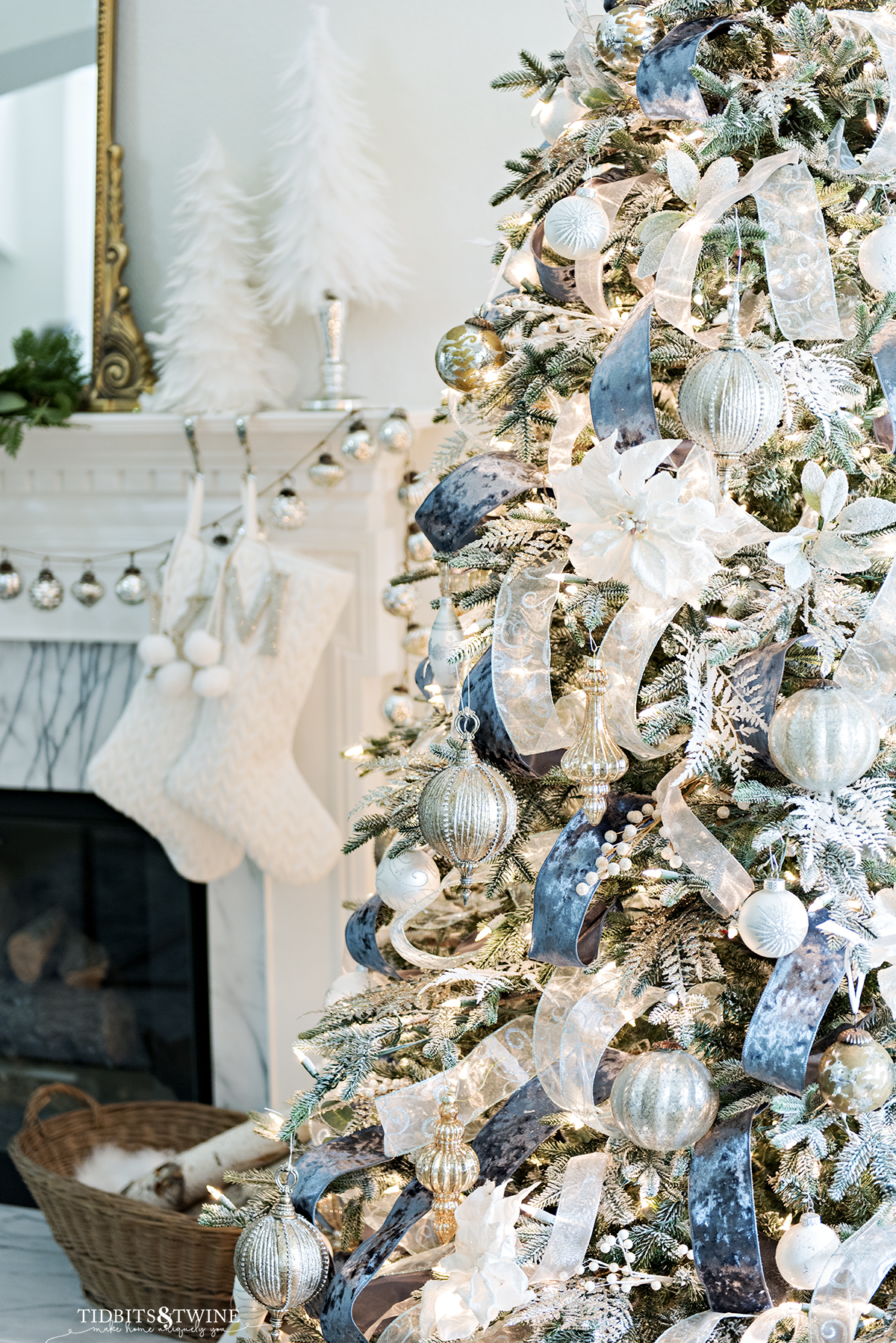
7. Storage
A big, full tree can be gorgeous in December and a complete pain in January.
Before you buy, check how many sections the tree has, whether a storage bag is included, and how compactly the branches fold down. Some premium trees are surprisingly bulky even after they’re disassembled.
Also think about where you’re actually going to store it. A 7.5-foot tree with thousands of tips can take up a lot more room than you expect once it’s packed away.
8. Reviews
Reviews can be really helpful, but I don’t pay much attention to vague comments like “beautiful tree” or “love it.”
Instead, I look for the same complaint showing up more than once.
Things I watch for include:
- Sections of lights failing
- Branches sagging under ornaments
- Bare spots that don’t improve with fluffing
- The tree leaning or feeling unstable
- Difficult assembly
- Excessive shedding
- Foliage color that looks different from the product photos
- Lights that are much brighter, yellower, or cooler than expected
One negative review wouldn’t scare me off. But if several people mention the same issue, that’s when I pay attention.
I also look closely at customer photos of the tree undecorated and fully lit. Those usually give you a much better idea of the actual shape, fullness, foliage color, and lighting than the perfectly styled product photos.d fully lit. Those usually tell you far more than the perfectly styled product photos.
My take: Look for patterns in the reviews, not one-off complaints.
9. Warranty and Returns
If you’re spending several hundred dollars on a tree, and especially if you’re spending over $1,000, check the warranty before you buy.
Look at whether it covers the tree, the lights, or both, since those are often handled separately. It’s also worth checking whether replacement bulbs, remotes, power cords, or other parts are available if something fails a few years down the road.
The return policy matters too, especially when buying online. A tree can look very different in your room than it did on the product page, so I prefer retailers with a reasonable return window if the color, shape, or lighting isn’t what you expected.
My take: The more expensive the tree, the more I expect the company to stand behind it.
How to Stretch Your Christmas Tree Budget
You don’t have to spend a fortune to get a beautiful artificial Christmas tree. Some lower-priced trees have surprisingly good specs compared with trees that cost twice as much.
A few ways to get more for your money:
- Consider an unlit tree. They’re often less expensive, and you won’t have to worry about built-in lights failing before the tree itself does.
- Prioritize the foliage. I’d put my money toward better PE foliage and a shape I love before paying extra for an app, remote, or lots of lighting effects.
- Compare the specs, not just the price. Look at PE percentage, light count, tree width, and overall features instead of assuming the higher-priced tree is better.
- Don’t assume more expensive means better. I’ve found plenty of mid-priced trees with specs that rival much more expensive options.
- Watch for sales. Higher-end trees are frequently discounted throughout the season, so the regular price isn’t always the price you’ll actually pay.
My take: Spend your money on the things you’ll actually notice once the tree is up: realistic foliage, a shape you love, and lighting you like.
What I’d Prioritize When Choosing an Artificial Christmas Tree
If all of these specs are starting to blur together, here’s how I’d narrow it down:
- Size and shape
- PE foliage and overall realism
- Light count and color
- Ease of setup
- Warranty and reviews
- Tip count and extra features
For me, foliage, shape, and lighting are the things worth spending money on. Tip count and convenience features can be helpful, but I wouldn’t let either outweigh how the tree actually looks.
The best artificial Christmas tree isn’t necessarily the one with the longest spec list or the highest price tag. It’s the one that looks right in your room and has the features you’ll actually notice every Christmas.
And if you’d rather skip all the research, I’ve already done plenty of it for you. My Best Artificial Christmas Trees guide compares my favorite trees at a range of prices and explains exactly why each one made the list.
More Decorating Tips
- How to Flock a Christmas Tree the Easy Way
- The Best Artificial Christmas Trees of 2025
- Tips for Decorating a Christmas Tree {to Give it a Layered Look}
DECORATING MADE EASY
Get my free 5-day decorating course and learn how to define your style, make better decisions, and create a home that feels like you.
After the course, you’ll receive my latest decorating tips, antique finds, and new posts.