




I recently swapped out the mirror above my console table. Okay, so this wasn’t a major change but it did have a big impact. And then I realized… I’ve shared plenty of photos of my consoles over the years, but I’ve never actually written a clear “how to decorate a console table” post.
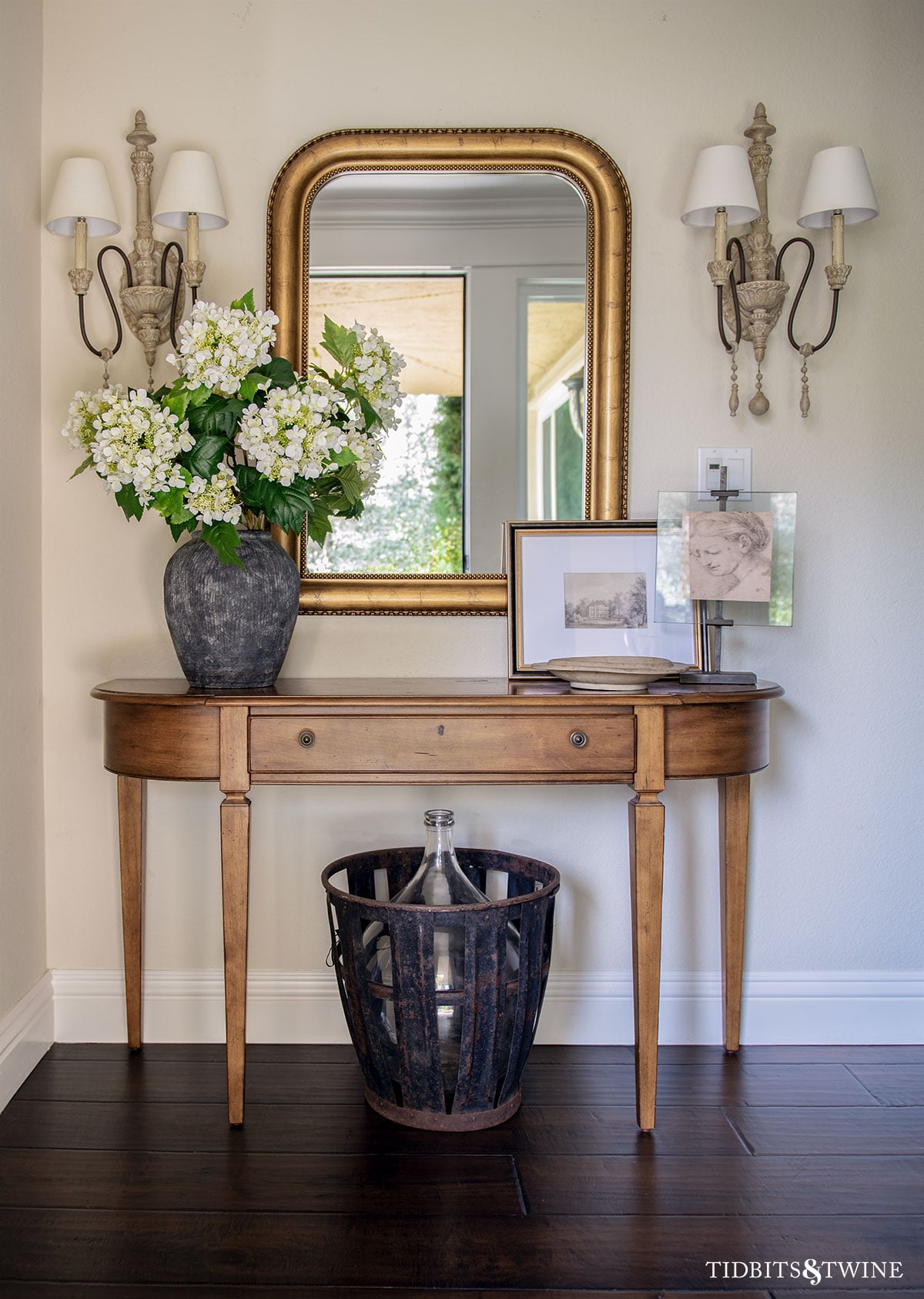
And honestly, how to decorate a console table is one of the most common decorating questions. You’re staring at a large flat surface and the options feel endless. A lamp? Two lamps? Books? A tray? All of it? It can get overwhelming fast. So today I’m breaking it down into simple, easy-to-follow formulas for console table styling.
Technically, a console table sits against a wall and a sofa table floats behind a couch. In this post, I’m talking specifically about how to decorate a console table against a wall. The “rules” for decorating when it’s against a wall are different than those when it’s floating behind a sofa. I’ll write a separate post about that soon…
Below you’ll find clear styling formulas, guidance on sizing and proportion, and common mistakes to avoid. You can even jump straight to the section you need using the Table of Contents.
3 Easy Ways to Decorate a Console Table Against a Wall
When a console sits against a wall, you are styling upward as much as across. The wall gives you an anchor point. That anchor is what makes the whole thing feel grounded instead of random.
When I swapped out the mirror in my entryway, I did not add more decor. I actually adjusted what was already there. I shifted the height on one side and simplified the other. That small change made everything feel balanced again.
That is usually the secret. It is not about adding more. It is about proportion.
Here are three simple ways to approach it.
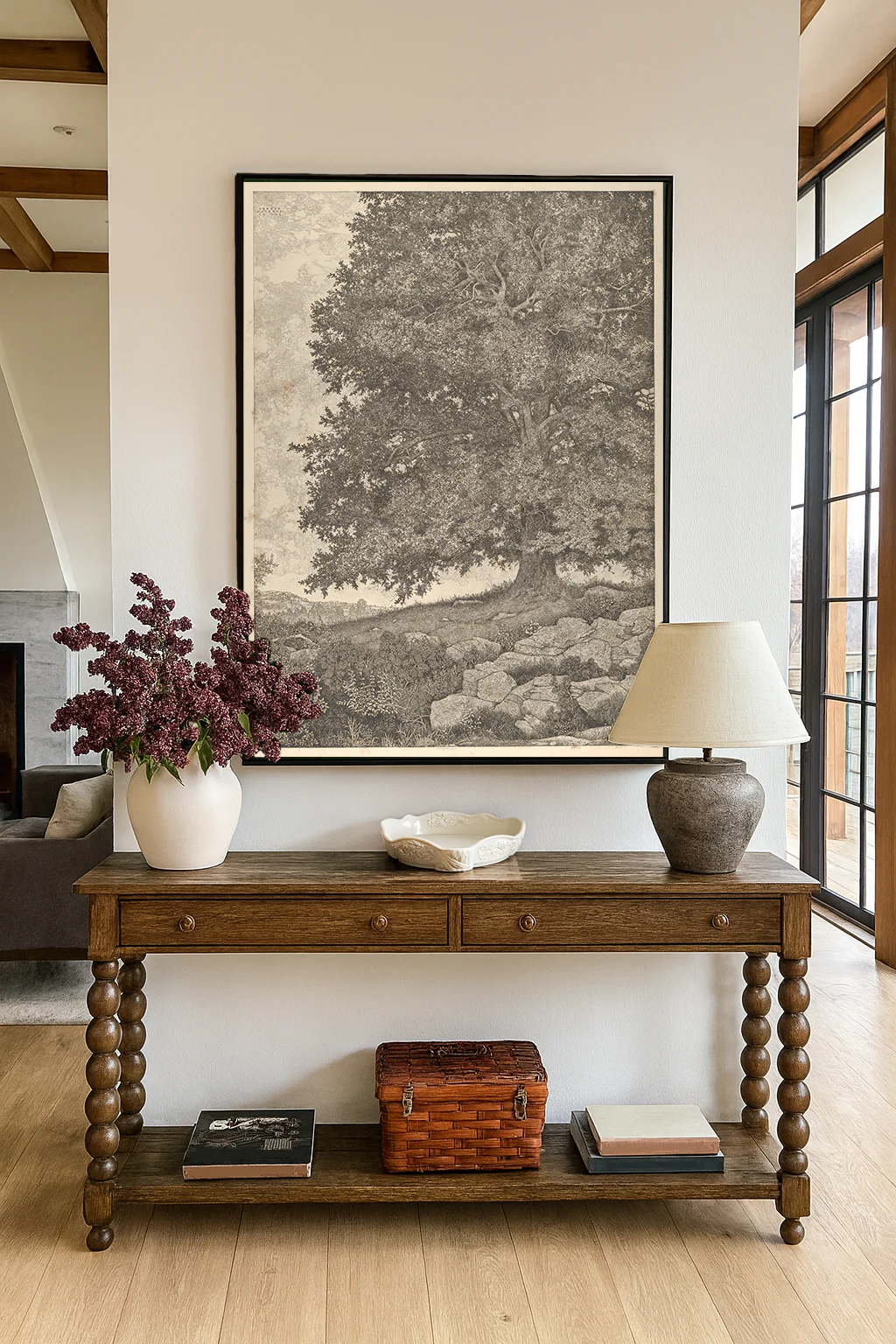
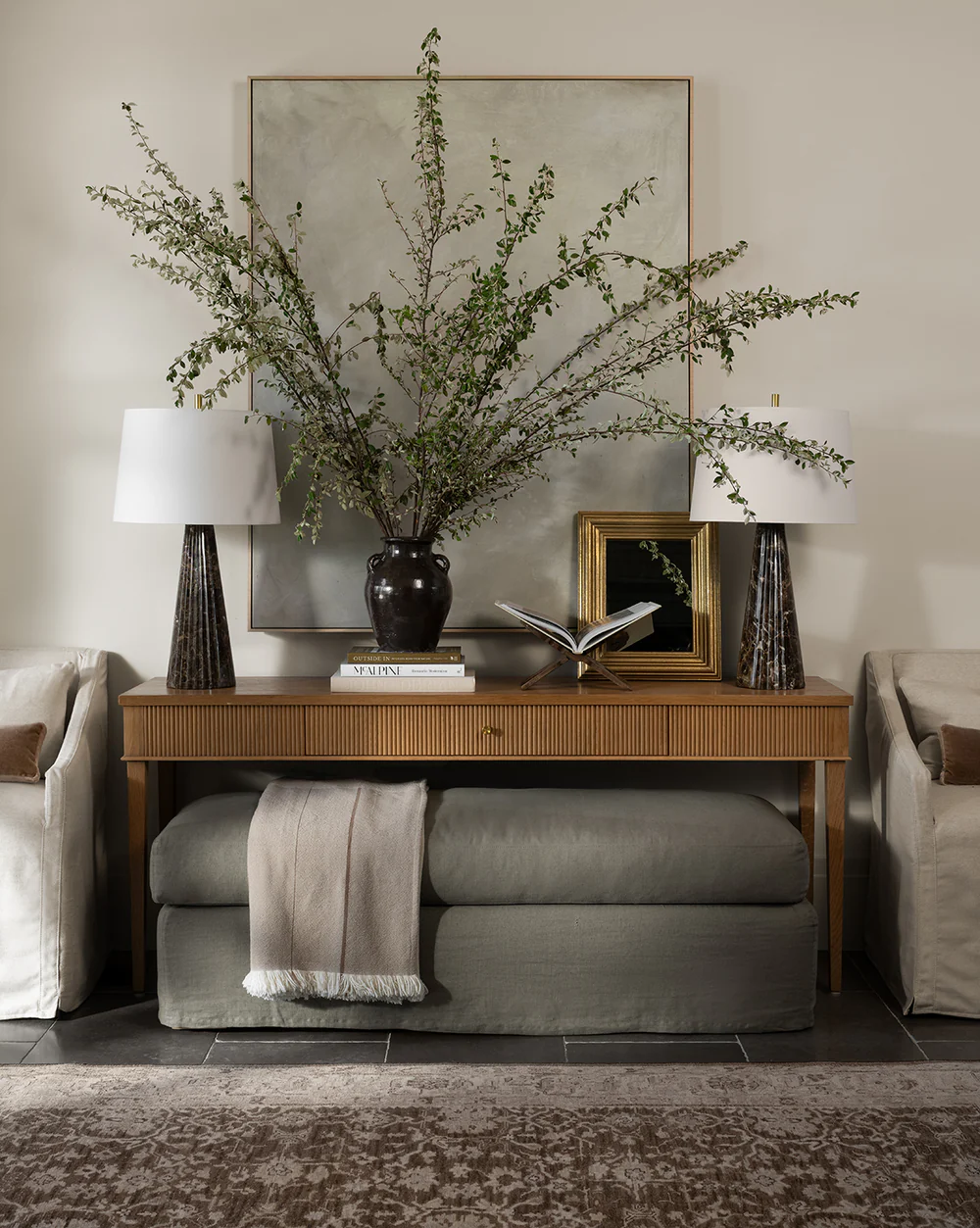
Formula 1: The Structured Symmetry
This is the calm and classic approach, but it does not require matching pieces.
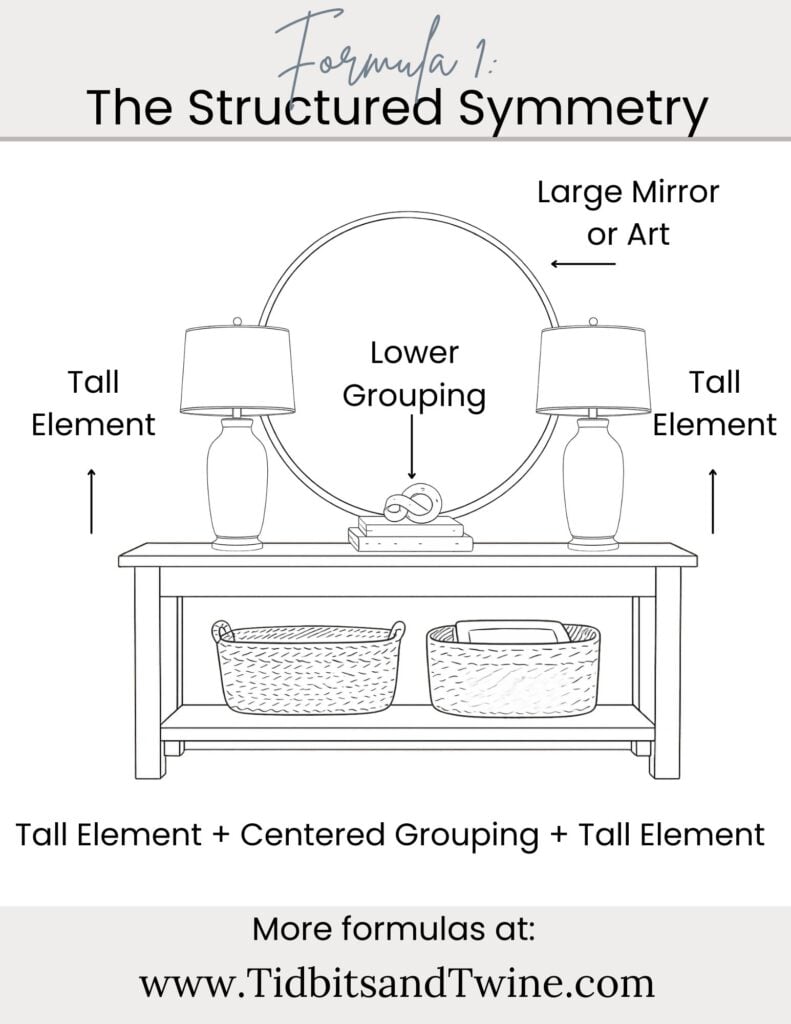
Layout
- Centered mirror or artwork
- One tall element on each end
- One contained grouping in the middle
How to Make It Work
The two end pieces do not have to match. They simply need to feel similar in height and visual weight.
Most often, people use two matching lamps. But you could just as easily use a lamp on one side and a tall vase or sculptural object on the other. What matters most is balance.
Make sure your console is long enough to comfortably support two taller elements without crowding the center. Around 60 inches or longer works well.
Keep the middle simple. A tray or bowl is usually enough. Avoid scattering smaller pieces around it.
Where It Works Best
- Long consoles
- Entryways that benefit from structure
- Dining rooms, living rooms, or spaces where you want a more formal balance
Formula 2: The Anchored Asymmetrical
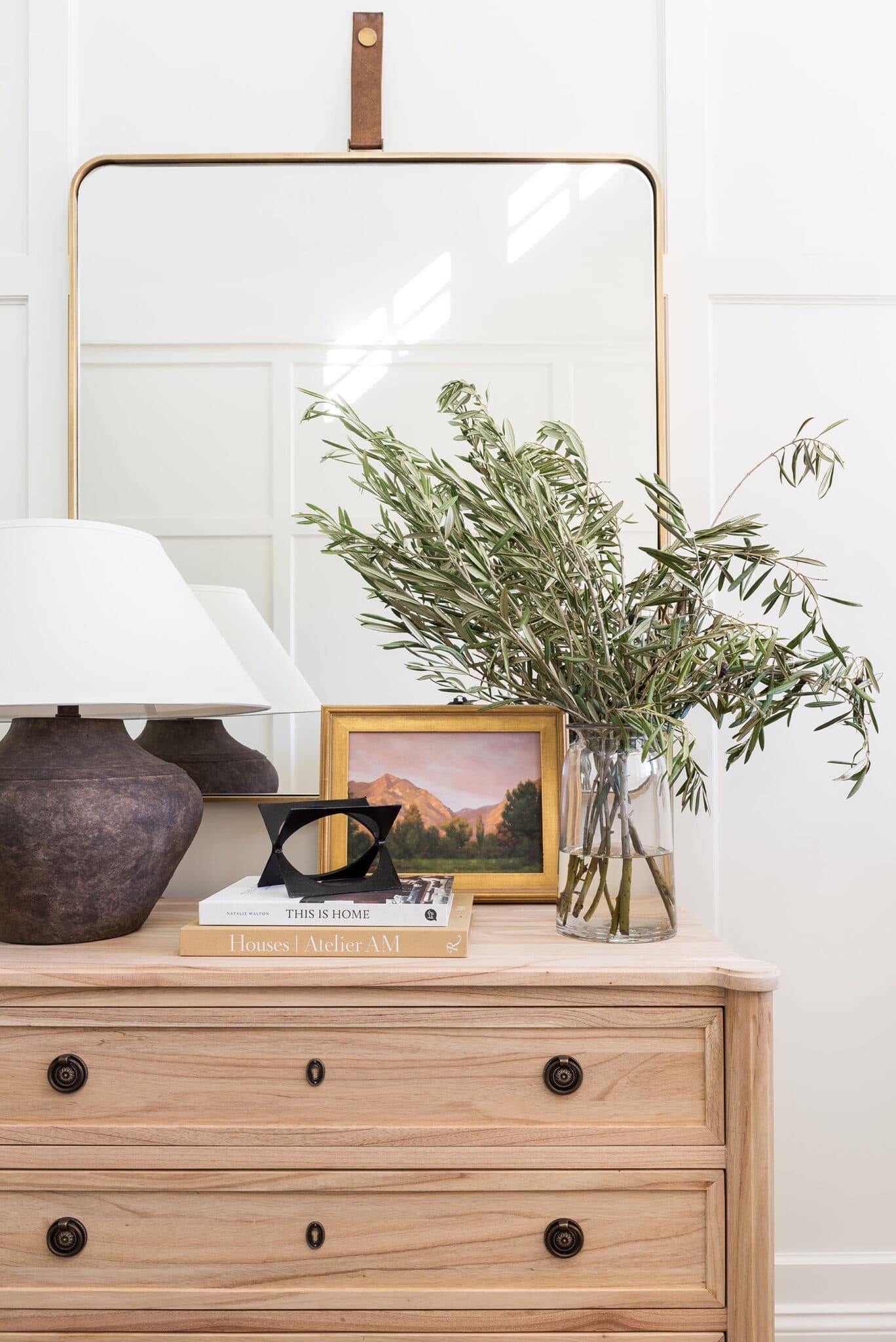
This is the most flexible formula and the one I use most often.
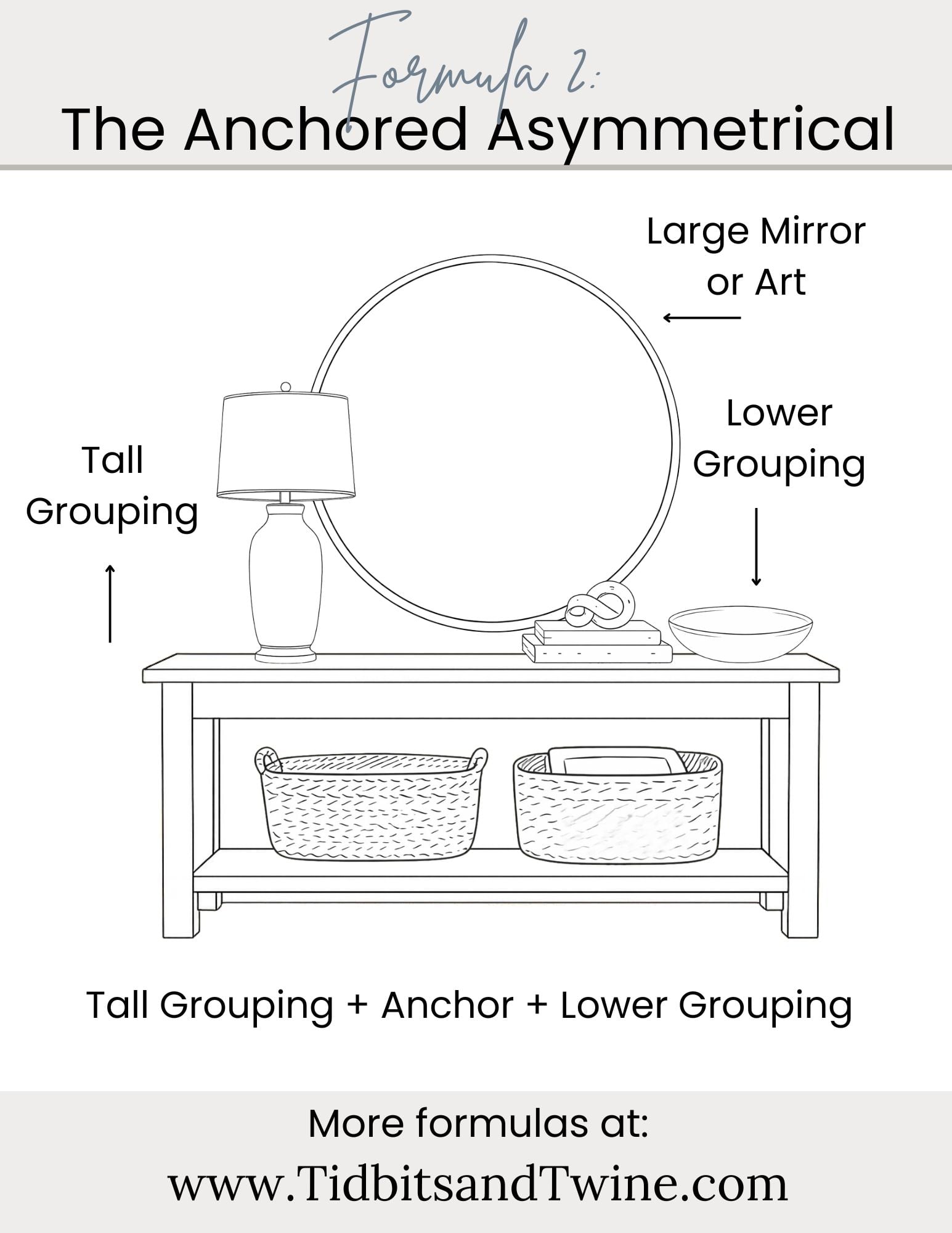
Layout
- Large mirror or artwork centered above the console
- One taller grouping on one side
- One lower grouping on the opposite side
How to Make It Work
Choose a wall piece that feels substantial enough to anchor the table. If it is too small, everything underneath will feel disconnected.
Let the taller grouping sit slightly off to one side, not pushed all the way to the edge. That grouping can be a lamp or a vase with branches. If you use greenery, that already satisfies the organic element.
On the opposite side, create a lower grouping with visual weight. A stack of books or a sculptural object works well. Focus on balance, not matching sides.
Where It Works Best
- Medium or shorter consoles
- Entryways that feel relaxed rather than formal
- Spaces where symmetry would feel forced
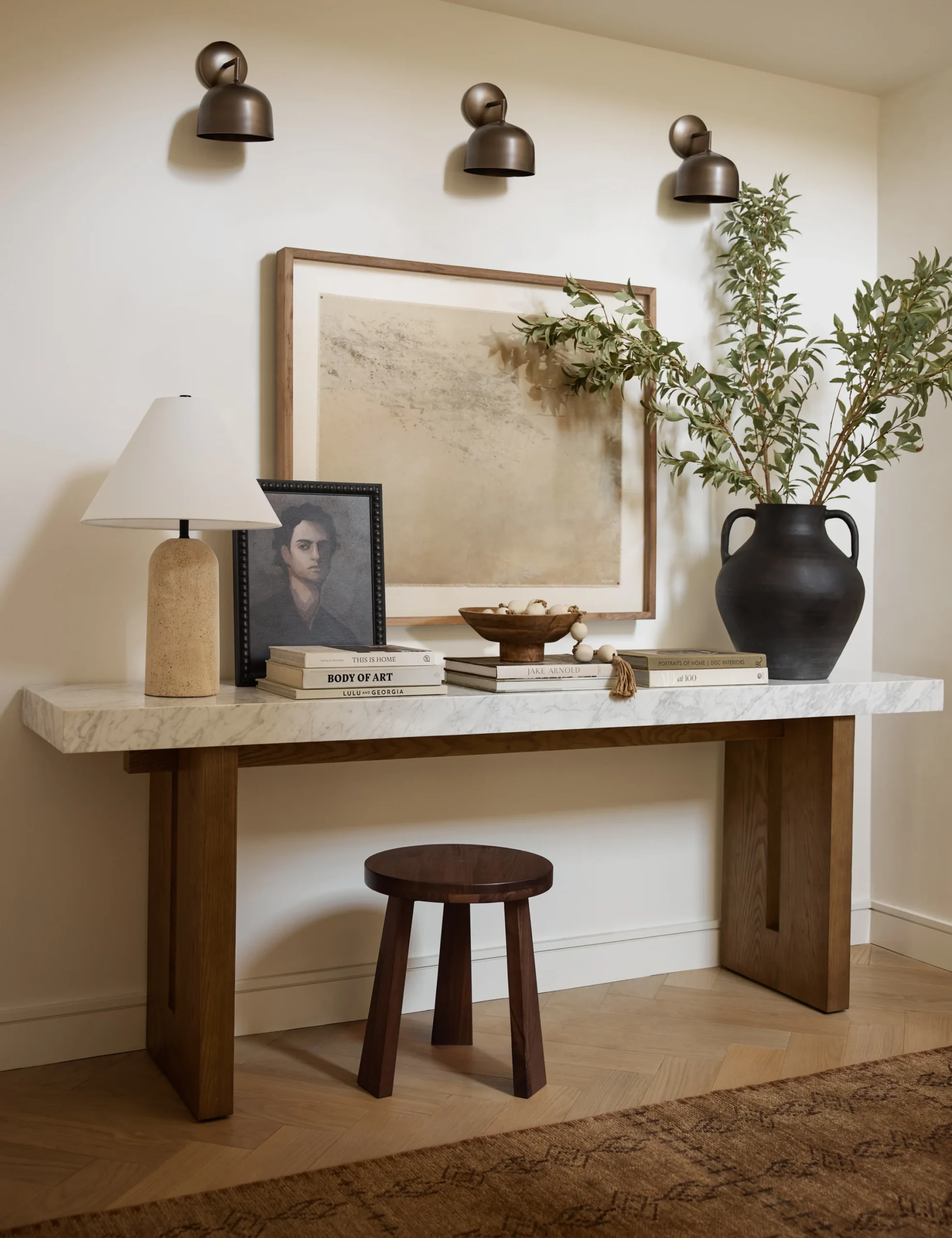
Formula 3: The Statement Center
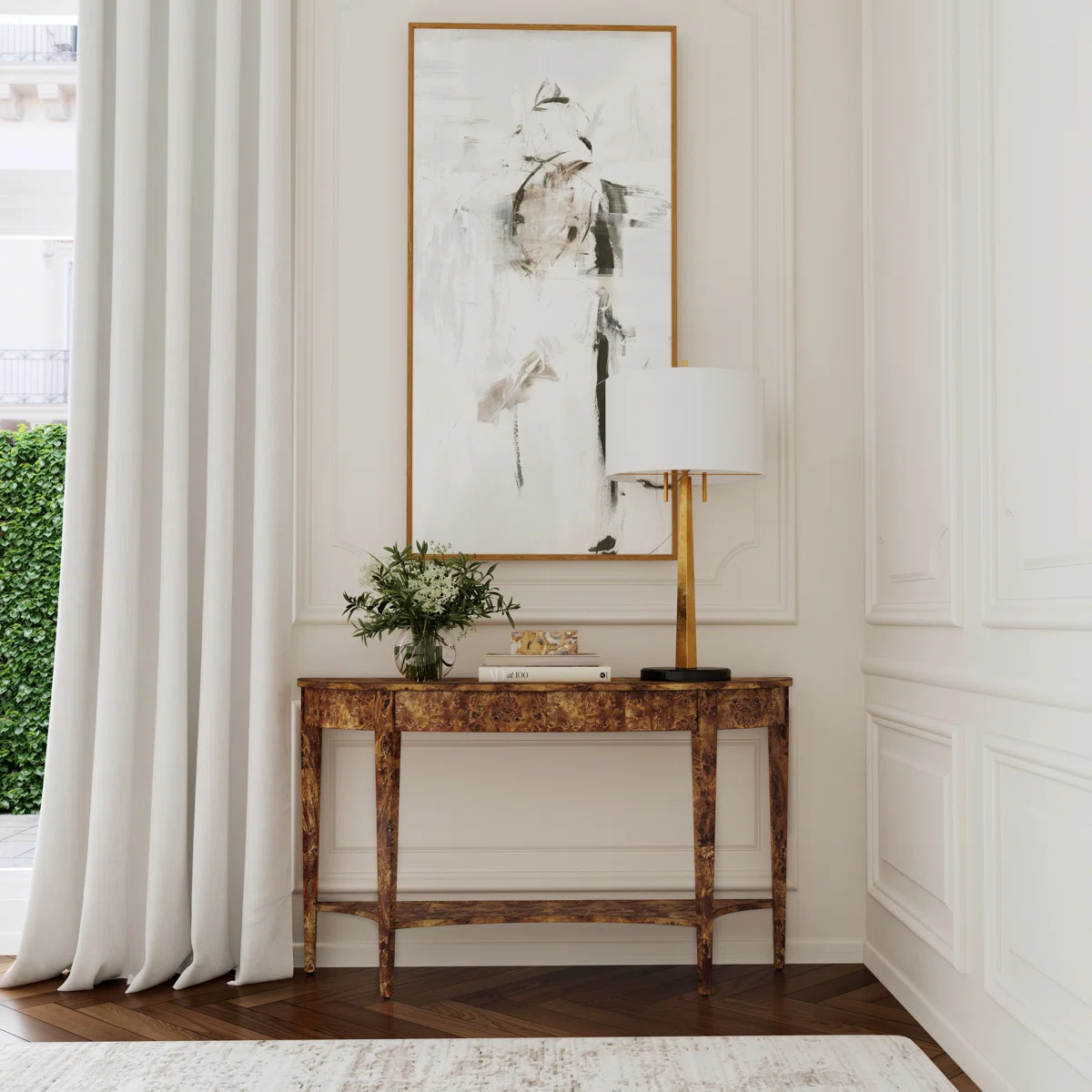
If you prefer a simpler look, this one keeps things clean.
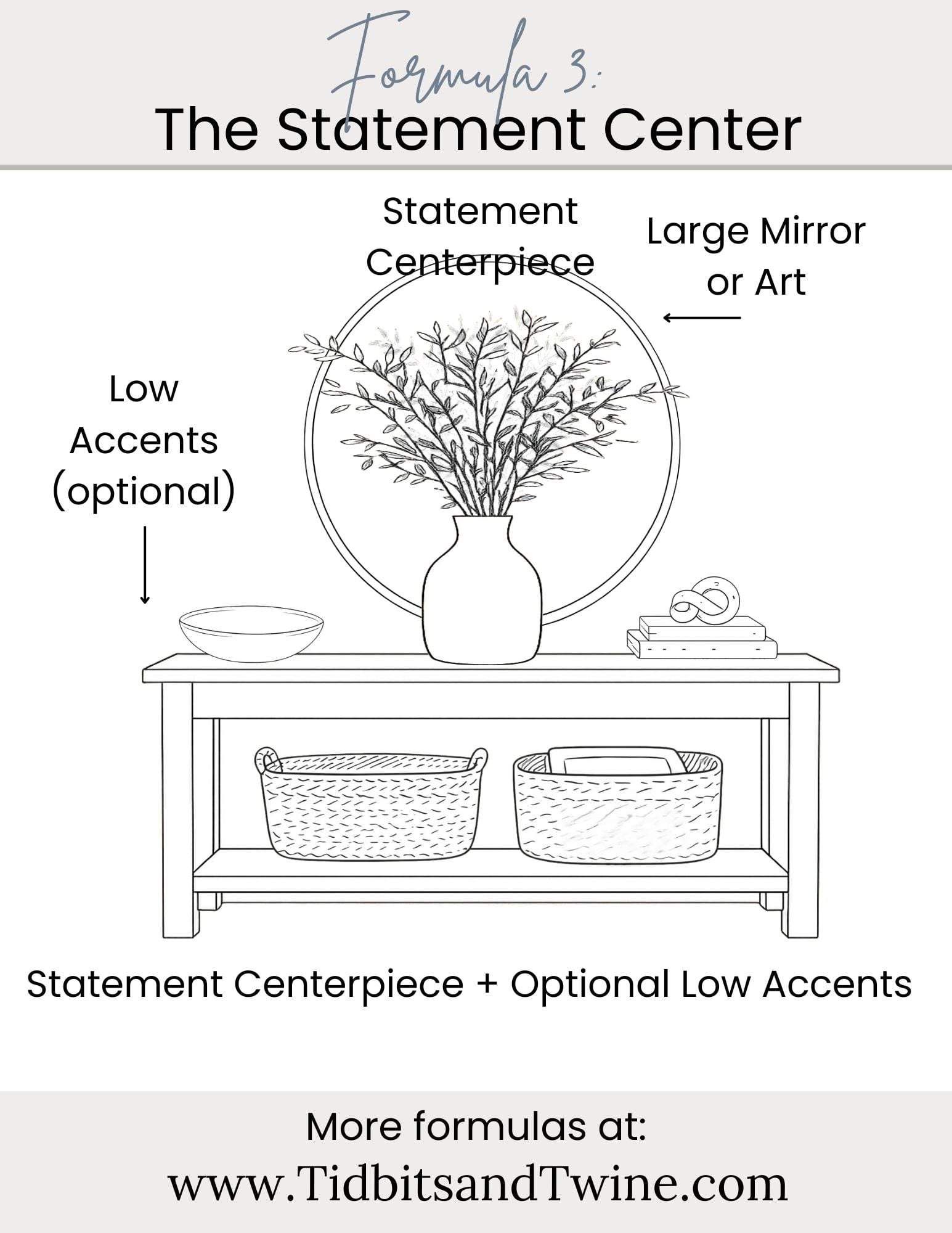
Layout
- Oversized art or mirror
- One strong centered grouping below
How to Make It Work
Go bigger with the wall piece than you think you need. This formula depends on scale.
Choose one grouping underneath that has enough presence to hold attention on its own. That could be a substantial vase, sculptural object, or lamp.
Leave open space on either side.
Where It Works Best
- Minimal spaces
- Smaller consoles
- Rooms that already have layered elements elsewhere
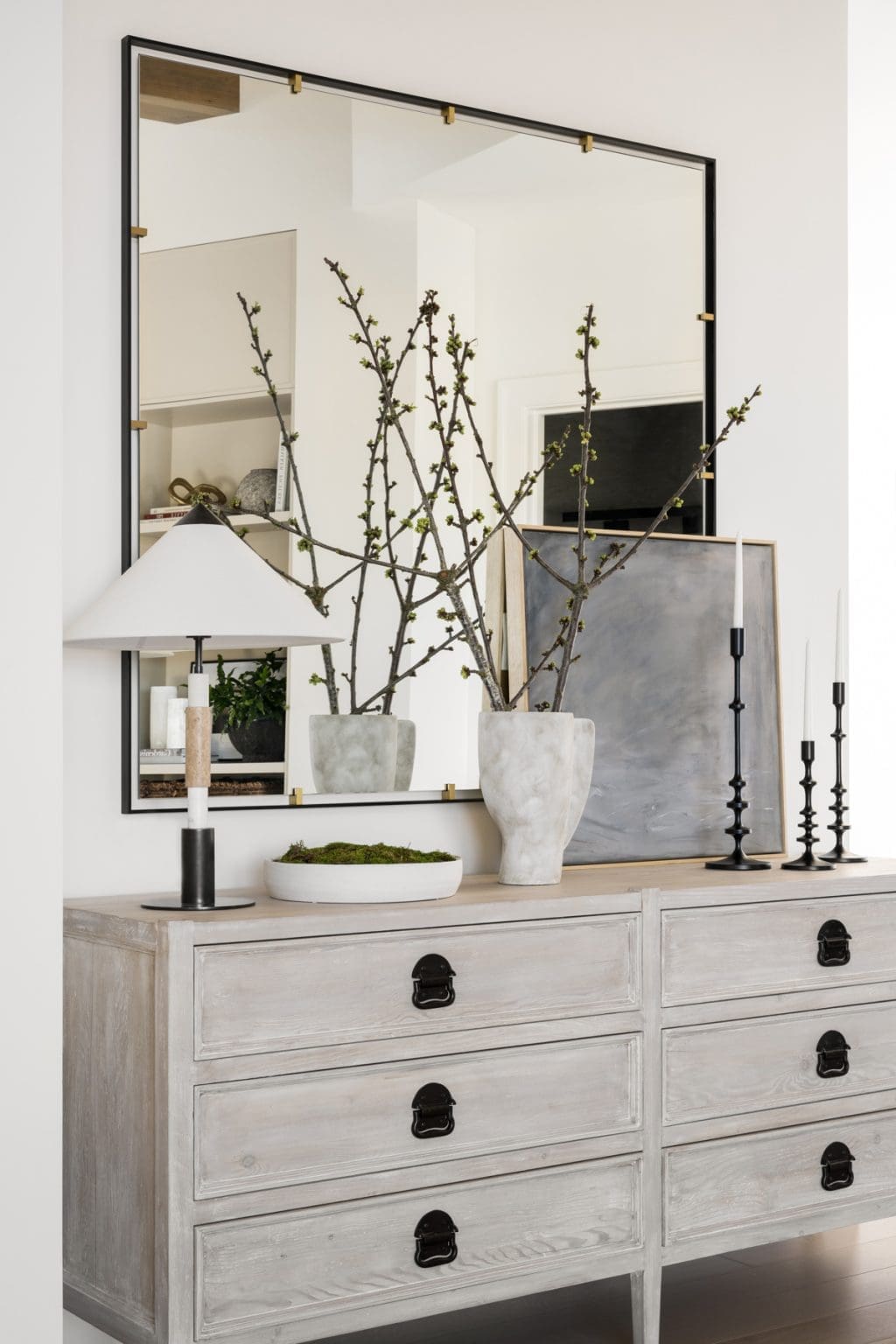
Before You Decorate a Console Table, Check the Size
Before we get into formulas, there’s one thing that matters more than anything else: the size of your table.
Some styling approaches only work if your console is long enough. Others are better for narrow or shallow tables. Paying attention to width and depth will save you from trying a layout that was never going to feel right in the first place.
Here’s how to think about it.
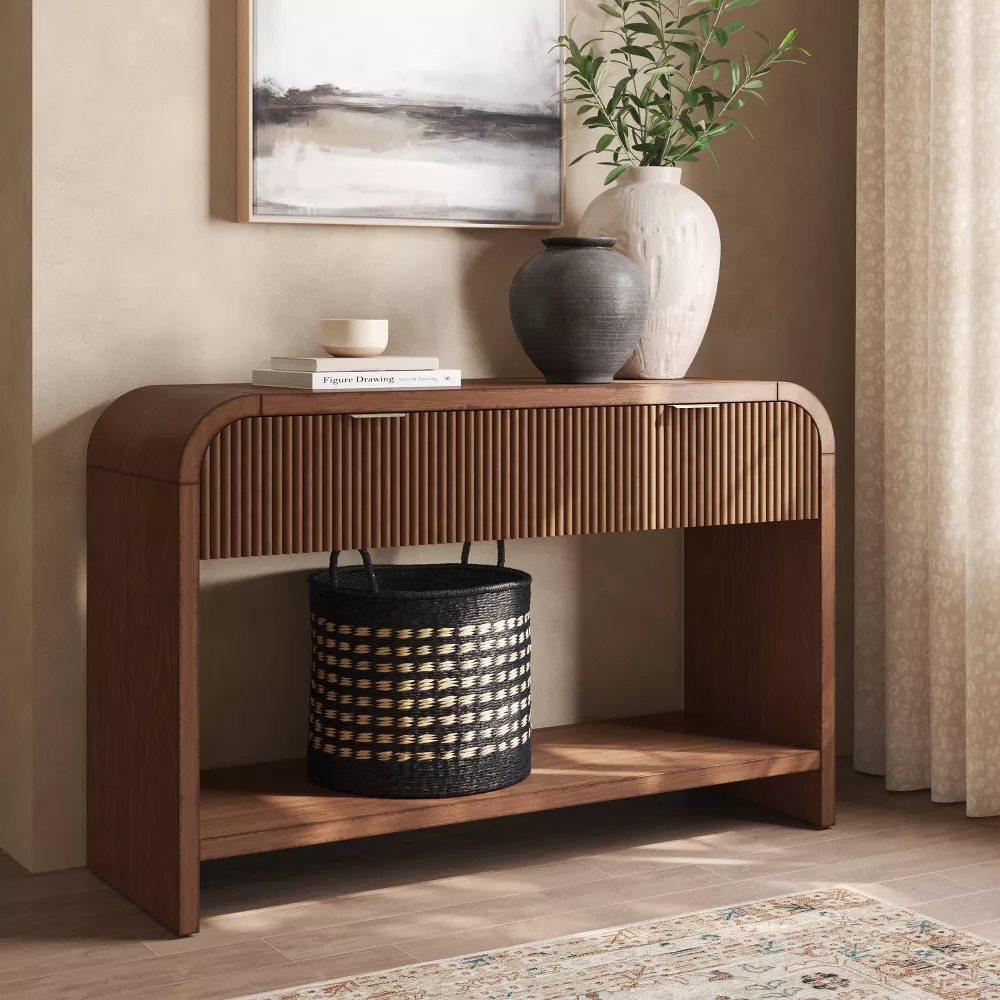
If Your Console Is Short (Under About 48 Inches)
Keep it simple.
This is not the place for two lamps or multiple large groupings. Choose one strong tall element and balance it with one lower grouping. The more you try to squeeze onto a short table, the faster it starts to feel crowded.
If Your Console Is Long (60 Inches or More)
You have room to breathe.
Symmetry works beautifully here. Two lamps won’t feel cramped. You can create three visual zones — left, center, and right — without it looking busy.
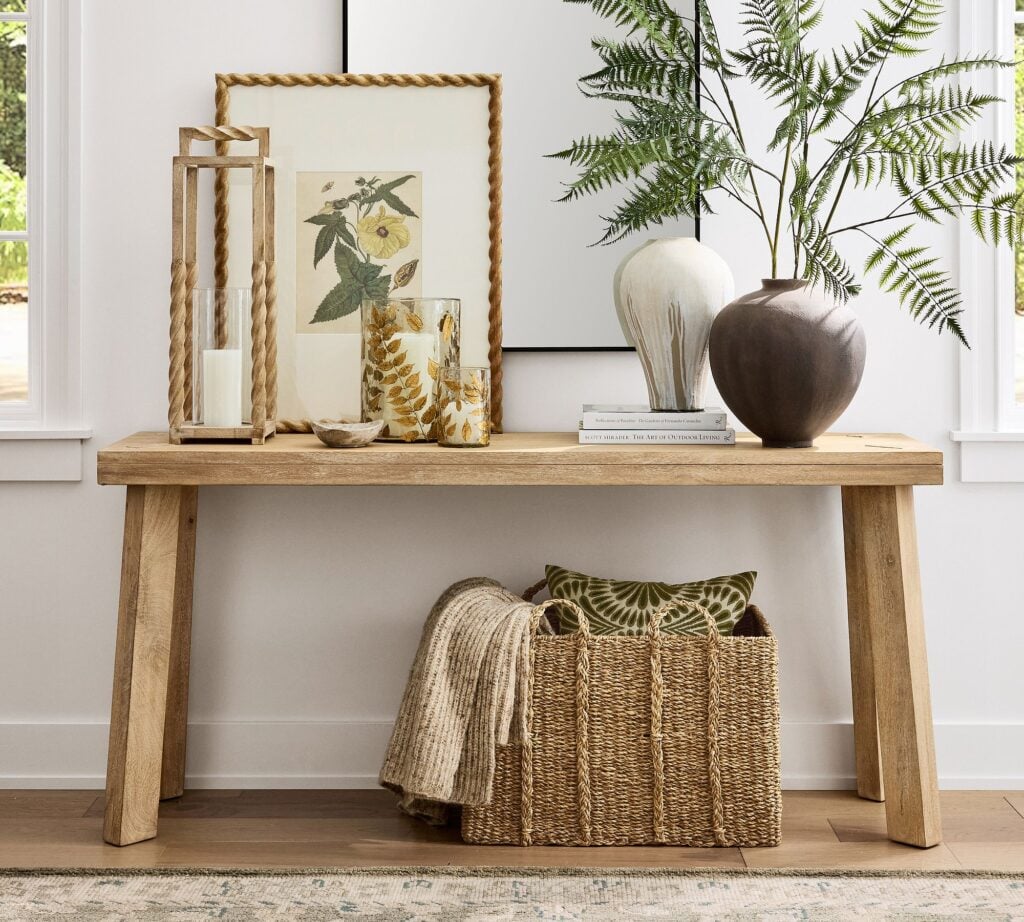
If Your Console Is Deeper (16 Inches or More)
You can layer slightly.
A deeper console gives you space to overlap objects a bit — for example, placing books slightly in front of a lamp base or tucking a small object in front of artwork. That extra depth makes layered styling feel natural instead of cramped.
If Your Console Is Shallow
Keep everything a little flatter.
Avoid deep trays or oversized bowls that eat up the surface. Slimmer lamps and tighter groupings will feel more proportional.
Styling Tips That Make Any Console Table Work
No matter which formula you choose, here are some additional tips to keep in mind as you choose your decor.
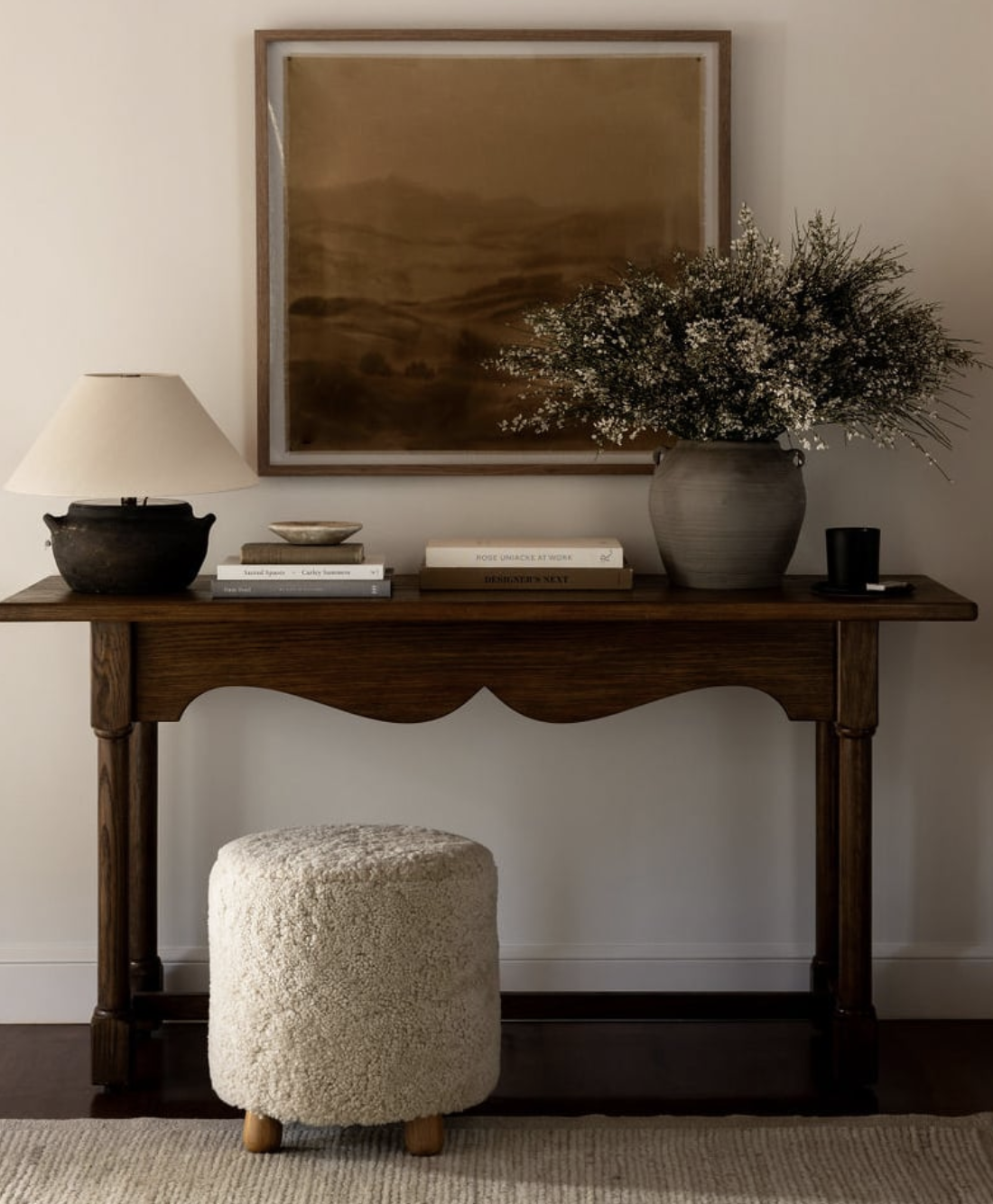
1. Vary the Heights
Aim for a clear difference between tall, medium, and low elements so the arrangement doesn’t feel flat. This often creates a subtle triangle that feels balanced.
2. Get the Art or Mirror Size Right
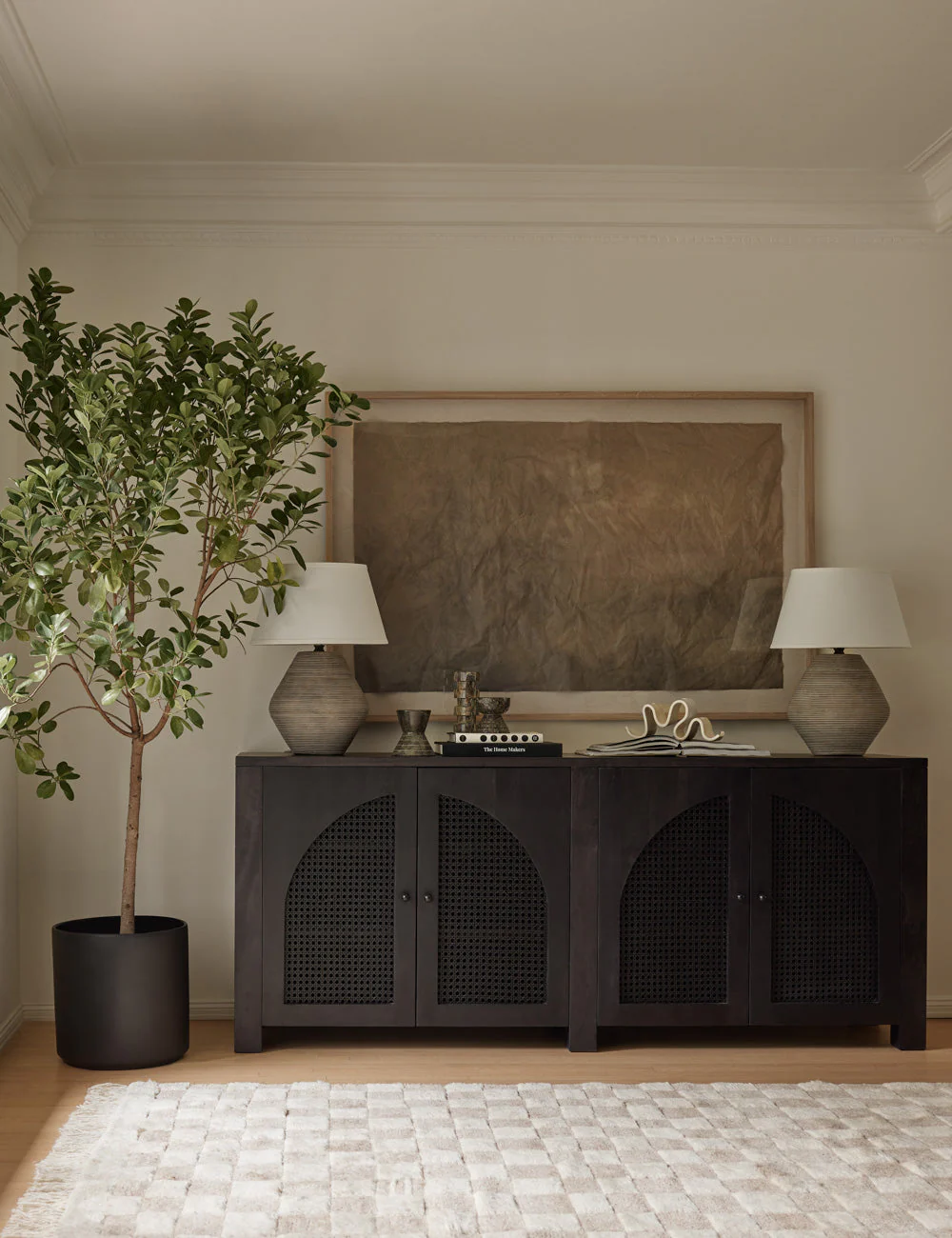
As a general rule, the artwork or mirror above a console should be about two-thirds to three-quarters the width of the console underneath. Too small looks disconnected. Slightly bigger is usually better than too small.
3. Use a Variety of Texture
Mix materials so everything doesn’t feel one-note. Ceramic, wood, woven elements, and books together will always feel more layered than one finish repeated over and over.
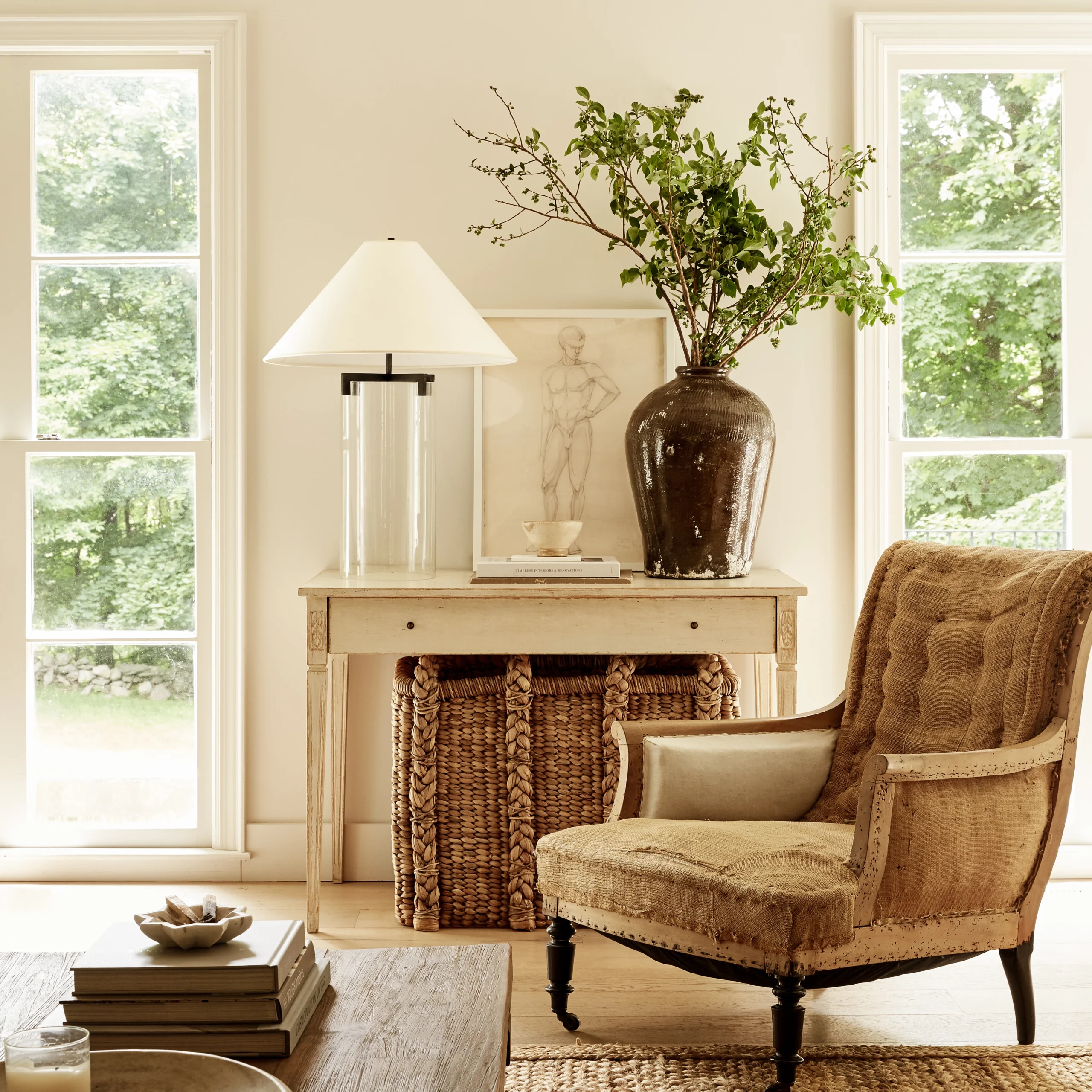
4. Contain Small Items
Group smaller pieces inside a tray or on a stack of books so they feel intentional instead of scattered.
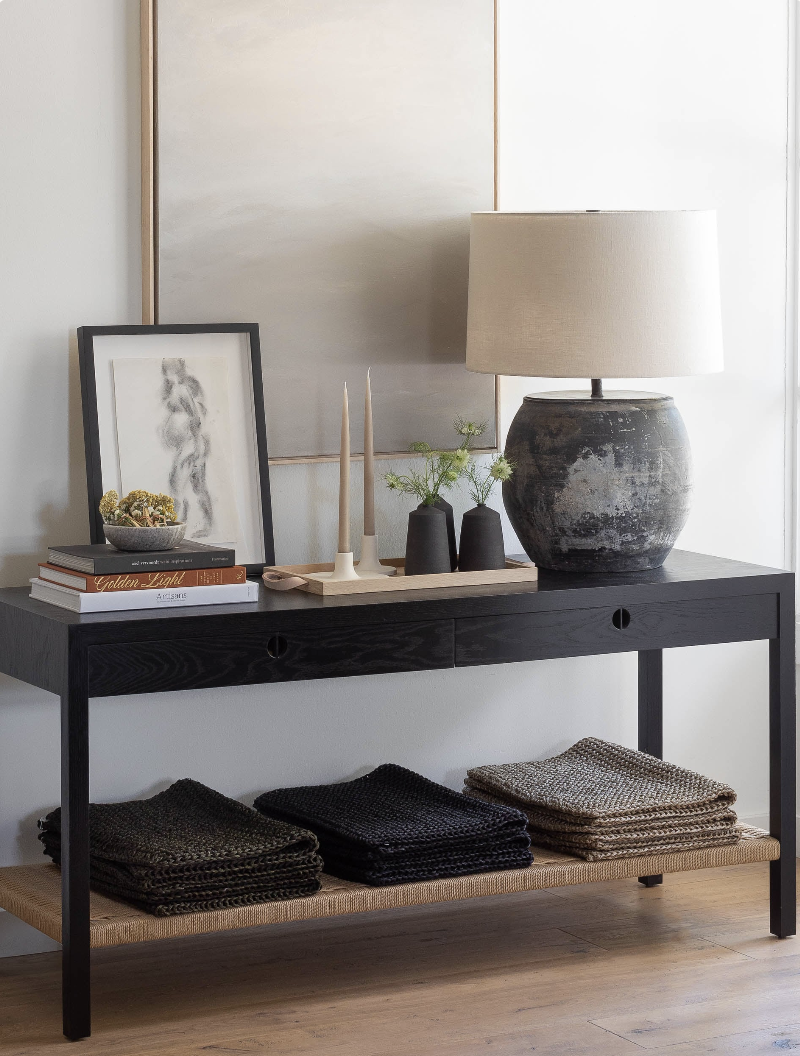
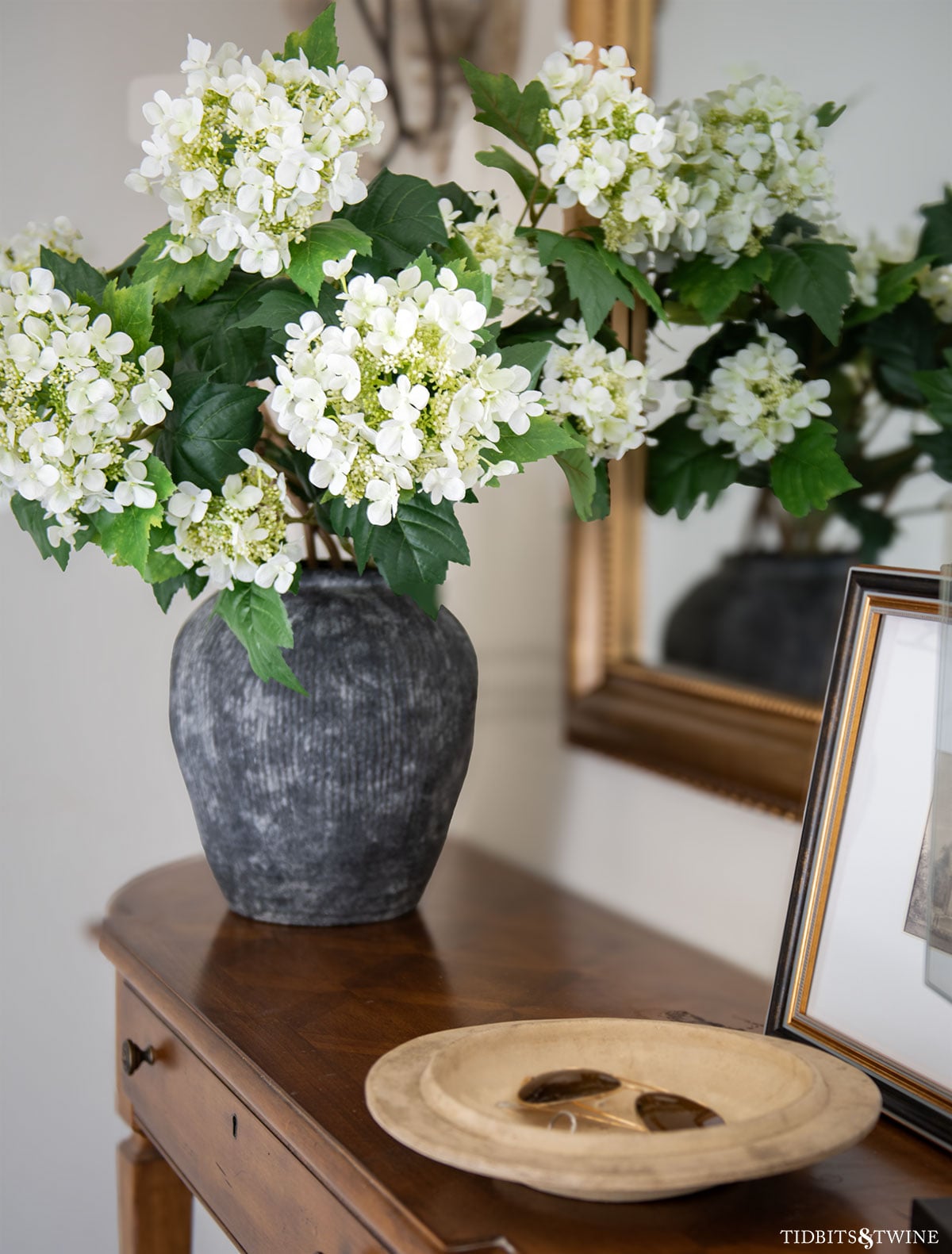
5. Include Something Organic
A vase with branches, a plant, or even a wooden bowl adds softness and keeps the arrangement from feeling stiff.
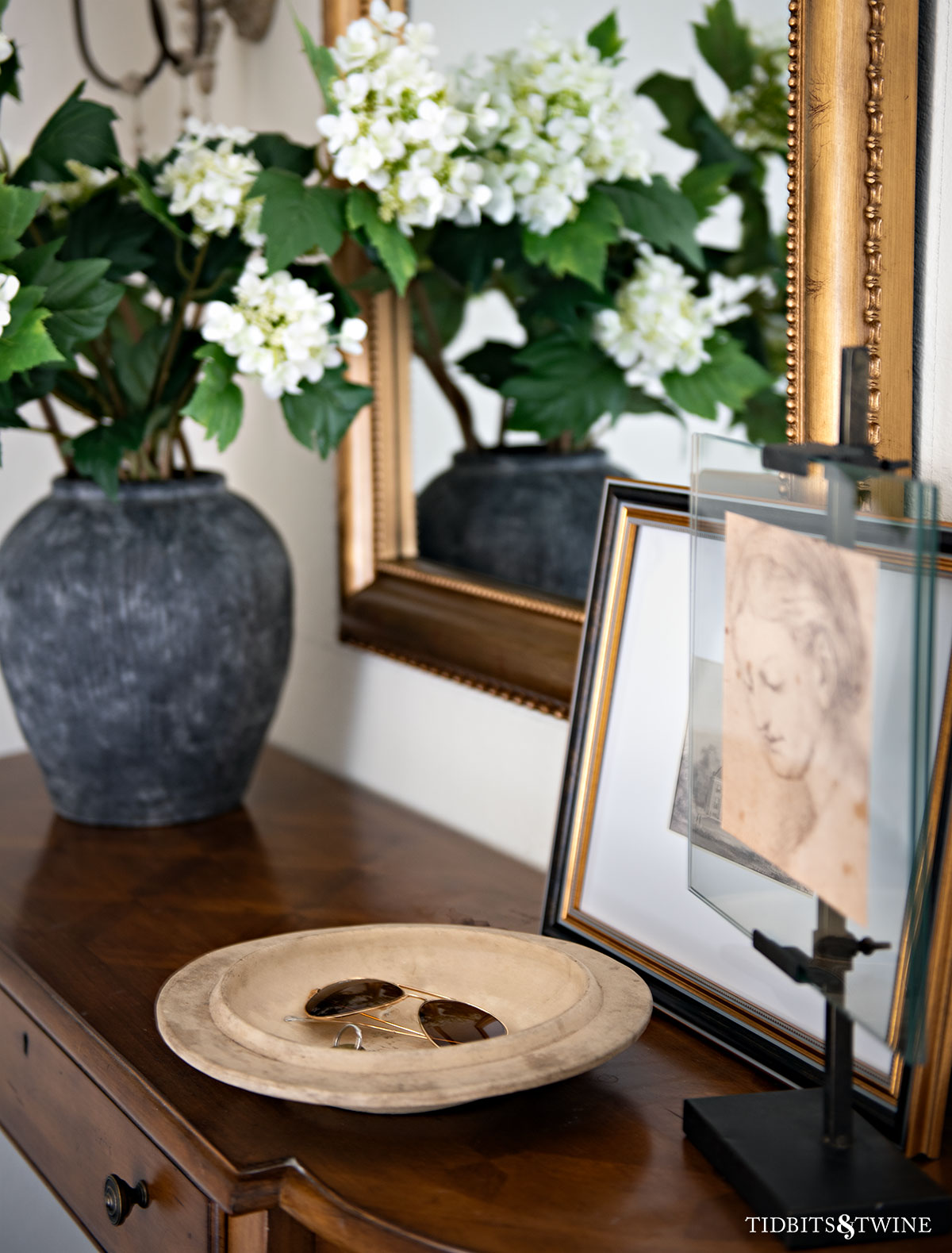
I’m obsessed with these faux hydrangeas I recently purchased. They look amazing!
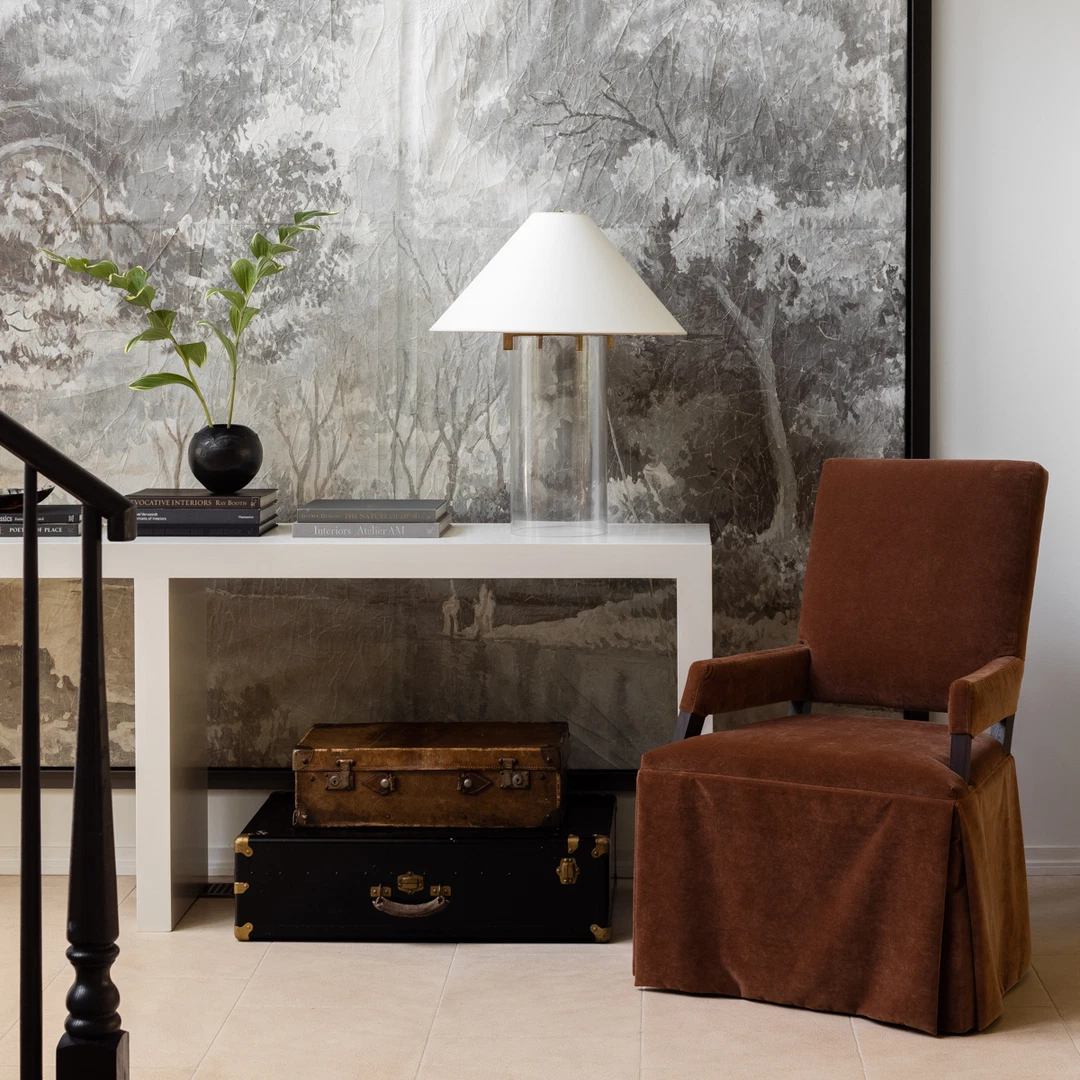
6. Add Something Personal
This is what keeps your console from looking like a store display. A framed photo, a small antique, or something meaningful makes it feel like your home.
7. Consider the Function
Before you style it, ask how the console needs to work.
In an entryway, that might mean a bowl for keys and baskets underneath. A dining room might hold barware or serving pieces.
In a living room, it could support lighting and decorative balance.
In my home, we enter our home through the front door and so need a place for our keys. This lid from an antique French crock makes the perfect catchall!
8. Leave Space and Edit
Not every inch needs something. If the console feels cluttered, remove one item before you add another.
Common Console Table Decorating Mistakes
Most console tables do not look “off” because you chose the wrong decor. They look off because of proportion or placement.
Here are the most common mistakes I see.
Art That Is Too Small
If the artwork or mirror above the console is too small, everything underneath will feel disconnected. The wall piece should feel substantial enough to anchor the table.
When in doubt, go bigger.
Everything the Same Height
If every object is roughly the same height, the console feels flat. You need variation. One taller element and one lower grouping creates balance.
Too Many Small Objects
Lots of tiny decor pieces scattered across the surface almost always reads as clutter. Think in groupings instead of individual items.
Forcing Symmetry on a Short Table
Two lamps on a small console will feel crowded. Symmetry only works when the table is long enough to support it.
Ignoring Depth
On shallow consoles, deep trays or oversized bowls can eat up the entire surface. On deeper consoles, not layering at all can make it feel unfinished.
Forgetting the Room
A console should support the space, not compete with it. In an entryway for example, decor should not block the walkway but should be functional.
Go-To Accessories for Styling a Console Table
If you’re staring at an empty console and wondering what actually works, these are the decorative pieces I reach for again and again. They’re versatile, easy to layer, and work with all three layouts.
Lamps
Lamps instantly add height and warmth. They work beautifully in symmetrical layouts, but even a single lamp can anchor one side of an asymmetrical design.
Mirrors
A mirror helps reflect light and visually expand the space, especially in entryways. It’s one of the easiest ways to make a console feel intentional.
Artwork
Artwork adds personality and color. Just make sure it’s large enough to relate to the console underneath.
Greenery or Branches
Something organic softens hard edges and keeps the arrangement from feeling stiff. Tall branches are especially useful for creating vertical movement.
Books
Books are one of the easiest ways to add height and structure. They also give smaller decorative objects a place to sit.
Trays and Bowls
These help contain smaller pieces so the surface doesn’t feel scattered. They’re practical and decorative at the same time.
Baskets or Stools Underneath
Don’t forget the space below. Baskets add storage and visual weight. Stools can add interest and function.
Console Table Decorating Frequently Asked Questions
Open consoles, whether with or without a bottom shelf, can still have extra storage or seating. If you need storage, baskets are the easiest solution, especially to hold blankets, shoes etc. Two matching baskets work well on longer tables. One larger basket can anchor a shorter one.
If you want something decorative, consider stools or ottomans tucked underneath. They add weight without adding clutter.
And sometimes the best answer is nothing. If the space feels tight, leaving it open can look intentional.
This is your chance to make a first impression on your guests. But before you focus on making it pretty, start with function.
Most entryway consoles need a place to drop keys, mail, or sunglasses. A bowl or tray keeps those items contained so they don’t take over the surface.
Then think about height and light. A mirror works especially well in an entryway because it reflects light and makes the space feel larger. A lamp adds warmth, especially in the evening.
If your console is large enough, this is also a great place for a candle. It adds both scent and ambiance, which can instantly make your home feel welcoming.
Underneath, baskets are often the easiest solution for storing shoes or bags while keeping the area tidy.
The goal in an entryway is balance. It should feel inviting, but it should also make everyday life easier.
Yes, if the table is long enough.
On a 60 inch or longer console, two lamps create beautiful balance. On shorter tables, one lamp with a balanced grouping on the opposite side usually works better.
A good rule of thumb is for the artwork or mirror to be about 65 to 75 percent of the width of the console table underneath it.
If it’s much smaller than that, the wall and the table will feel disconnected. If it’s significantly wider, it can overpower the console and look top-heavy.
When in doubt, lean slightly larger rather than smaller. A substantial piece anchors the space and makes the decor below feel intentional.
Did you notice that I often lean & layer art? Check out my guide: How to Lean and Layer Art
More Decorating Guides
- Coffee Table Dimensions – How to Choose the Right Size
- Design Rules You Should Never Break
- Design Guide: The Right Wall Sconce Height for Every Room
- Need to Know Bathroom Measurements

DECORATING MADE EASY
Get my free 5-day decorating course and learn how to define your style, make better decisions, and create a home that feels like you.
After the course, you’ll receive my latest decorating tips, antique finds, and new posts.