



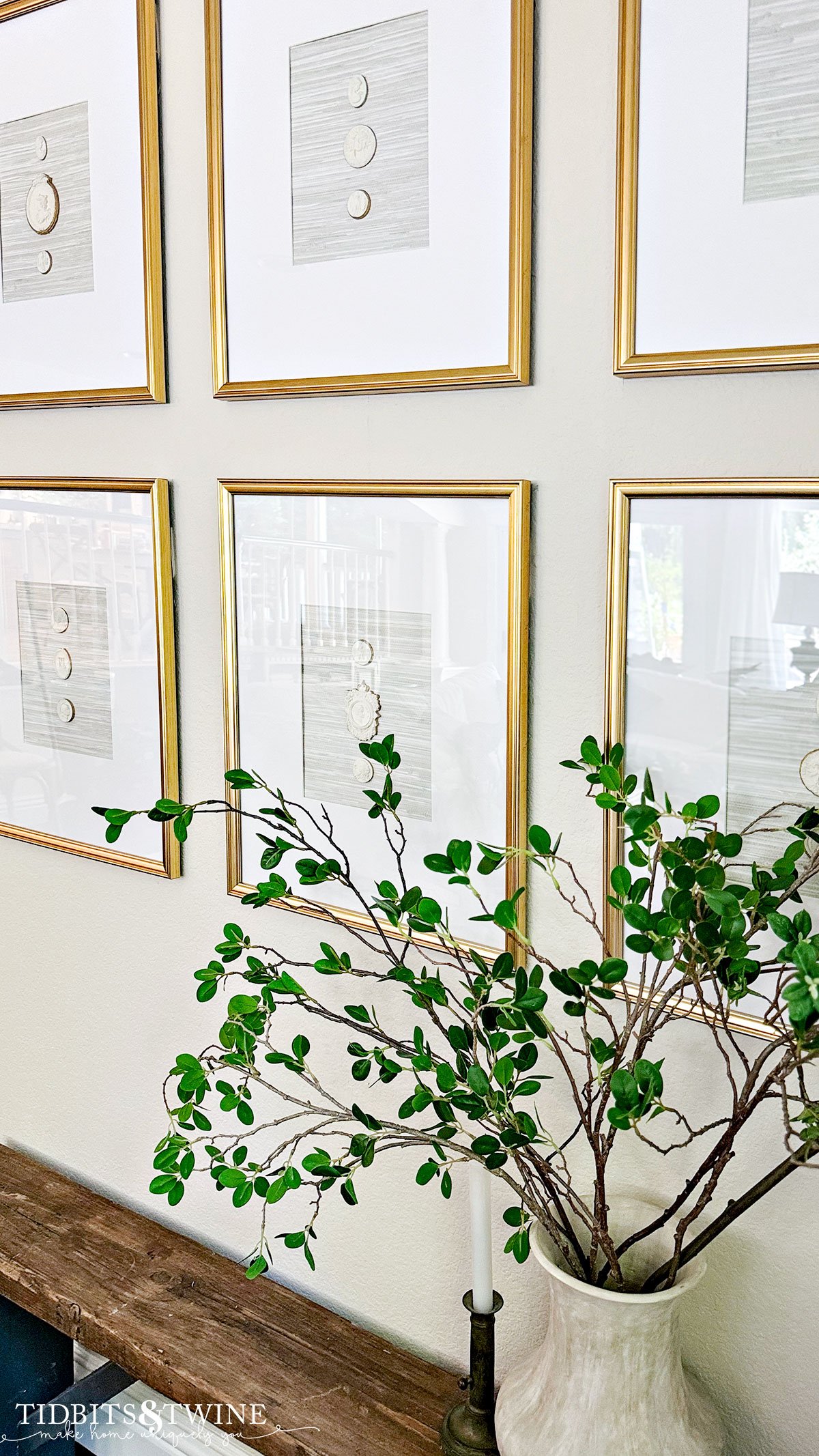
Intaglio decor has been popular in home design for quite some time now. You’ll find framed intaglio collections at places like Restoration Hardware, Ballard Designs, Anthropologie, Magnolia, and more—but they often come with a hefty price tag.
When I wanted to create a gallery wall of my own, I couldn’t quite justify the cost…so I decided to make them myself! (If you’re curious how, I shared the full tutorial here → DIY Intaglios: How to Make and Frame Them).
But maybe you’re wondering—why do I like them so much in the first place? What are they? What makes them so interesting?
Like so many other antiques I’ve written about, I thought it was about time to take a deeper dive into these fascinating little works of art: intaglios.
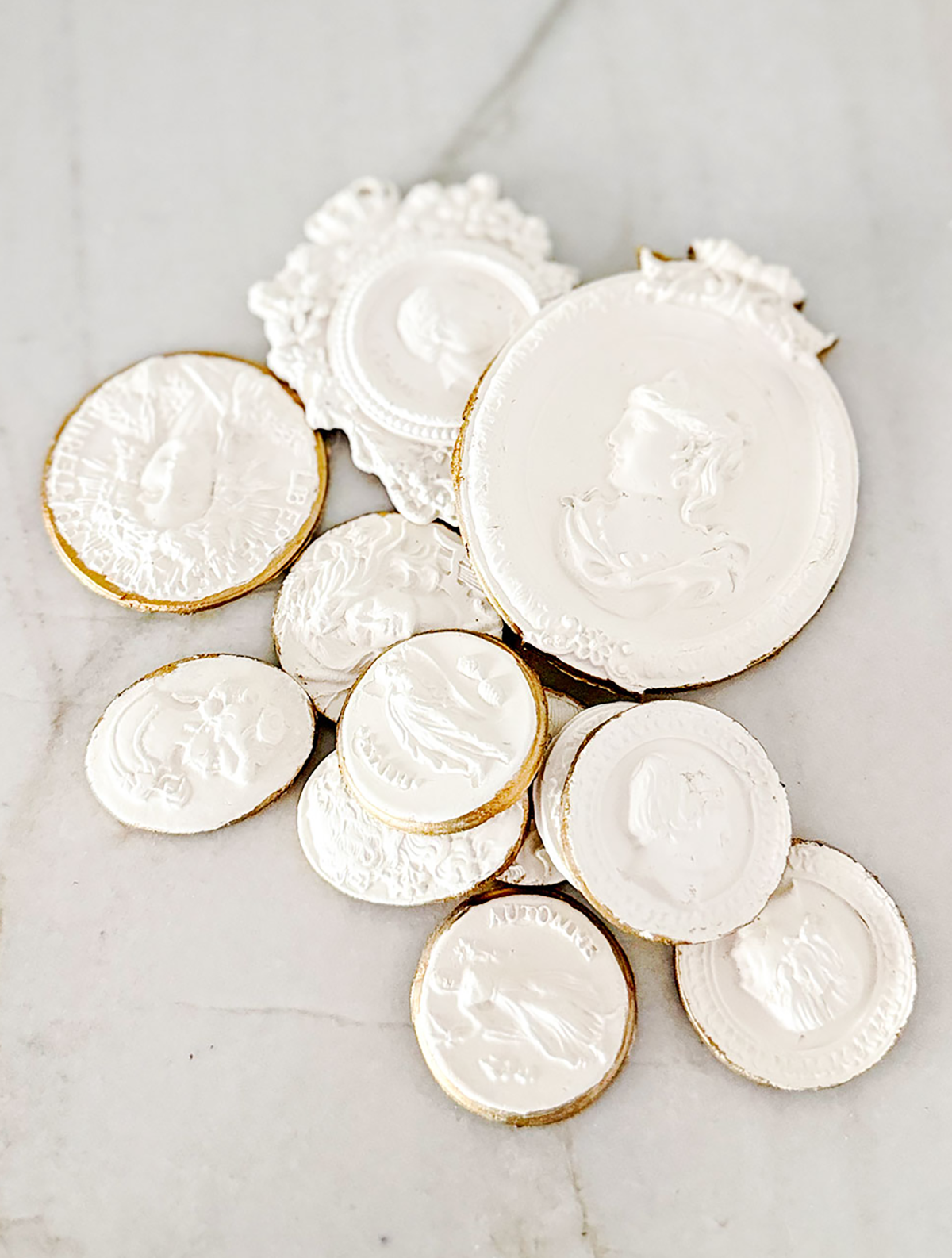
What Exactly Is an Intaglio?
You’ve probably seen those little white medallions framed in grids at stores like Restoration Hardware or Ballard Designs. They’re called intaglios—but what are they, really?
The word intaglio comes from the Italian for “to carve or engrave,” which makes sense because the earliest versions were carved into the surface of tiny gemstones and used to seal letters or mark ownership. Each one was personal, almost like a signature.
Much later, artisans began making plaster versions inspired by those old carvings. They’d create a recessed mold, pour in plaster of Paris, and once it dried, the design appeared raised instead of carved in. Those are the intaglio decor we see framed and hanging on walls today.
So even though modern intaglios aren’t carved at all, the name stuck.
An intaglio is a small plaster relief, once collected by Grand Tour travelers as a souvenir of their journey.
Before Souvenir Shops, There Were Intaglios
Today, when we travel, we take pictures—hundreds of them—and post them online almost instantly. They’re our souvenirs, our proof of where we’ve been and what we’ve seen. But long before camera phones and social media, travelers had to find other ways to capture their memories.
During the 18th and 19th centuries, wealthy Europeans embarked on what was known as the Grand Tour—a months-long journey through cultural capitals like Rome, Florence, and Paris. It was part education, part adventure, and a rite of passage for those eager to study art, architecture, and history firsthand.
Along the way, travelers collected intaglios—small plaster impressions of classical sculptures, mythological scenes, and architectural details—as keepsakes. Think of them as the travel photos of their time. Each tiny carving represented a place they’d visited or a piece of history they’d admired, carefully tucked into velvet-lined boxes or later framed and displayed at home.
So while we scroll through digital albums today, they had boxes of plaster medallions—a tangible record of their journeys and an elegant reminder of the world’s beauty.
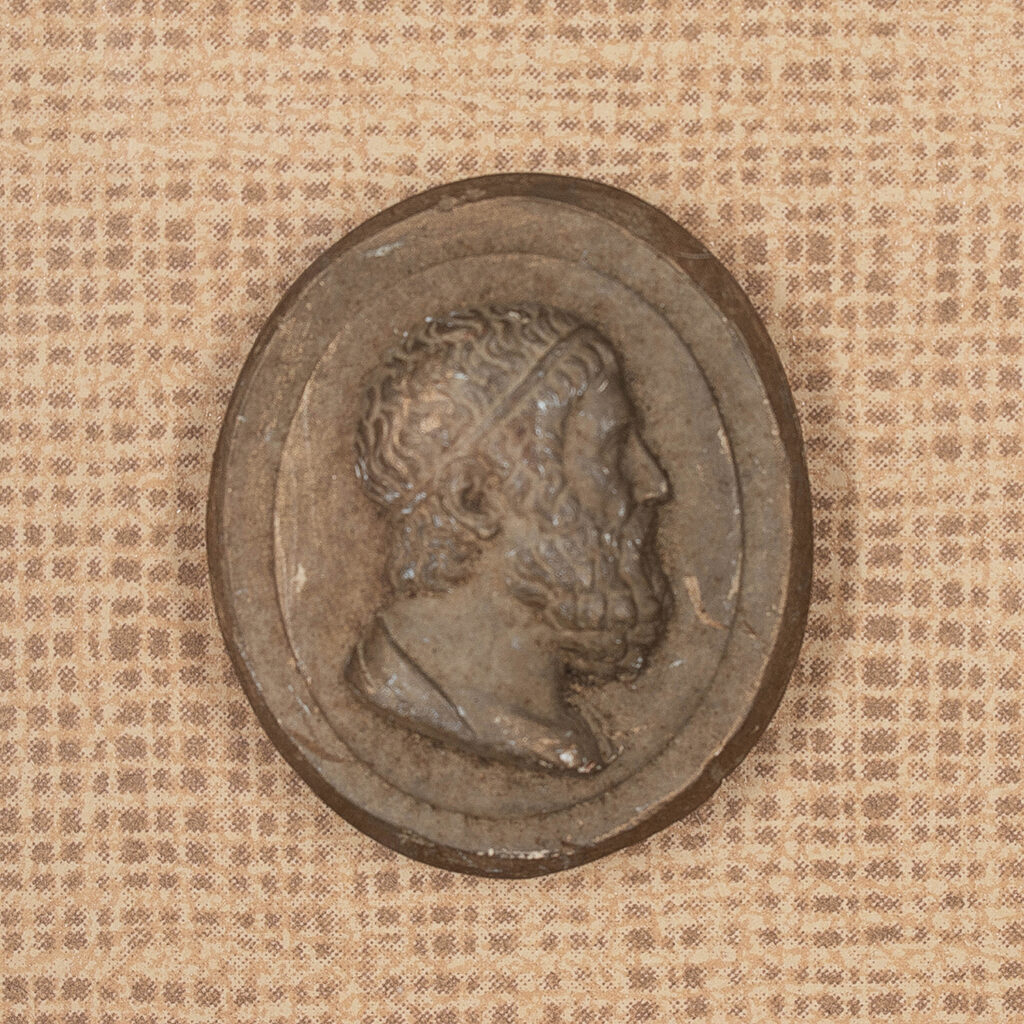
Intaglio vs. Cameo: What’s the Difference?
Here’s where it gets confusing—because if you look at antique intaglios and cameos, they actually look the same. Both are raised, usually white, and often framed or displayed together.
The difference really comes down to how they were made and what they’re made of.
A cameo is carved by hand so the design stands out in relief. They’re usually made from shell, coral, agate, or ivory, and while most show a woman’s profile, some feature mythological scenes, flowers, or animals. Cameos were meant to be worn—as brooches, lockets, and other jewelry.
An intaglio, on the other hand, isn’t carved at all. It’s cast from plaster using a mold, which gives it that same raised look. These were made as decorative art pieces, not jewelry, and are what you’ll see framed in grids or shadowboxes today.
So the quick way to tell them apart? Cameos are carved and wearable. Intaglios are cast from a mold and meant for display.
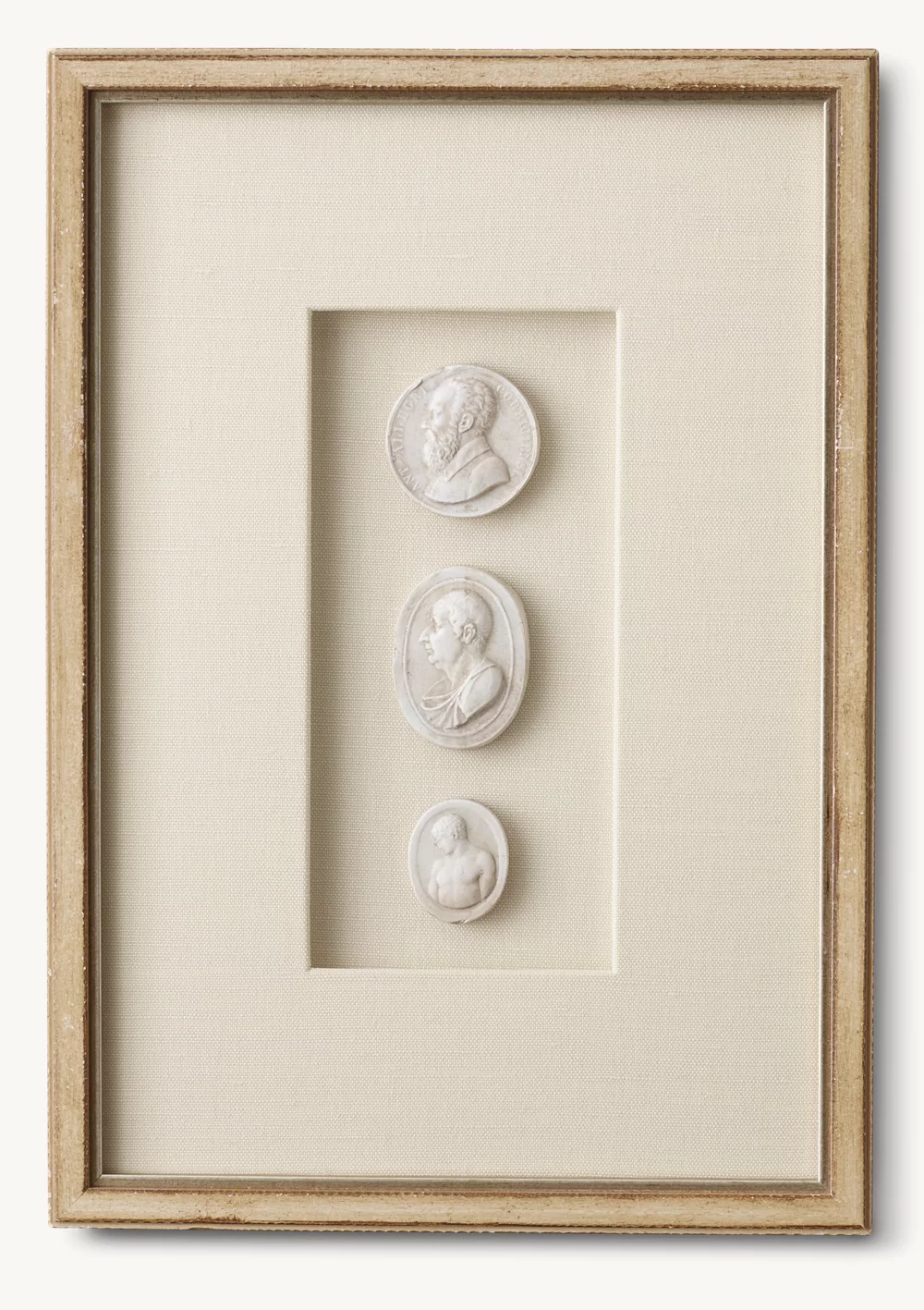
What They Look Like: Originals vs. Reproductions
Color:
Original Grand Tour intaglios were usually made from off-white plaster of Paris, which naturally develops a warm, creamy tone over time. You’ll often see subtle discoloration, faint cracks, or soft shadows that come from age and handling. They were never stark white—that slightly aged color is part of their charm.
Reproductions are often bright white when new, though some makers intentionally tint them to look antique. If you see a very crisp, uniform white with sharp edges, it’s probably modern.
Edges and Finish:
Those gold or gilded edges you sometimes see? That’s not original to the Grand Tour pieces—it’s a modern styling choice. Some sellers add gold paint, bronze powder, or a metallic wash to make the edges pop against a mat or linen background. True antique intaglios would have plain plaster edges, sometimes slightly rough or chipped, or a gold paper band around the edges.
Surface Texture:
Originals tend to have softer detail, because the plaster molds were reused and wore down over time. Reproductions are sharper, cleaner, and more consistent from piece to piece.
Maker’s Marks and Numbers:
Some authentic Grand Tour intaglios also have small numbers or maker’s marks impressed on the back. These numbers once corresponded to printed catalogs that identified each subject—mythological scenes, famous sculptures, or architectural landmarks. Not every antique has one, but when you do find it, it’s a lovely reminder of the craftsmanship and organization that went into these original sets.
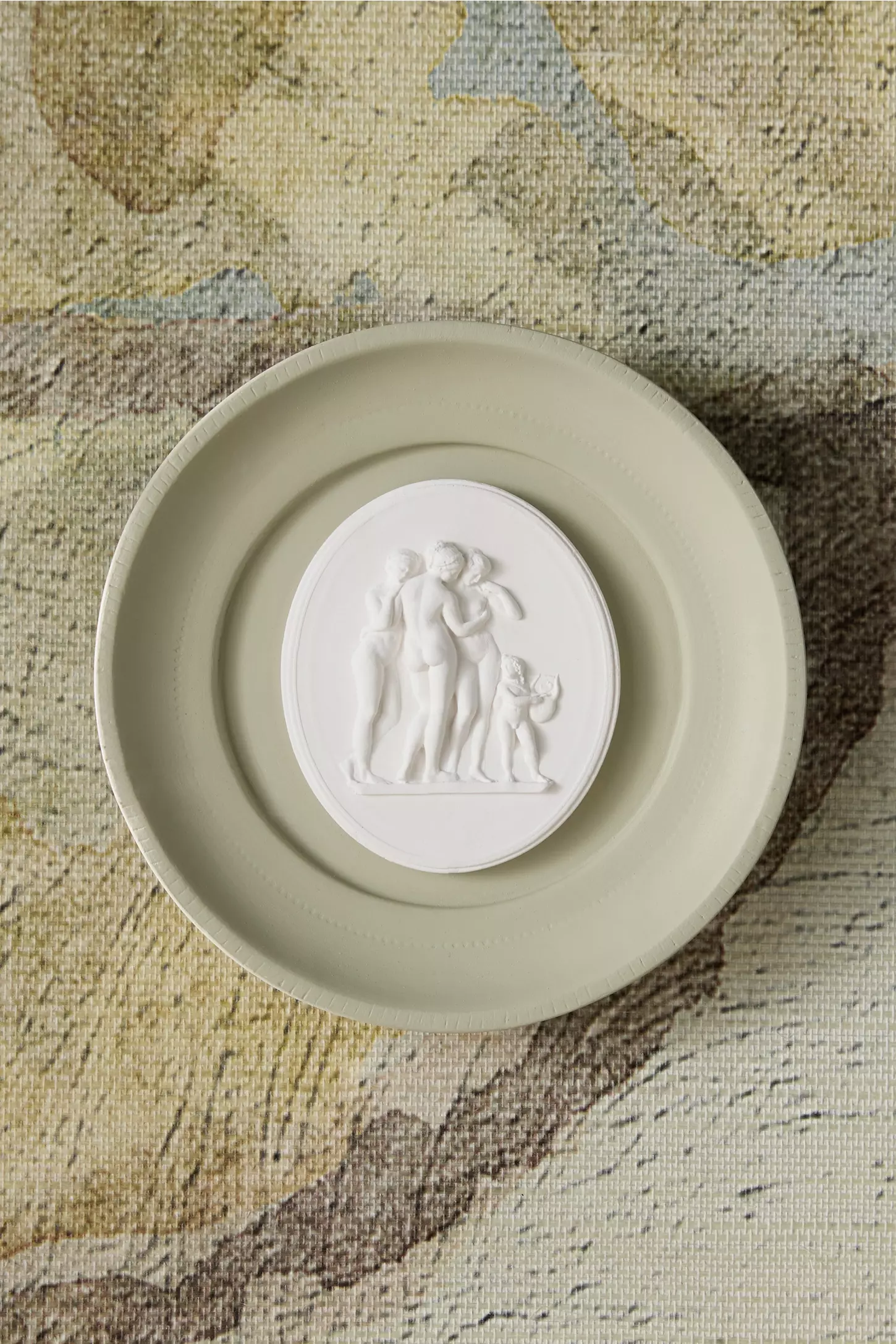
Intaglio Decor: Ideas and Inspiration
Whether antique, reproduction, or even DIY, intaglio decor is small and delicate, which makes them perfect for display. Most often, you’ll see them framed and used as wall décor—either as a single piece, a pair, or a larger collection. Their subtle details and soft color bring a sense of history without overwhelming a space.
If you’re creating a wall display, try hanging a pair or trio over a console, or go bolder with a grid arrangement for a more formal look. They also work beautifully mixed into a gallery wall with art, mirrors, or architectural prints. Because they’re typically neutral, they layer easily with almost anything.
Framing makes all the difference. Linen or fabric mats add texture and help the white plaster stand out, while simple gold, black, or wood frames keep the focus on the details. You can even use deeper shadowbox frames if your pieces have more dimension—it helps them feel substantial and lets the light catch those raised surfaces.
And while wall art is the most common use, intaglios don’t have to stay on the wall. You can tuck one into a bookshelf vignette, layer a few on a console, or even use a single framed piece as book-topper décor. They add just the right touch of texture and Old-World charm wherever you place them.
Where to Find Intaglios
If you’re hoping to start a collection of your own, there are plenty of options—whether you love the idea of finding originals or prefer the ease of reproductions.
For antiques, check local flea markets or antique fairs—places like Alameda Point often have beautiful sets tucked among paper ephemera or old prints. Online, Etsy, eBay, 1stDibs, and Chairish are great sources for both authentic Grand Tour pieces.
If you’re after something ready to hang, look at Ballard Designs, RH, or Magnolia for framed sets. And of course, you can always make your own (I shared the full tutorial here → DIY Intaglios: How to Make and Frame Them).

Shopping Tip: When shopping online, zoom in on the edges. Crisp white and perfect gold rims often mean reproduction; slightly uneven or creamy plaster hints at vintage or antique.
Shop the Look
Below are a few beautiful options for creating your own intaglio decor display—whether you’re curating a full wall or just want one small, framed accent.

Frequently Asked Questions
Intaglio decor refers to small plaster medallions that feature raised classical designs. They were originally collected by 18th- and 19th-century travelers during Europe’s Grand Tour as souvenirs of art, architecture, and history. Today, they’re loved for their timeless texture and elegance in home design.
Most antique intaglios were cast from fine plaster of Paris, while modern reproductions may use plaster, resin, or even clay. The earliest versions—centuries before the Grand Tour—were carved into gemstones, but the plaster medallions we use in decor came later.
Antique intaglios usually have a creamy tone, soft details, and subtle imperfections from age. Some even have maker’s marks or catalog numbers impressed on the back. Reproductions tend to be bright white, sharper, and more uniform, sometimes with gold-painted edges for style.
Framed and hung in pairs or grids is the classic look, but you can also tuck them into a bookshelf vignette, style one as a book-topper, or group a few on a console table. Their neutral color makes them easy to mix with other art and antiques.
Looking for a specific antique?
Browse the Antique Object Guide
Explore 20+ antique objects with identification tips, decorating ideas, and links to detailed posts about each piece.
Final Thoughts
Whether they’re centuries old, newly made, or handcrafted at your kitchen table, intaglios have a way of feeling timeless. They’re quiet pieces—soft in color, small in scale—but they add so much depth and character wherever they’re displayed.
Maybe that’s what makes them so special. They remind us that beauty doesn’t have to be bold to make an impact. Sometimes, it’s the subtle things—the worn plaster, the imperfect edges, the stories hidden in tiny details—that make a home feel layered, personal, and full of history.
Related Reading
If you love decorating with pieces that tell a story, you might also enjoy these:
- History of Deckled Edge Books & How to Style Them
- How to Decorate with Antique Portraits Without the Haunted House Vibe
- Frozen Charlotte Dolls: Tiny Treasures of History

DECORATING MADE EASY
Get my free 5-day decorating course and learn how to define your style, make better decisions, and create a home that feels like you.
After the course, you’ll receive my latest decorating tips, antique finds, and new posts.