



I’ll happily talk your ear off about a new decor find or a fresh idea for rearranging things. That’s the fun part, right? Adding, layering, trying something new.
So it’s a little unusual for me to focus on the opposite: taking things away. But the truth is, editing a room matters just as much as styling it. Those small additions we make over time (a new vase here, an extra pillow there) have a way of piling up. And when you live in a space every day, it’s hard to step back and really see what’s going on.
That’s where this comes in. Think of this as a simple checklist to help you spot what might be better removed than rearranged. Because sometimes the quickest way to improve a room isn’t adding something new—it’s clearing a few things out.
1. Too Many Small Objects
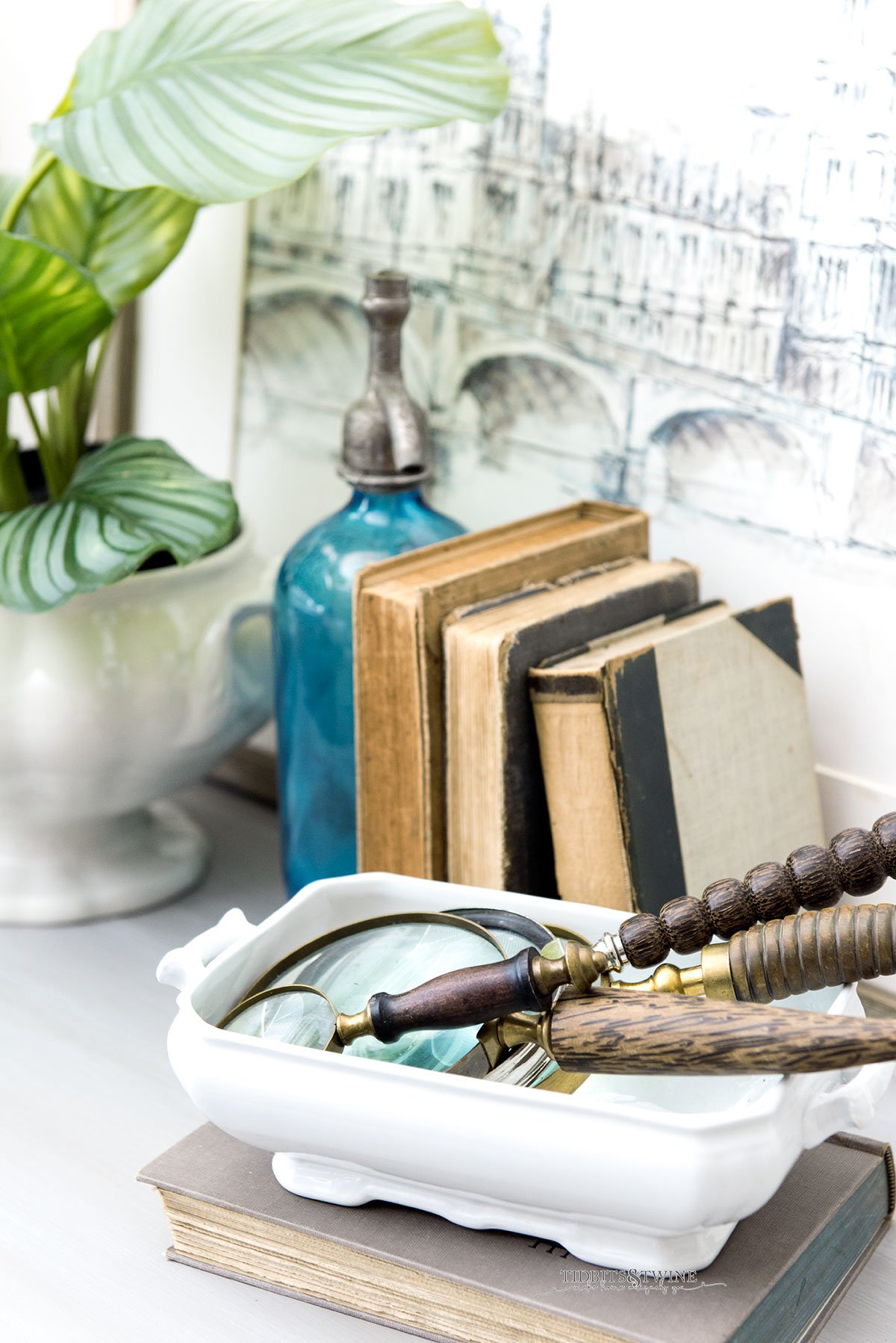
One of the quickest ways to make a room look cluttered is having too many small things spread out across surfaces.
Individually, they’re all fine. You probably like every single piece. But when there are too many of them competing for attention, nothing really stands out—and the whole space starts to look busy.
What to do instead:
- Edit down your surfaces so each item has a little breathing room
- Group pieces together instead of scattering them
- Swap several small items for one or two larger ones
You’re not getting rid of everything—you’re just being more selective about what earns a spot.
2. Anything Blocking Natural Light
If a room looks darker or heavier than it should, there’s a good chance something is getting in the way of the light.
This is one of those things that’s easy to miss because you get used to it. A chair pulled a little too close to a window, a lamp sitting right in front of it, or even decor lined up along the sill can all cut down the amount of light coming in.
What to do instead:
- Take a quick look at your windows and clear anything sitting directly in front of them
- Pull furniture back just enough so light can actually come into the room
- Keep window areas simple and open whenever possible
You don’t need to change anything major here. Sometimes just moving one or two pieces can make the whole room feel brighter.
3. Overly Themed Decor
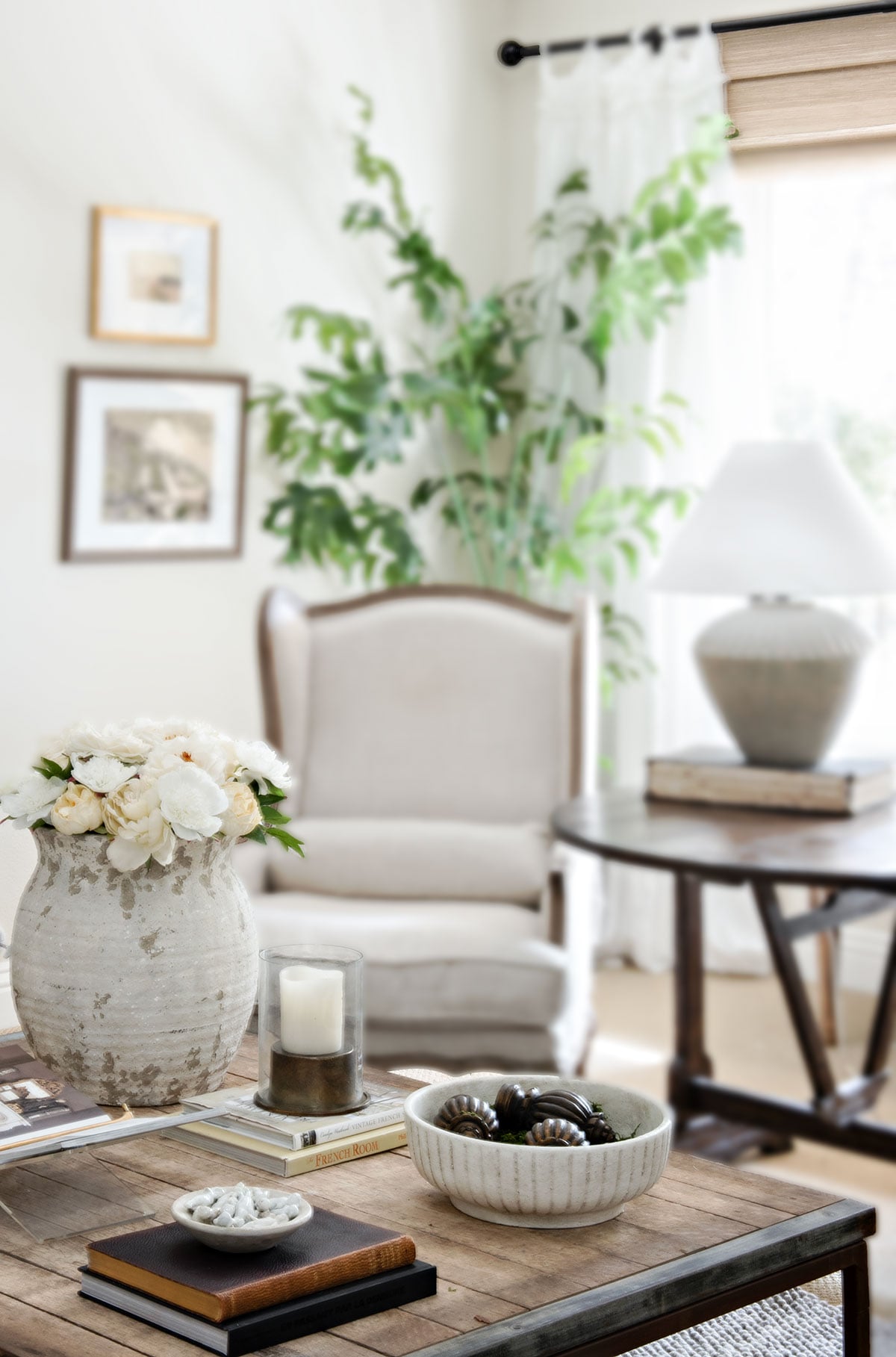
This is one of the easiest ways for a room to start looking dated. When everything leans too heavily into a single look, it can feel more like a display than a home.
A few pieces that hint at a style? Great. But when every object is reinforcing the same theme, it starts to feel overdone and predictable.
If you’ve ever wondered where that line is, I shared more about it in The Difference Between Style and Theme—because it’s a subtle shift, but it makes a big difference in how a room comes across.
What to do instead:
- Remove a few of the more obvious pieces so the look feels less literal
- Keep the elements that add texture and age (wood, linen, metal) and scale back the themed items
- Let your style come through in materials and mix, not matching decor
You’ll still have the same overall look—just without it feeling like you tried too hard to get there.
4. Excess Pillows
I know…this one hurts a little.
Pillows are one of the easiest ways to update a room, so it’s also one of the easiest places to go overboard. And once they start stacking up, the sofa or bed can look overfilled and a little impractical.
If you have to move a pile of pillows just to sit down, that’s usually a sign.
What to do instead:
- Remove a few so there’s still space to actually use the furniture
- Focus on a smaller mix with contrast (instead of more of the same)
- Let each pillow have a purpose instead of just filling space
If you’re not sure what sizes or combinations work best, I shared my go-to arrangements in Throw Pillow Sizes and Arrangements.
You don’t have to get rid of all of them—just edit down to the ones that actually add something.
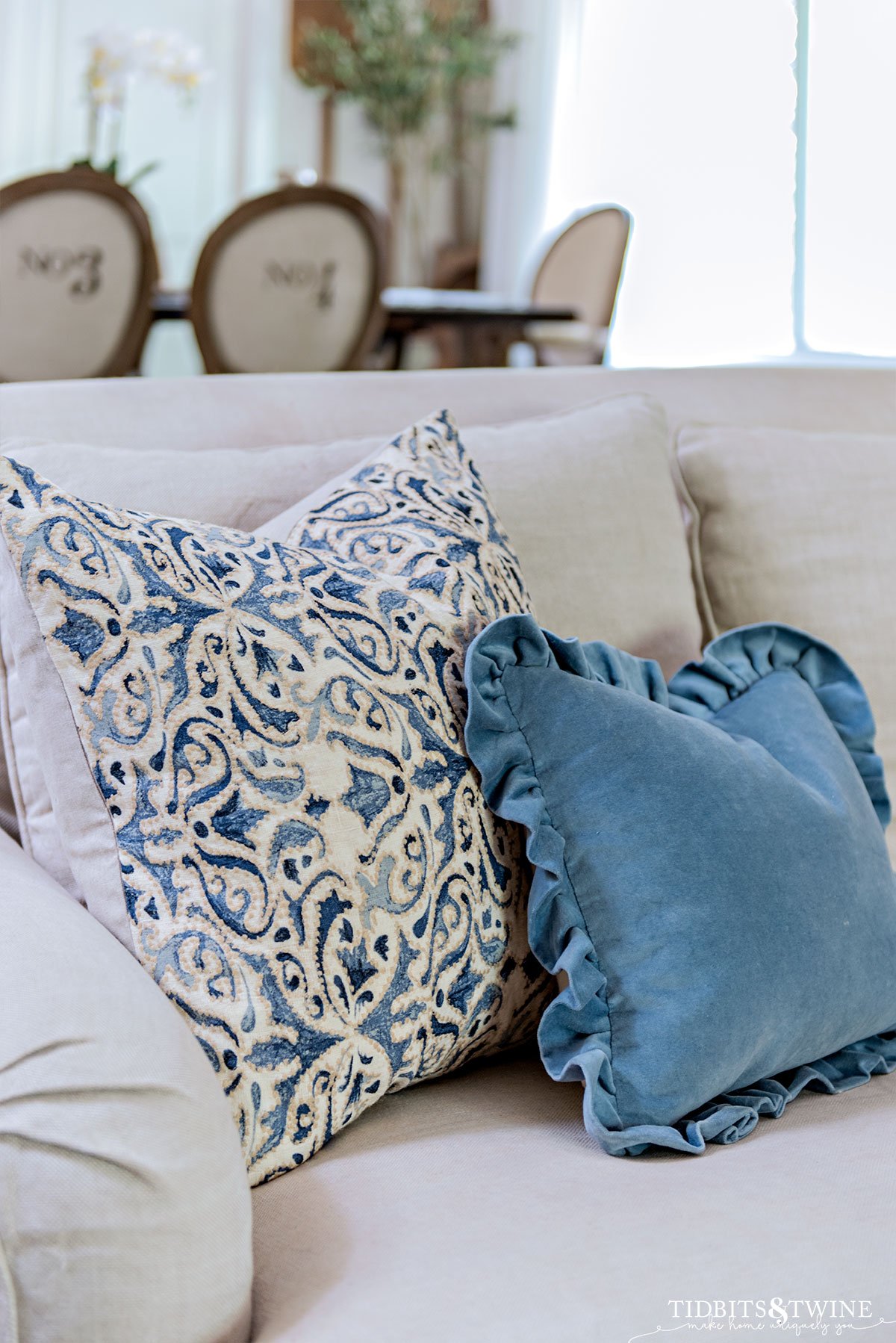

For more info, check out my Guide to Throw Pillow Arrangements!
5. Duplicate Decor Pieces
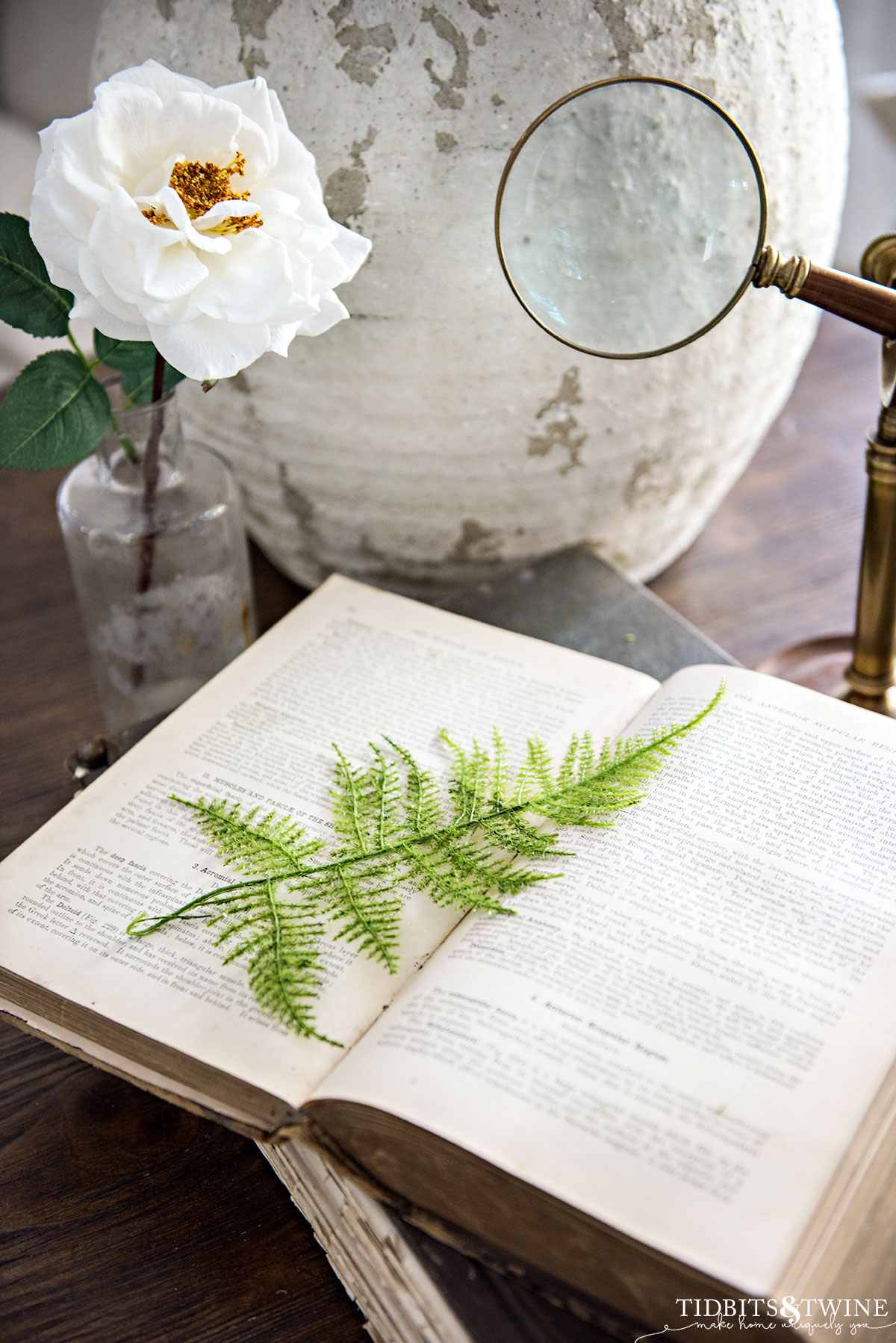
It’s easy to end up with multiples of the same thing. You find a vase you love, so you buy another. And then another. Before long, the same shape or material is showing up all over the room.
The problem is that repetition like this can make a space feel flat and a little predictable instead of layered.
What to do instead:
- Remove a few of the duplicates so each piece has more impact
- Keep one or two favorites and let them stand out
- Mix in different shapes, materials, or finishes for more variety
You don’t need everything to match for a room to feel cohesive. In fact, it usually looks better when it doesn’t.
6. A Rug That’s Too Small
A rug that’s too small can throw off the entire room. It tends to make everything feel a bit disconnected, like the furniture is floating instead of anchored.
In most cases, fixing this means replacing it—but if that’s not happening right now, it can actually look better to remove it altogether.
What to do instead:
- Remove the rug if it’s clearly undersized and not grounding the space
- When you’re ready, choose one large enough so at least the front legs of your furniture sit on it
- Think of the rug as something that connects the room, not just fills the floor
If you want a quick visual guide, I’ve shared sizing tips in my post on choosing the right rug.
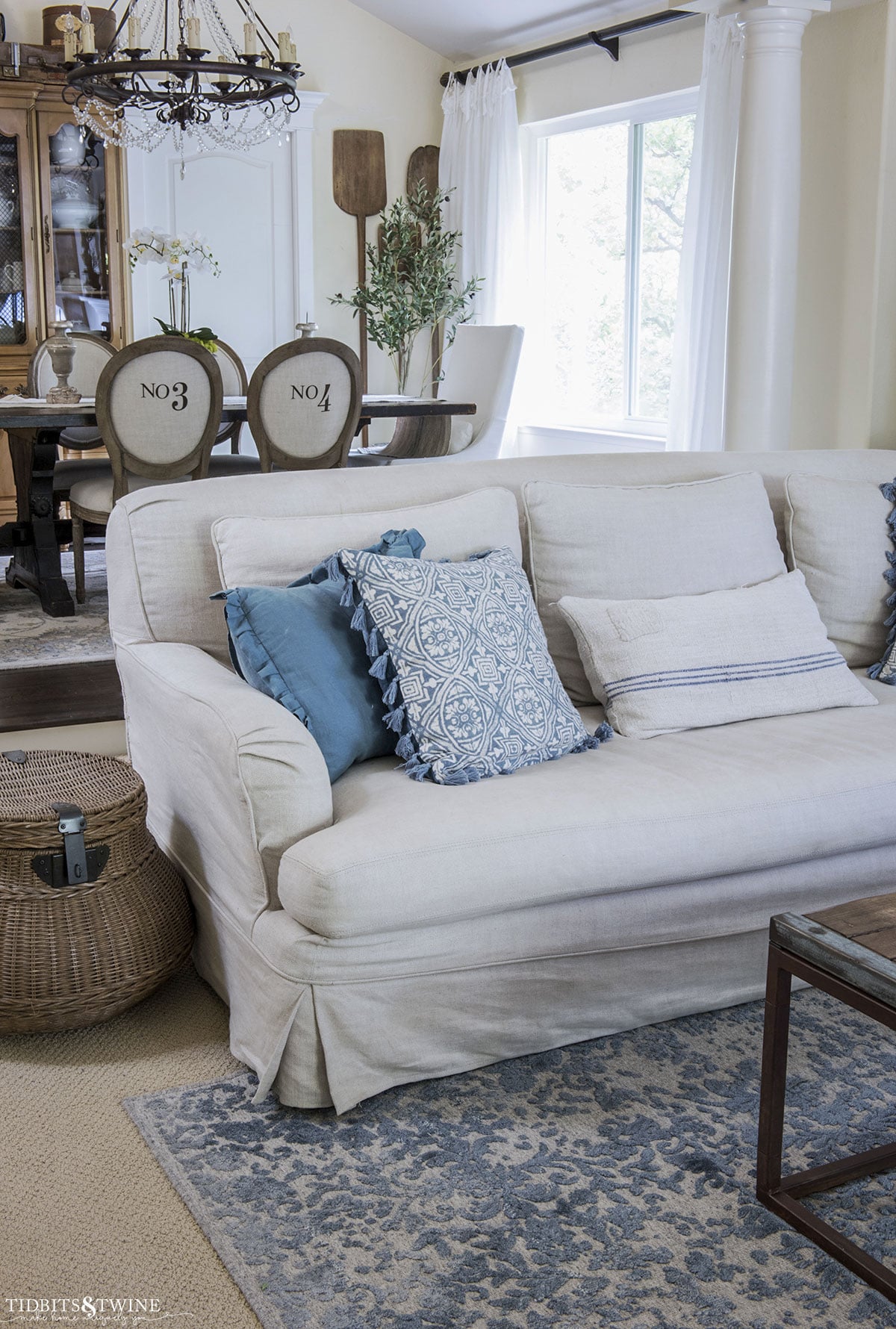
7. A Cluttered Corner
Almost every room has one. A corner that slowly turns into a catch-all for things that don’t quite have a place.
It might be a chair holding clothes, a stack of baskets, or a few random pieces grouped together without a clear purpose. Over time, it starts to look unintended and a little chaotic.
What to do instead:
- Remove anything that doesn’t serve a clear purpose
- Choose one simple use for the space (a chair, a plant, a lamp)
- Or leave it empty so the room has a little breathing room
Not every corner needs to be filled. Sometimes the best choice is to let it stay open.
8. One Thing That Doesn’t Belong
This one can be harder to spot, but it makes a bigger difference than you’d expect.
Most rooms have one piece that just doesn’t quite fit. Maybe it’s the wrong scale, a color that doesn’t relate to anything else, or a style that doesn’t connect with the rest of the space.
Even if everything else works, that one piece can throw off the overall look.
What to do instead:
- Remove it and take another look at the room
- Pay attention to what changes once it’s gone
- Decide if it belongs somewhere else—or if you’re ready to let it go
Sometimes improving a room isn’t about changing everything. It’s just about removing the one thing that’s throwing everything else off.
More Decorating Ideas
- Ideas for That Empty Corner
- Nightstand Decorating: The Simple Formula
- How to Decorate a Console Table (Against a Wall)
- Learn How to Decorate a Mantel in 3 Simple Steps

DECORATING MADE EASY
Get my free 5-day decorating course and learn how to define your style, make better decisions, and create a home that feels like you.
After the course, you’ll receive my latest decorating tips, antique finds, and new posts.