
There are book lovers, and then there are antique book lovers.
Book lovers collect books for the stories written inside. Antique book lovers can fall in love before ever turning the first page.
I am firmly in both camps, but when I’m wandering through an antique fair, it’s usually the outside of the book that gets me first and I just can’t resist! In fact, whenever we go antiquing, I usually tell my husband not to let me buy another book because I already have too many. Which is exactly the sort of sentence I say right before finding one I absolutely cannot leave behind.
And yes, sometimes I buy one without a single plan for where it will go. I’ll figure that part out later. Probably.
This isn’t a post about collecting rare editions or buying books for monetary value. I’m not looking for books that need to be kept behind glass or handled with white gloves. I’m looking for beautiful, decorative antique books that add age, texture, and character to a home.
Of course, I love a gorgeous stack of high-end coffee table books, and I have plenty of those too. But antique books are different. They’re more visually interesting to me. They have wear, variation, history, and personality in a way that a brand-new book usually doesn’t.
So today, I’m sharing what I look for when buying antique books for decorating, including the covers, edges, colors, subjects, sets, and little details that make one come home with me.
What Makes an Antique Book Decorative?
When I’m buying antique books for decorating, I’m not looking at them the same way a serious book collector might.
I’m not checking first editions, researching market value, or worrying about whether a book belongs in a protected collection. I’m looking at it as something that will add age, texture, warmth, and character to my home.
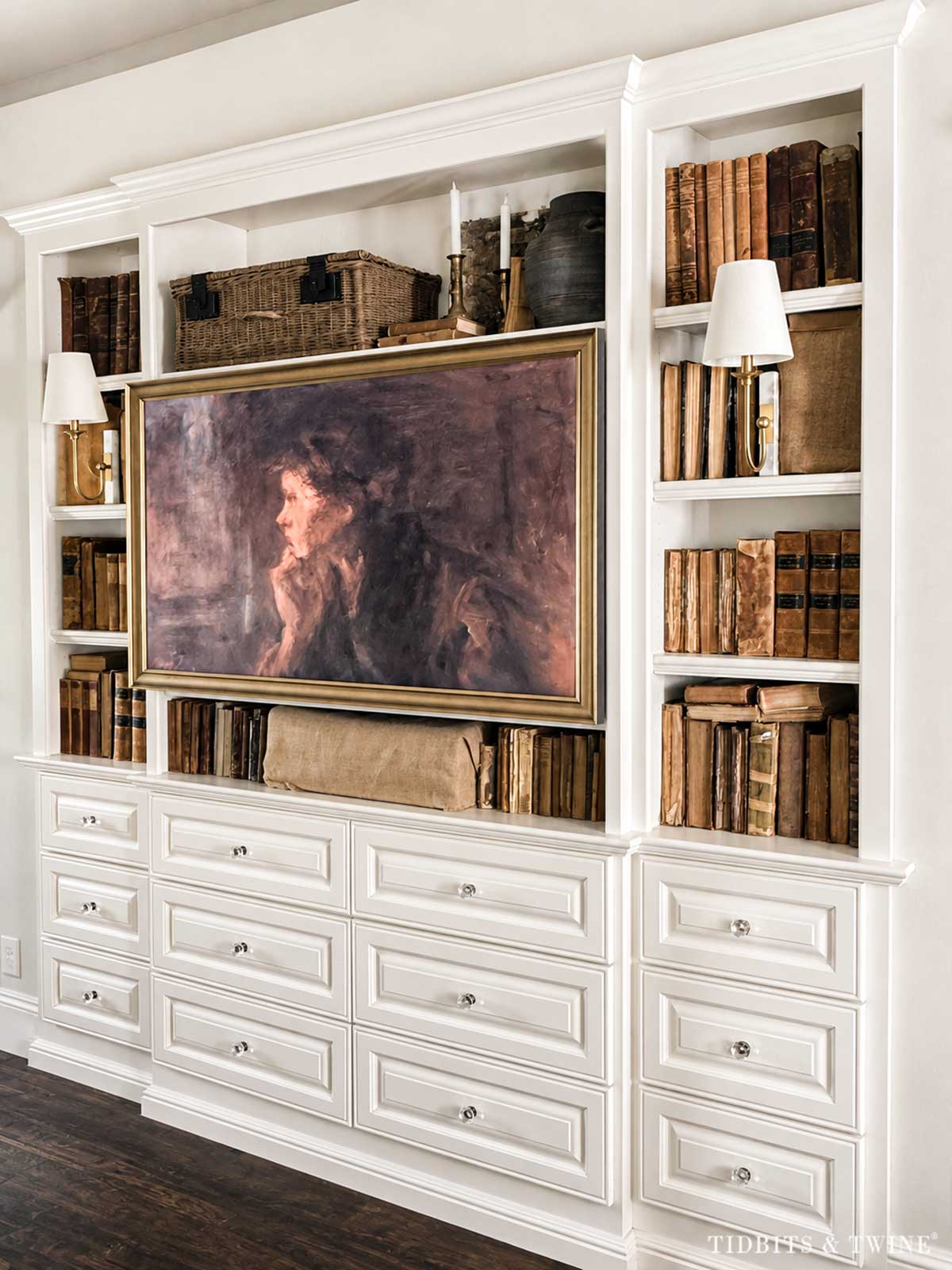
For me, a good decorative antique book usually has some combination of a beautiful cover, an interesting spine, aged pages, pretty details, and enough wear to make it feel special without looking like it’s about to disintegrate in my hands.
The trick is knowing the difference between charming age and actual damage. One adds character. The other comes home, sheds on your shelf, smells suspicious, and makes you question your life choices.
So here’s what I look for before an antique book earns a spot in my already-too-large collection.
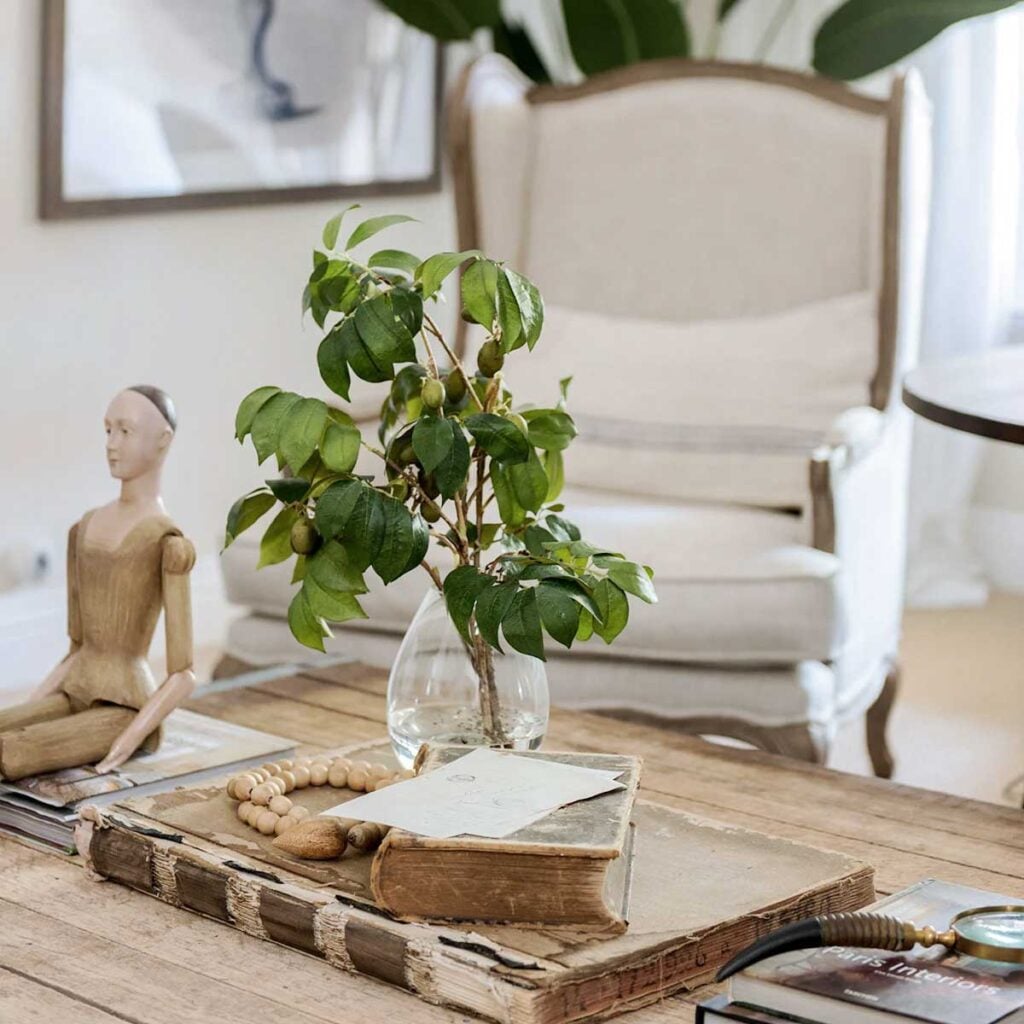
What I Look for When Buying Antique Books for Decorating
When it comes to old books, I’m not looking for perfection. I’m looking for character.
A decorative antique book doesn’t need to be rare, valuable, or even especially pristine to come home with me. But there are a few details that almost always make me stop and pick one up.
Leather Covers
Leather covers are always my first choice.
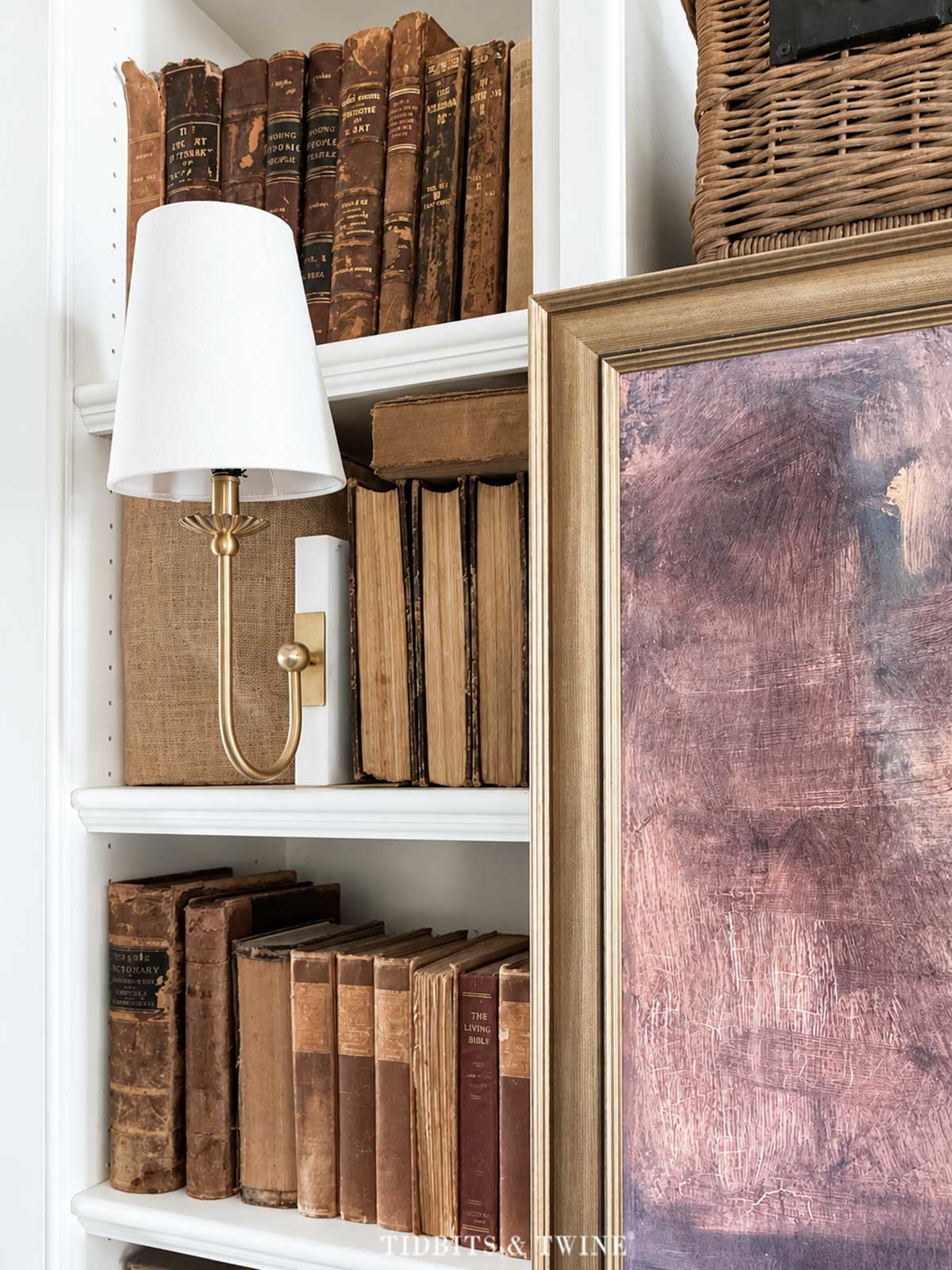
I love the way old leather ages. It softens, darkens, rubs at the edges, cracks a little, and develops that beautiful worn finish that feels almost impossible to fake. A new book can be gorgeous, of course, but an old leather book has a different kind of warmth.
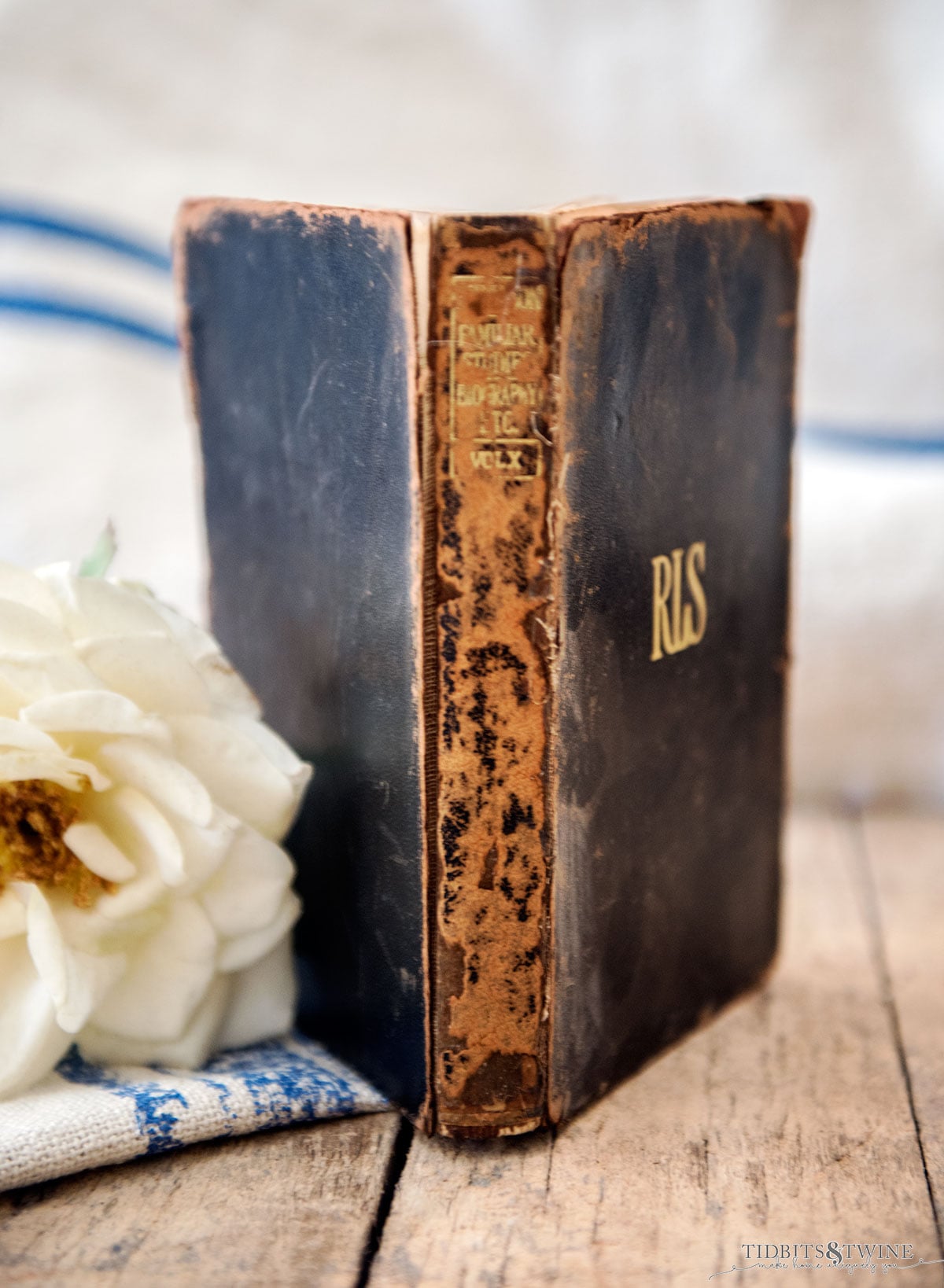
The more worn-in it looks, the more I usually love it. I’ll take rubbed corners, faded gold lettering, scuffed edges, and a little uneven color any day!
That said, old leather does come with a few quirks. Some leather books also leave behind a fine colored dust, which is usually called red rot. It sounds worse than it usually is, at least for the way I use antique books. Since mine mostly sit on shelves and aren’t handled often, red rot doesn’t usually deter me. I’ve never had it permanently stain my shelves, although it can leave behind a dusty residue that needs to be wiped away every now and then.
If a book is shedding heavily every time I touch it, I may think twice. But a little powdery leather? For a decorative book with a beautiful spine, I can live with that.
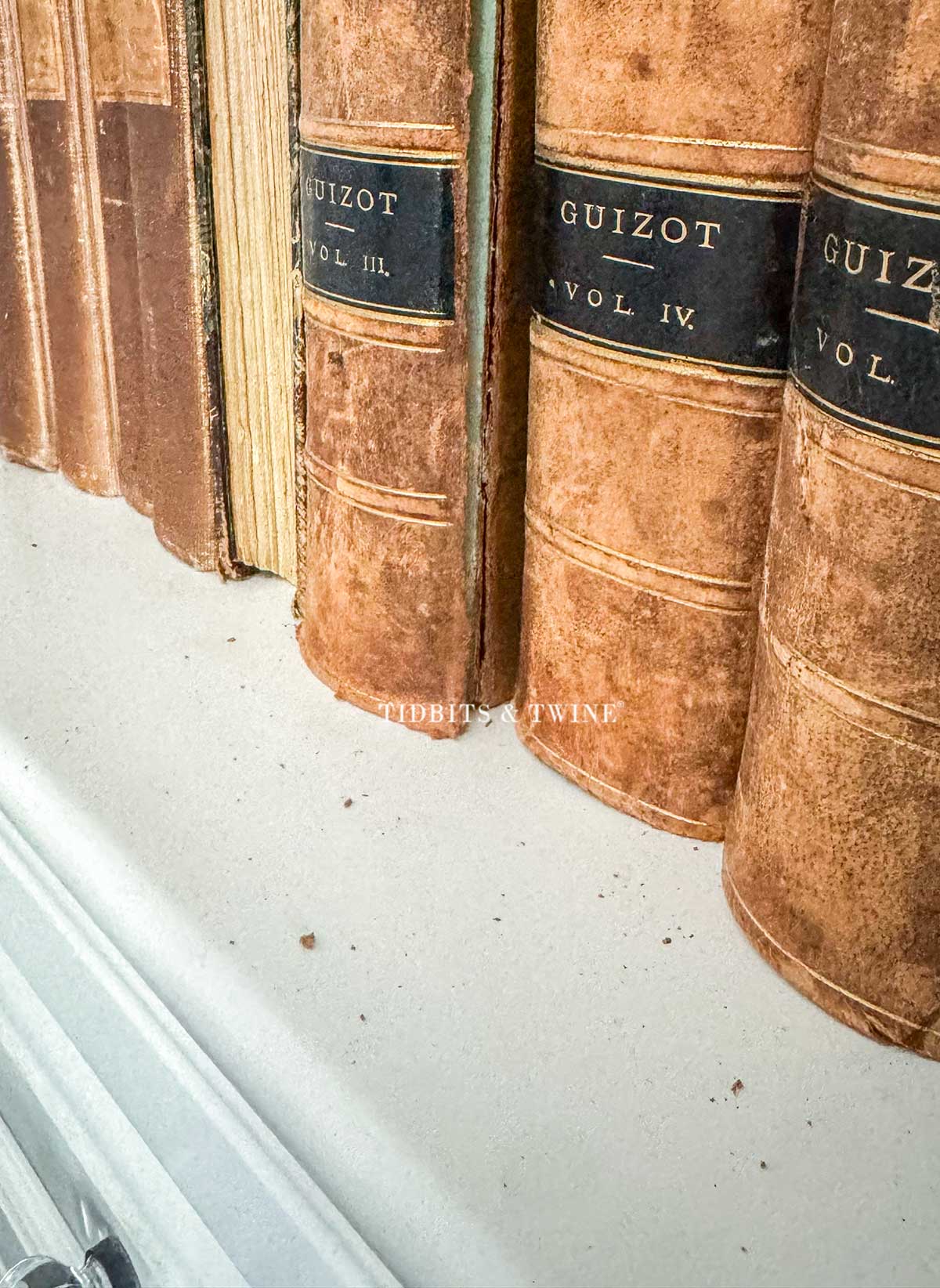
Beautiful Spines
The spine is usually what sells me first because that’s the part I’m going to see most often.
A beautiful cover is wonderful, but if the book is sitting on a shelf, tucked into a cabinet, or stacked with other books, the spine matters most. I look for faded titles, gold lettering, raised bands, embossed details, worn leather, and anything else that gives the book a little extra character.
Sometimes the title itself makes me love it more. A French title, an old gardening book, a book about travel, art, history, or interiors will always catch my eye faster than something completely random.
That said, not every book has to be deeply meaningful. Sometimes the spine is just beautiful, and that’s enough.
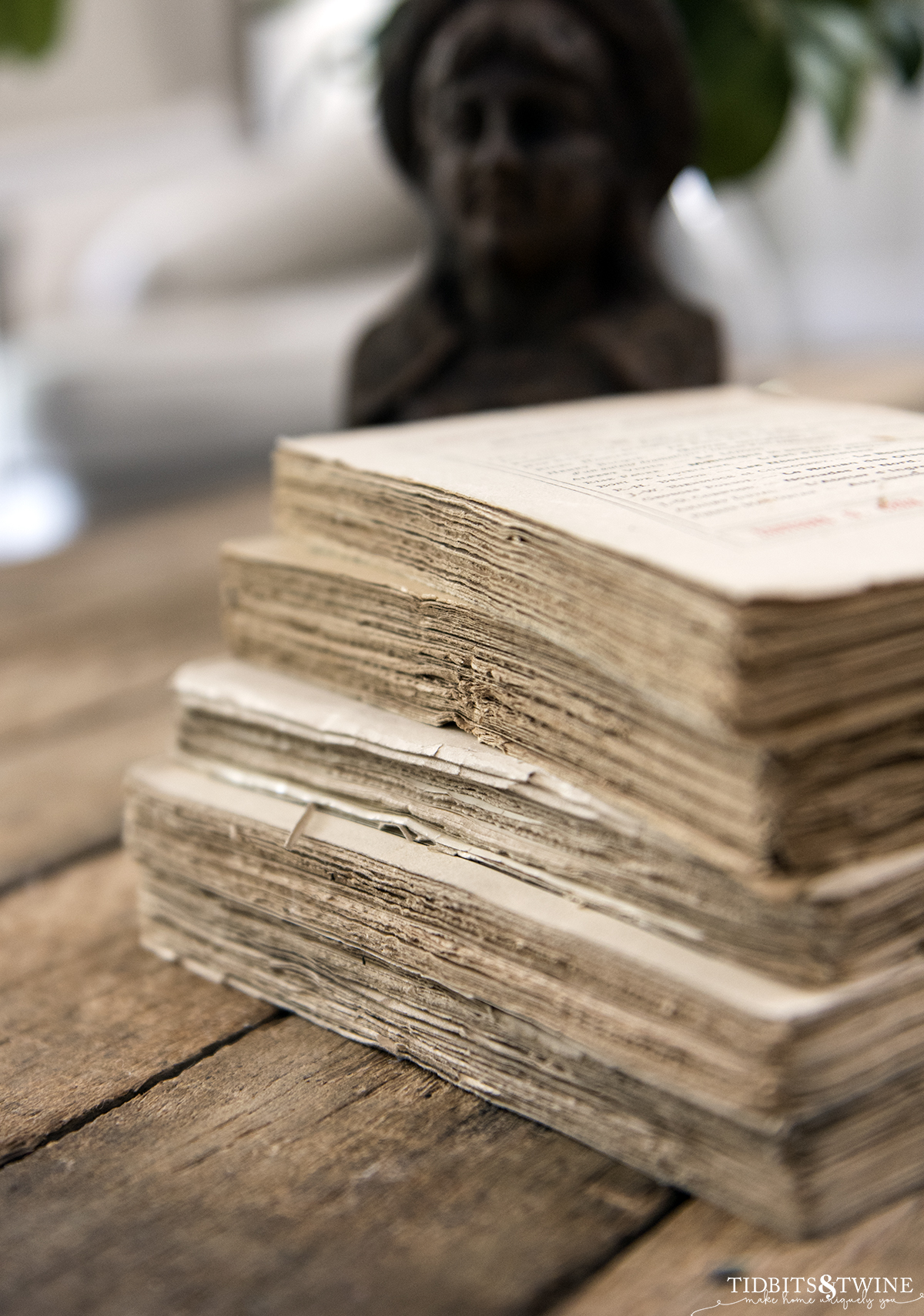
Deckled Edges
Deckled edges are another detail that almost always gets me.
I love the uneven, textured look of old pages, especially when they’re a little wavy, aged, or imperfect. They add so much character, whether the books are stacked on a table or lined up on a shelf.
Sometimes I’ll find a book with great deckled edges, but the cover isn’t a color I love. If the price is right, I’ll still buy it knowing I can turn it around on a bookshelf so the pages face outward.
I know not everyone loves the backward book look, and I get it. But for decorative books, I’m fine using whichever side looks best. If the pages are prettier than the cover, the pages win.
Aged Pages and Light Foxing
Even if a book doesn’t have deckled edges, I still pay attention to the pages.
I love pages that have softened with age. Creamy paper, uneven coloring, little marks, old inscriptions, bookplates, and even a bit of foxing can make a book feel more special.
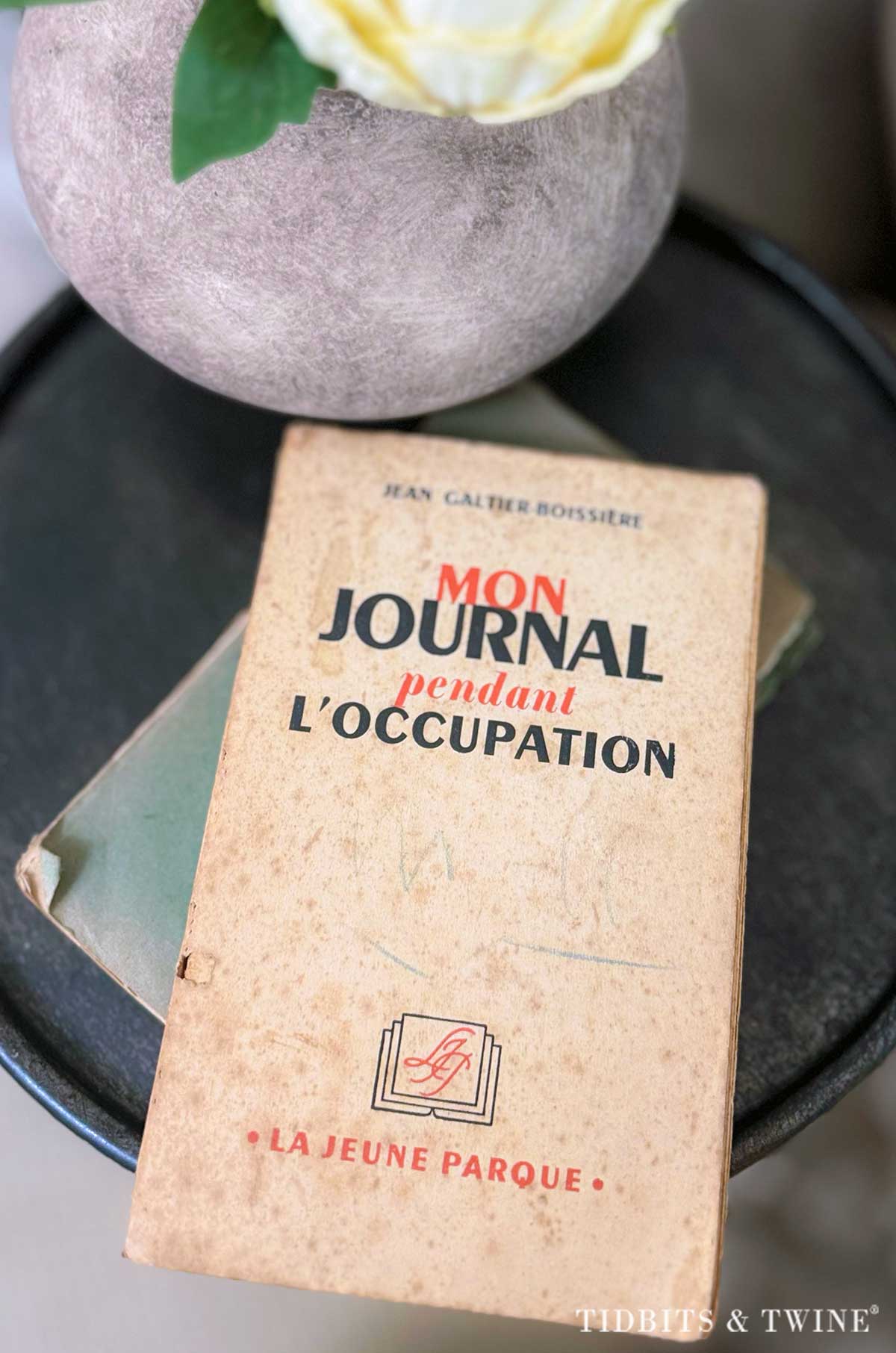
Foxing is the name for those small brown, tan, or rusty-looking spots you sometimes see on old paper. A little foxing doesn’t bother me at all. In fact, I usually like it because it gives the pages that aged, timeworn look I’m drawn to.
Mold is different, though, and that’s where I’m more careful. Foxing usually looks flat, dry, and brownish. Mold may look fuzzy, powdery, smeared, raised, or blotchy, and it often comes with a musty smell.
My very unofficial antique fair test is this: if the spots look dry and the book smells fine, I’m usually not worried. If it smells like a damp basement or looks like something is growing on it, I leave it behind.
Colors That Work With My Home
Color matters, but I’m not looking for a perfect match.
In fact, I usually prefer antique books that feel softened and faded. Warm browns, worn black, muted greens, faded blues, creams, and old leather tones are the ones I’m usually drawn to.
What I don’t want is a book that screams for attention in the wrong way. Some old books have bright covers or colors that just don’t work with my home, and unless the pages or spine are really special, I usually pass.
That said, I’m not too rigid about it. If a book has beautiful deckled edges, a great spine, or an interesting subject, I can usually find a way to use it. Sometimes that means turning it around so the pages face out, tucking it into a stack, or using it somewhere the color isn’t quite as noticeable.
The goal isn’t to make every book match. It’s to choose books that feel like they belong.
Sets Mixed With One-Offs
I love a beautiful set of antique books, but I don’t usually keep them all together.
A matching set can look gorgeous, especially if the spines have pretty details or the colors work well together. But if everything is too perfectly matched, it can start to feel a little stiff. I like things to look collected, not like I ordered “instant old library” by the foot.
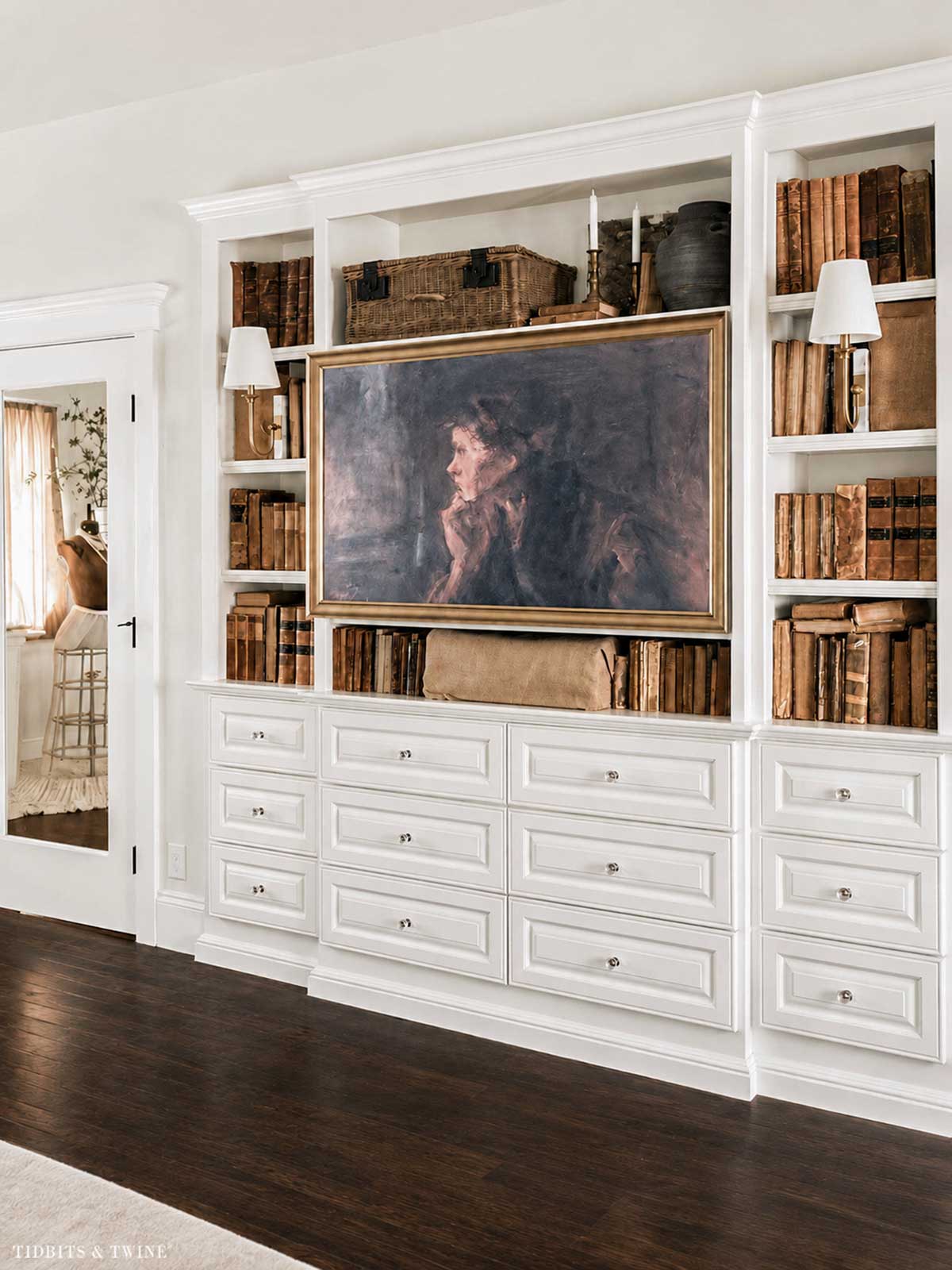
So even when I buy a set, I’ll usually break it up and mix in a few one-offs. A leather book here, a faded cloth book there, maybe one with deckled edges or a title I love. That little bit of variation keeps the shelves more interesting.
The goal isn’t perfect symmetry. It’s a mix that feels gathered over time.
Size and Shape
I also pay attention to the size and shape of a book before I buy it.
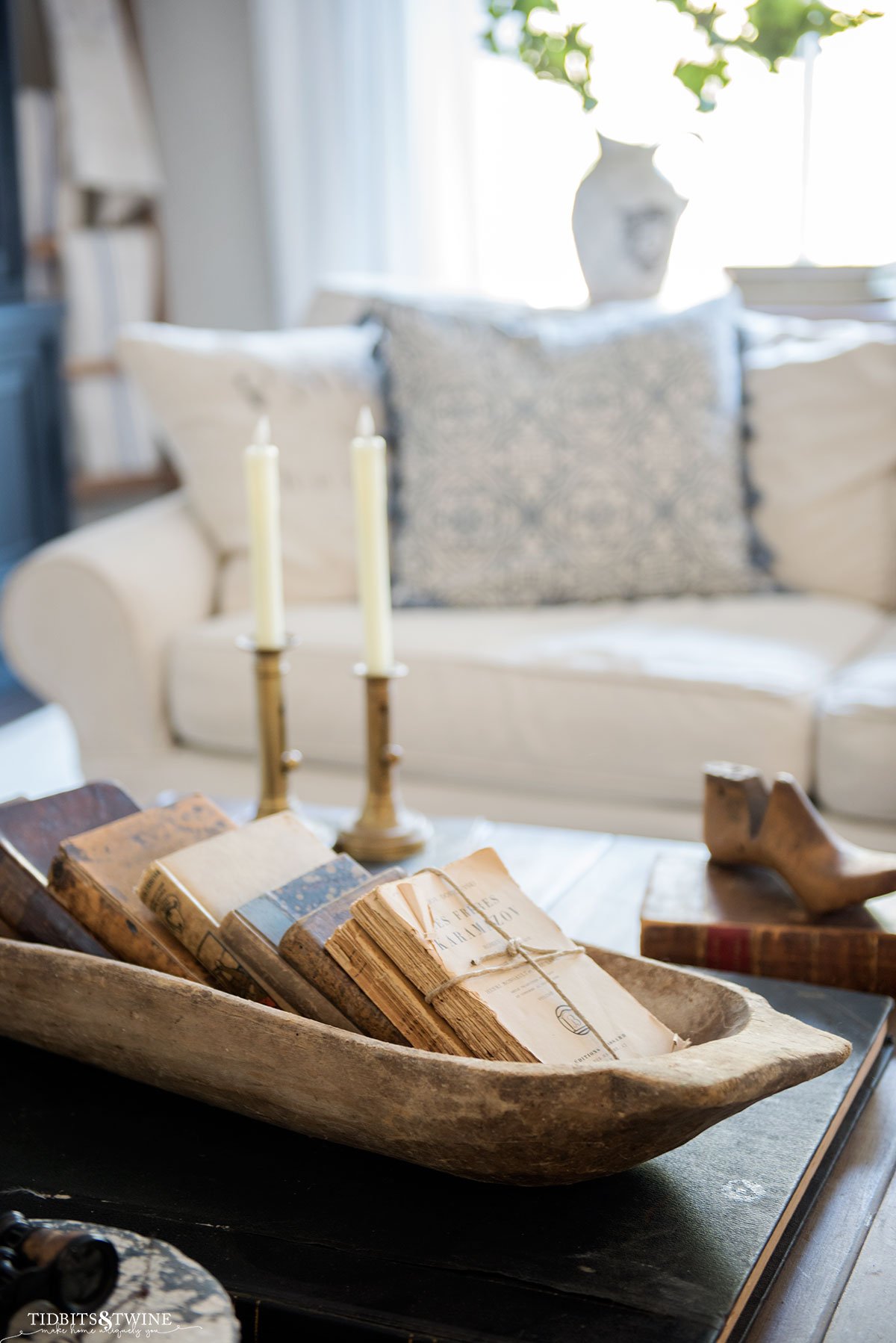
Small books are easy to tuck onto shelves, layer into a stack, or use in smaller spots where a larger book would feel awkward. Medium books are probably the easiest to use because they work almost anywhere. Larger books can be beautiful, but I’m a little pickier with those because they take up more visual space.
I’m especially drawn to chunky little books. They have great presence on a shelf and are easy to mix with taller books, frames, pottery, or whatever else I’m trying to squeeze in without making the whole thing look like a yard sale.
Very thin books can be pretty too, but they usually need friends. On their own, they can disappear. Grouped together, though, they can add a nice little collected layer.
Price
Price definitely plays a role, especially when I don’t have a specific spot in mind.
At the antique fair, I usually pay around $5 for a small leather book, $10 for a medium one, and $15 for a larger one. I think the most I’ve ever spent was about $25, and that was for something I really loved.
Could I sometimes find one cheaper at a thrift store or estate sale? Absolutely. But for a pretty decorative leather book that I can inspect in person, those prices feel fair to me.
I’m much more willing to take a chance on a $5 or $10 book, even if I don’t know exactly where I’ll use it. A $40 book with no plan needs to be really, really good.
What I Avoid When Buying Antique Books
I’m very forgiving when it comes to antique books, but I do have limits.
A little wear is part of the charm. Scratched leather, rubbed corners, faded lettering, foxed pages, and uneven color usually make me love a book more. But there’s a difference between beautifully aged and probably-should-have-stayed-in-the-garage.
A lot of the same rules I use when buying antiques apply here too. I shared more of my general antique-buying red flags in my post about what to avoid when buying antiques, and old books definitely fall into that same category.
Strong Musty Smells
A slight old-book smell doesn’t bother me. Honestly, I kind of expect it.
But if a book smells strongly musty, damp, or like it has been sitting in a wet cardboard box for thirty years, I usually leave it behind. That smell can be hard to get rid of, and I don’t want it transferring to my shelves, cabinets, or the other books around it.
Mold or Dampness
This is one of my biggest no’s.
A little foxing is fine with me, but mold is different. If a book feels damp, has fuzzy or powdery patches, or looks like something is actively growing on it, I pass.
I love an old book with character. I do not need one with a science experiment.
Books That Are Falling Apart
I don’t mind a book that looks worn. I actually prefer it.
But if the cover is completely detached, the pages are crumbling every time I touch them, or the binding is so loose that I’m afraid to pick it up, I usually leave it behind unless it’s extremely inexpensive and I have a very specific decorative use in mind.
There’s charmingly imperfect, and then there’s “this is going to shed all over my shelf and make me regret my choices.”
Books I’m Only Buying Because They’re Cheap
This one took me a while to learn.
A cheap antique book is only a good find if I actually like something about it. The spine, the cover, the pages, the subject, the size, something.
If I’m only buying it because it’s inexpensive, it usually becomes clutter. And as someone who has told her husband not to let her buy another book right before buying another book, I do try to have at least a few standards.
Where I Find Decorative Antique Books
I mostly buy antique books in two places: the antique fair and Elsie Green.
The antique fair is my favorite place to look because I can see the color in person, feel the leather, check the pages, and give the book the very official smell test before buying it. Photos online can make a book look beautiful, but they don’t always show loose bindings, musty odors, powdery leather, or colors that are much brighter in person.
Elsie Green is my other favorite source, especially for beautiful French books with deckled edges. She always seems to have the kind of old books I love most: muted, textured, imperfect in the best way, and full of character.
If you don’t have an antique fair nearby, I’d look at Elsie Green online, Etsy, eBay, and estate sales. Just pay close attention to the photos, measurements, and condition notes before buying. I especially like when a seller shows the cover, spine, page edges, and any damage.
For me, the best finds usually happen when I’m not looking for anything specific. I’ll be scanning a shelf, digging through a stack, or pretending I’m only “just looking,” and then there it is. A worn leather spine, deckled pages, a French title, or a little book that clearly has no assigned place in my home but somehow needs to come with me anyway.
Looking for a specific antique?
Browse the Antique Object Guide
Explore 20+ antique objects with identification tips, decorating ideas, and links to detailed posts about each piece.
More Decorating tips
- How to Decorate with Books
- Deckled Edge Books: A Designer’s Trick for Adding Character
- 25+ Gorgeous Book Topper Ideas
Don’t you just love the old money, reserved grace of old books, I do! Kim
Yes! That’s exactly it. They have such a quiet elegance to them.