



The other day, a friend asked me how I’d describe my decorating style. I told her it’s a mix of French, Belgian, Italian, and traditional pieces, and she stopped me at Belgian. “Wait, what’s Belgian style?”
Fair question. Belgian isn’t one of those decorating styles everyone immediately recognizes by name. But you’ve probably seen it, and maybe even loved it, without realizing what it was.
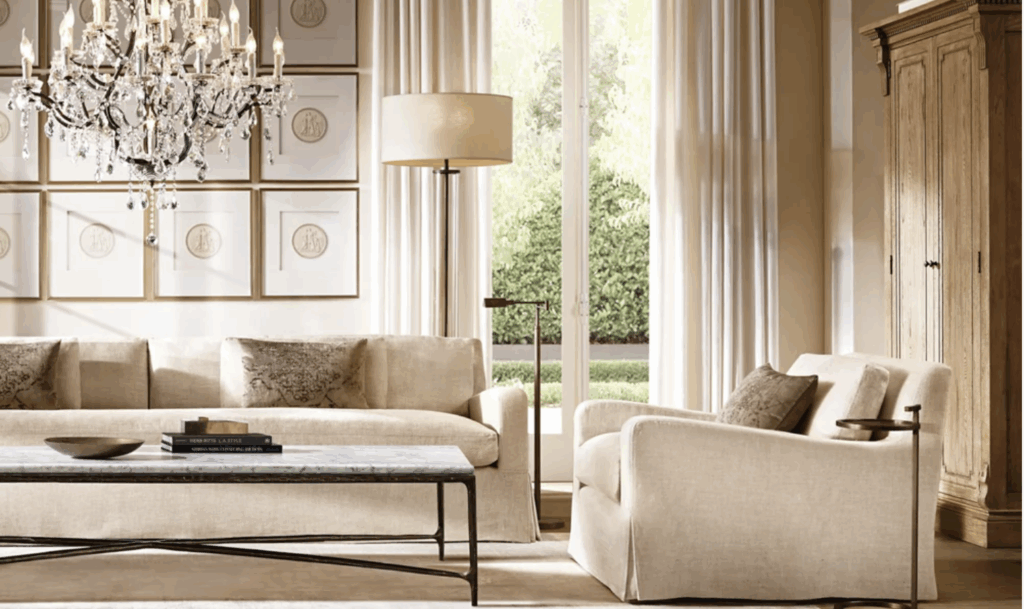
Who remembers the old Restoration Hardware?
The one before they started carrying so much sleek, modern furniture. The one filled with linen wingback chairs, oversized tufted beds, weathered wood, ornate gold mirrors, and pieces that looked like they had been pulled from a European country house. Their catalog used to live under my bed so I could pull it out from time to time and admire all the lovely rooms.
If that was your favorite version of RH, you may already love Belgian style. You might have thought of it as French or French country, but much of that look was heavily influenced by Belgian design.
And that’s really why I wanted to talk about it. Belgian style might describe what you already love better than you realized, or it might simply give you a few new ideas to mix into the style you already have.
What Is Belgian Style?
Belgian style isn’t one rigid formula. It can range from rustic to quite contemporary, but the common thread is a love of natural materials, muted color, strong scale, and pieces that get better with age.
Belgian interiors rely more on texture, patina, and proportion than on pattern or decoration. Think linen, aged wood, stone, plaster, leather, and iron, often paired with substantial furniture and fewer small accessories competing for attention.
The result feels warm, refined, and restrained without being minimal. Belgian design gives beautiful materials and well-chosen pieces enough room to stand out. The age stays. The elegance stays. Much of the fuss is gone.
Belgian Style Can Be Rustic or Contemporary
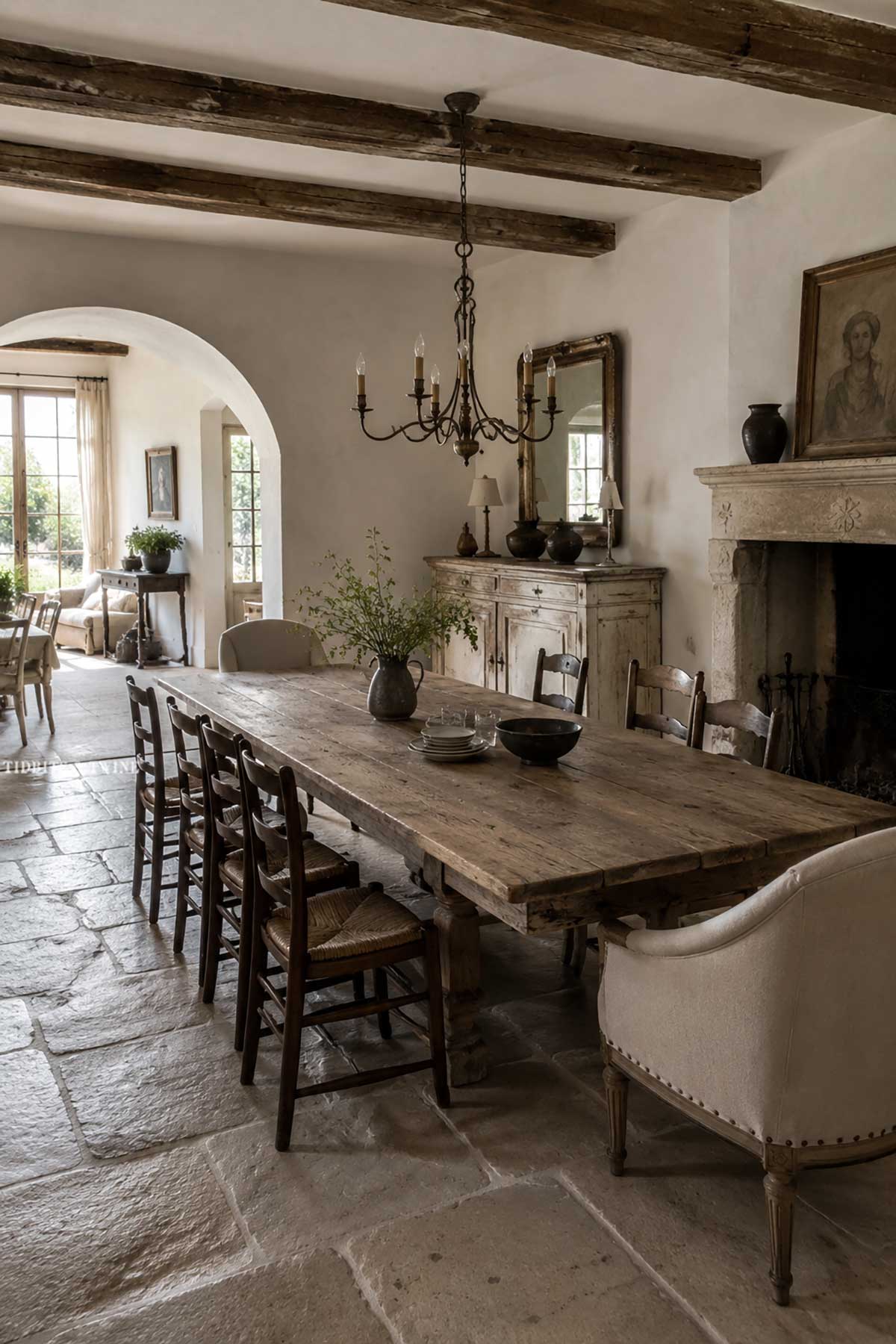
The old Restoration Hardware look introduced many of us to the more rustic side of Belgian design, but Belgian interiors can also be quite contemporary.
Modern Belgian rooms often pair clean-lined sofas, sculptural furniture, and modern lighting with plaster, stone, aged wood, linen, and antiques. The furniture may change, but the common threads remain: natural materials, strong proportions, plenty of texture, a restrained palette, and a mix of old and new.
Belgian vs. French Country
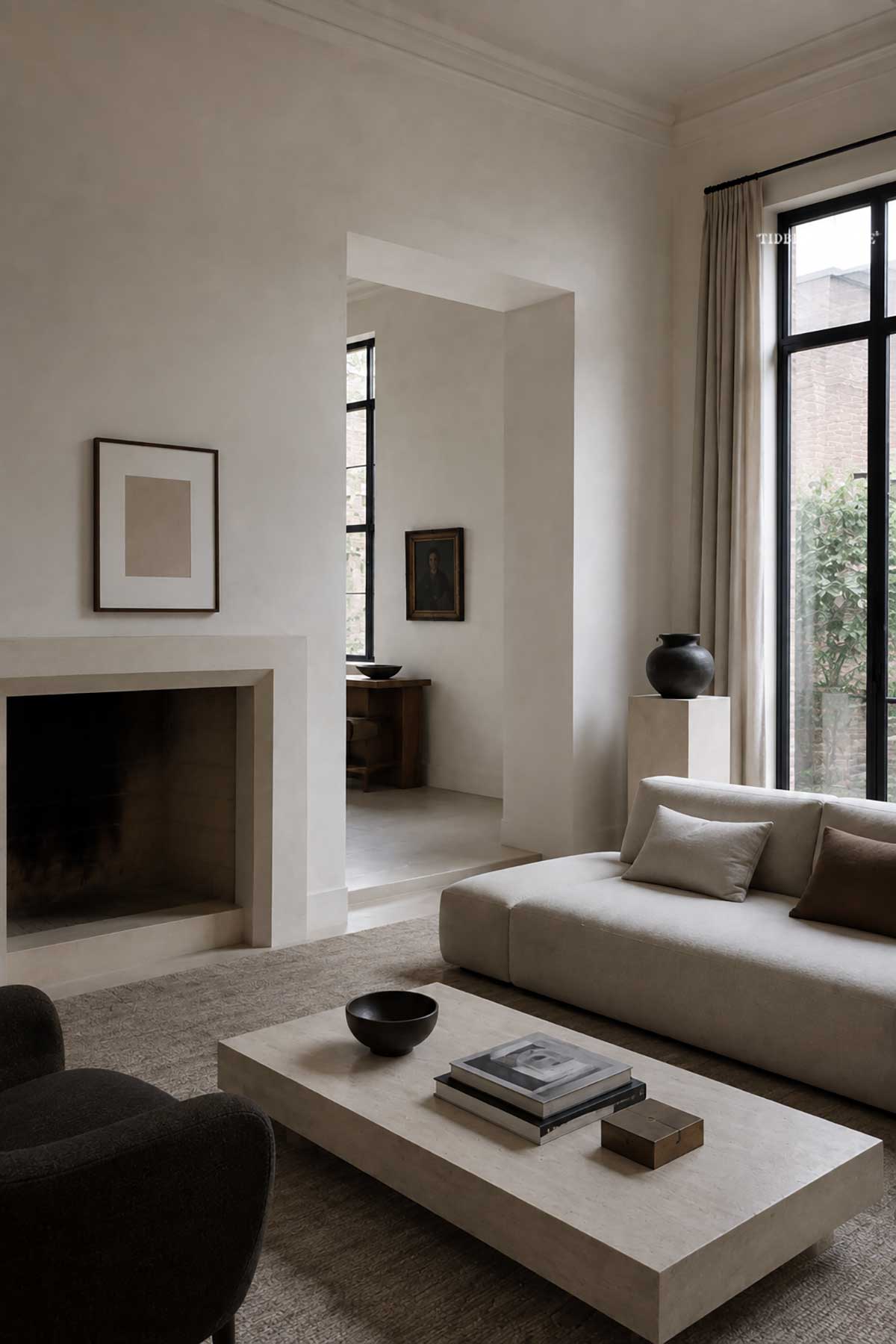
Belgian and French country share a lot of the same ingredients: antiques, natural materials, aged finishes, and furniture that looks better with a little wear.
The biggest difference is how those elements are put together.
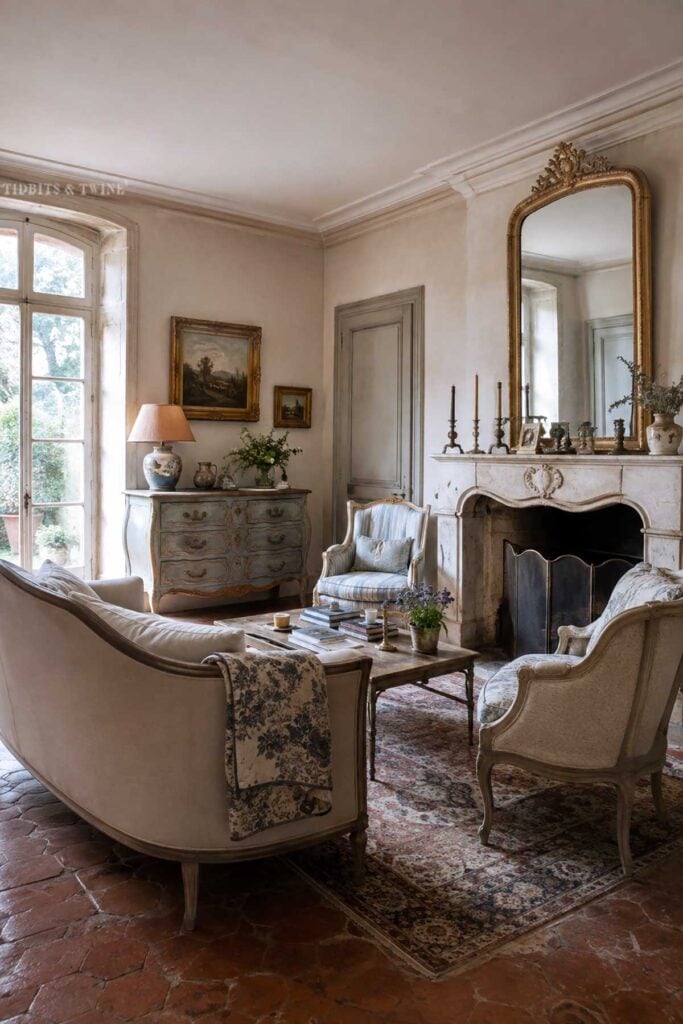
Color and Pattern
French country usually makes more room for color and pattern, including:
- faded blue
- soft green
- ochre
- checks and stripes
- florals
- toile
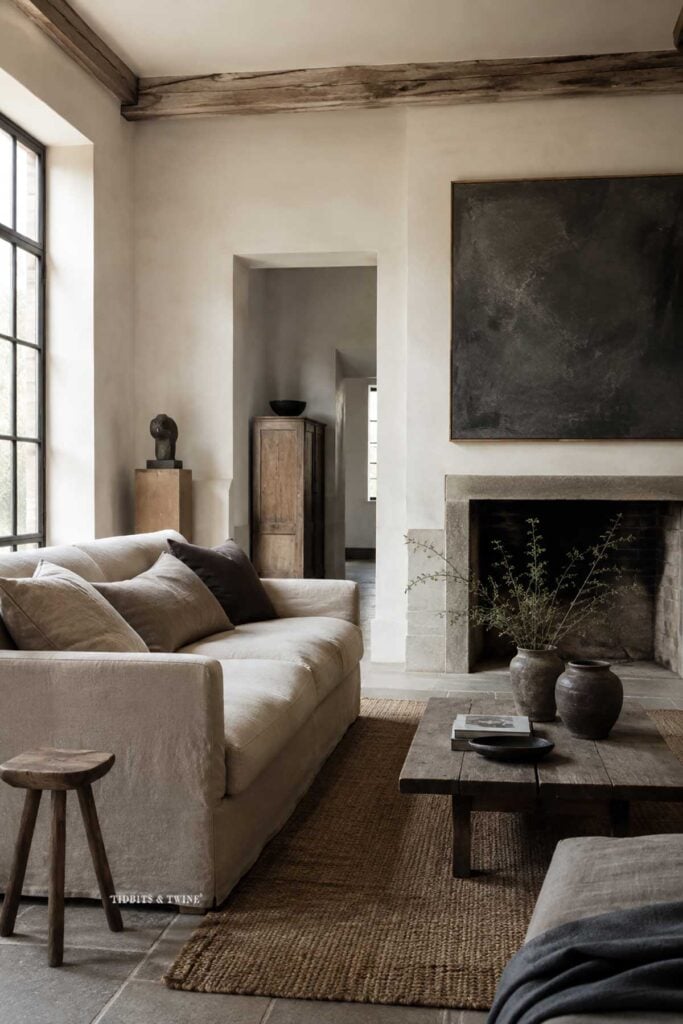
Belgian interiors tend to stay closer to warm white, flax, stone, taupe, brown, and charcoal.
Pattern isn’t off-limits, but Belgian rooms rely more on linen, wood grain, plaster, stone, and other natural textures for interest.
Furniture and Scale
French country furniture is often more graceful and decorative, with:
- curved legs
- carved details
- painted finishes
- shapely silhouettes
Belgian furniture tends to feel larger, heavier, and more architectural. Deep sofas, tall cabinets, substantial tables, and oversized chairs are common.
French country often makes room for more decorative layers, while Belgian interiors tend to give larger pieces more breathing room.
Materials and Finishes
Both styles use wood, linen, stone, iron, and plaster, so there can be quite a bit of overlap.
French country is more likely to include painted furniture, decorative carving, warmer woods, and occasional gilding.
Belgian design puts more emphasis on aged oak, heavy linen, worn leather, dark iron, honed stone, and patina.
The Overall Feel
French country tends to feel softer, more decorative, and a little more romantic.
Belgian interiors feel quieter, weightier, and more restrained.
Both have plenty of age and European character. French country tends to show it through graceful details and collected layers, while Belgian design relies more on scale, texture, patina, and simplicity.
Why Belgian Style Still Works Today
A lot of us still want rooms with age, warmth, antiques, and natural materials, but without necessarily wanting lots of pattern or decoration. Belgian design fits nicely into that middle ground. It can quiet down a more decorative room or add age and texture to a home filled with cleaner, newer furniture.
Belgian style had a big mainstream moment around 2009, when Restoration Hardware leaned heavily into the look. Copy one of those rooms piece for piece today and yes, it might look dated. But natural materials, texture, patina, scale, and restraint are timeless.
The idea isn’t to recreate an RH showroom from 2010. It’s to borrow the parts that still work and mix them with the furniture and style you already have.
How to Add Belgian Style to Your Home
You don’t need to redecorate an entire room to bring in a little Belgian influence. A few changes in color, texture, scale, and styling can shift the look quite a bit.
1. Quiet the Palette and Add More Texture
Belgian interiors tend to rely on a limited range of warm, earthy colors:
- flax and oatmeal
- warm white and stone
- taupe and brown
- charcoal and muted black
Then let the materials provide the interest. Look for:
- linen
- aged or worn wood
- stone and plaster
- iron
- leather
- woven natural fibers
Your room doesn’t have to be beige, and pattern isn’t forbidden. The idea is simply to lean more on texture than pattern.
2. Choose Pieces With Presence and Let Age Show
Belgian rooms often feel substantial without being crowded. Instead of several small pieces competing for attention, try giving one stronger piece more room to stand out.
That might be:
- a tall antique cabinet
- a deep upholstered chair
- an oversized mirror or painting
- a chunky wood table
- a large old urn or vessel
And don’t be too quick to fix every scratch, worn edge, or tarnished finish. Real patina is part of the appeal. Belgian interiors look better when everything doesn’t feel brand new.
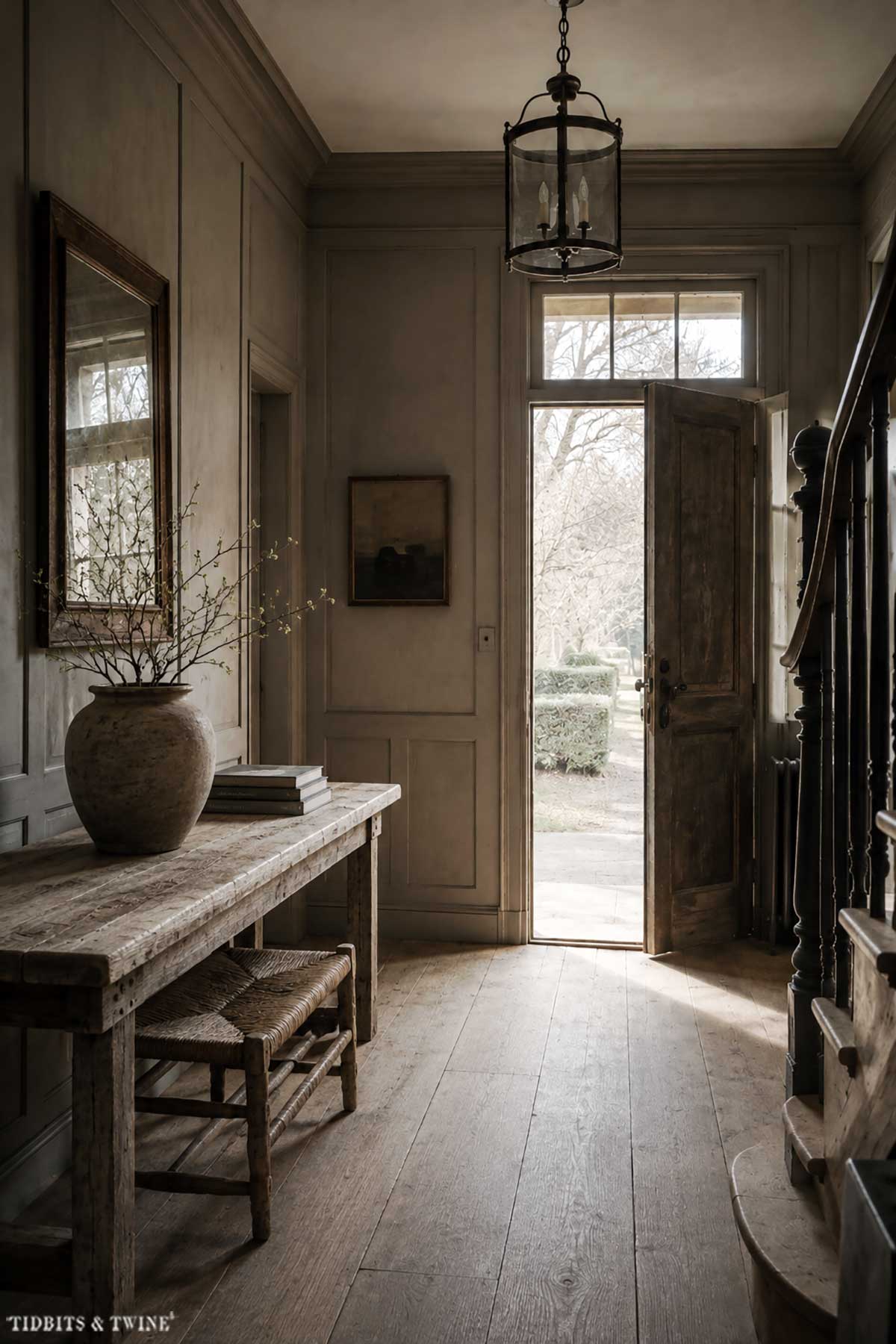
3. Mix Old and New
Belgian design doesn’t require a room full of antiques. In fact, mixing old and new is part of what keeps the look from feeling like a period room.
Try combinations like:
- a clean-lined sofa with an antique cabinet
- a modern lamp on an aged wood table
- contemporary art against old plaster
- a new upholstered chair beside a weathered chest
Sometimes one or two pieces with age are enough to give newer furniture much more character.
4. Keep the French Pieces You Love
If you already love French country, there’s no reason to choose one style over the other.
Keep the:
- ornate mirror
- carved chair
- painted chest
- crystal chandelier
- graceful antique side table
A quieter Belgian foundation can actually make those more decorative French pieces stand out even more.
You can see this kind of mix in the work of Brooke and Steve Giannetti. Their Patina Style isn’t strictly Belgian, but it shares the same love of natural materials, aged finishes, substantial antiques, and quiet color, often mixed with French, Swedish, and more contemporary pieces.
The goal isn’t to make your home look perfectly Belgian. It’s to borrow the parts of the style that work with what you already love.
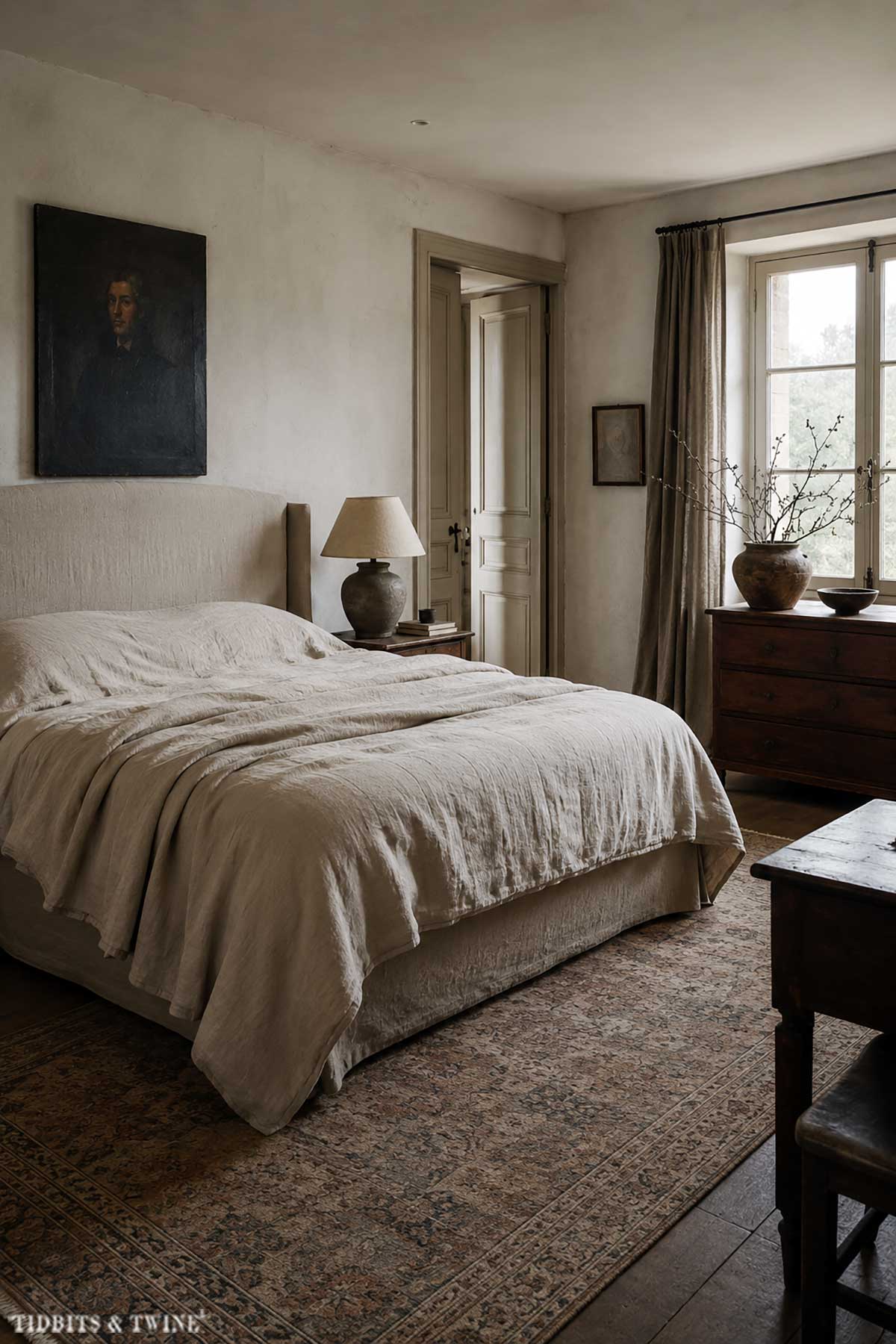
Is Belgian Style More Your Style?
If you love rooms with natural materials, age, texture, and a little breathing room, Belgian design might explain why certain interiors have always appealed to you.
You may still love French country too. I certainly do. A carved chair, painted chest, ornate mirror, or other decorative French piece can mix beautifully with a quieter Belgian foundation. Most homes are more interesting when they aren’t a perfect example of one style anyway.
Knowing the difference isn’t about putting a label on your home. It simply helps you understand what you’re drawn to and why. And the next time you find yourself missing the old Restoration Hardware catalog, you’ll finally know what you were looking at.
More Decorating Tips
- 7 Decorating Mistakes that Ruin French Style
- 10 Tips for Decorating with Patterns
- How to Identify Your Decorating Style (Without Taking a Quiz)

Very interesting and informative. I became familiar with this style through our Canadian publication, House and Home, a designer , Jill Kantelberg is a master of mixing older and more contemporary Belgian style. Really enjoyed this post. Kim
I’m so glad you enjoyed it, Kim! I’m not familiar with Jill Kantelberg, but now I’m going to have to look her up. I especially love seeing Belgian style mixed with more contemporary pieces, so she sounds right up my alley. Thank you for the recommendation!