





Wondering what to put on your mantel or how to decorate it so it actually looks right?
A fireplace mantel is often the focal point of a room, yet it’s surprisingly tricky to decorate. Many mantels end up looking either too bare or too cluttered, and finding that “just right” balance can feel harder than it should.
The reason is simple: a mantel is a long, narrow surface that is usually the focal point of the room,. and without a little visual organization, decor can quickly look random.
When people style a mantel, they often add pieces one at a time—a candle here, a plant there, maybe a mirror in the middle. But without a plan for how those objects relate to each other, the display can easily feel scattered or crowded.
This is where one of those helpful decorating “rules” comes in. Well-styled mantels usually follow a simple visual framework that creates balance and layering. Once you understand that framework, decorating becomes much easier.
Instead of guessing what to put where, you can build a mantel arrangement step by step so the whole display feels balanced and intentional.
In this post, I’ll walk you through three simple steps that help pull a mantel display together.
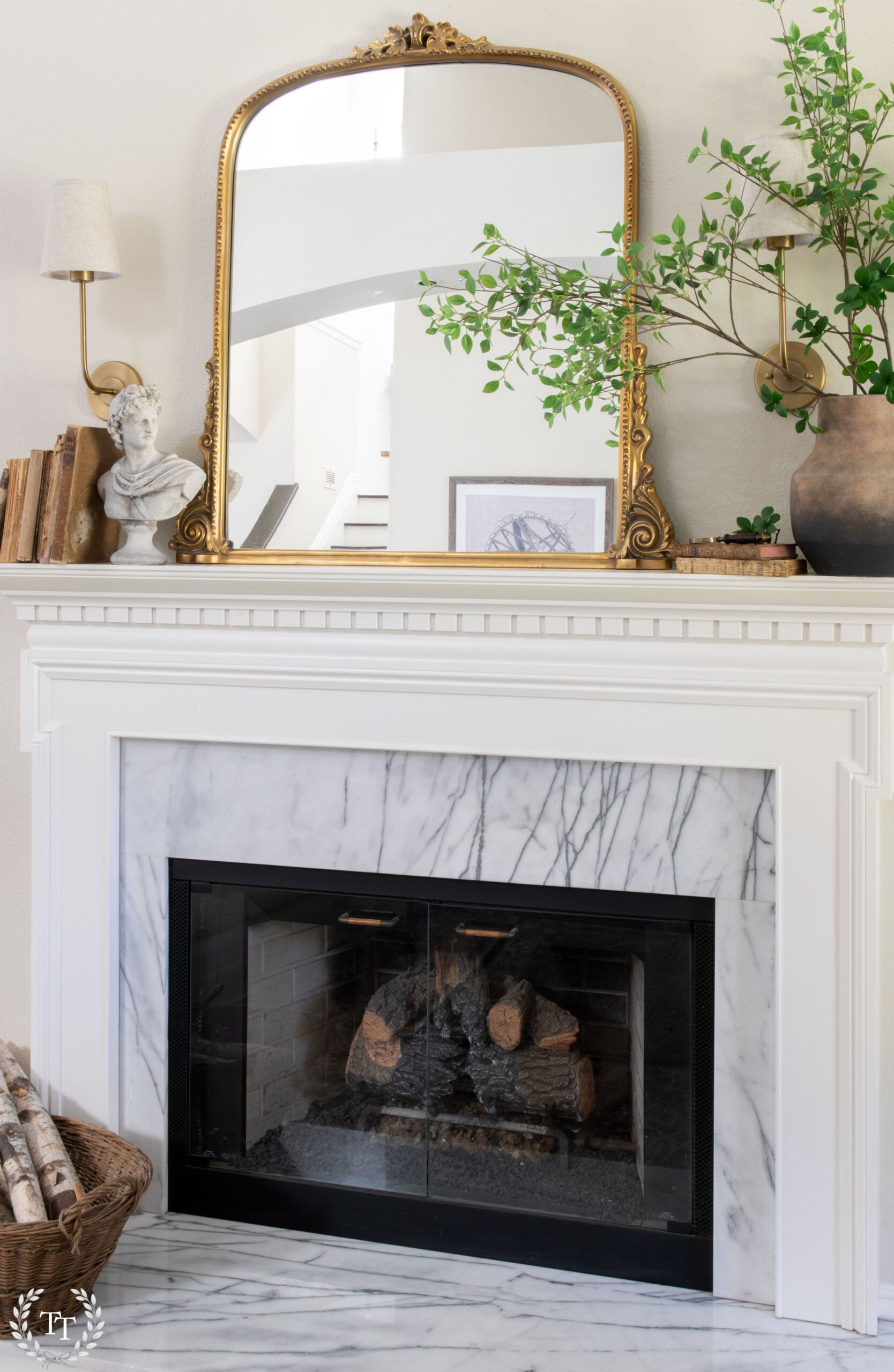
How to Decorate a Mantel
Decorating a mantel becomes much easier once you understand the simple framework behind a well-balanced display.
Instead of placing objects randomly across the mantel, it helps to build the arrangement in layers. Each layer plays a different role in the overall design and helps create balance along the long horizontal surface.
Most mantel arrangements include three key elements:
• Layer 1 – The Anchor: a large focal piece such as a mirror or artwork
• Layer 2 – The Weight: objects on each side that add balance and width
• Layer 3 – The Filler: smaller pieces that add interest and complete the display
Once you understand these three parts, decorating your mantel becomes much more straightforward.
Below is the simple approach I use to decorate a mantel.
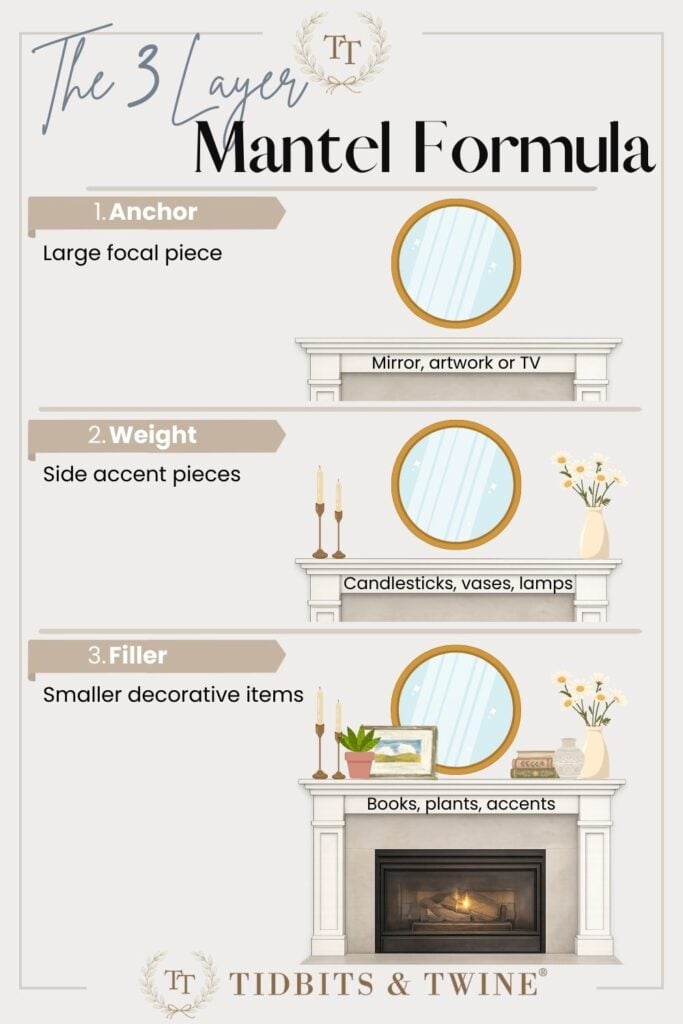
Step 1: Follow the 3-Layer Mantel Formula
A well-decorated mantel usually follows a simple formula built around two or three layers of decor. Layers 1 and 2 create the foundation of the display, while Layer 3 is optional depending on your decorating style.
Instead of placing objects randomly across the mantel, this approach helps you build the arrangement in a way that feels balanced and intentional.
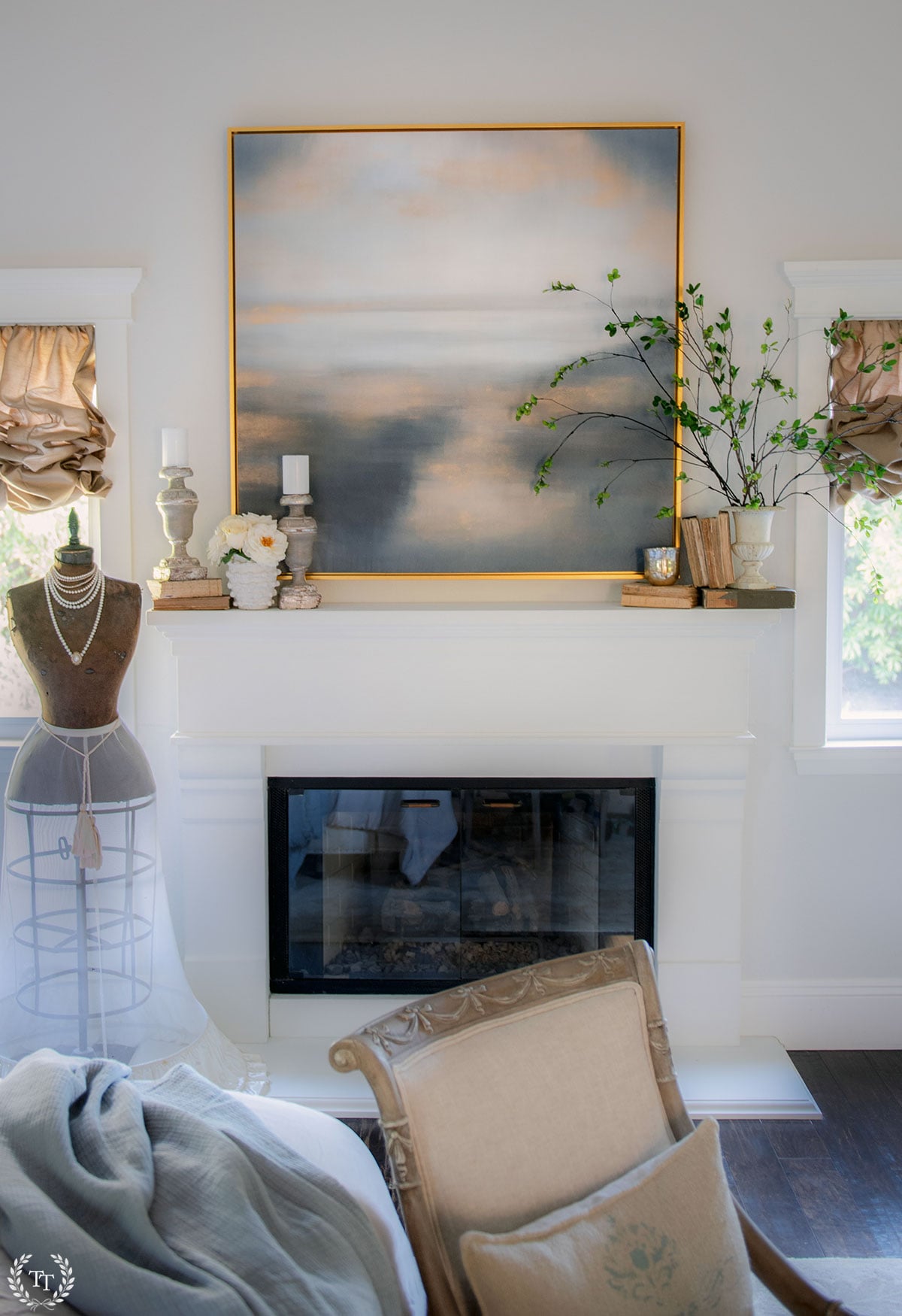
Below is an illustration using my bedroom mantel.
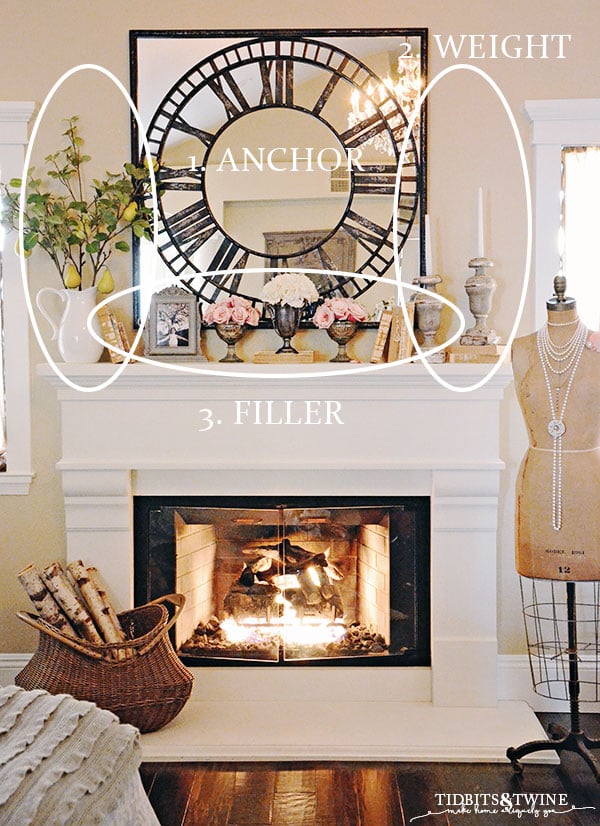
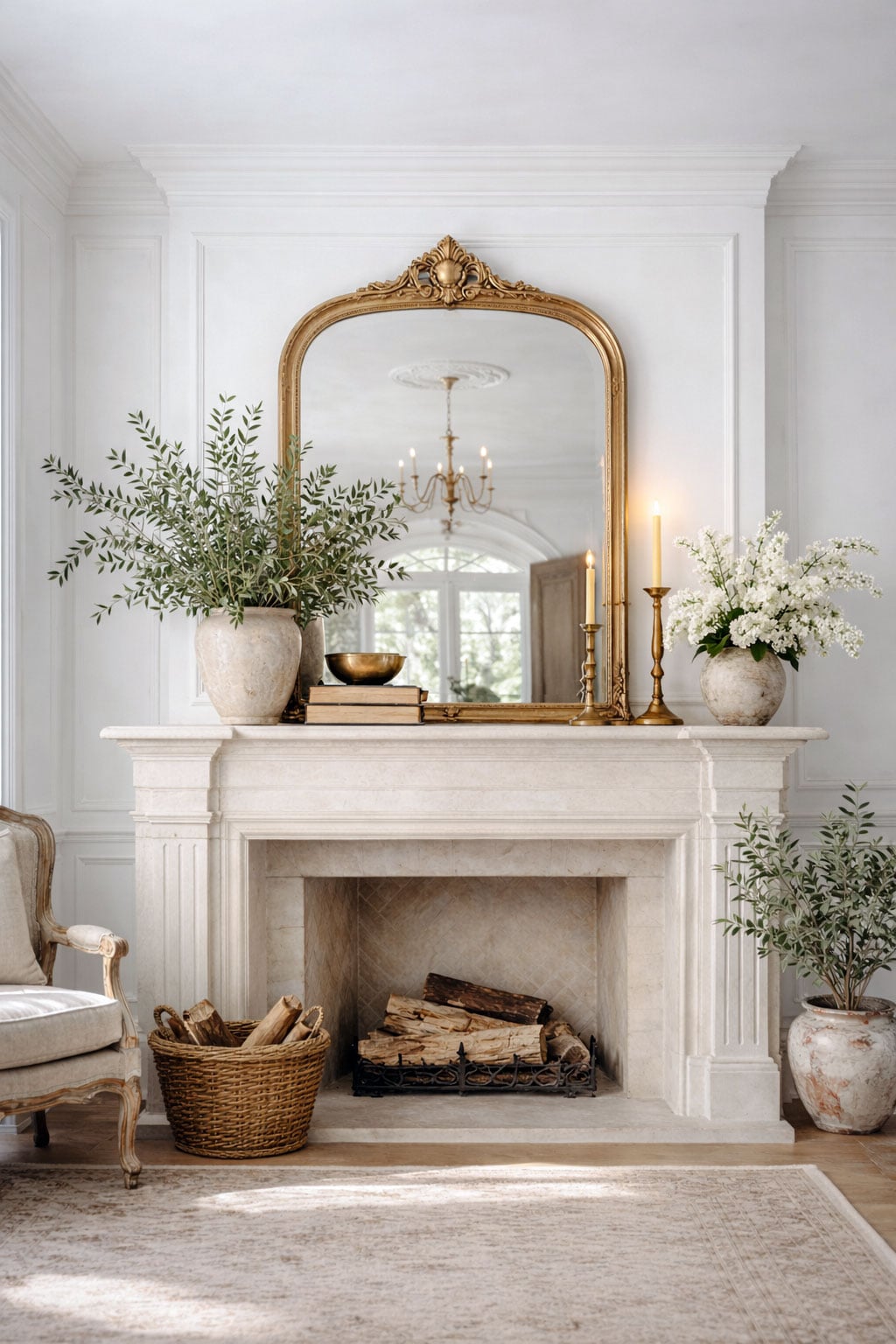
Layer 1: The Anchor
Start with a large focal piece for the center of the mantel. This might be a mirror, artwork, or even a television.
This piece acts as the anchor for the entire arrangement and is typically the tallest element in the display.
Scale matters here. The anchor piece should feel substantial enough to balance the visual weight of the fireplace below it and fill a good portion of the wall space above the mantel.
Layer 2: The Weight
Next, add objects to the right and left of the anchor to create balance and visual weight across the mantel.
These pieces might include candlesticks, vases, lamps, or decorative objects. They don’t have to be identical, but they should feel similar in scale so that one side doesn’t appear heavier than the other.
When choosing these items, their height should remain lower than the anchor piece while still feeling proportionate to the overall arrangement.

If you don’t love a symmetrical look, here are some tips for creating an Asymmetrical Style!
Layer 3: The Filler (Optional)
Finally, you can add smaller pieces near the center of the mantel underneath the anchor.
These items help fill the space and add visual interest. Books, small decorative objects, or greenery often work well here.
When adding this layer, vary the heights of the objects so you avoid creating strong horizontal lines that compete with the long horizontal line of the mantel itself.
If you prefer a very clean or minimal look, you may choose to skip this layer entirely.
Layers aren’t just for mantels! In fact, you can use the concept of layering to give your home a “finished” look. You can get the details in my guide The Art of Layering
Step 2: Create a Triangle of Movement
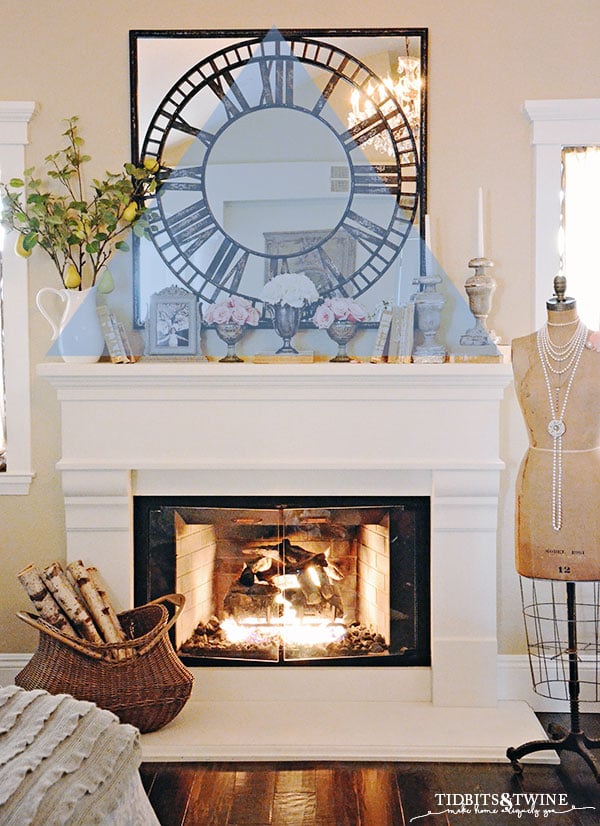
Once your layers are in place, the next goal is to create a gentle triangle of height across the mantel.
The tallest piece should remain in the center (Layer 1), with slightly shorter objects on either side (Layer 2), and the smallest items closer to the middle of the mantel (Layer 3).
This arrangement naturally creates a triangular shape above the mantel, with the highest point in the center gradually stepping down toward the sides.
This subtle change in height helps guide the eye upward to the focal point and then outward across the mantel. The result feels balanced and easy to look at rather than flat or cluttered.
Step 3: Keep Scale in Mind
As you arrange the pieces on your mantel, pay attention to how the objects relate to one another in size and scale.
Each item should feel connected to the pieces around it rather than standing alone. One simple way to achieve this is to allow objects to slightly overlap each other so the arrangement reads as one cohesive display instead of several separate items.
It also helps to think of the arrangement as a gentle step-down in height, starting with the tallest piece in the center and gradually moving to shorter pieces toward the outer edges.
The key is to make these changes in height gradual rather than abrupt. When objects decrease in size step by step, the display feels balanced and easy for the eye to follow.
Now that you understand the formula, the next question is what types of decor pieces actually work on a mantel.
What Decor Works for Each Mantel Layer
Once you understand the three layers, the next question is often what types of decor pieces work best for each one.
When You Have a TV (or Large Art) Above the Mantel
If you have a TV above your mantel—or even a large piece of art you don’t want to compete with—you’ll want to approach styling a little differently.
This is one of the few times where less structure and more breathing room actually looks better.
Instead of layering across the entire mantel, keep your styling lower and more focused to the sides. Let whatever is above the mantel remain the focal point, and use your decor to support it—not compete with it.
In this space, I kept the center area open and concentrated the styling toward the ends. It still feels layered and interesting, but nothing blocks or distracts from what’s above.
What to Put on a Mantel
Here are some common options for each layer of a mantel arrangement.
Layer 1: Anchor Pieces
The anchor is the main focal point above the mantel and should be the tallest element in the display.
Common anchor pieces include:
• mirrors
• framed artwork
• a television
• large antique frames
• oversized wall decor
• architectural pieces
Layer 2: Weight Pieces
These pieces sit on either side of the anchor and help balance the visual weight of the arrangement.
Examples include:
• candlesticks
• table lamps
• vases
• small sculptures
• urns
• decorative containers
These pieces do not need to match, but they should feel similar in scale and height.
Layer 3: Filler Pieces
Filler pieces help complete the display and add texture and interest near the center of the mantel.
Examples include:
• stacked books
• small framed art
• plants or greenery
• decorative boxes
• small pottery
• seasonal decor
If you prefer a very clean or minimal look, you can choose to skip this layer entirely.
The key is not the specific objects you choose, but how they relate to each other in scale, height, and visual weight.
Mantel Decor Ideas
If you’re looking for inspiration, here are some of my favorite decor pieces to use when styling a fireplace mantel.


Common Mantel Decorating Mistakes
Even when you follow the basic layering formula, a few common mistakes can make a mantel arrangement look awkward or unfinished.
Here are a few things to watch for when styling your mantel.
Using decor that is too small
A fireplace mantel is usually a substantial architectural feature, so very small decor pieces can look lost. Choose items that feel large enough to balance the scale of the fireplace.
Placing everything the same height
When objects are all similar in height, the arrangement can look flat. Varying the heights of your decor creates movement and makes the display more visually interesting.
Not overlapping objects
If every item sits separately with space around it, the display can feel disconnected. Allowing pieces to slightly overlap helps the arrangement feel more cohesive.
Overcrowding the mantel
It’s easy to keep adding decor until the mantel feels cluttered. Leaving a little breathing room between objects helps the arrangement look intentional.
More Decorating Tips
- Benjamin Moore Ballet White – The Perfect Neutral Whole House Color
- Marble Tile Bathroom – My Experience with Care and Maintenance 2 Years Later
- 6 Small-Scale ideas for that Empty Corner in the Living Room!
- 10 Stylish Ideas for What to Put Behind a Couch

Hi, where could I find that mirror with the clock dial you featured in the example?
Hi! Where can I buy the mirror with the clock like detail? Thanks!
I have an old, but refinished :) Victorian style mantle. It’s hard to describe but I will try…it’s one piece/unit. The type with a shelf across the top, centered square beveled mirror underneath, (with chunky “poles”(?)) mantle, with fireplace beneath that. Hope that helps with visual. Anyway, for years I have struggled with this. Always had a small arched clock on the mantle but tired of that. There is only about two feet of space between the top shelf and lower mantle. Can you suggest anything for me to do?? I can send a pic through email if you respond.
Hi! Send a picture to me and I’ll see what I can do! kim at tidbits and twine dot com
Love your tutorial.
How do you do the triangle effect on an extra long mantel. It runs the whole length of a long wall.
Do you do the triangle effect in the middle and spread it out horizontally more than you are showing on these mantels.
And then, what do you do with the corners on each end?
Your tips were helpful to me but I still need a little assistance. I have a mantel clock that is the central (or anchor) point on the mantel. We don’t have anywhere else to put it so it will need to remain on the mantel- and I love it- but don’t know what to put on the sides especially since the mantel clock is not very tall (and you mentioned having everything else shorter than the anchor). I believe it’s about 8 inches tall and about 12 inches wide at the bottom.
I have looked and looked online for how to decorate with a mantel clock and nothing has actually come up- just for large clocks that you attach to the wall.
So just wondering if you have any tips or ideas? Thank you so much!
Hi Pamela,
Are you able to hang a mirror or a piece of art above your mantel and then place the mantel clock on the center of your mantel with other items flanking on the side? In my post, I would use your mantel clock as the “filler” layer. Does that make sense?
:) Kim
Great how to article. I think a lot of people struggle with decorating mantles. You did a great job of breaking it down for those less creative!
Hi Lindsay! I’m so glad you like the article and found it helpful! :) Kim
Hi there,
I came across your tutorial concerning mantels. I generally follow your rules when decorating them. However, I am at a quandary with my own mantel but isn’t how it is with your own stuff. I have a massive arched window over my mantel and then 2 long windows on each side of the fire place. While all the windows create great light and beautiful views of my back yard. How would you handle this? Would you ignore the elephant in the room and work around it or leave it as your focal point?
Thanks
Candy
Beautiful!! I was wondering where I can find the candle holders you used
I loved this! I struggle so much on how to place all my items. This was deffinately a help!
Hi Debbie,
I so glad you found it helpful! :)Kim