



Have you ever noticed that some of the most interesting antiques used today as decor actually started out as purely practical objects?
Grain sacks were once used to haul crops. Demijohns stored wine and oil. Bread boards were work surfaces. If you think about it, none of these were meant to decorate a home, yet today we style them on shelves, lean them against walls, or use them as anchors in a room.
The silent butler fits perfectly into this category. And we’re talking about it today because I got not one, but two for Christmas!
It was never meant to be admired. It was designed to solve a very specific, very ordinary problem: crumbs.
And if you think about how we deal with crumbs now, it’s usually some version of wiping them onto the floor, brushing them onto our hand, or swiping them away with a napkin while hoping no one notices (It’s me! I’m guilty of this!)
The silent butler was a better solution. And today, it’s one of those antiques that still makes sense, both functionally and decoratively.
This post is part of my European antiques series, where I explore everyday antiques, their history, and how they fit into real homes today. You can find all of those posts HERE.
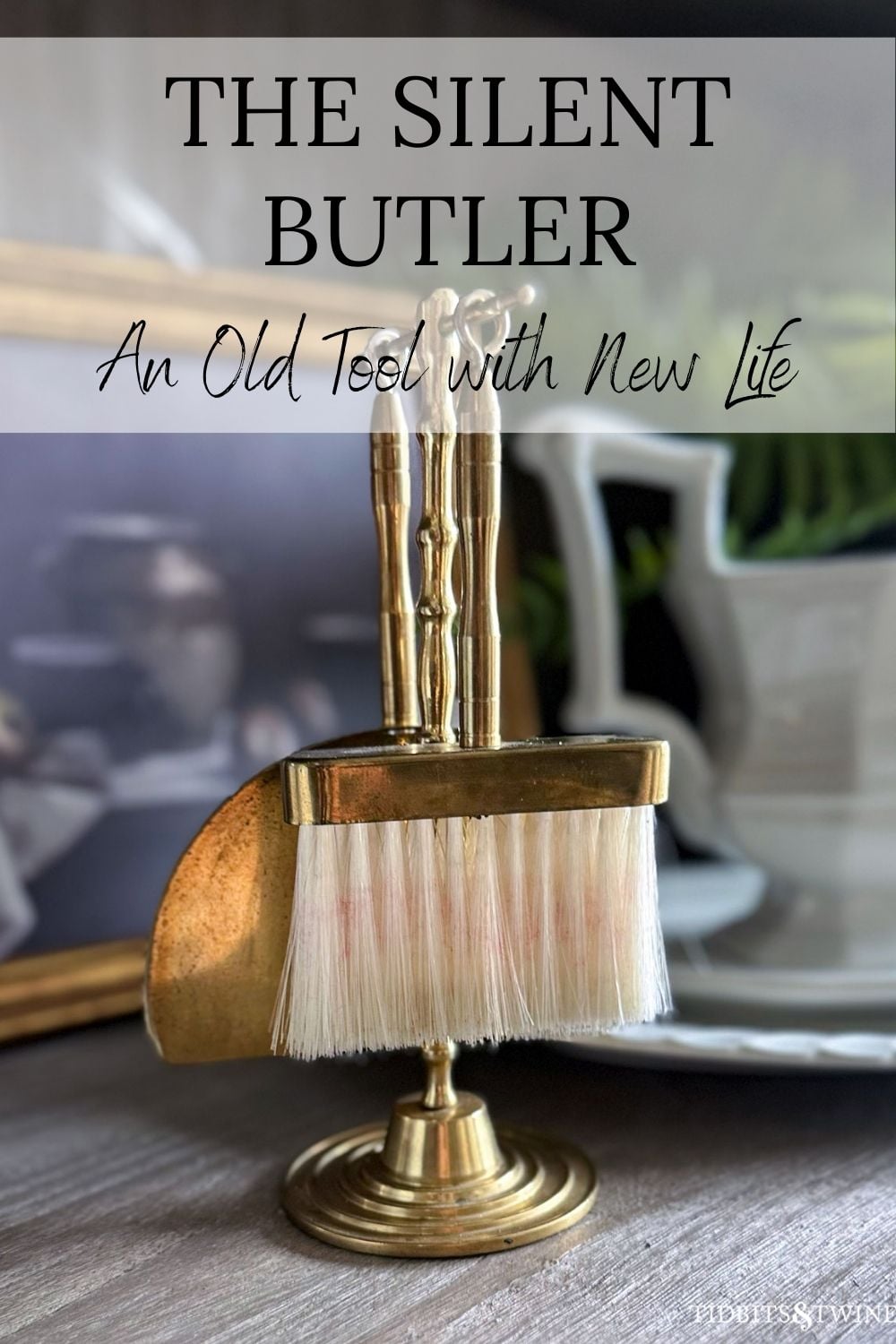
What Is a Silent Butler?
A silent butler is a table tool used to collect crumbs after a meal.
Rather than brushing crumbs onto the floor or a napkin, crumbs were swept into a small pan or tray and removed between courses. The goal wasn’t just cleanliness. It was discretion.
That’s where the name comes from. It performed the role of a servant without ceremony.
You may also see these referred to as an “ash butler.” In addition to crumbs, similar tray-and-brush sets were sometimes used to collect ashes from fireplaces or smoking accessories, especially in studies or smoking rooms. The form is often the same, with the name reflecting how it was used rather than a completely different object.
Earlier crumb-collecting tools existed well before the term “silent butler” became common, but the form we recognize today became most widespread in the late 19th and early 20th centuries.
The Two Main Styles (and Which Came First)
There are two primary styles of the silent butler, and they reflect how dining habits and household design evolved over time.
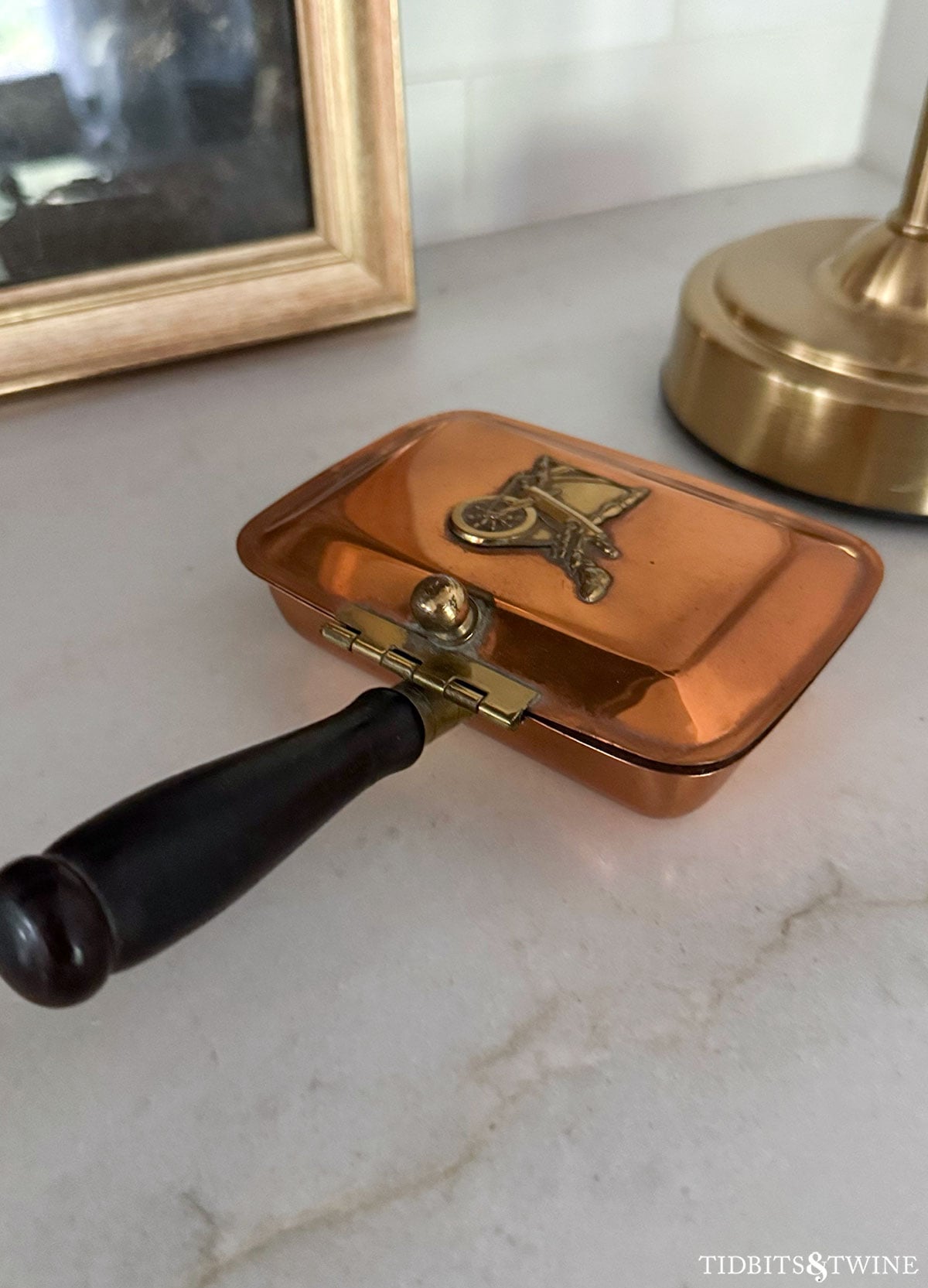
The older style is the hinged crumb pan. This version typically dates to the early to mid-1800s, with very simple examples appearing even earlier. It consists of a shallow brass pan attached to a turned wooden handle, often with a hinge that allows the pan to open slightly. Many originally came with a small scraper used to push crumbs into the pan.
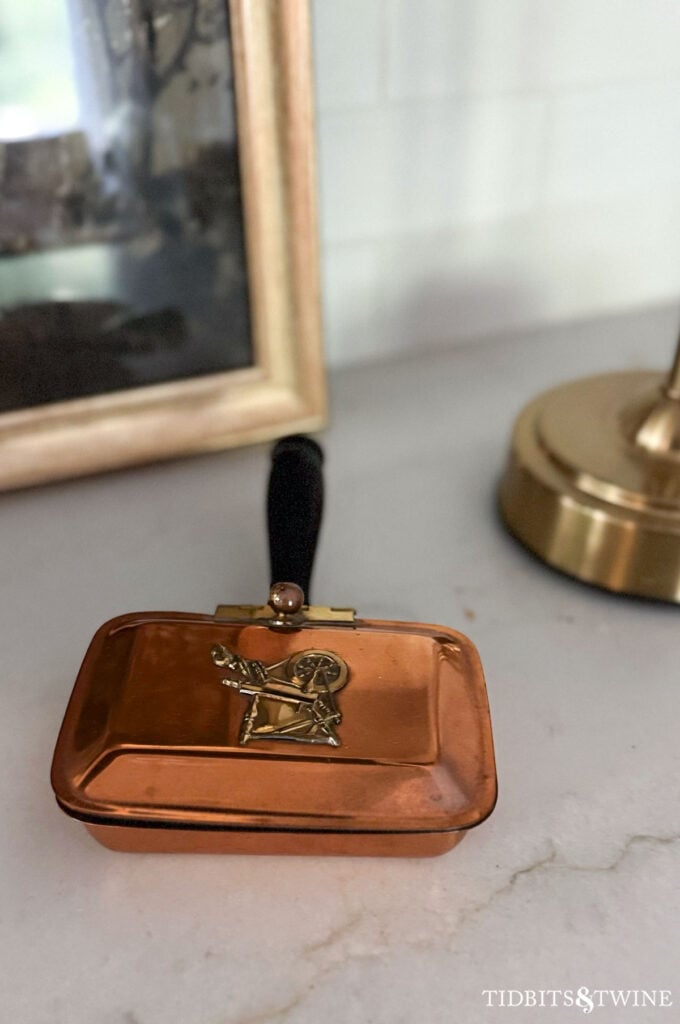
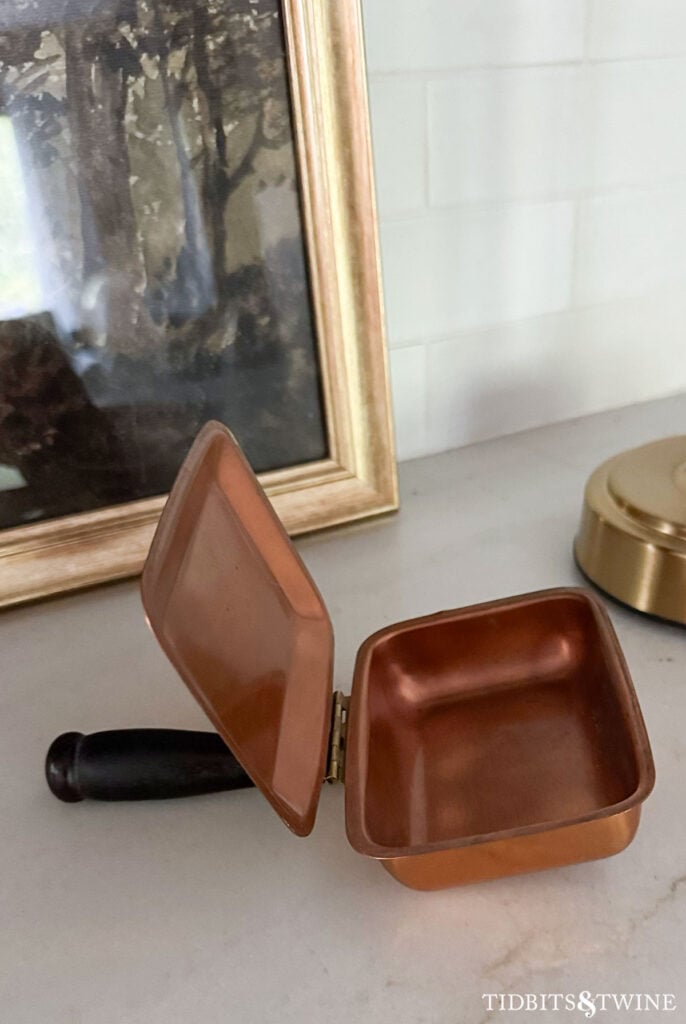
These were designed to be used during service and then removed from the table. Because they weren’t meant to be left out, they tend to be straightforward in design, often plain brass with minimal decoration.
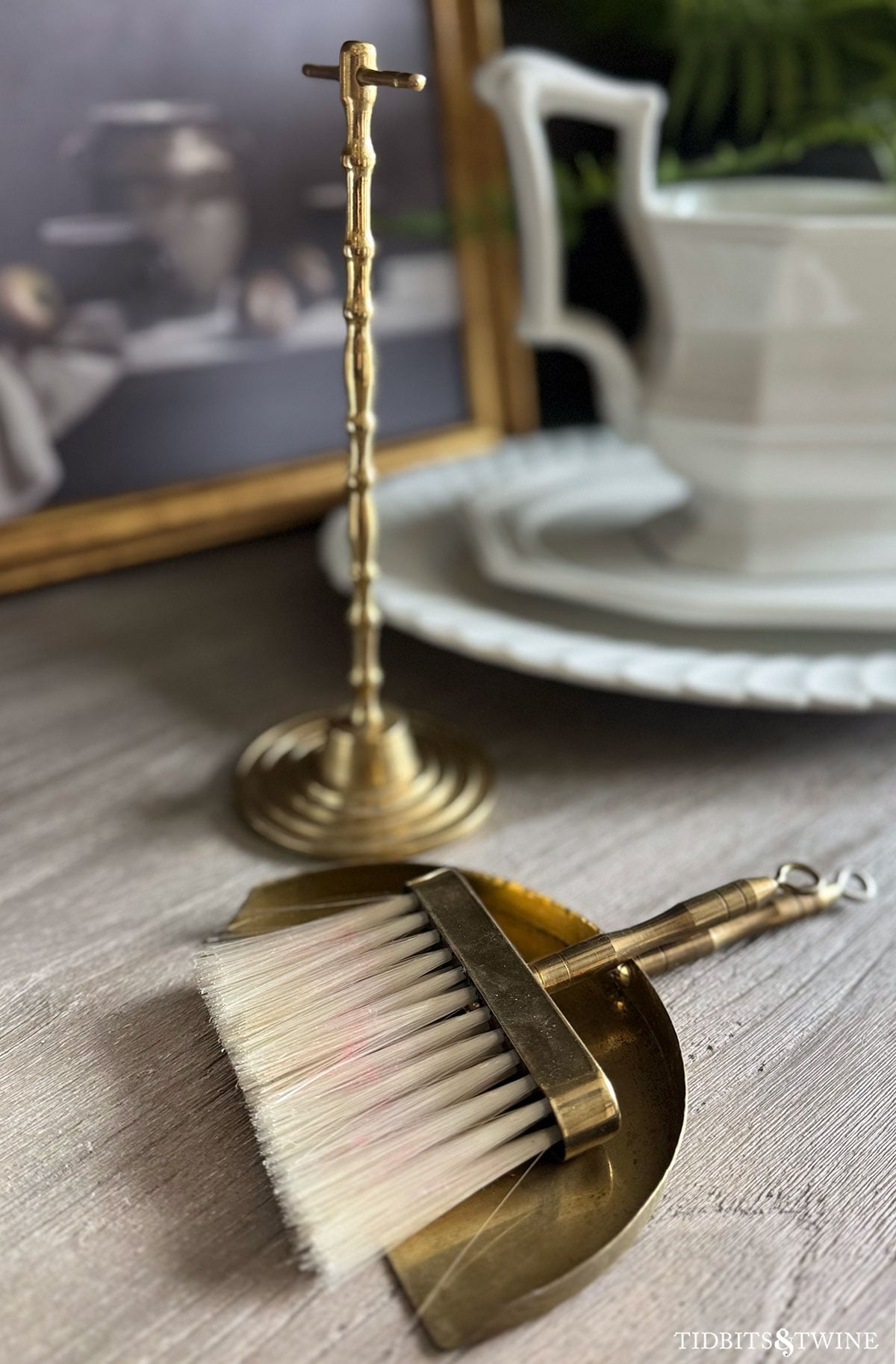
The later style is what most people picture when they hear “silent butler.” This is the freestanding tray paired with a small brush. These became popular later in the 1800s and into the early 1900s, particularly during the Victorian and Edwardian periods.

Because these were often left on sideboards or buffets, their appearance mattered more. This is where you begin to see more variation in form, materials, and finish.
Same purpose. Two different moments in time.
A Bit of History (Dates, Origins, and Design Details)
Silent butlers were most popular from the mid-1800s through the early 1900s.
They were widely used in England, France, Germany, and later in the United States, particularly in homes influenced by European dining traditions. England has the strongest association, especially during the Victorian era, but similar crumb-collecting tools were used across Europe.
One of the most interesting aspects of silent butlers is the range of designs that appeared during this later period. Nautical motifs, especially ships, are common on English examples, reflecting maritime culture and trade. Some feature crests, shields, or symbolic shapes that may have referenced family identity, profession, or regional traditions. Others lean more decorative, with sculptural forms, turned wooden handles, or subtle ornamentation that echoed design trends of the time.
They weren’t meant to be showpieces, but they still reflected the values and aesthetics of their era. Even the most ordinary tasks were handled with care.
How to Use a Silent Butler Today (Practically and Decoratively)
A silent butler can still be used exactly as intended. It’s genuinely handy after a meal, especially if you entertain or eat at a kitchen island or dining table regularly.
Even if you never use it for crumbs, it works well as a decorative object. I have one in my dining room. Can you spot it?
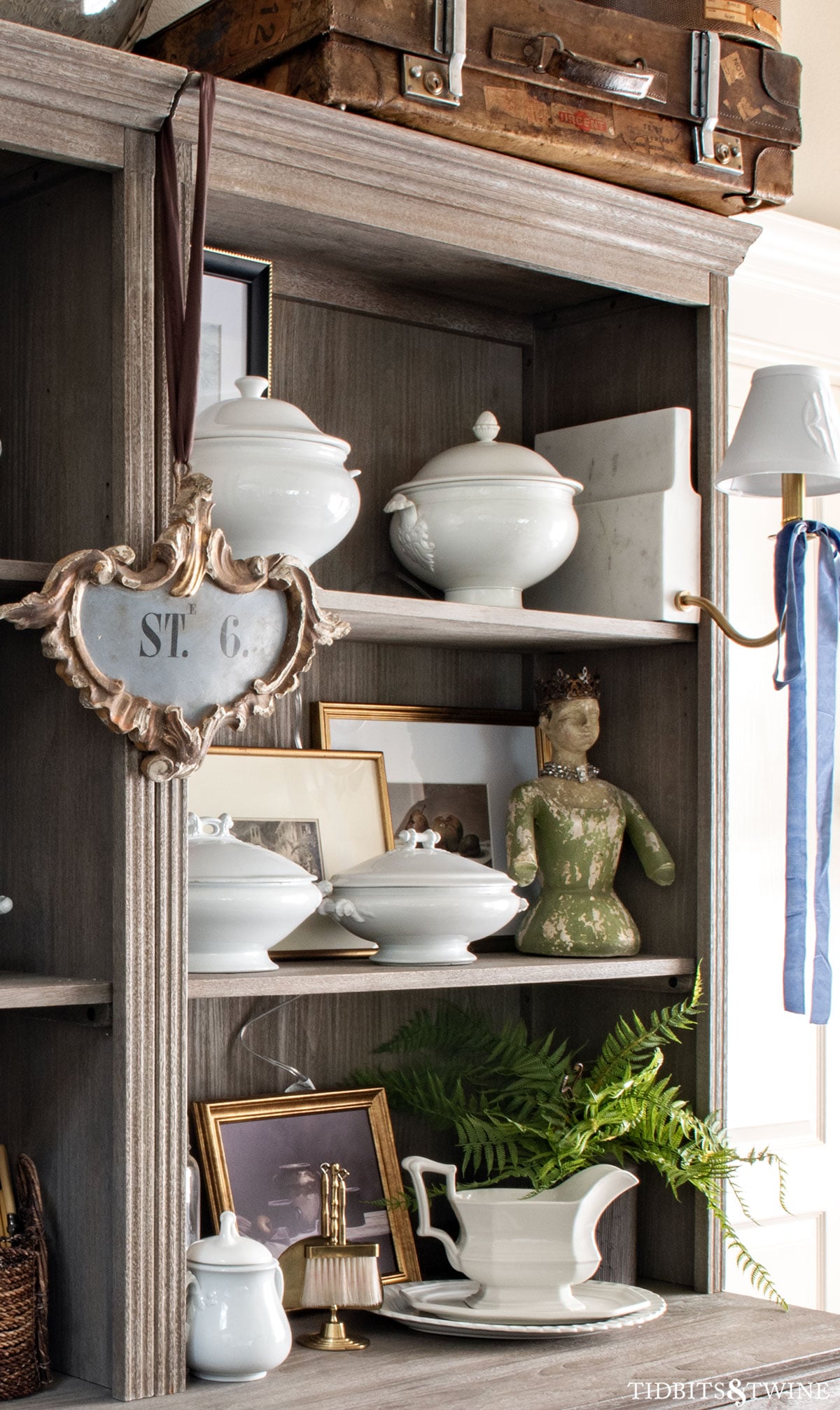
This one is brass with very simple styling. I love the little stand!
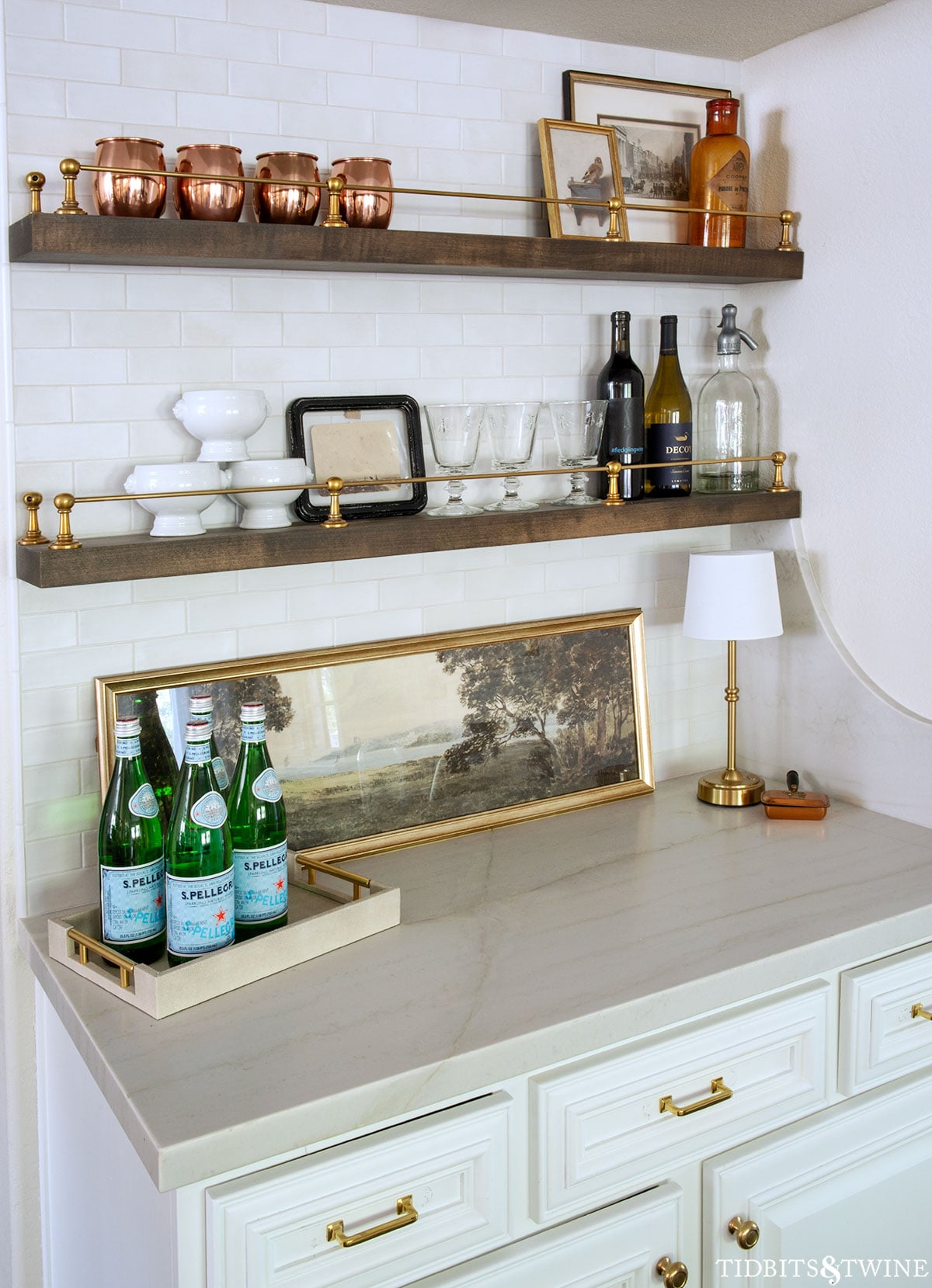
I don’t have a permanent home for my other silent butler just yet, but for now it’s downstairs on the bar.
This one has a spinning wheel on the top with a carved wooden handle.
Here are some ideas for where you might put one:
- on a dining room sideboard or buffet
- in a kitchen hutch or on open shelving
- near a bar or serving area
- styled on its own without additional accessories
- inside a glass kitchen or dining cabinet
Where to Buy One
Silent butlers are relatively easy to find, which makes them a great entry point into functional antiques.
You’ll often see them at antique shops, flea markets, estate sales, and online antique marketplaces. Prices vary depending on condition and detail, but they’re generally accessible compared to larger antique pieces.
They don’t need to be a matched set or in perfect condition. Evidence of use is part of the appeal.
What to Look For
When shopping, focus on structure rather than perfection.
Look for:
- a tray or pan that sits flat
- a handle that feels sturdy
- bristles that are intact if it includes a brush
You may also come across examples that still include all of their original components, like a hinged crumb pan with its scraper or a tray-and-brush set with the original brush. Complete sets are less common and can be appealing to collectors, but missing pieces are very normal and don’t detract from how these work or how they’re used decoratively today.
Looking for a specific antique?
Browse the Antique Object Guide
Explore 20+ antique objects with identification tips, decorating ideas, and links to detailed posts about each piece.
My Curated Favorites
I rounded up some of my favorite Silent Butlers below:

I love that I ended up with one of each style, because they’re so different from one another. But I still haven’t decided if I’ll actually use the one on the stand, though. The bristles are in such good shape that I don’t really want to mess them up. To be decided.
But if you’re looking for something with character and charm that feels a little different from what you can buy in stores today, the silent butler is a great antique to consider, especially at a reasonable price point.
Happy collecting!

DECORATING MADE EASY
Get my free 5-day decorating course and learn how to define your style, make better decisions, and create a home that feels like you.
After the course, you’ll receive my latest decorating tips, antique finds, and new posts.