




I love touring model homes, not only to see the latest layout trends, but also just to get decorating inspiration.
One thing I’ve noticed is that model homes are full of wall decor ideas that aren’t art. You might see vintage tennis racquets in a home office, old washboards in a laundry room, or a large architectural piece used to make the most of a tall wall.
And the more I started paying attention, the more I realized those choices usually have a purpose. Sometimes the wall decor helps tell the story of the room. Sometimes it creates a focal point. And sometimes it simply works with the architecture better than a framed piece of art would.
So I thought it would be fun to take a closer look at how to decorate walls without relying on art, including what kinds of objects work well, how to get the scale and placement right, and when it’s better to leave a wall alone.
Note that the model-home images in this post were digitally created to illustrate wall decorating ideas I’ve seen while touring model homes.
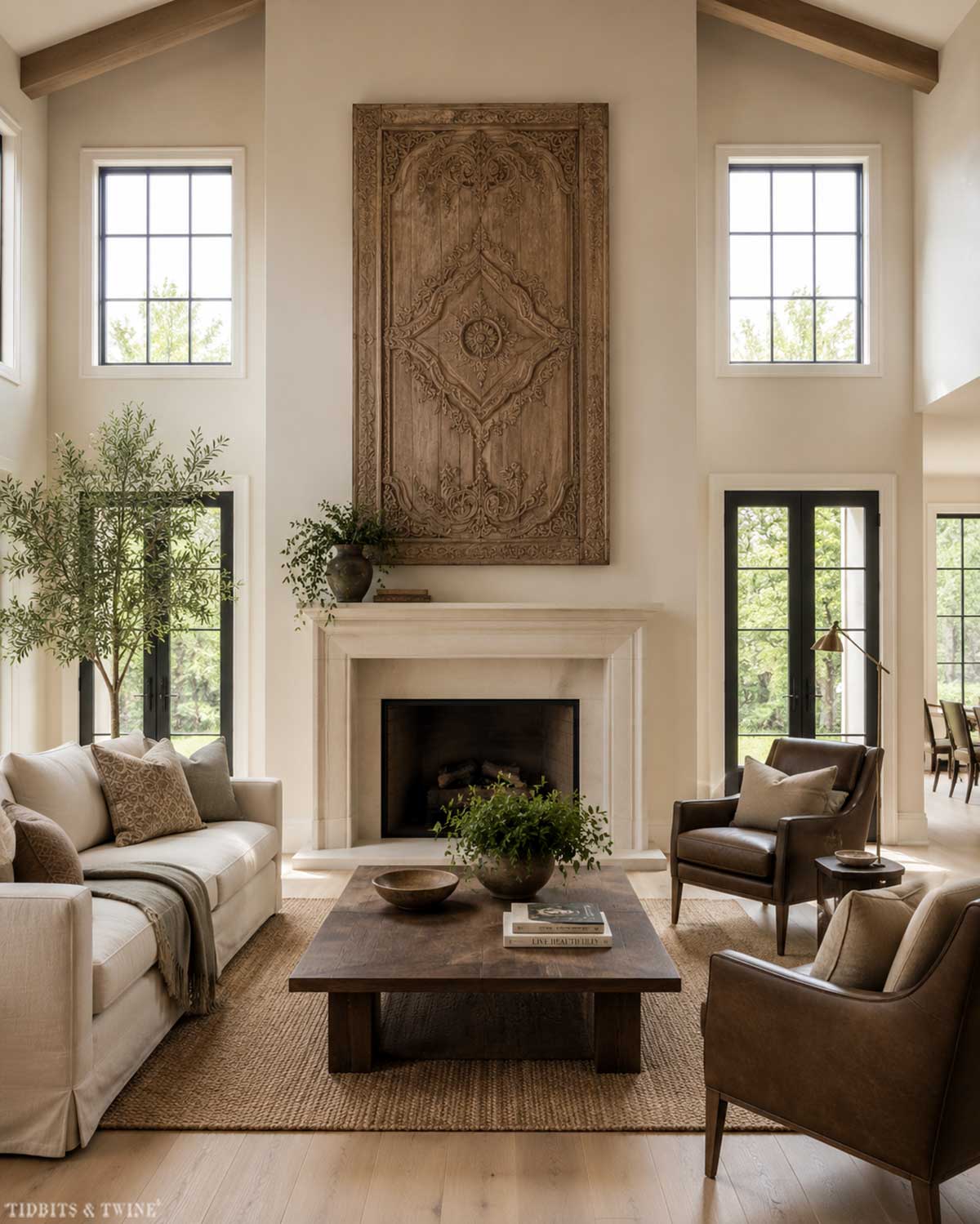
What Model Homes Get Right About Wall Decor
One reason non-art wall decor works so well in model homes is that it usually isn’t there just to fill an empty wall. The pieces are chosen to do something for the room.
Most often, wall decor is being used in one of three ways:
- To tell the story of the room by choosing objects that relate to how the space is used or who it belongs to.
- To create a focal point with something large, dimensional, or interesting enough to draw the eye.
- To highlight the architecture by using the height, shape, or scale of a wall to your advantage.
Once you start looking at wall decor this way, the question becomes less about what can I put on this empty wall? and more about what does this wall need to do for the room?
Objects That Tell the Story of the Room
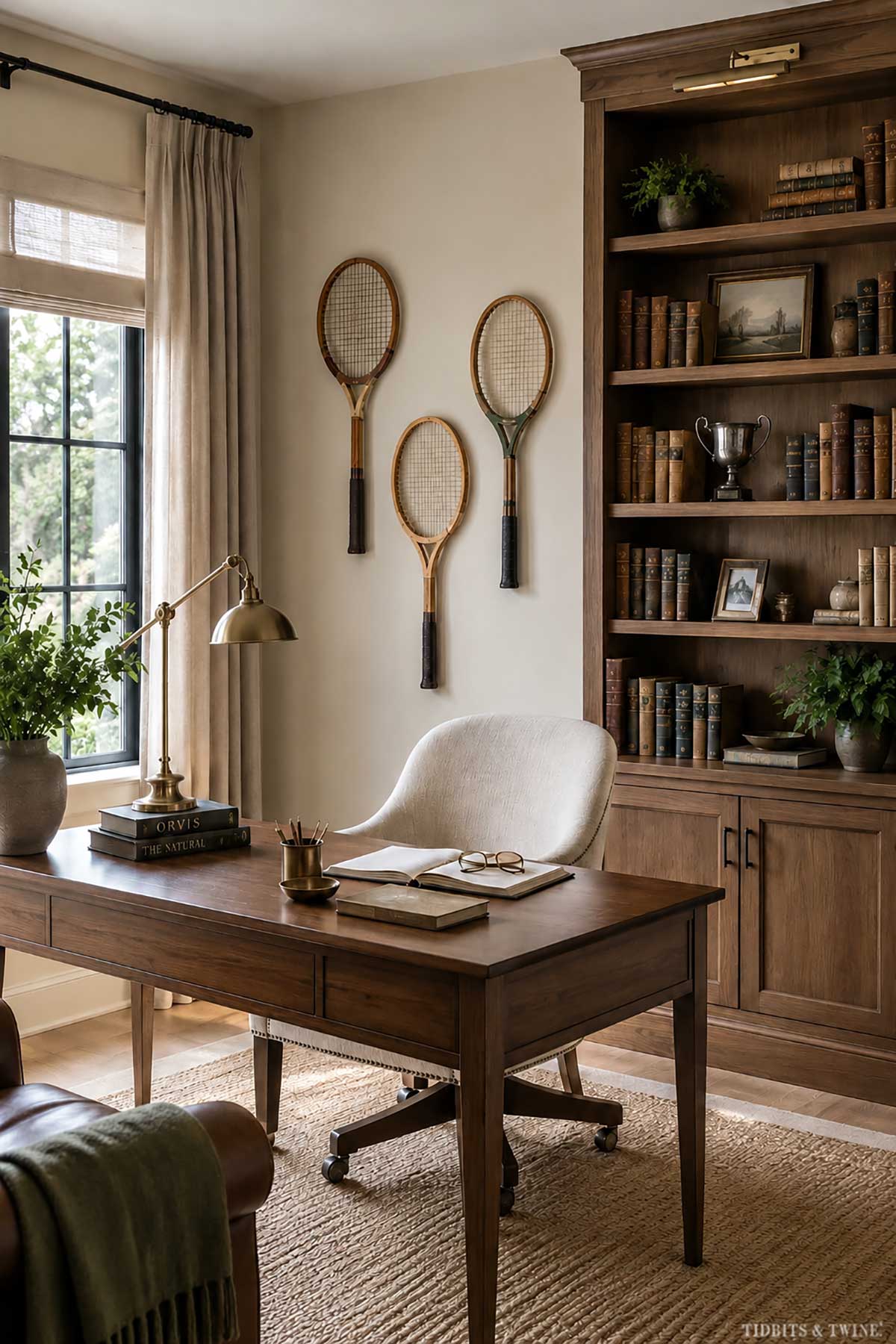
Model homes are especially good at using wall decor to give you an immediate sense of what a room is about.
Instead of choosing another piece of art, designers might hang an object that relates to the room, the person who uses it, or an activity that happens there.
For example:
- Vintage tennis racquets in a sports-inspired room
- Antique washboards in a laundry room
- Copper molds, plates, or old kitchen utensils in a kitchen
- Musical instruments in a music room or bedroom
- Equestrian pieces in an entry, mudroom, or bedroom
- Antique gardening pieces in a potting room or garden-inspired space
What makes this work is restraint. The goal is to suggest the story of the room, not turn the whole room into a theme.
Objects That Add Architectural Character
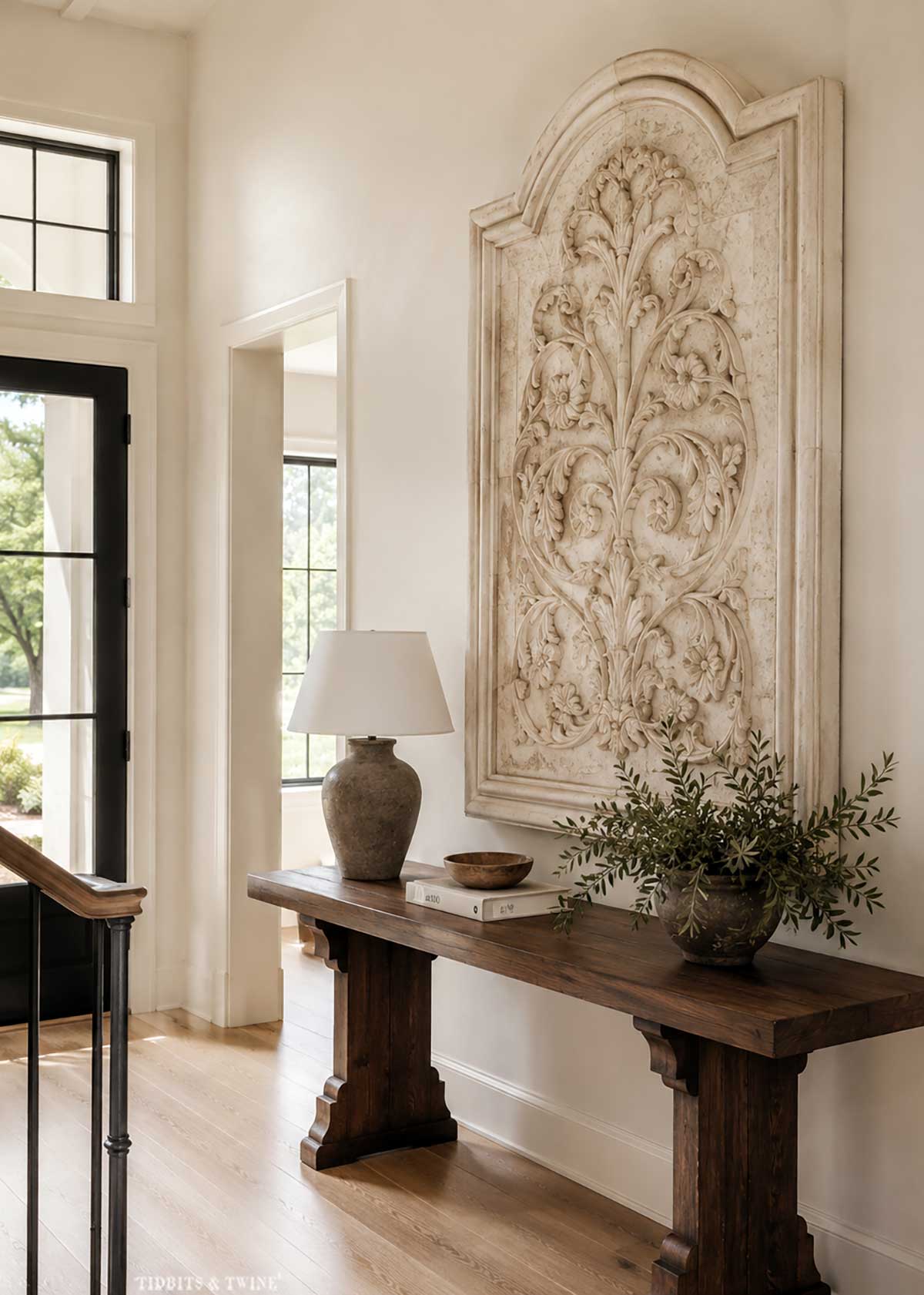
Wall decor can also be used to add architectural interest where a room doesn’t have much of its own.
This is especially helpful in newer homes with large stretches of plain drywall. A carved panel, architectural fragment, or piece of decorative ironwork can add dimension and age in a way that framed art doesn’t.
Some ideas include:
- Carved wood panels
- Architectural fragments
- Decorative ironwork
- Antique grilles
- Ceiling medallions hung on the wall
- Carved stone or plaster pieces
- Decorative wall brackets
Architectural pieces are also a great option for large walls that need something with more presence. Because they have depth and an interesting silhouette, one substantial piece can often have more impact than several smaller items.
Just be careful with scale. The piece should feel substantial enough for the wall without making the room feel crowded or heavy.
Collections That Work Beautifully on Walls
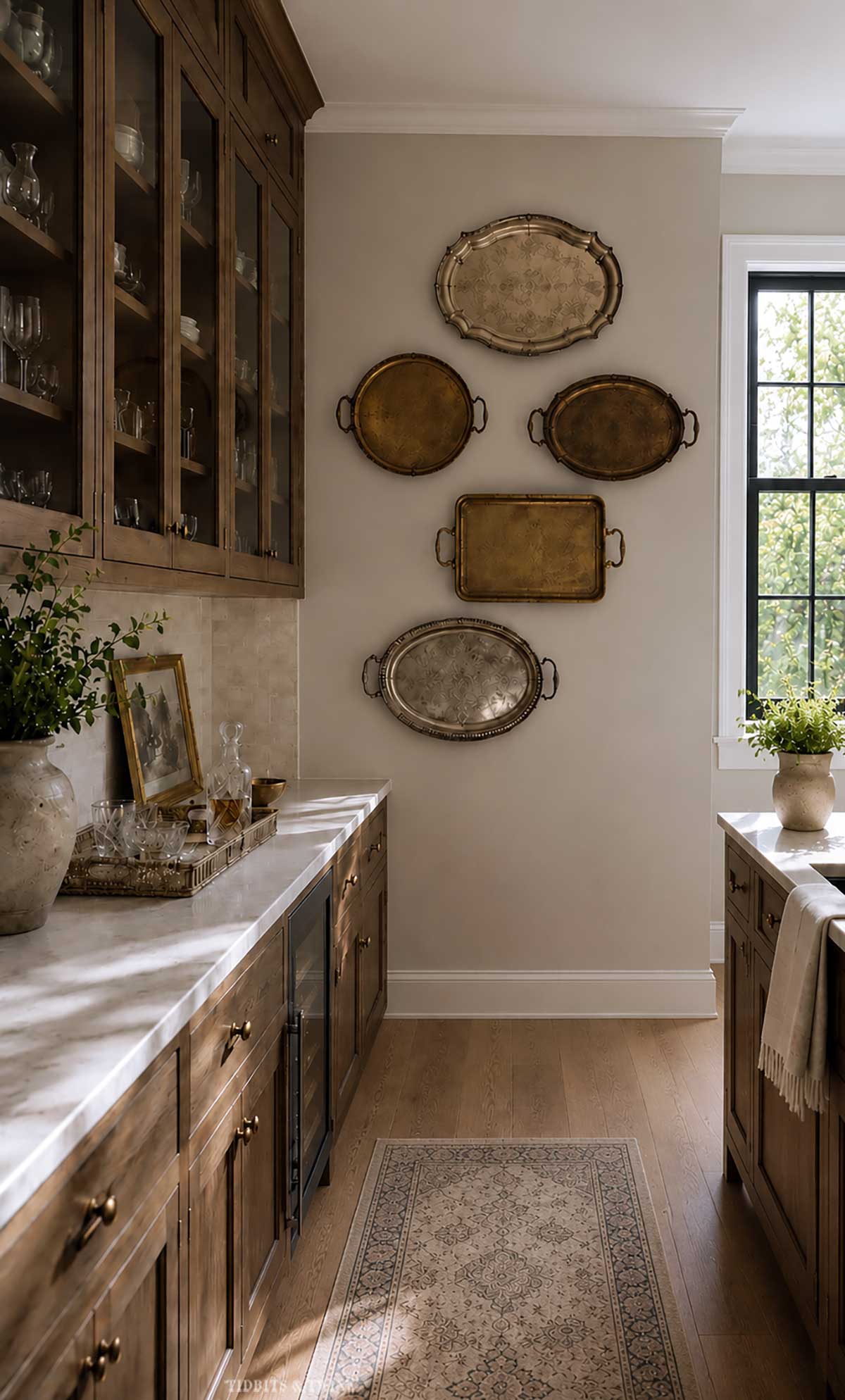
Collections don’t have to stay on shelves or inside cabinets. Grouping similar objects on a wall can give them much more impact than displaying them one at a time.
If you have a collection you’re not sure how to display, I’ve shared more ideas for displaying and organizing collections here.
This works especially well when the pieces share something in common, such as color, material, shape, or subject.
Some ideas include:
- Decorative plates or platters
- Antique trays
- Hand fans
- Small mirrors
- Intaglios or cameos
- Antique frames
- Baskets with interesting shapes or weaves
- Small sculptural objects that can be safely mounted
You can arrange a collection in a more structured grid or create a looser grouping, depending on the pieces and the room. What matters most is that the grouping feels connected and reads as one display.
The size of the collection should also make sense for the wall. A few larger pieces might be enough, while smaller objects may need a bigger grouping to have the same impact.
Textiles as Wall Decor
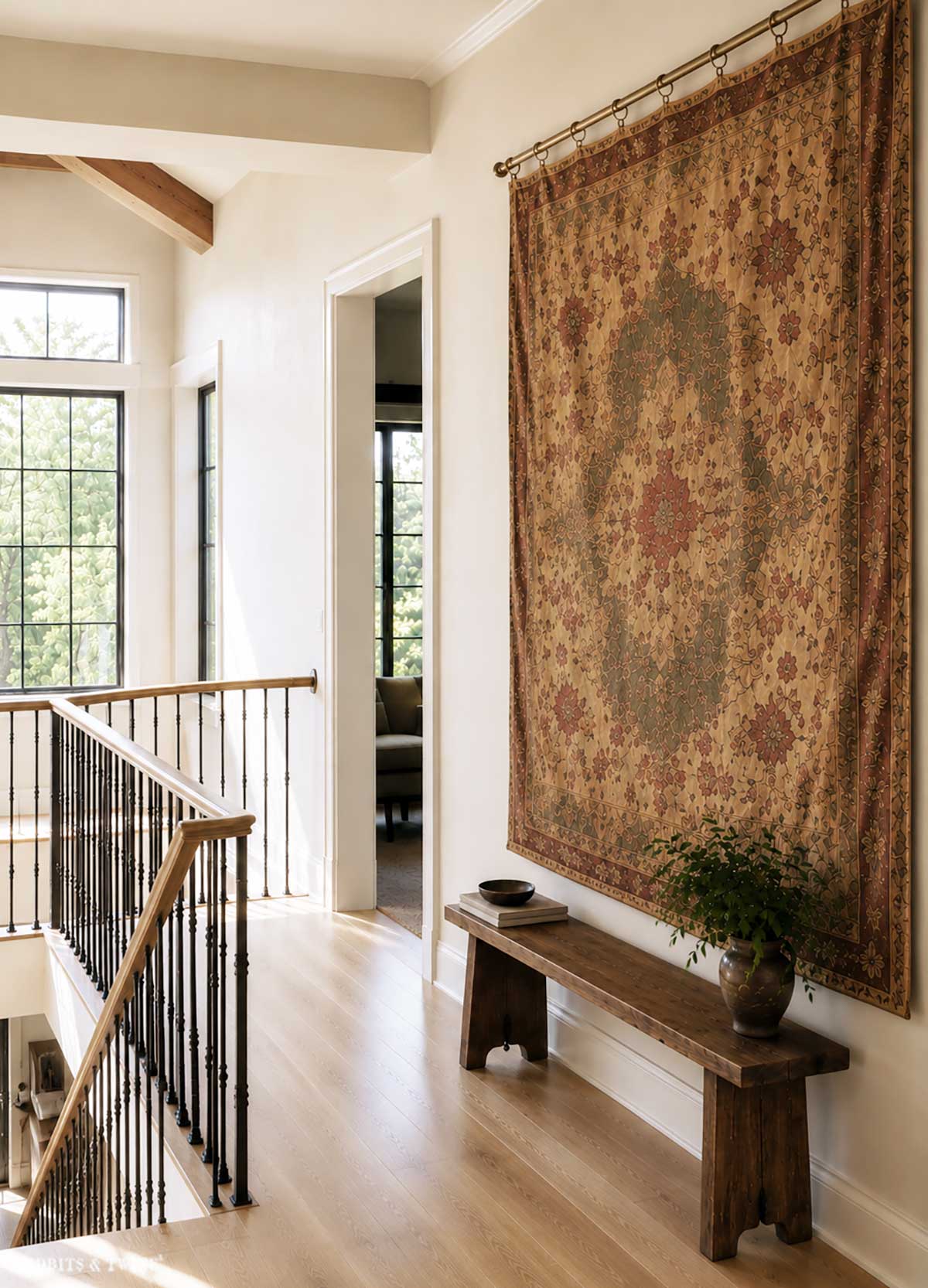
Textiles are another way to decorate a wall without relying on framed art. They add texture, pattern, and softness while also giving the wall more dimension.
Some ideas include:
- Tapestries
- Antique textiles
- Decorative rugs
- Quilts
- Embroidery or needlework
- Fabric panels
Textiles can be especially effective behind a bed, above a console, or on a large wall that needs a stronger focal point. A long tapestry can also draw the eye upward on a tall wall, making it a good choice for rooms with high ceilings.
And unlike a framed print, a textile brings both visual interest and texture to the wall, which can be especially helpful in a room with lots of wood, stone, glass, or other hard surfaces.
How to Use Wall Decor Without Creating Clutter
Choosing an interesting object is only half of it. The scale, placement, and amount of wall decor can completely change how a room feels.
Here are a few guidelines I find helpful:
- Start with the focal point. In a bedroom, that’s usually the bed. In a living room, it might be the fireplace. Wall decor should support the main focal point rather than create several areas that all compete for attention.
- Choose a scale that makes sense for both the wall and the furniture. When hanging something over a bed, sofa, or console, a piece or grouping that is roughly 2/3 to 3/4 the width of the furniture below it is a helpful starting point. It doesn’t have to be exact, especially with irregularly shaped objects.
- Keep pieces over furniture visually connected to what’s below them. Around 6 to 10 inches above the furniture is often a good place to start, but the size and shape of the object matter. The goal is to avoid having it look like it’s floating on the wall.
- Use tall walls to emphasize height. A long textile, vertical architectural piece, or taller grouping can draw the eye upward and make high ceilings feel like part of the design. You don’t have to fill the entire wall from top to bottom.
- Consider visual weight as well as actual size. A dark piece of ironwork or a heavily carved panel can feel much larger than a pale textile of the same dimensions.
- Let the architecture help guide you. Paneling, niches, vaulted ceilings, stair walls, and narrow stretches of wall can all help determine the shape and placement of what you hang.
- Don’t decorate every wall. Too many strong groupings or oversized objects can make a room feel smaller and busier. Choose the walls you want to emphasize and let some of the others stay simple.

Need another decorating measurement?
Browse all of my guides for furniture spacing, artwork, lighting, rugs, window treatments, and more.
When It’s Better to Leave a Wall Empty
Sometimes the best choice is to hang nothing at all.
Consider leaving a wall alone when:
- There’s already a strong focal point nearby. Another large display can compete for attention.
- The architecture is interesting enough on its own. Paneling, stone, molding, or wallpaper may not need anything added to it.
- The room already has plenty of visual interest. Pattern, collections, books, or several decorated walls may be enough.
- You’re only adding something because the wall is blank. If the scale, shape, or piece itself isn’t right, it’s usually better to wait.
Before adding something to an empty wall, think about what the wall actually needs. Does it need to help tell the story of the room, create a focal point, or work better with the architecture?
The best wall decor usually has a reason for being there. Sometimes that means a collection, a textile, or an architectural piece. And sometimes it means leaving the wall alone.
More Decorating Tips
- How to Get a Luxury Look on a Budget
- 9 Ideas for the Foot of the Bed
- Ideas for Decorating Your Staircase

DECORATING MADE EASY
Get my free 5-day decorating course and learn how to define your style, make better decisions, and create a home that feels like you.
After the course, you’ll receive my latest decorating tips, antique finds, and new posts.