


When we moved into our home almost 20 years ago, the previous owners had completely landscaped the backyard.
Sounds great, right? Well, not so much when it’s not your style.
And trust me, my yard was not my style.
Over the years, I’ve added a few plants here and there and removed the ones I didn’t love, but for the most part, the backyard belonged to the kids. It’s where they rode their bikes (yes, it’s a big patio), where the trampoline lived, where the basketball hoop stood, and where we set up an inflatable waterslide every summer.
But now things are changing. My youngest is heading off to college, and I’ve decided to reclaim the space for myself. What I’m left with is a large (and not particularly pretty) patio, planting beds that feel a little bare, and a backyard that just feels unfinished.
I’m not interested in ripping everything out and starting over, so I’ve been slowly trying to shift the overall feel by working with what I already have. My biggest goal right now is to soften the look of the large patio.
It’ll be no surprise to you that my outdoor style matches my indoor – European gardens that feel a little more relaxed, a little more lived-in, and a lot less perfect.
Over the last few weeks, I’ve gone down the rabbit hole researching what actually creates that look, and these are the 8 details I keep seeing and have started to add into my own yard.
What is a European Garden?
When I say “European garden,” I’m not talking about one specific look. It can mean a few different styles depending on where in Europe you’re pulling inspiration from.
Gardens in France and Italy usually feel a little more formal and structured, with symmetry, clipped greenery, gravel, and a more controlled layout. English gardens usually feel softer and a little more relaxed, with looser planting and a more layered look.
Most of the spaces I’m drawn to fall somewhere in between. They have the structure of French or Italian formal gardens, but they’re softened with a more relaxed mix of plants and materials.
For me, that usually means mixing formal structure with softer plantings: clipped shrubs, topiaries, gravel walkways, terracotta pots, olive trees, cypress, fountains, and repeated plants that feel calmer and less busy than mixing a bunch of unrelated plants together. It’s elegant without feeling overly formal, and collected without looking perfectly manicured.
That’s really what I’m trying to create in my own yard: something that feels pulled together but still relaxed, with a mix of structure and softness.
And the good news is, you don’t need a formal layout to get the look. You just need a few of the right elements.
How to Create a European Garden in Your Own Yard
Creating a European garden doesn’t mean you need a sprawling estate in the French countryside or an ivy-covered villa in Italy (although that would be nice!). Even just a few elements like structured plants, gravel paths, aged planters, and layered lighting can completely change the feel of an ordinary backyard or patio.
The more I looked at the gardens I loved most, the more I realized many of them shared the same elements. And that’s what I’m sharing with you today. Even making a few of these changes has already started changing the feel of my own yard.
Classic European Plants
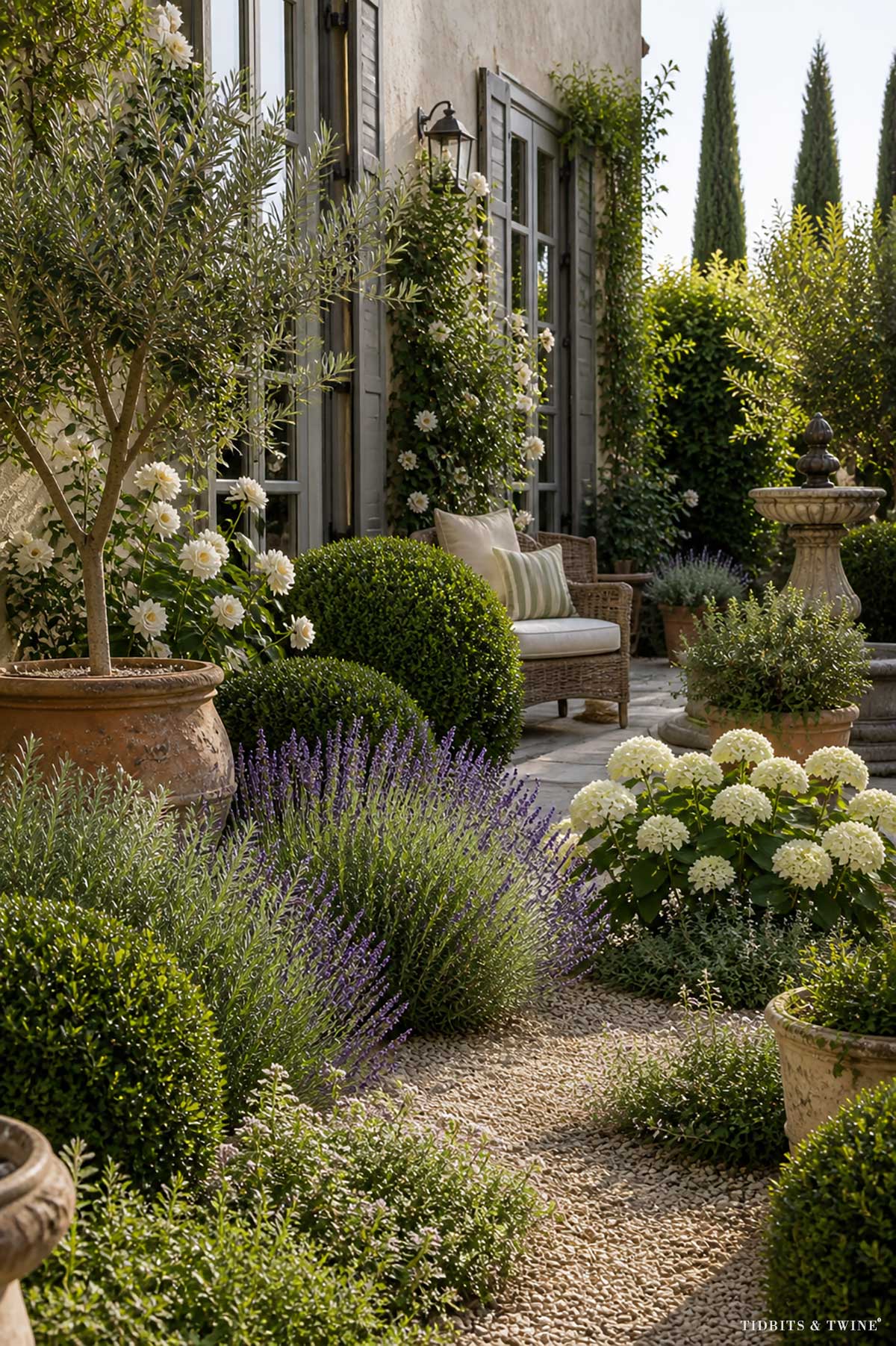
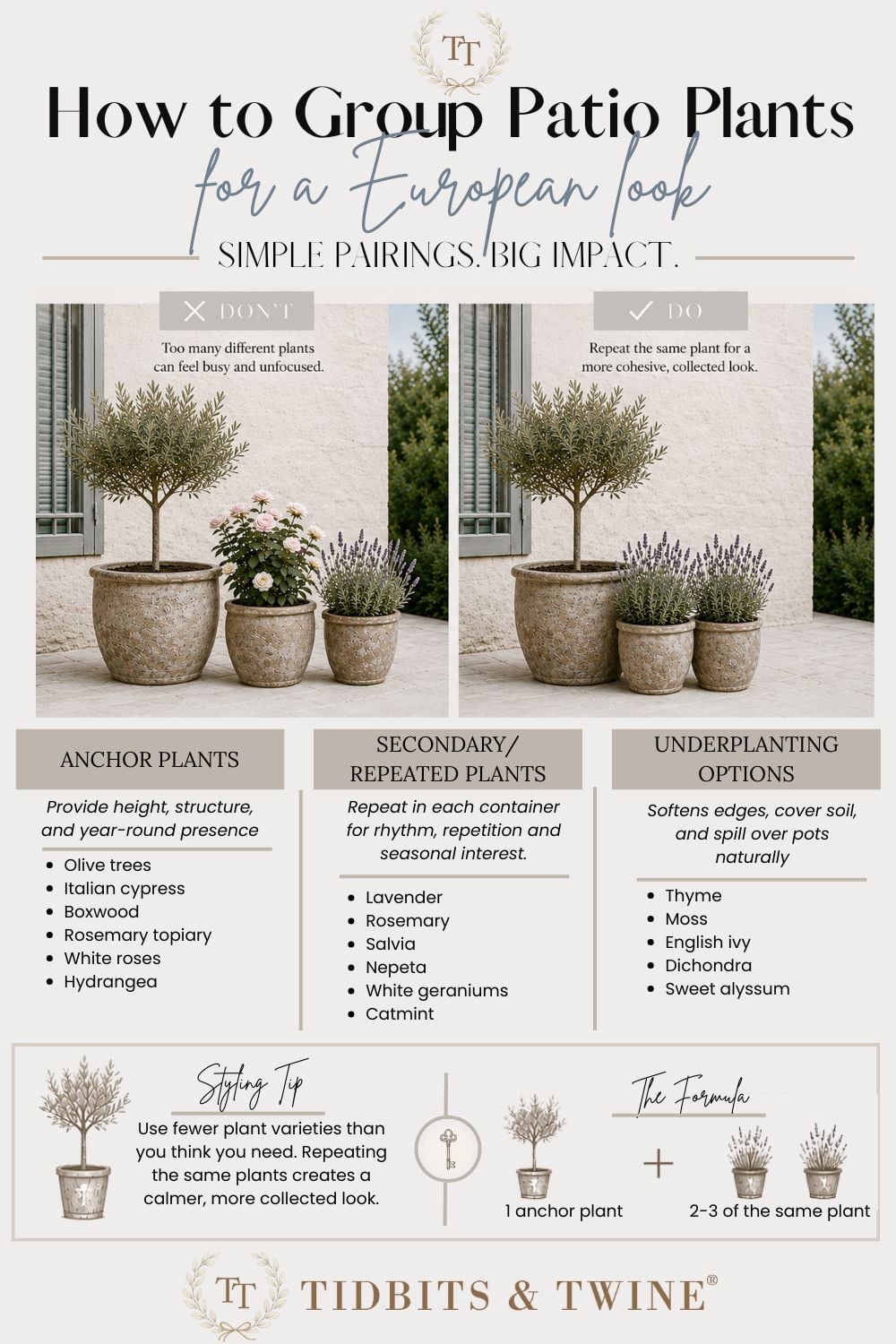
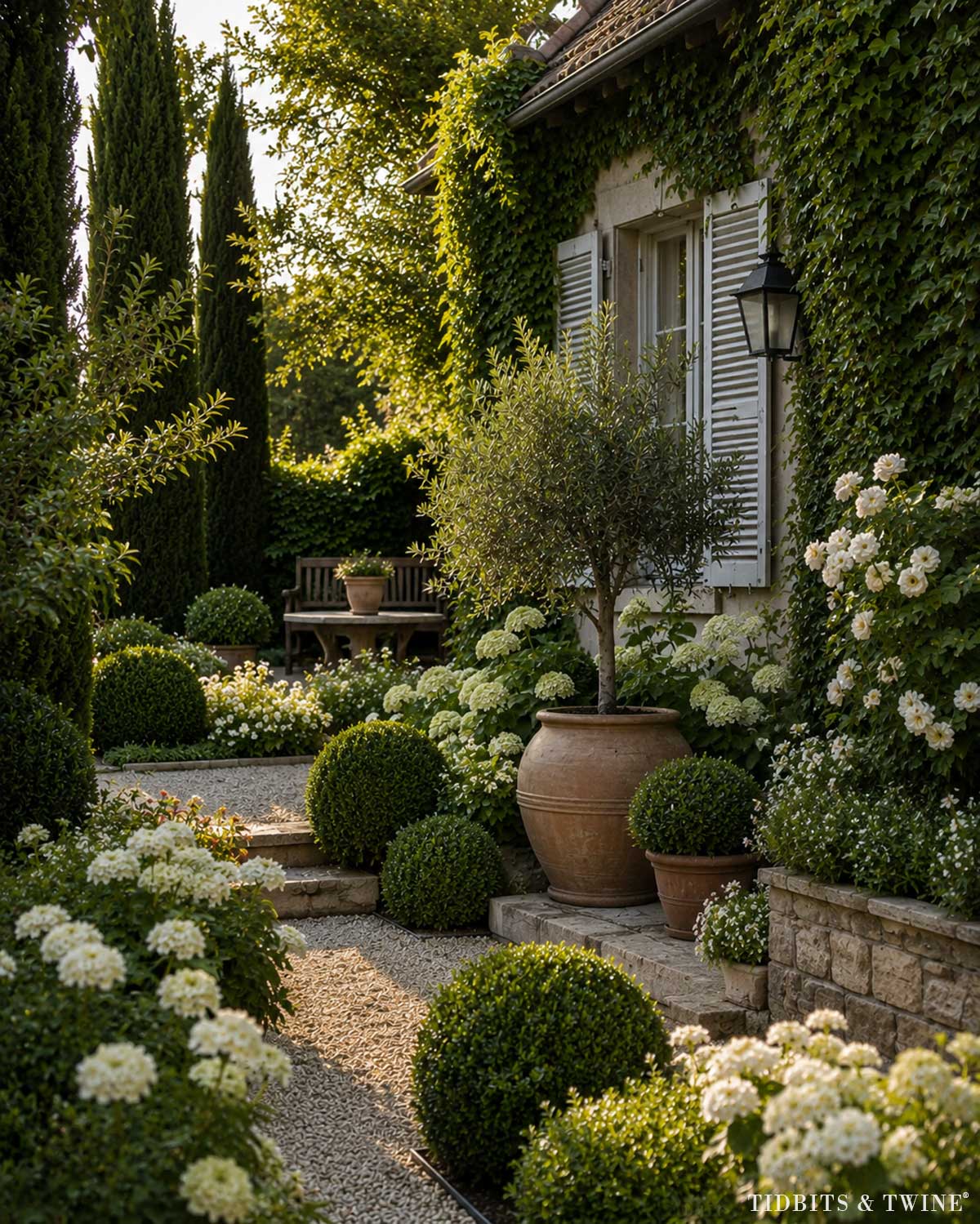
One of the easiest ways to get a European garden feel is by sticking to a smaller plant palette. A lot of the gardens in France and Italy use the same types of plants repeated throughout the space, which is part of what makes them feel so calm and pulled together.
Here are some of the most recognizable perennials:
- Boxwood
- Olive trees
- Cypress
- Lavender
- Rosemary
- White roses
- Hydrangea
- Catmint
- Thyme
- Moss (where it naturally works)
You don’t need all of these to get the look. Even a few repeated throughout your yard goes a long way.
In my own yard, I’ve mostly been using lavender and roses, and I’m starting to add in more structure with olive trees and boxwood hedges.
Gravel and Crushed Stone
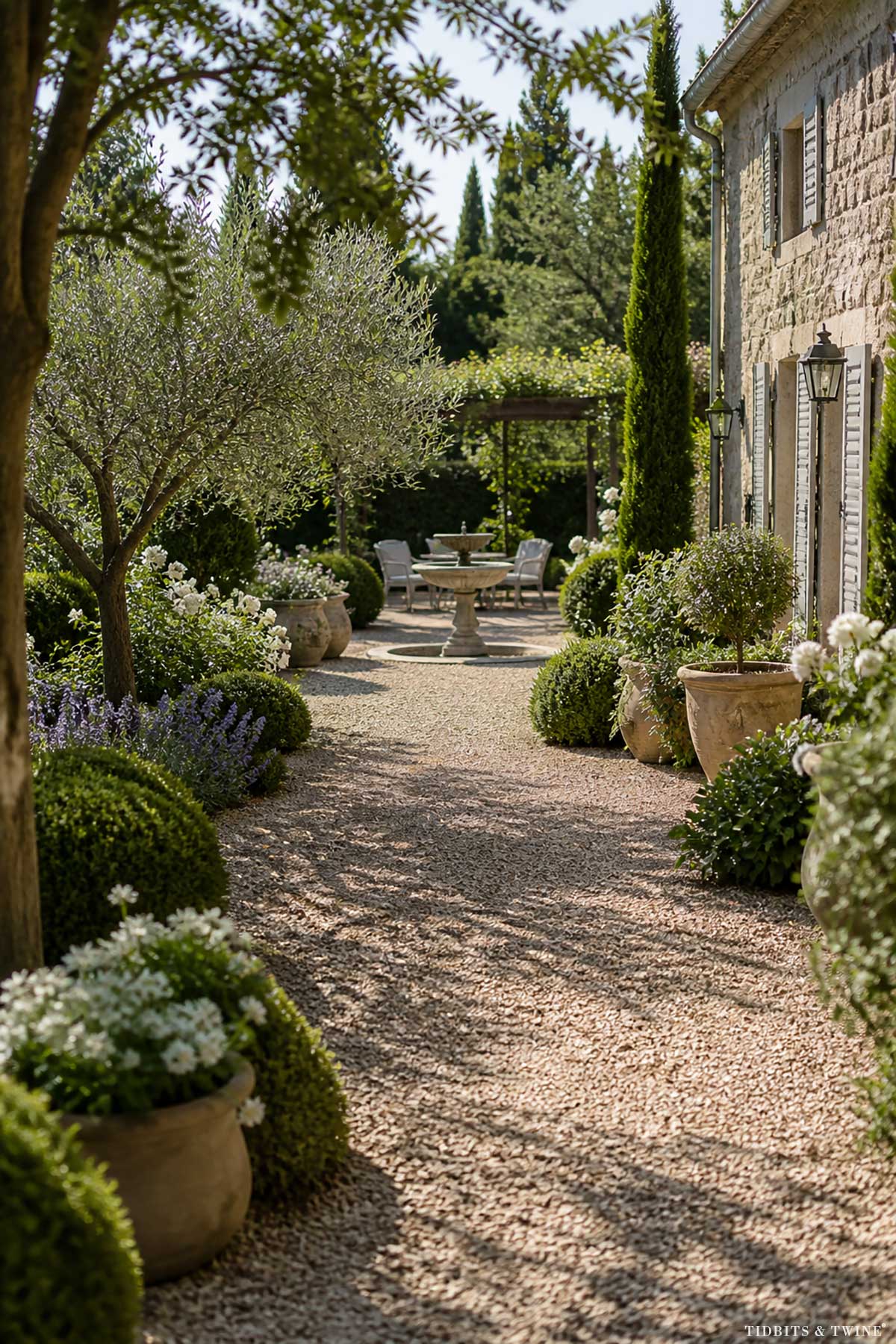
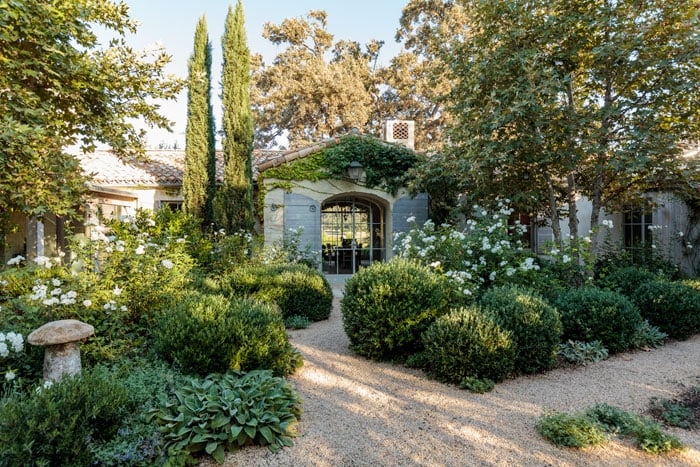
One thing you’ll notice in almost every European garden is the use of gravel or crushed stone. It shows up in pathways, courtyards, and even between plantings, and it does a lot to soften the space.
If you have a lot of concrete (like I do), or even just bare dirt between plants, this is one of the easiest ways to change how the space feels. It softens the edges and fills in those awkward in-between areas that tend to look unfinished.
Right now, this is actually one of the biggest things missing in my own yard. The space between my lavender and roses is just bare dirt and it just doesn’t look good. I’m planning to add decomposed granite to fill those areas and break up some of the hard surfaces.
Planters (Oversized and Slightly Aged)
Planters are one of the easiest ways to change the overall look of a backyard. In a lot of European gardens, you’ll usually see fewer, larger pots instead of lots of small ones, and they tend to have a bit of age and texture to them.
Think terracotta, stone, concrete, metal, or wicker. Nothing too shiny or perfect. Honestly, the more weathered they look, the better.
The shapes matter just as much as the material. A few classic planter styles show up a lot in European gardens:
Urns – wider at the top with a base, often more traditional
Olive jar shapes – rounded, slightly imperfect, very Mediterranean
Square or paneled planters – more structured and architectural
Tapered metal planters – simple, often with small details like handles
Low bowls – great for herbs or softer plantings
Mixing a few different shapes keeps things from feeling too uniform, but they should still feel like they belong together.
Good pots can get expensive fast, so I’ve been mixing more affordable pieces in with a few larger pots from places like Home Depot, IKEA, and HomeGoods. Even just adding one or two larger planters has already changed the look of my patio quite a bit.

Styling Tip: Go bigger than you think you need.
A single oversized planter will have more impact than several small ones. If something feels a little too big in the store, it’s probably the right size once it’s outside.
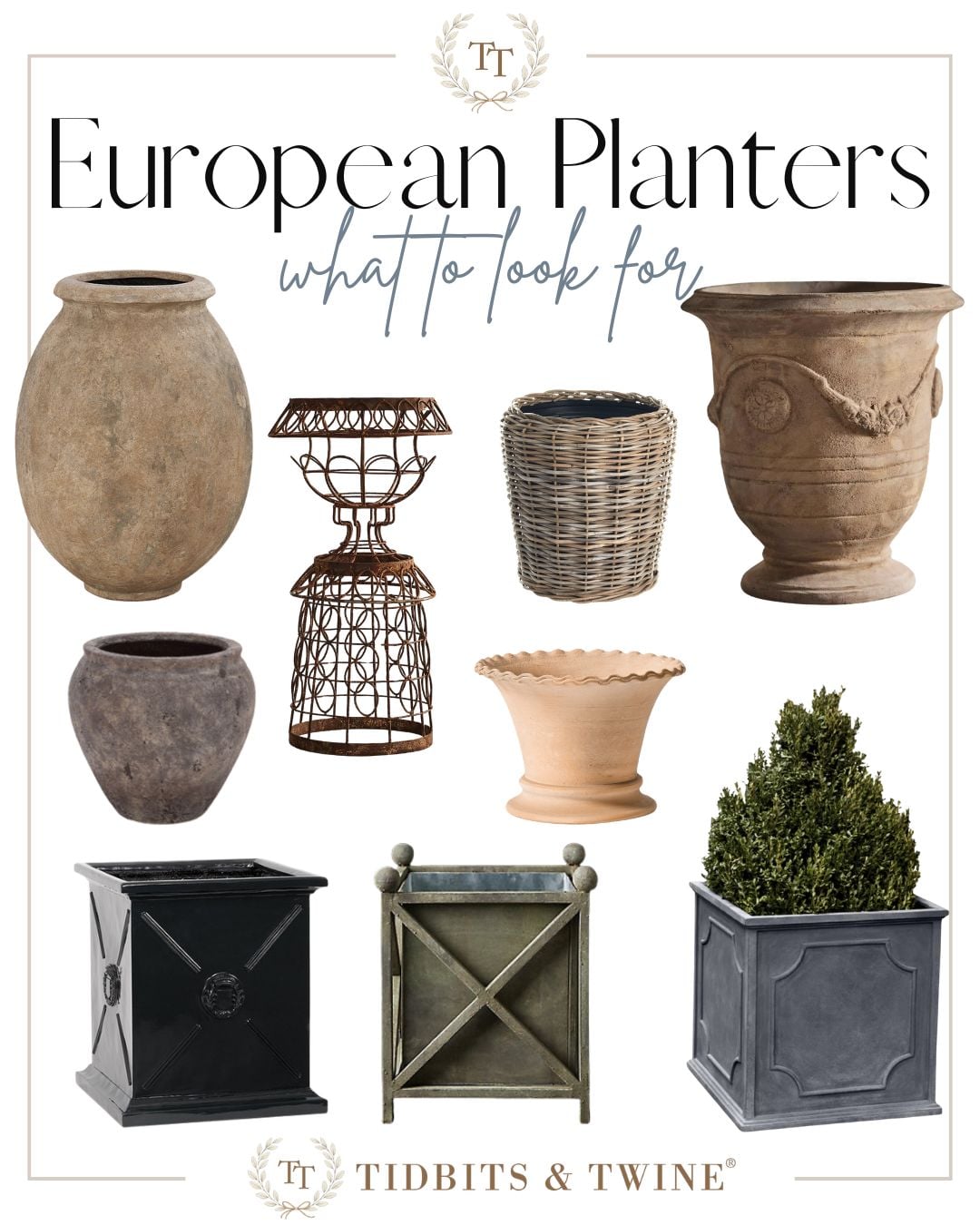
If you want a deeper breakdown of the different planter styles and shapes, I’ve shared more in this post on French planters.
Fountain or Water Feature
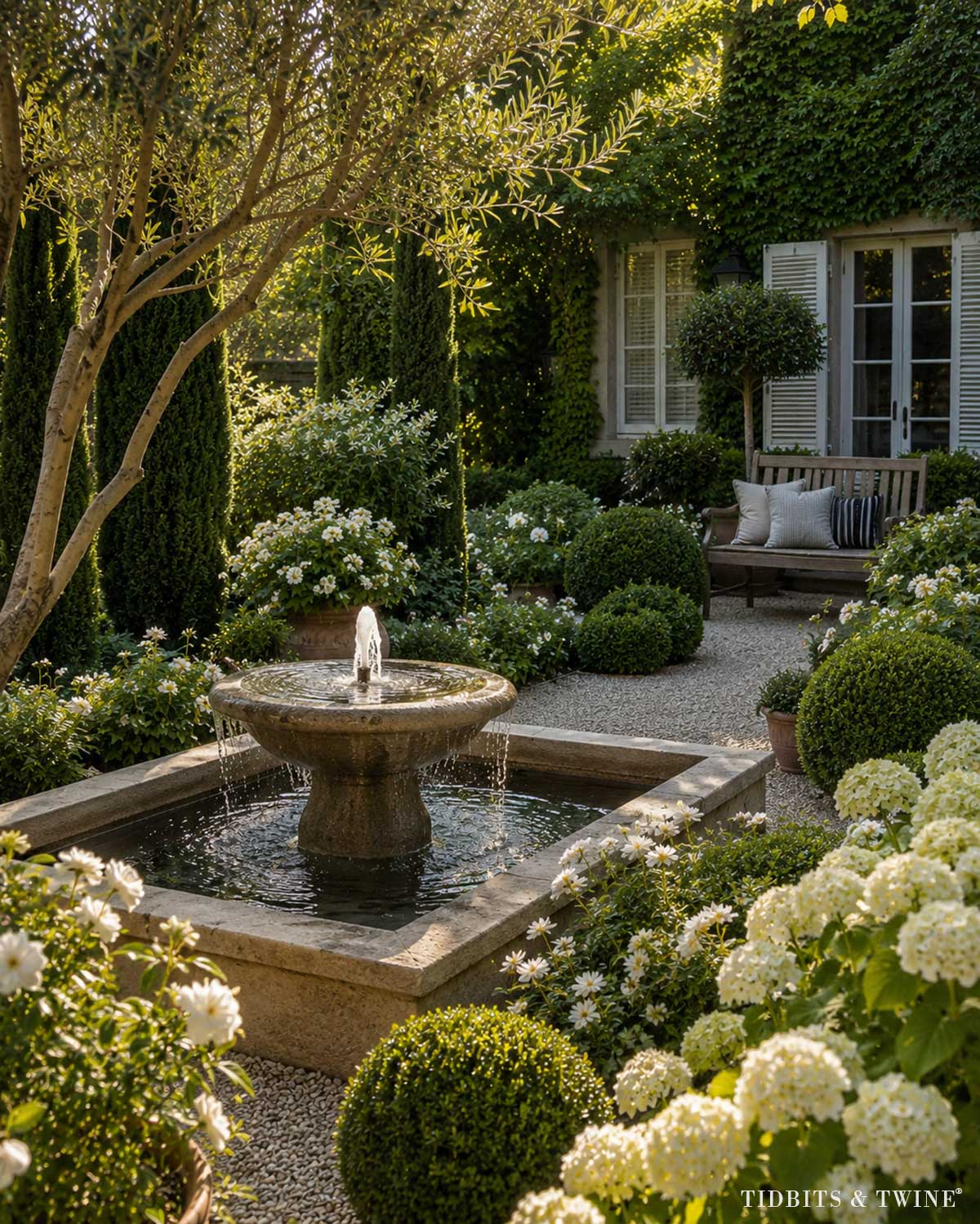
A water feature instantly gives a space more of a European garden feel. You’ll see everything from large, formal fountains to smaller wall fountains tucked into a corner.
It doesn’t have to be grand to work. Even a simple fountain can create a focal point and make a garden feel more established and layered.
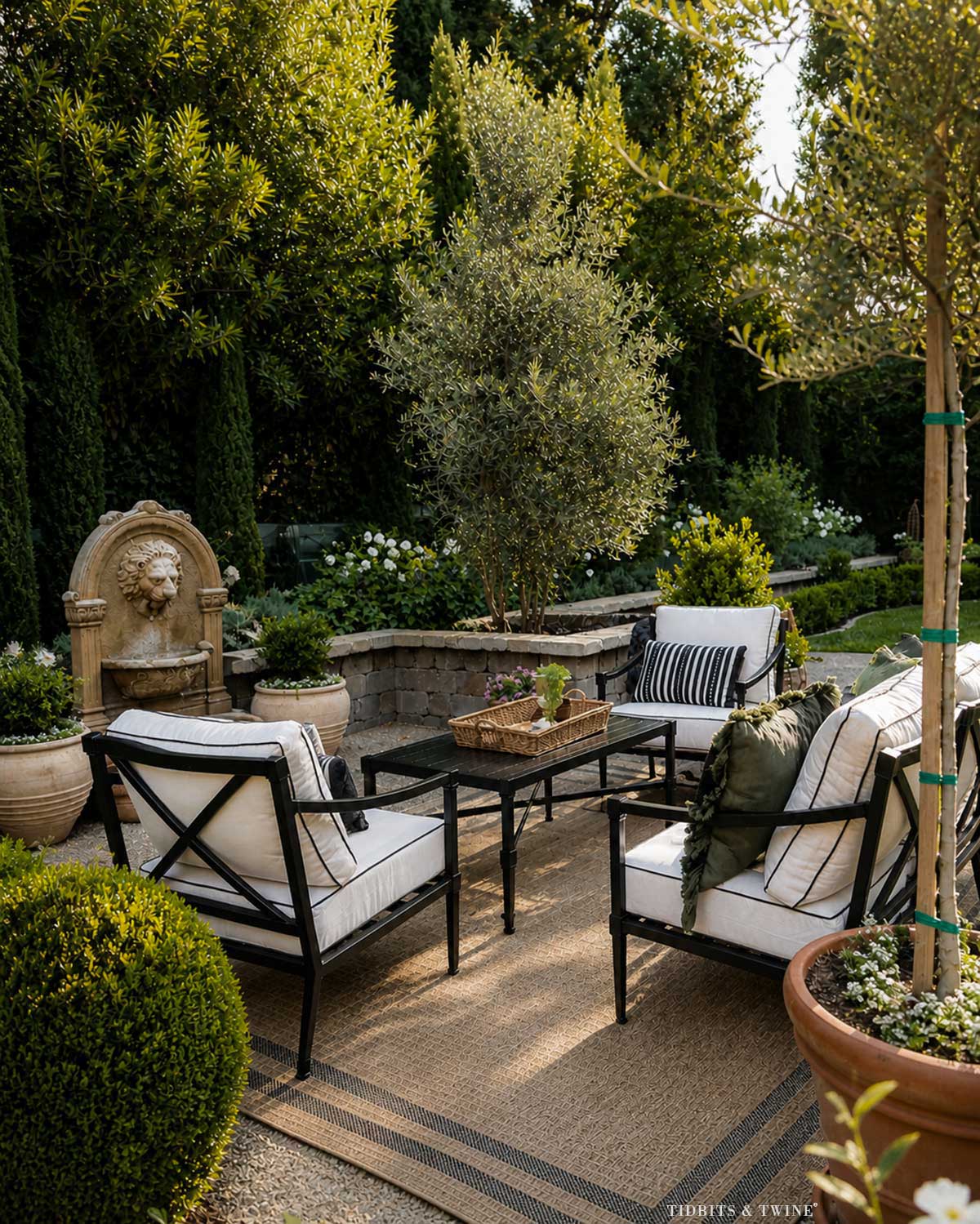
I actually found my lion fountain for free on Facebook Marketplace. It had moss and algae all over the back and even a chipped piece, which honestly made me love it even more. It feels like something that’s been there forever, and it adds so much character to the space.
As I’ve started changing the patio around it, it’s become even more of a focal point than I expected. It’s one of the few things I never felt tempted to replace.
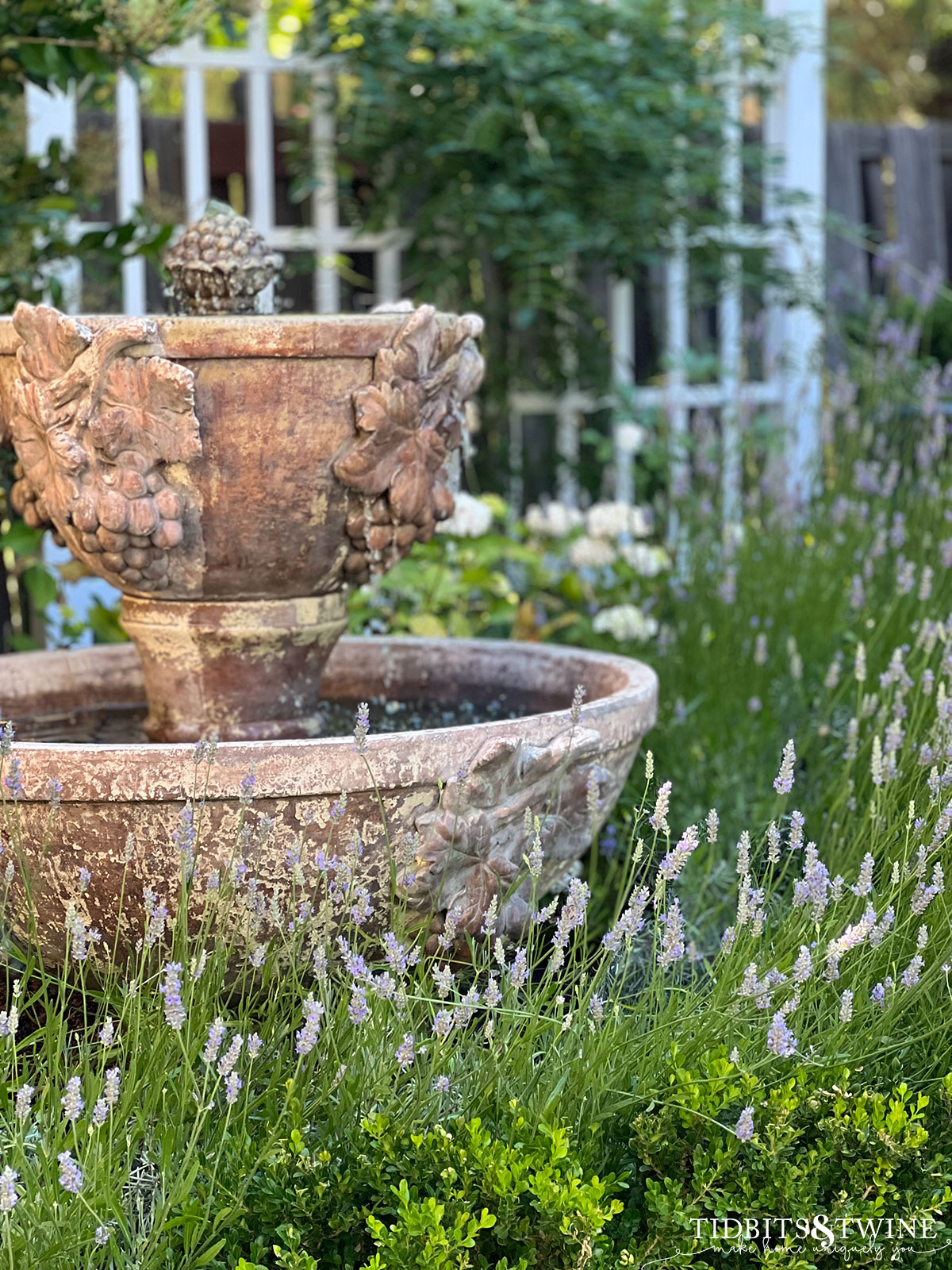
And can you believe I actually have a second free fountain in my yard that I got from a friend? This one sits more off to the side of the garden, and I planted lavender around it with a low boxwood hedge along the edge of the patio.
Practical and Relaxed Seating
A lot of European gardens aren’t just meant to be looked at. They’re meant to be lived in. There’s almost always a spot to sit, whether it’s for coffee, a glass of wine, or just hanging outside for a while.
The furniture itself is usually pretty simple. You’ll see iron, wicker, wood, or even concrete pieces, often with lighter cushions to soften everything a bit. It doesn’t feel overly styled or perfectly matched. It just feels comfortable and relaxed.
In my own yard, this is something I recently updated. I found this Sunbrella seating set that looks like black wrought iron but will actually hold up in the California sun, which was important for me. It instantly made the patio feel more inviting and gave me a reason to actually spend time out there.
It also changed the way the patio functions. Before, everything just felt like one big stretch of concrete. Now it actually feels like an outdoor sitting area instead of just a patio.
Sources: Sunbrella Seating Set – Outdoor Rug – Basket Tray – Outdoor Moss – Green Pillow
Trellises and Obelisks
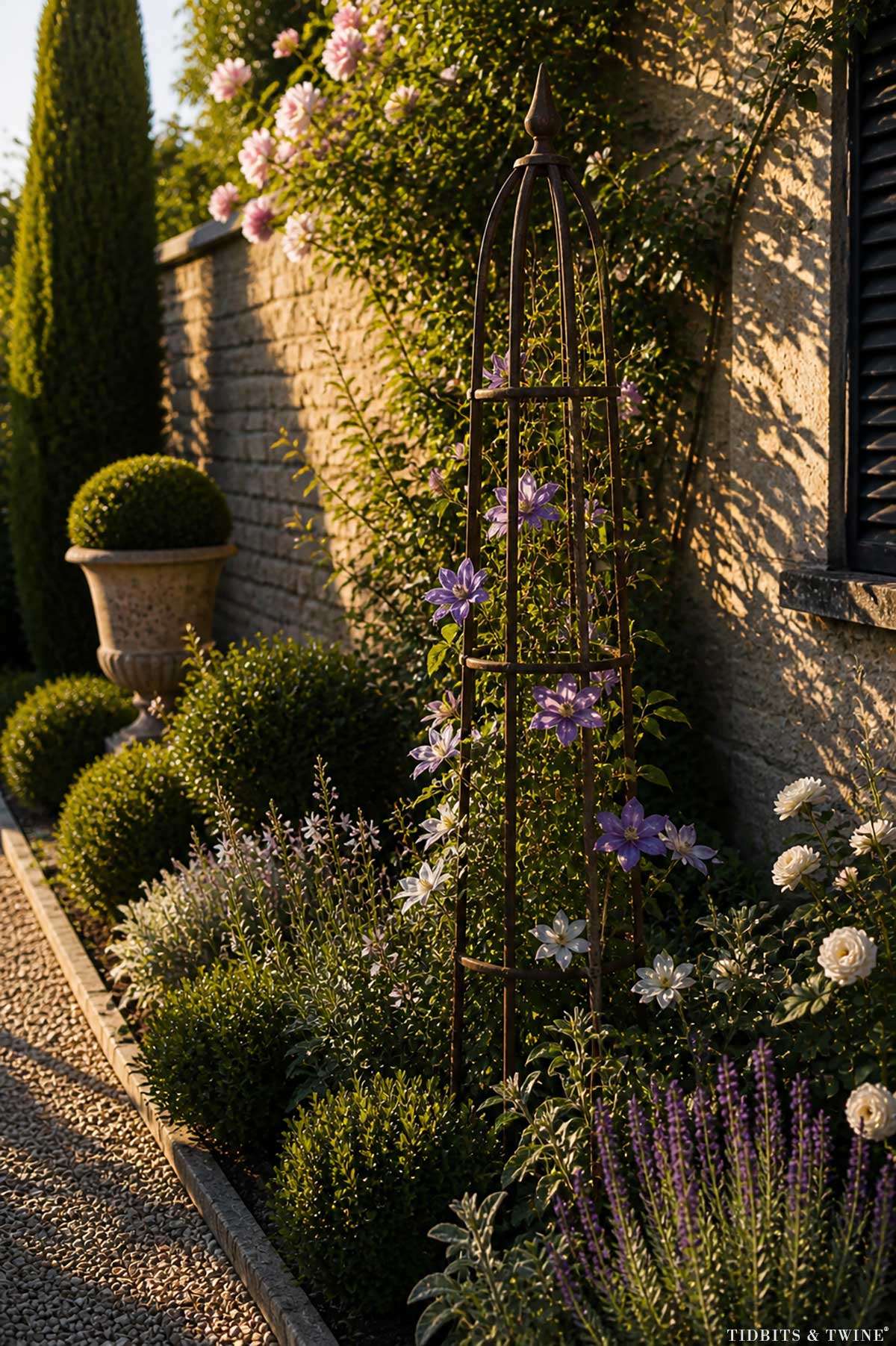
One thing I noticed in a lot of the European gardens I loved was that there was almost always something adding height, even in smaller spaces.
That can be as simple as a trellis against a wall or an obelisk tucked into a planting bed. They don’t take up much room, but they add structure in a way that plants alone sometimes can’t.
You’ll often see them paired with climbing roses or jasmine, but they don’t have to be covered in vines to work. Even on their own, they help break up all the lower plants and keep a garden from feeling too flat.
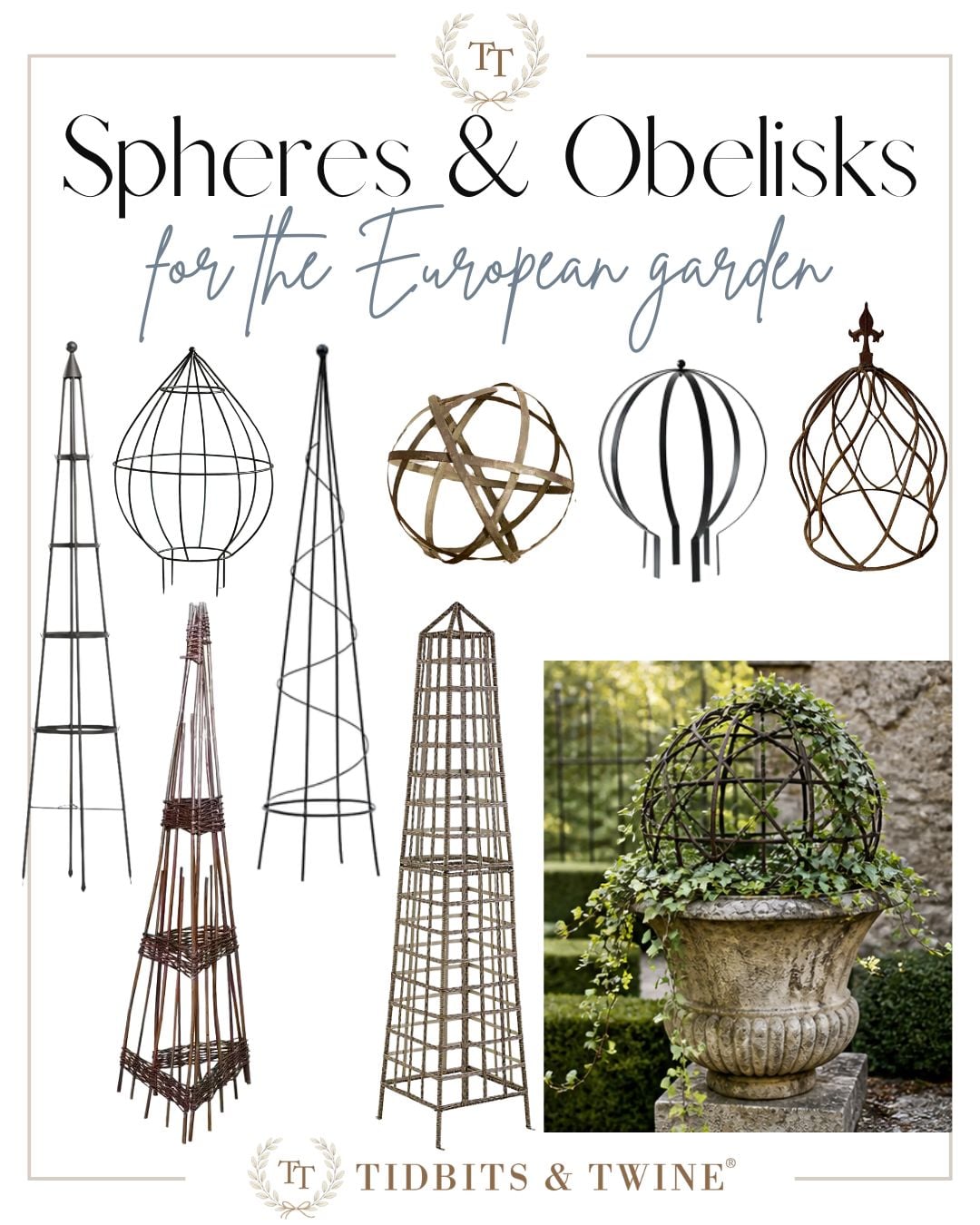
I tend to think of them as one of those finishing touches you add when a space still feels like it’s missing something. Click the image below to shop some of my favorites.
Sculptural Pieces (The Unexpected Details)
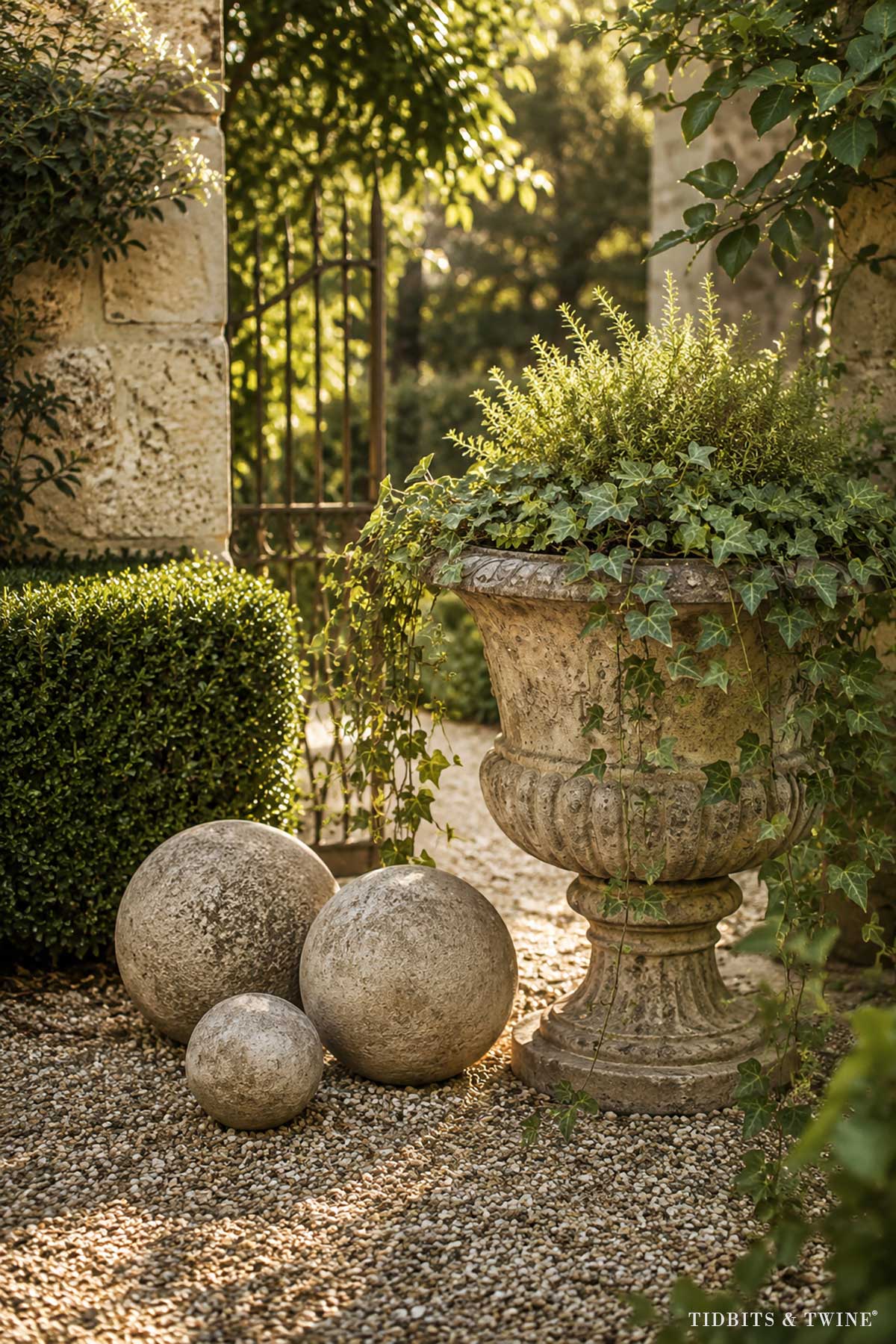
This is the category that starts making a garden feel a little more collected and personal instead of looking like everything came from the outdoor section at Home Depot.
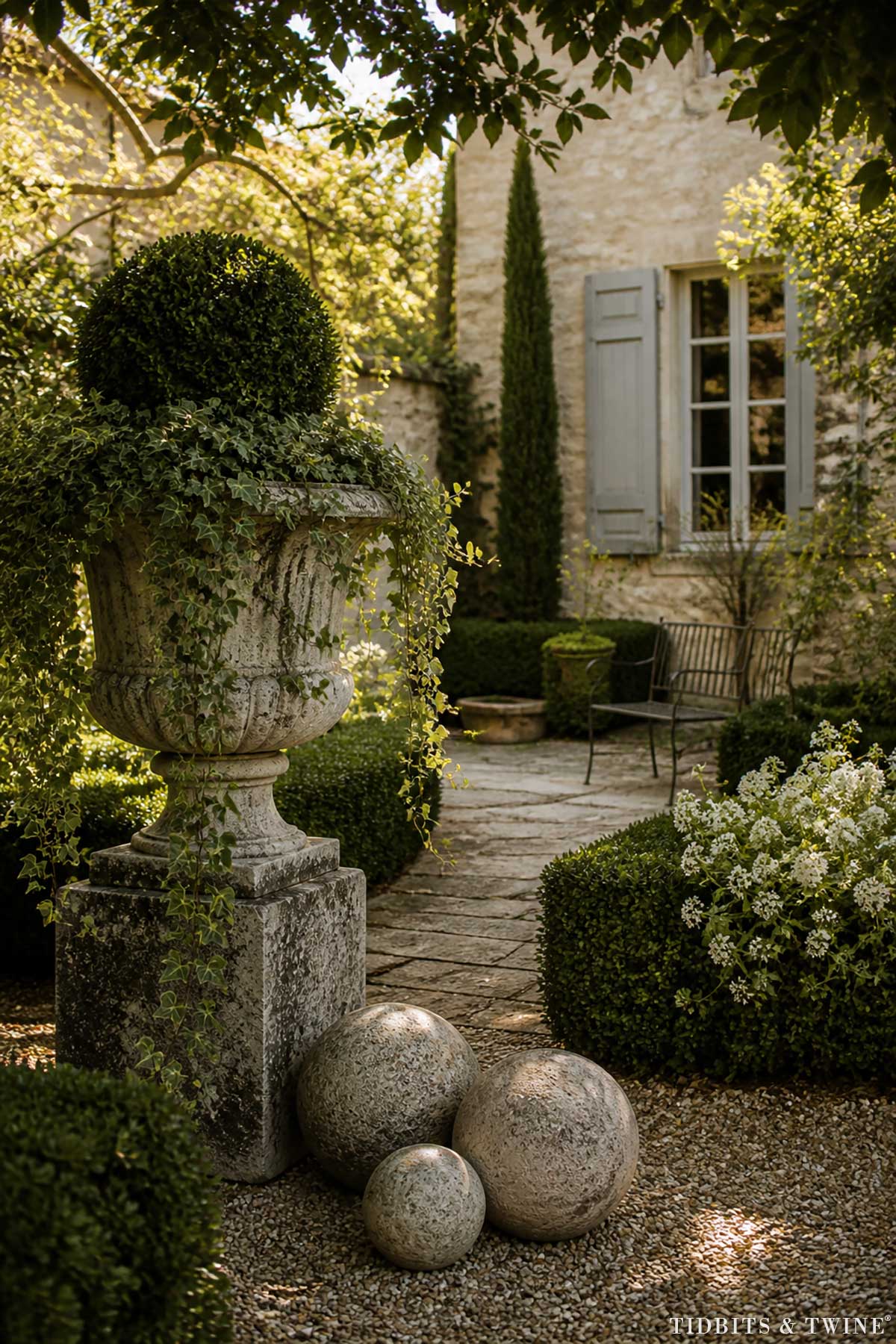
A lot of European gardens include decorative pieces mixed in with the plants and gravel paths. Not in a “garden gnome” kind of way. More like objects that feel aged, architectural, or a little unexpected tucked into the greenery.
Some ideas:
- Stone or concrete spheres
- Empty urns and aged planters
- Birdbaths
- Iron obelisks or trellises
- Decorative finials
- Bee skeps
- Olive buckets or metal containers
- Small statues or busts
- Old cages or aviaries
- Weathered benches
- Lanterns tucked into planting beds
- Antique watering cans
- Wall fountains
- Dovecotes
- Rustic baskets
- Stone troughs
- Cloche-style garden covers
- Architectural fragments or salvage pieces
What I’ve noticed is that these pieces usually aren’t perfectly styled or centered. Sometimes they’re partially hidden behind plants or off to the side instead of becoming the main focal point. That’s part of what gives European gardens that layered, collected feel instead of looking too perfect or overly decorated.
Garden Lighting (Soft, Not Showy)
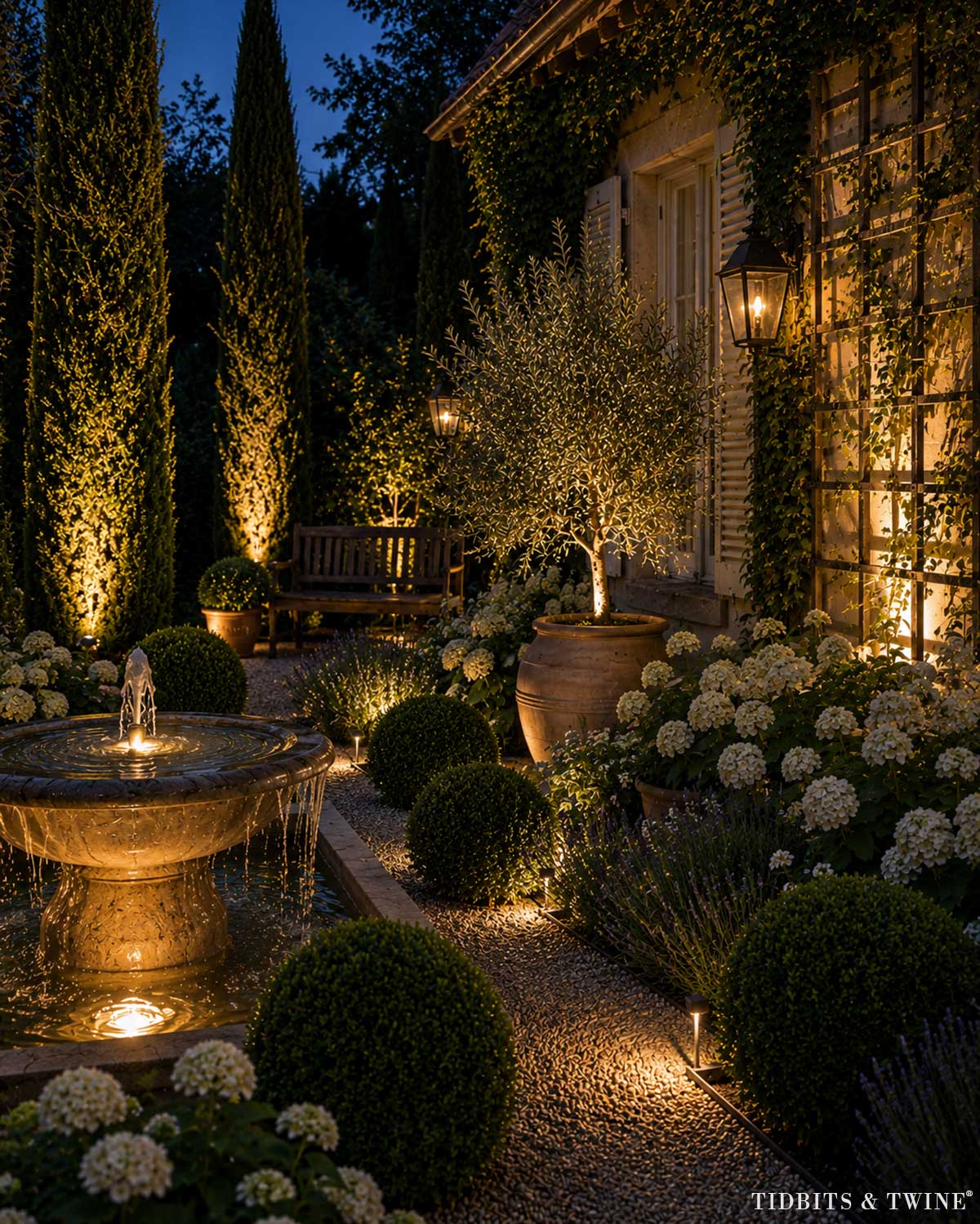
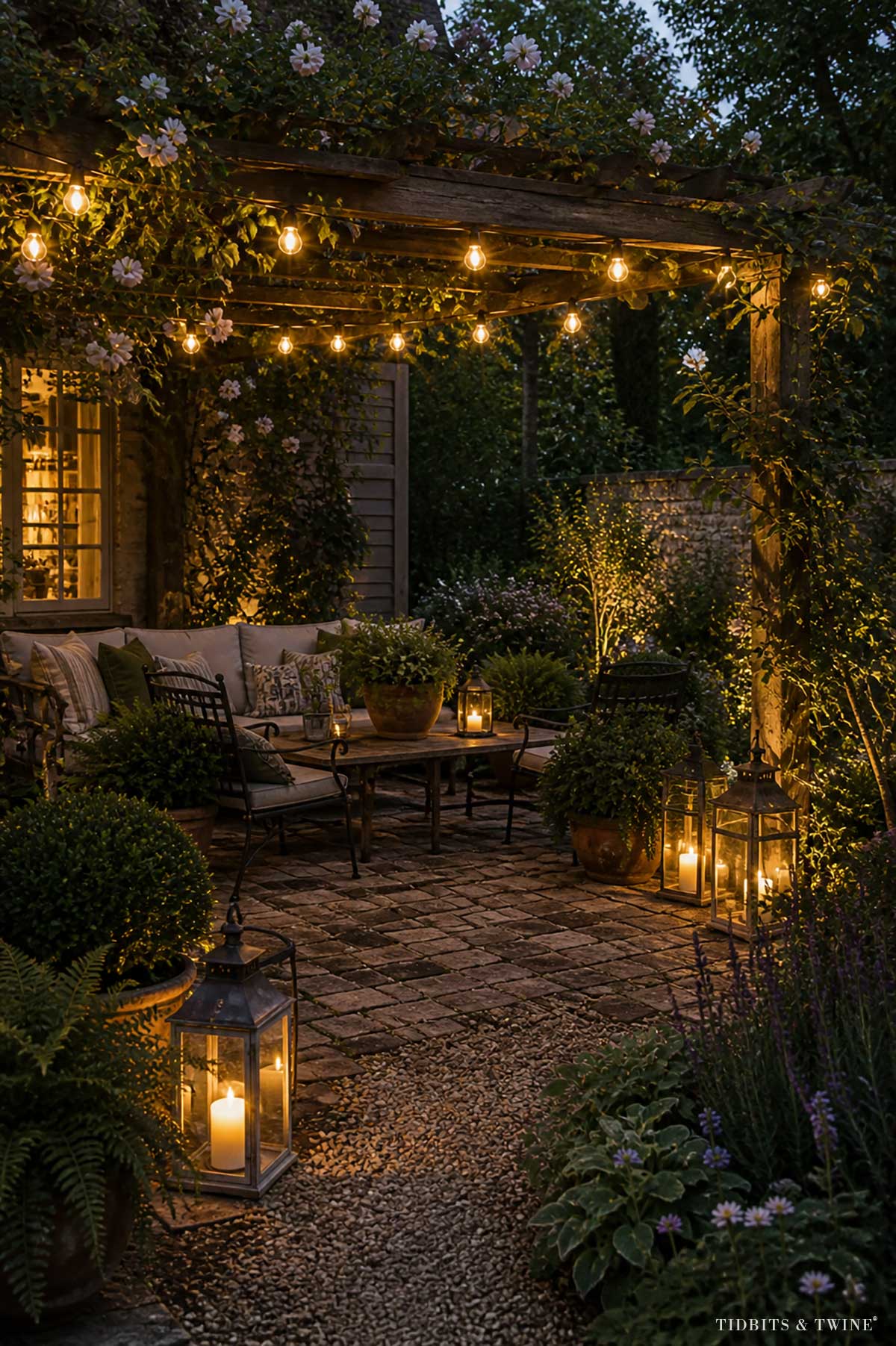
Lighting changes the feel of a garden more than almost anything else. During the day, you notice the plants and planters first. But once the sun goes down, the lighting is what makes people actually want to stay outside.
Most European-inspired gardens don’t use a ton of lighting or anything overly dramatic. Usually it’s just a few lanterns, some string lights, carriage lights on the house, or subtle uplighting on a tree, fountain, or wall. Think of it as just enough light to make the space feel warm and inviting at night.
I think this is the point where a patio starts feeling less like a backyard and more like an outdoor room. Lighting is something that can be added over time and doesn’t have to cost a fortune. You can use solar lights, lanterns, and even solar candles.
Bonus: Don’t Forget a Touch of Black
One thing I noticed is that black doesn’t just show up inside the house, but outside too. In European gardens, you’ll see it in iron furniture, lanterns, planters, fountains, or obelisks.
So when you’re working to create a European garden in your own backyard, don’t forget to add a touch of black. It gives the space a more timeless look and adds just enough contrast to keep everything from feeling too soft.
I’m still figuring this out as I go, especially because my patio has so much hardscape and heavy clay soil to work around. But simplifying the plant palette and repeating the same few plants has probably made the biggest difference so far.
Instead of trying to squeeze in every plant I like, I’ve started focusing more on structure, repetition, and layering. And honestly, the patio already feels calmer, more cohesive, and a lot more like the European garden look I was after in the first place.
More Decorating Ideas
- 25+ Favorite French Planters for the Yard
- 10 Easy & Affordable Luxury Yard Ideas
- 8 Textures that Add the Look of Luxury
- Why Every Room Needs a Touch of Black



DECORATING MADE EASY
Get my free 5-day decorating course and learn how to define your style, make better decisions, and create a home that feels like you.
After the course, you’ll receive my latest decorating tips, antique finds, and new posts.