



Designers know a secret: the difference between a good room and a great one often comes down to the finishing touches. While the big pieces—sofas, rugs, and paint—set the stage, it’s the smaller details that add polish, personality, and warmth.
The truth is, these details are what give a room a sense of completion. They’re the things that make a space feel intentional instead of accidental, layered instead of flat. They don’t just look pretty; they create balance, add comfort, and tie everything together so the room feels welcoming and lived-in.
So yes, you’ll often find me fussing over pillows, greenery, or even something as small as a switch plate—because those little touches are what bring the whole space to life.
A while back, I shared five finishing touches that can take your space from one you live in to one you love. Today, I’m expanding that idea with 10 simple details that instantly make a room feel finished. These are approachable changes that can make any space feel thoughtfully designed and complete.
10 Finishing Touches for a Room
Big pieces like sofas, rugs, and paint set the stage, but it’s the details that pull everything together. The following ten ideas are simple, approachable, and add the polish that makes a room feel intentional and inviting.
1) Trim & Molding
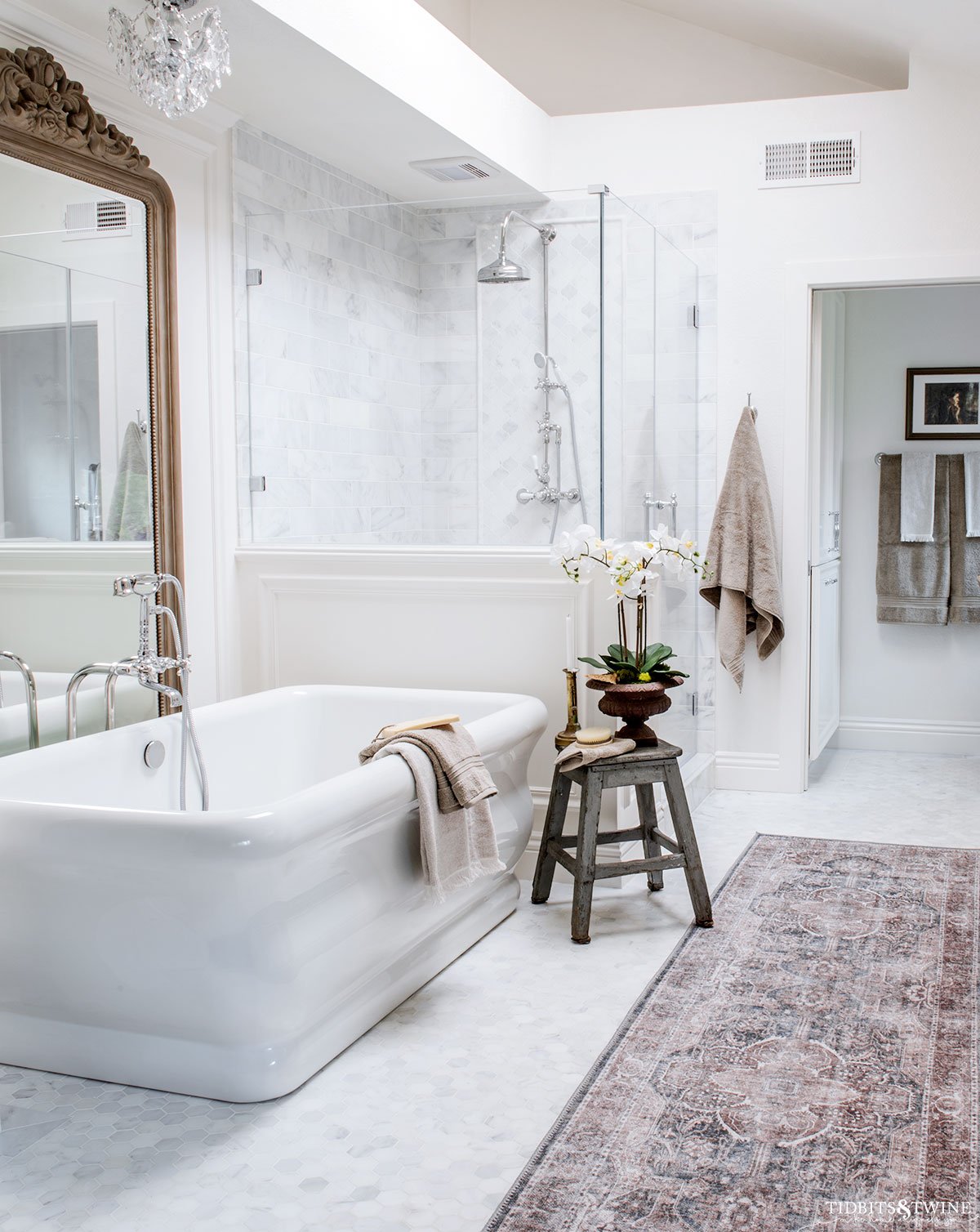
Trim is one of those things you don’t always notice when it’s there, but you definitely notice when it’s missing. Bare drywall edges or unframed ceilings can make a space feel a little raw. Even something simple like baseboards or crown molding adds definition and makes the whole room look finished. It’s sort-of like earrings for an outfit – they aren’t necessary but the finishing touches add a bit of polish.
- Crown molding draws the eye up and makes ceilings feel taller.
- Baseboards give the walls a crisp “finished edge” where they meet the floor.
- Casings around windows and doors make openings look intentional and framed.
- Wainscoting or panel molding adds interest and breaks up big blank walls.
Admittedly, this one is more expensive and time-consuming than others on this list. And I’ve come to learn that it also makes a difference where you live! In California, our walls are textured, so adding trim requires skimcoating the wall first or adding a thin layer of MDF over the entire wall before adding trim pieces. So yes, a lot of work and expensive, which is why I have only added picture frame molding to two small areas of my home.
2) Window Treatments
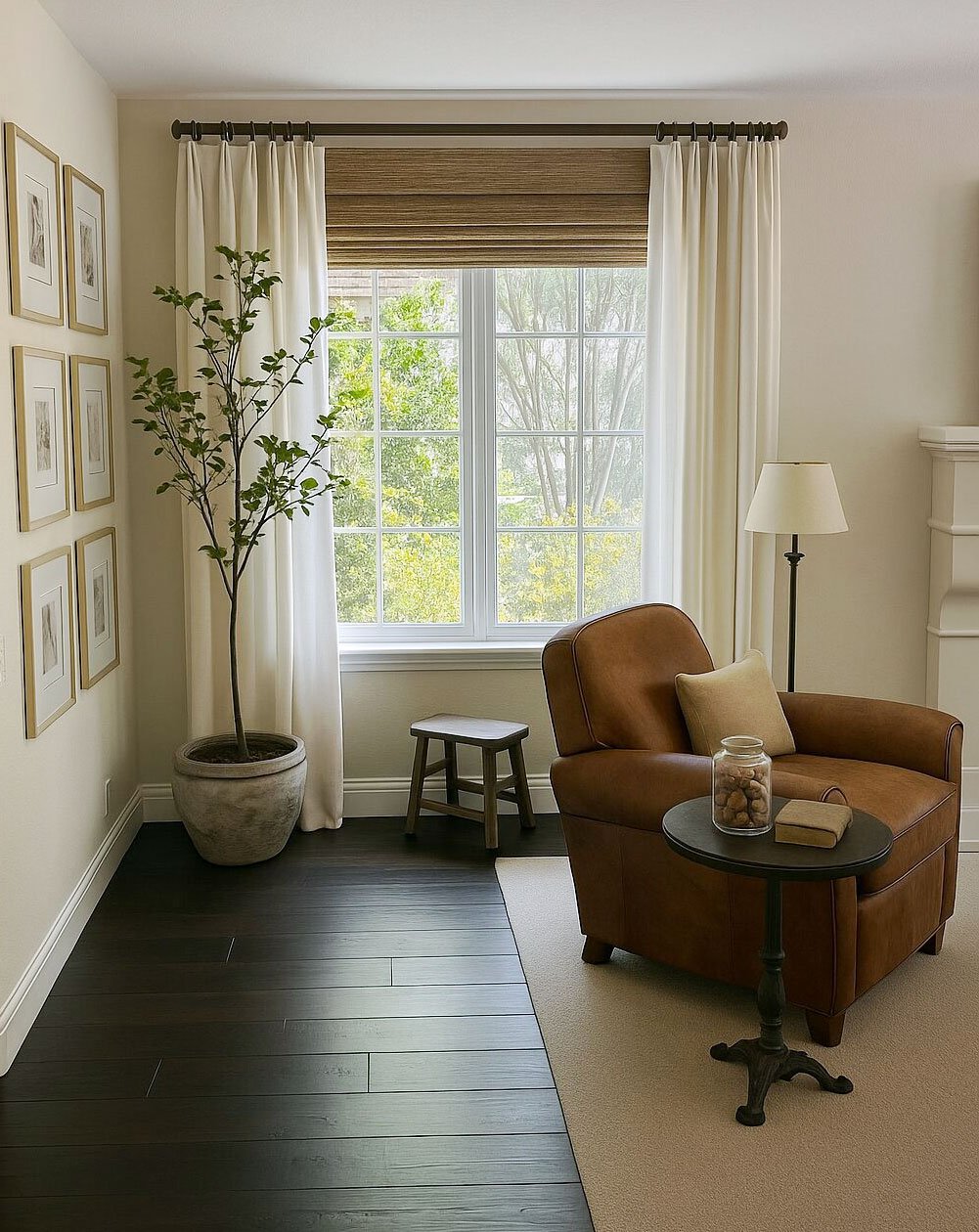
For the longest time, my windows felt unfinished. We had curtains, but no shades, and without trim, all I saw was bare drywall. Every time I looked at them, I thought, this room just doesn’t feel done.
That’s the thing about window treatments: they do more than control light or add privacy. They bring in texture and softness, and the vertical lines of curtains draw the eye up, making ceilings feel taller. Shades add a sense of tailoring—they make the window look dressed instead of forgotten.
Even something as simple as linen panels can shift the mood of a room. Suddenly the walls don’t feel flat, the furniture feels more grounded, and the whole space has a layer of comfort it was missing before. Now that my shades are going in (I ordered these shades), I finally feel like the room is coming together.
Tips for Window Coverings
- Hang curtains high and wide to make ceilings look taller and windows larger.
- Layer shades with panels for depth, softness, and privacy.
- Even simple linen panels can transform a window from “unfinished” to styled.
3) Rugs: Size, Material & Placement
A rug is one of the quickest ways to make a room feel grounded and pulled together. Without it, furniture can look like it’s floating in space. With it, everything feels connected and intentional. Rugs don’t just add comfort underfoot—they define areas, add warmth, and bring in texture or color.
The right rug can:
- Anchor the furniture so the room feels cohesive.
- Define zones in open floor plans.
- Soften sound and add a layer of coziness.
I’ve made the mistake of buying rugs that were too small, and nothing makes a room feel more awkward. In fact, using the correct size rug is one of my design rules you should never break!
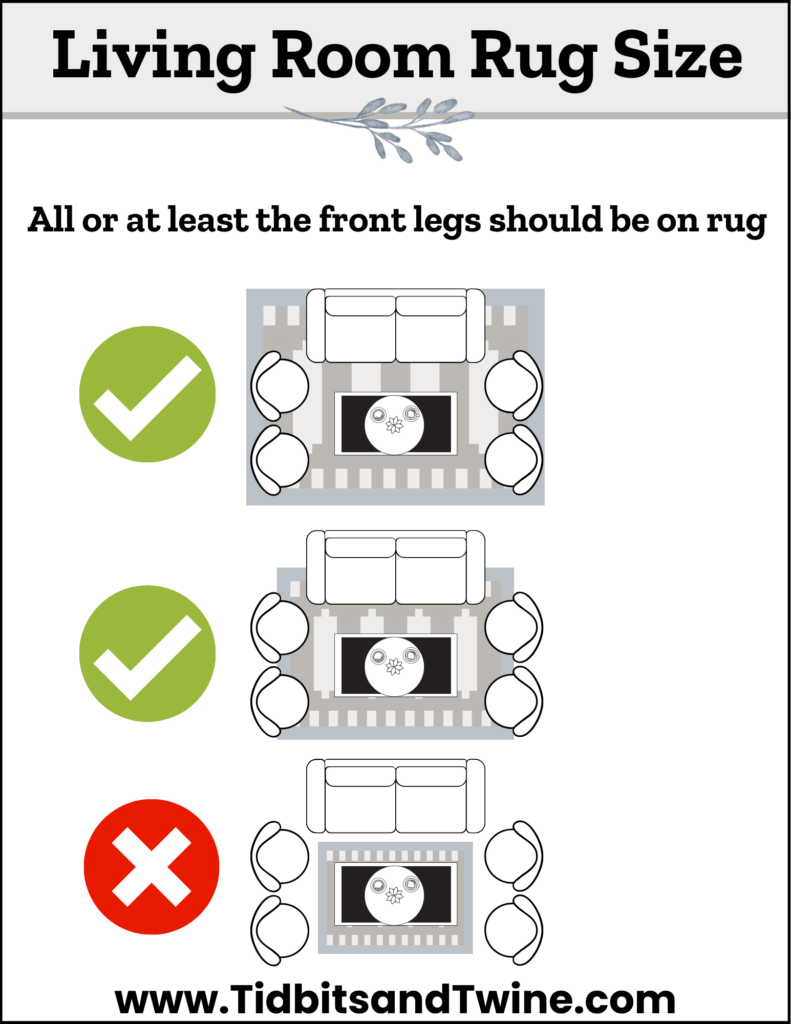
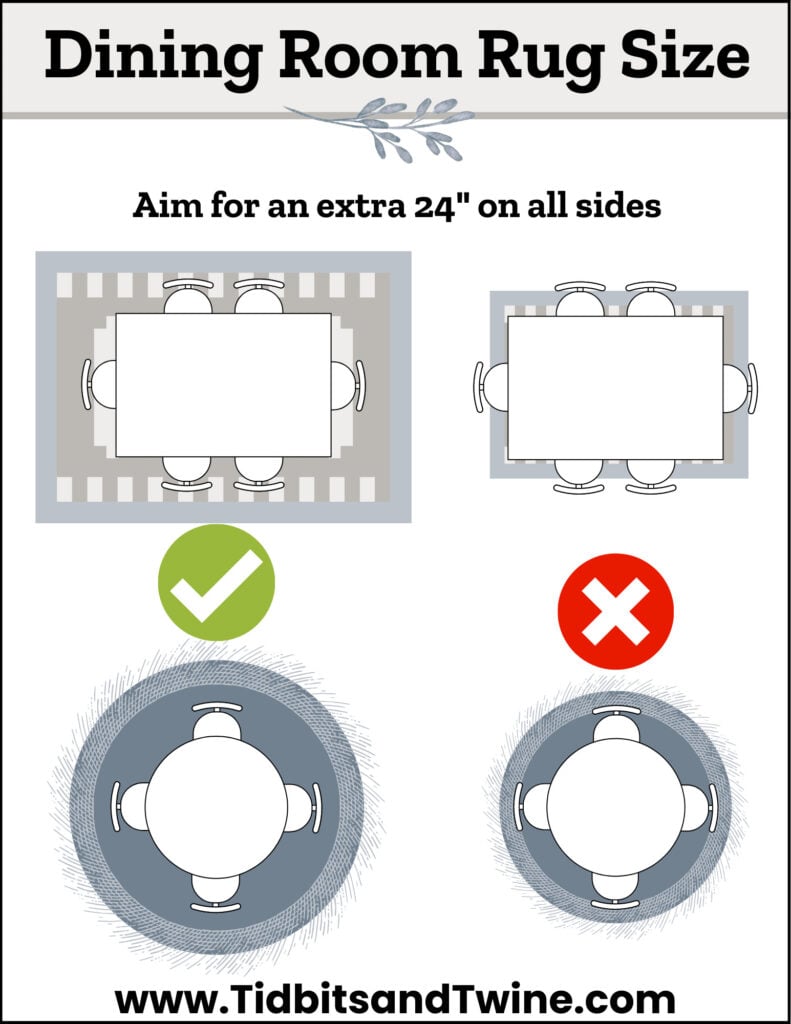
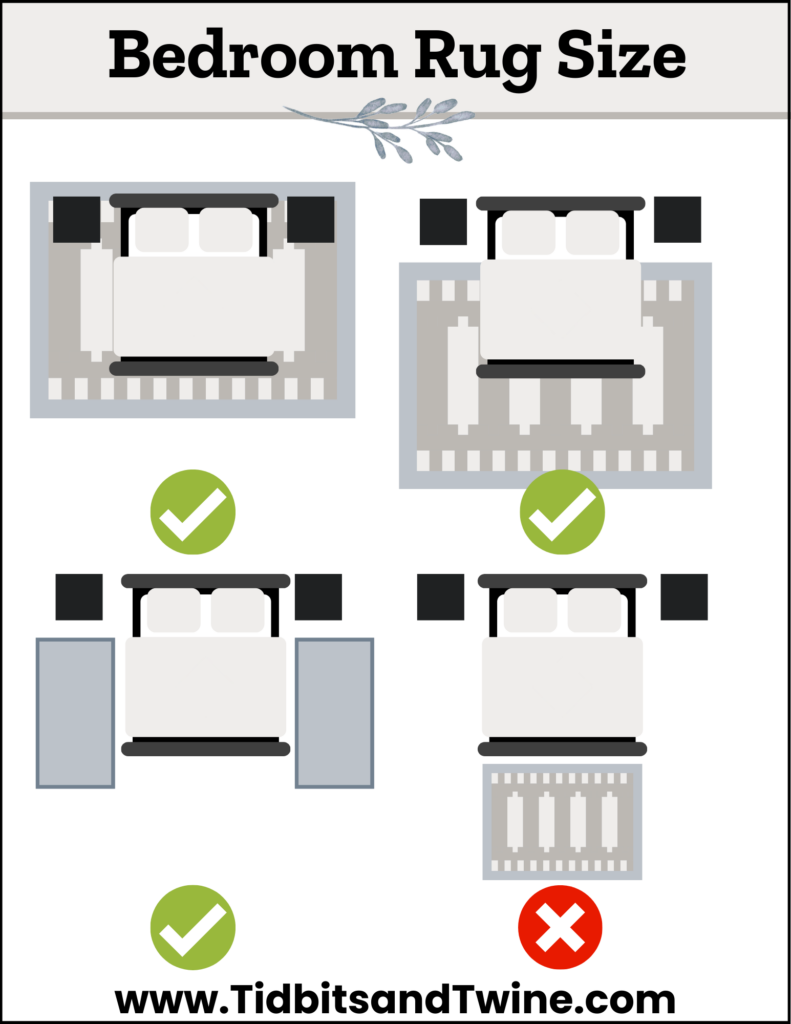

Design Tip: Material matters, too. Flatweaves are durable for high-traffic spots, while wool and thicker piles bring softness in cozy rooms. For more, see How to Choose a Rug.
4) Artwork & Wall Styling
Art isn’t just about covering a blank wall—it’s about what it brings into the room. Artwork adds color, personality, and emotion. It can set the mood, reinforce your style, or even add a bit of contrast that keeps the space interesting. A soft landscape calms, a bold abstract energizes, and a vintage portrait adds a sense of history.
Mirrors, too, do more than fill space. They reflect light, expand sightlines, and can make a room feel bigger and brighter. Even wall hangings like tapestries, plates, or architectural fragments add texture and depth that paint alone can’t achieve.
Of course, placement matters—hang pieces where they connect with the furniture below and at about eye level so they feel natural. But the most important thing? Choose art you love. Because what you hang on your walls tells the story of you—and that’s what makes a room feel complete.
Tips for Hanging Art
- Hang the center of most artwork at 57 inches from the floor (average eye level).
- Leave 6–10 inches between the bottom of art and the top of furniture so the two feel connected.
- For gallery walls, treat the grouping as one piece with consistent spacing.
I once hung a piece way too high over a console, and it looked awkward and floating. Lowering it instantly made the room feel balanced and intentional.
For more tips, see How High to Hang Pictures.
5) Lighting Layers & Statement Pieces
Lighting can completely change the way a room feels. Relying on just one overhead light often makes a space feel flat and harsh, but layering different types of lighting creates warmth, depth, and atmosphere.
Each type of lighting plays a role:
- Ambient lighting gives general illumination but can be stark on its own.
- Task lighting (lamps, sconces, pendants) provides focused light where you need it most.
- Accent lighting (candles, picture lights, dimmers) adds mood and coziness.
Even the way you use lighting matters. I almost never flip on just the overheads—turning on a lamp in the corner and lighting a candle instantly softens the space and makes it feel more inviting.
A statement fixture is another layer to consider. Chandeliers, lanterns, or pendants aren’t just practical—they act like jewelry for the room, drawing the eye up and setting the tone for your style.
Design Tip: The right bulb makes all the difference. See my guides on Soft White vs. Daylight Bulbs and How Many Lumens You Really Need.
6) Textiles: Throws, Pillows & Blankets
Almost nothing makes a space feel quite as cozy as pillows and throws. They can take a plain piece of furniture and make it feel uniquely you by adding softness, texture, and color. If I’m in the mood for a little room refresh, pillows and throws are usually where I start—they’re relatively inexpensive and instantly give the room a whole new look.
Mixing shapes, sizes, and fabrics keeps things interesting. I love pairing a crisp linen with a plush velvet, or layering a chunky knit throw over a smooth cotton sofa. And the best part? You can swap them seasonally or whenever you’re craving a change.
Design Tip: Not sure where to start? I’ve broken it down here: Choosing the Right Pillow Sizes and How to Style a Throw Blanket.

7) Hardware, Fixtures & Switches
It’s funny how the smallest details can make the biggest difference. I never thought much about my outlets until I saw those almond switch plates staring back at me in photos. Once I swapped them out, the walls instantly looked fresher and more modern.
And did you know, you can easily swap out almond or beige plugs for crisp white ones without any wiring? Click here to see how I did it for just $2.00!
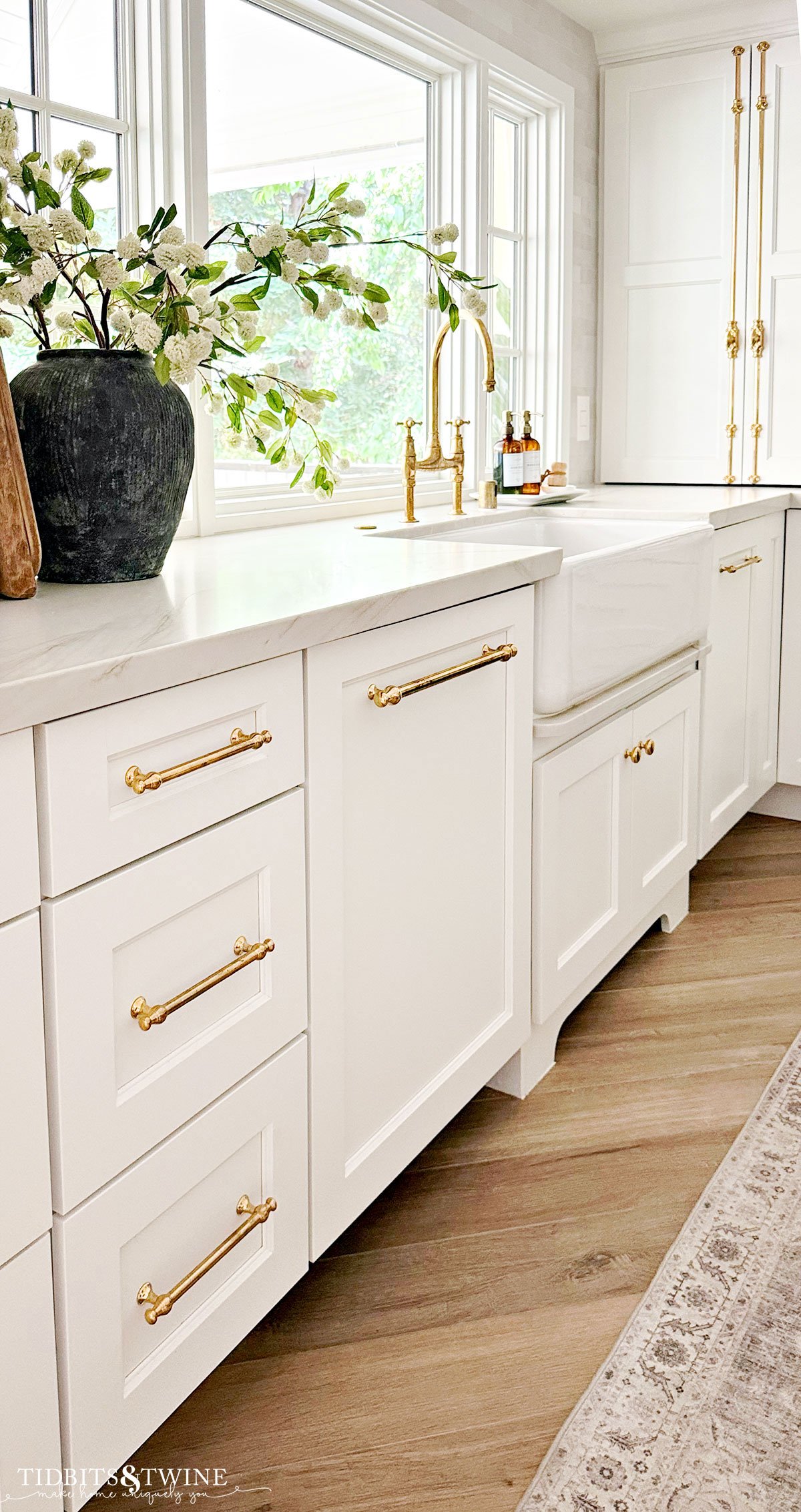
The same is true for cabinet hardware. Standard builder knobs are fine, but replacing them with something that has a bit more style—brass, black, or even glass—makes furniture and cabinetry feel more special. Even the scale changes the look: oversized pulls feel bold, while dainty knobs can almost disappear.
Think of hardware and fixtures as the “jewelry” of your home. They’re not the first thing you notice when you walk into a room, but they pull the whole look together.
Design Tip: If you’re tackling cabinetry, here’s my guide to hardware placement to take the guesswork out of it.
8) Organic Elements
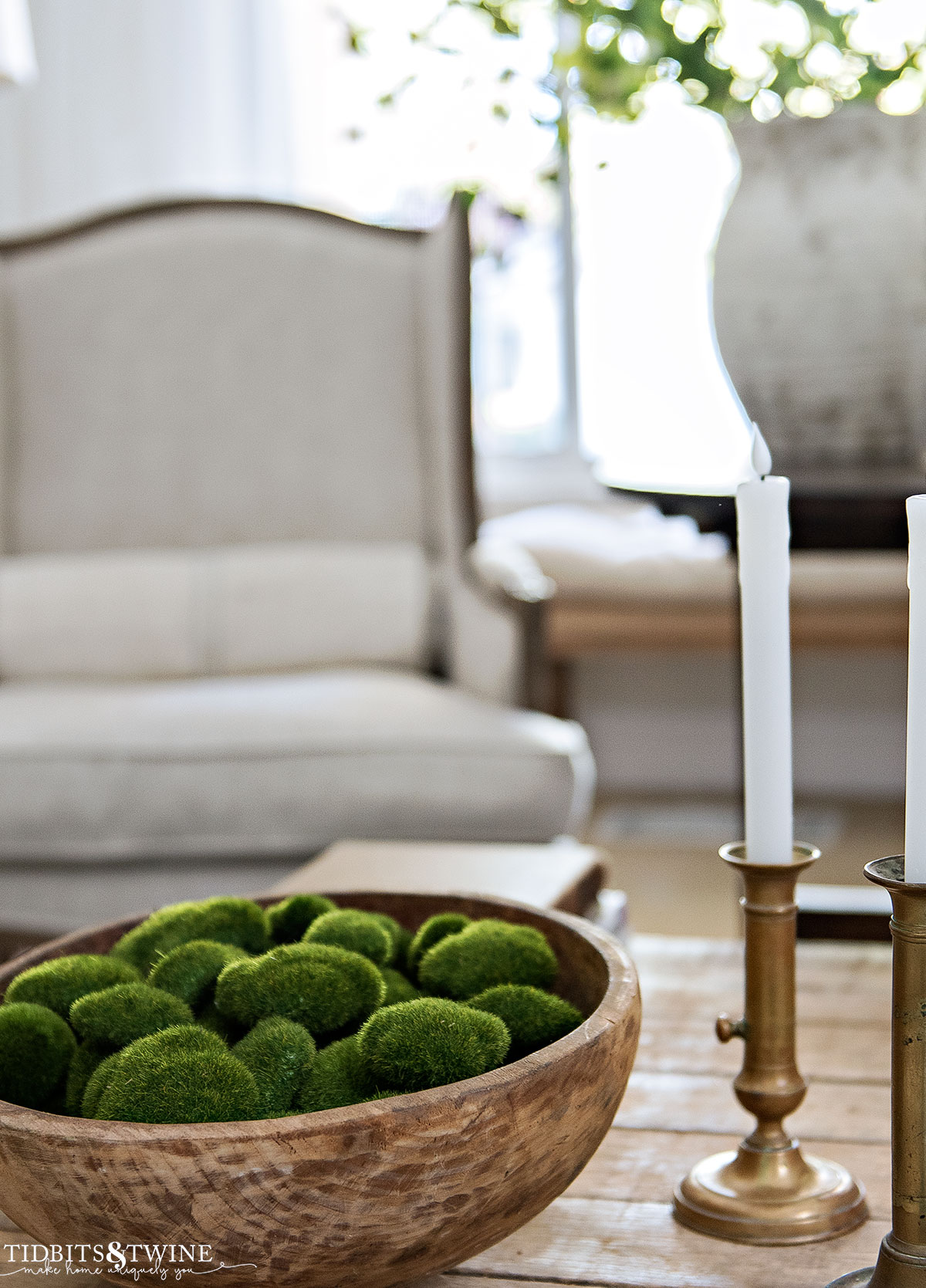
Rooms without anything organic can sometimes feel a little stiff, like everything is too controlled. Add a plant, a bowl of moss, or even a branch in a vase, and suddenly the space feels softer, more natural, and more inviting.
If you’ve got a green thumb, there are lots of beautiful indoor plants to choose from—Peace Lilies, Pothos, and Kentia Palms are all great low-maintenance options. Even one tree, like a Fiddle Leaf Fig or Olive, can bring height and life to a corner.
No green thumb? No problem. Faux plants and flowers have come a long way, and with a little styling, they can look incredibly realistic. You can also bring in organic shapes and textures with feathers, shells, branches, or dried stems.
Tips for Choosing Fake Stems
- Choose the most realistic stems you can find.
- Cut or bend them to fit the vessel naturally.
- Fluff leaves and petals so they don’t look stiff.
More ideas: faux flowers that look real, favorite greenery, and my trick for styling faux plants.
9) Decorative Details
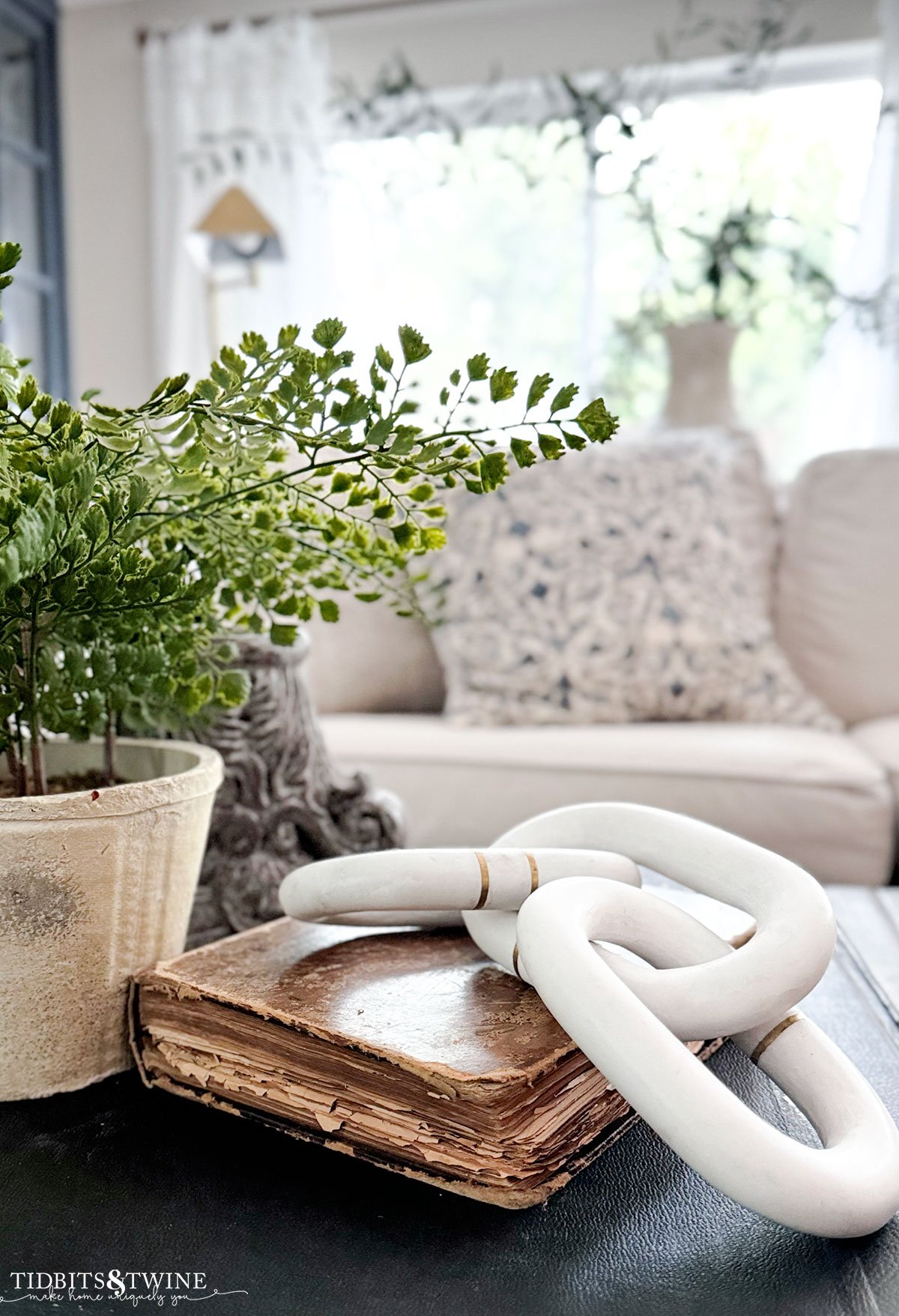
Accessories are the finishing layer that make a house feel like a home. Furniture gives structure, but it’s the little things you add — the books, trays, candles, or mementos — that make a room feel personal, lived-in, and loved. Without them, even a beautiful space can feel flat, like something’s missing.
Tips for Choosing Accessories
- Mix different heights and textures so your eye has places to land.
- Use books as bases to elevate objects and add interest.
- Group items in odd numbers for a look that feels natural and balanced.
- Include at least one personal or collected piece so the space reflects you.
- Leave some negative space — every surface doesn’t need to be filled.
Design Tip: For more styling help, see my post on How to Create a Vignette or the Rule of Odds.
10) Atmosphere & Scent
The way a room smells is just as important as how it looks. You can have the most beautifully decorated foyer, but if the house doesn’t smell good when someone walks in, I guarantee the scent will be the first thing your guests notice—not your gorgeous décor.
The tricky part is, you might not even know how your own home smells. We get used to it! That’s why the only time I really notice is if I’ve been away on vacation or someone else mentions it. And that’s when it hits you—scent has the power to completely shape first impressions.
Of all the senses, smell most readily triggers memories and emotions, a phenomenon so common it even has a scientific name: the Proust effect. A cozy vanilla candle, fresh linen in summer, or a hint of citrus in the kitchen can shift the entire feeling of your home in an instant.
Tips for Adding Scent to Your Home
- Match the scent to the mood: calming (lavender), energizing (citrus), cozy (vanilla or spice).
- Use subtle layers—candles, diffusers, or even fresh flowers—so the fragrance feels natural, not overwhelming.
- Switch scents with the seasons to keep your home feeling fresh and in tune with the time of year.
Design Tip: Want to create a signature fragrance for your home? I share exactly how in Choosing a Home Scent.
FAQs
If something feels “off” but you can’t quite put your finger on it, chances are you’re missing the details. Bare windows, walls with no art, or surfaces without any accessories are common culprits.
Not at all. Even a couple of thoughtful touches can make a big difference.
Pillows, greenery, and lamps—they’re affordable, quick, and instantly cozy.
Be intentional. Choose pieces you love or that serve a purpose, and leave space for the eye to rest.
Final Thoughts
The truth is, a finished room isn’t about adding more—it’s about choosing the right details. These ten touches give your home warmth, polish, and personality, turning spaces from simply decorated into truly lived-in and loved. Start with just one or two, and you’ll be surprised at how much more welcoming and complete your room feels.

DECORATING MADE EASY
Get my free 5-day decorating course and learn how to define your style, make better decisions, and create a home that feels like you.
After the course, you’ll receive my latest decorating tips, antique finds, and new posts.