


Antiques are one of those things that can either make a room look really good… or like you accidentally moved into your grandma’s house. There’s not a lot of middle ground.
If you’ve been a long-time reader, you might already know that I love antiques, especially European antiques. But I also know that how they’re used can make or break a space. I’ve definitely brought home pieces that felt “interesting” at the time… and then couldn’t figure out where they actually worked (hello, shutter dogs!).
A collected home isn’t about filling your space with old things. It’s about using just enough of them, in the right way, so your home feels personal instead of like a time capsule.
Even if you don’t decorate with antiques right now, this is still worth understanding. You don’t need many, but the right ones can completely change how a room feels.
In this post, I’m sharing what actually makes antiques look dated—and how to use them so they feel current and natural.
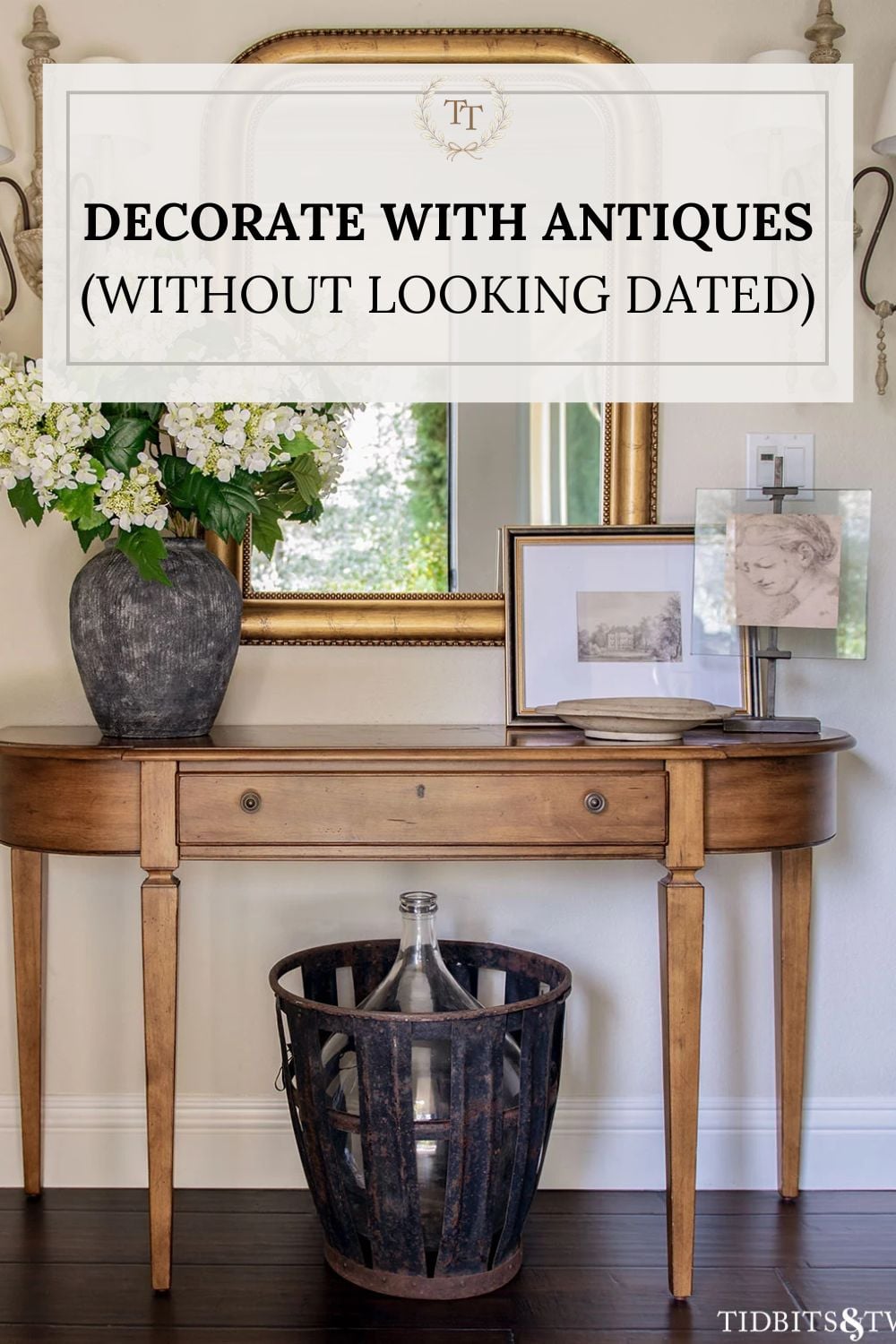
What Makes Antiques Look Dated
If you’ve ever walked into a room and thought, this just feels old, it’s usually not because of one piece. It’s how everything is working together…or not.
Antiques don’t automatically make a space feel dated. But certain combinations definitely can.
Here are the biggest things that make a space look dated:
Too many antiques in one space
When everything is old, nothing stands out. The room starts to feel heavy instead of layered.
Everything from the same time period
When pieces all feel like they came from the same era, the room can start to feel more like a set than a home.
Lots of small items spread everywhere
This is where things quickly feel cluttered. A few pieces have impact. Dozens just feel like visual noise.
No contrast with newer pieces
Antiques need something to play off of. Without contrast, everything leans in the same direction.
Trying to recreate a “look”
This is when a room starts to feel themed instead of personal.
The good news is, these are all easy to fix, so you can decorate with antiques without your home looking dated.
1. Only Use What You Actually Love
Not every antique belongs in your home. And just because something is old doesn’t make it a good choice.
If you wouldn’t choose it new, don’t choose it just because it’s old.
It’s easy to start bringing home pieces that feel “interesting,” even if they don’t really fit your style. That’s when things start to look cluttered or mismatched.
Instead, look for pieces you’re naturally drawn to. Maybe it’s the shape, the patina, or just something about it that makes you pause.
The pieces that work are the ones that feel personal, not forced.
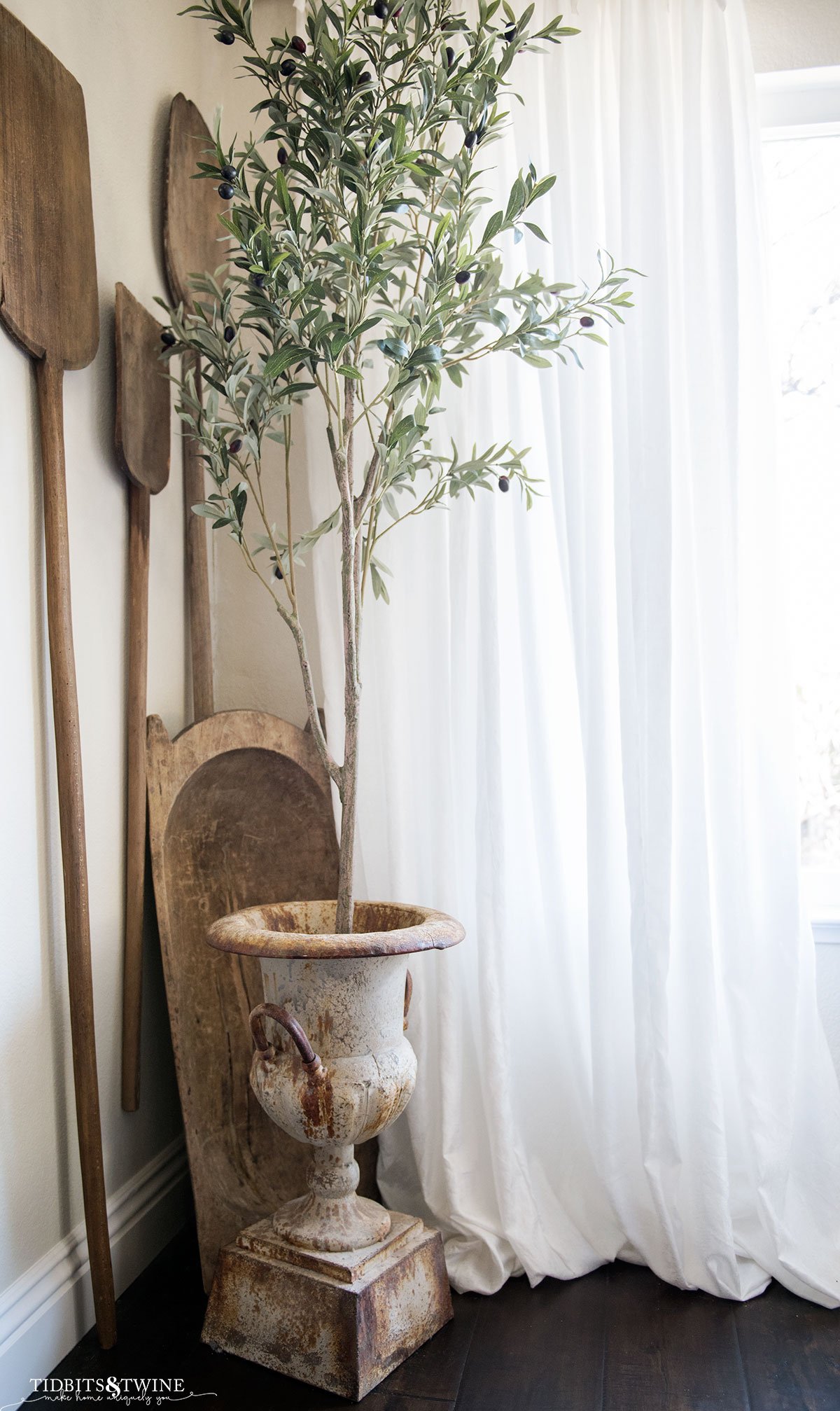
2. Mix Different Time Periods
One of the fastest ways to make a room look dated is to have everything from the same time period.
Rooms feel better when they look like they’ve come together over time. When everything matches too closely, it can feel staged.
Mixing old and new is what makes a space feel collected.
You don’t need a dramatic contrast. Even small shifts help:
- an antique mirror with a simpler console
- vintage books on a newer coffee table
- an older frame paired with current artwork
You’re not trying to match everything. You just want it to feel balanced.
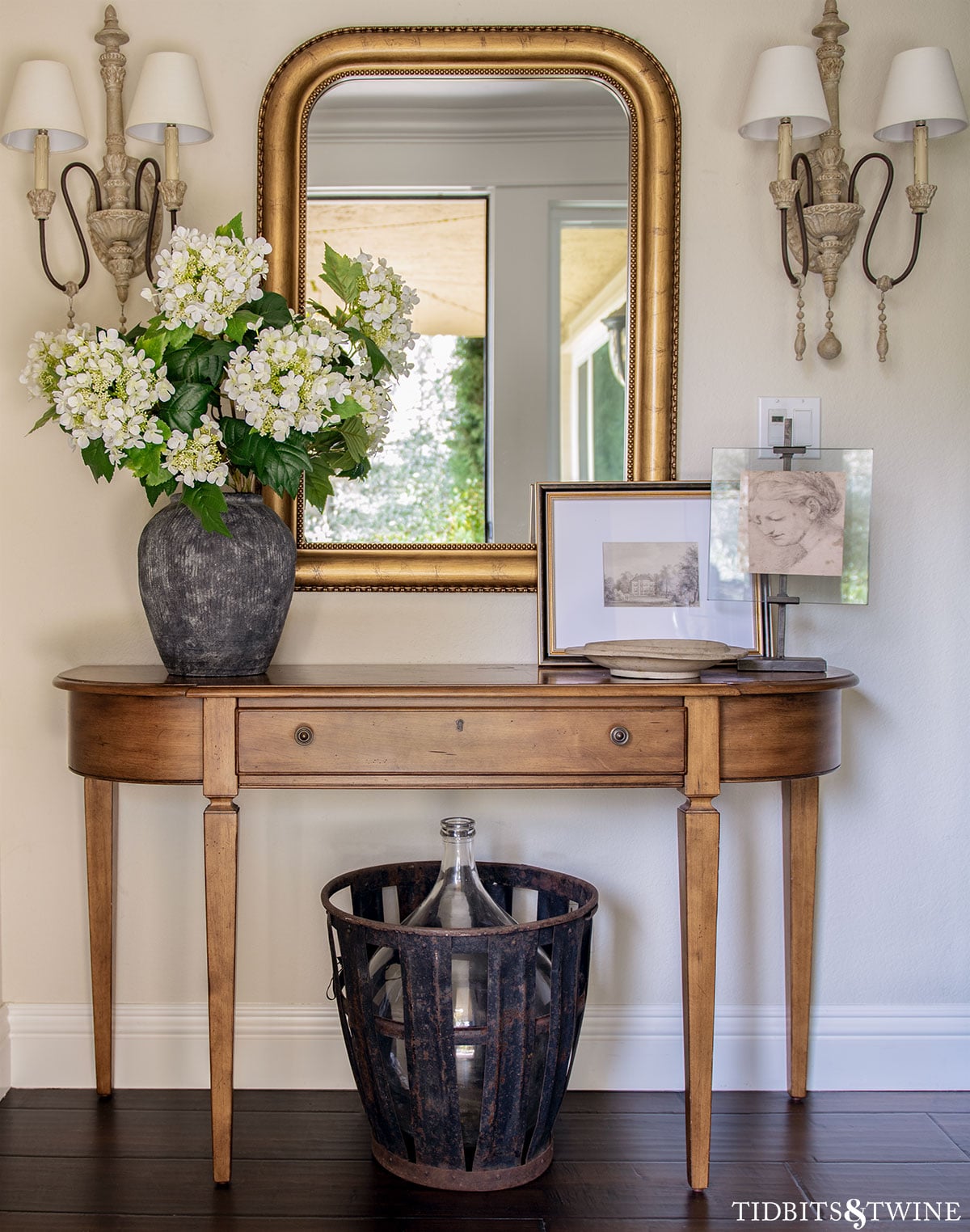
3. Start with Accessories
If you’re new to decorating with antiques, don’t feel like you need to commit to a big piece right away. Start with smaller items instead.
Things like books, bowls, frames, and simple objects are easy to move around, easy to swap out, and much easier to work into what you already have.
Starting with accessories lets you get comfortable using antiques without overcommitting. Once you start adding them in, this is where they really begin to make a difference.
Think about the surfaces you’re already styling:
A stack of vintage books, a small bowl, an old frame, or a collected object can completely change how a space looks.
At the same time, this is where it’s easy to overdo it. Group smaller antiques together so they have more impact.
A few pieces in one spot will always look better than lots of little things spread all over a room. And you don’t need antiques on every surface. Leaving some areas simpler helps the pieces you do use stand out more.
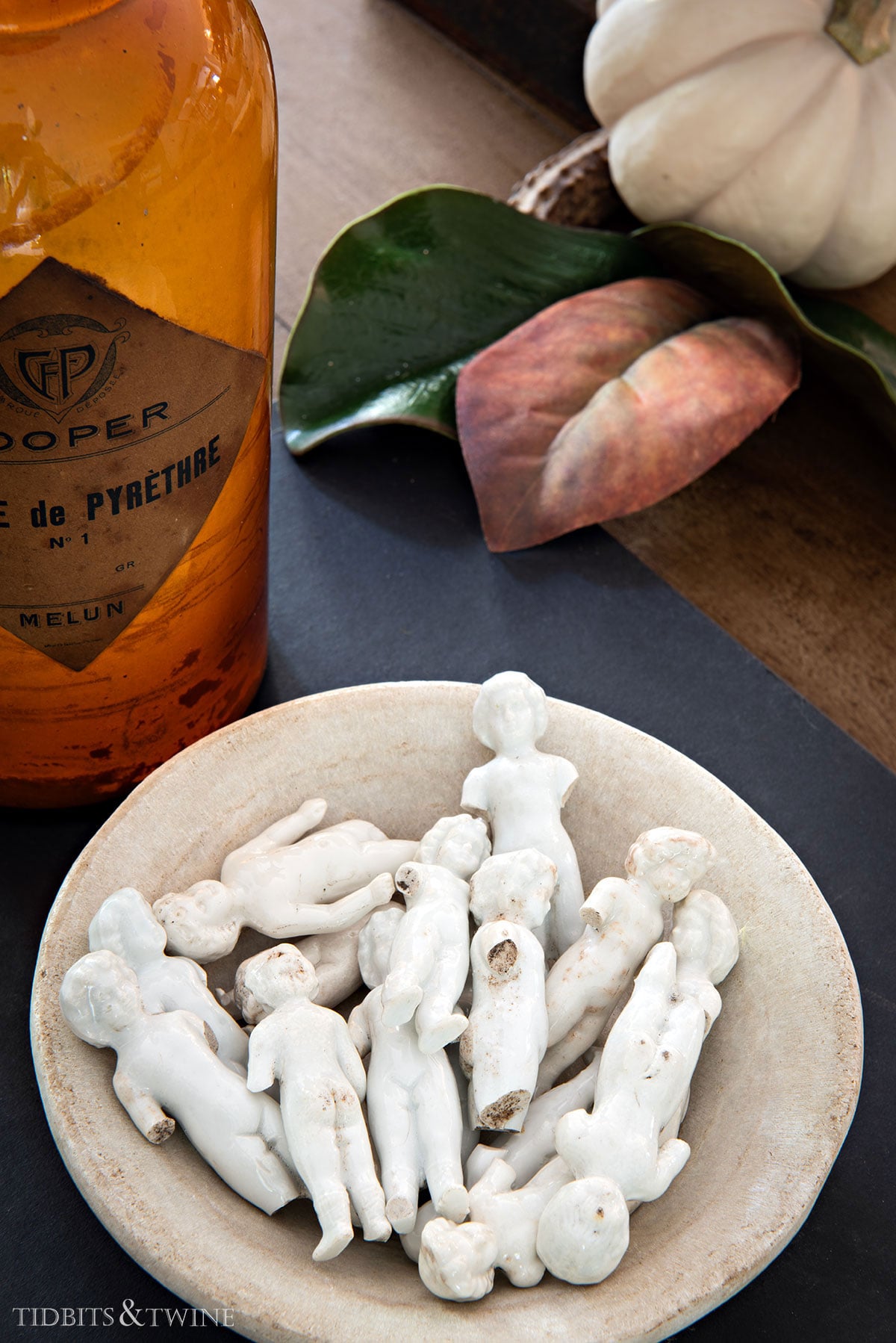
4. Look for Good Bones, Not Perfect Pieces
When you’re shopping for antiques, it’s easy to focus on the finish. But more often than not, the best pieces aren’t perfect.
Pay attention to shape and detail first.
A beautiful curve or interesting detail will matter more than whether the color is exactly right. And honestly, a lot of antiques need a little work. Sometimes that means:
- a light restoration
- toning down a finish
- or even painting a piece
You’re not required to keep everything exactly as you found it. The goal isn’t to preserve it like a museum piece. It’s to make it work in your home.
A little wear and patina is part of what makes antiques interesting.
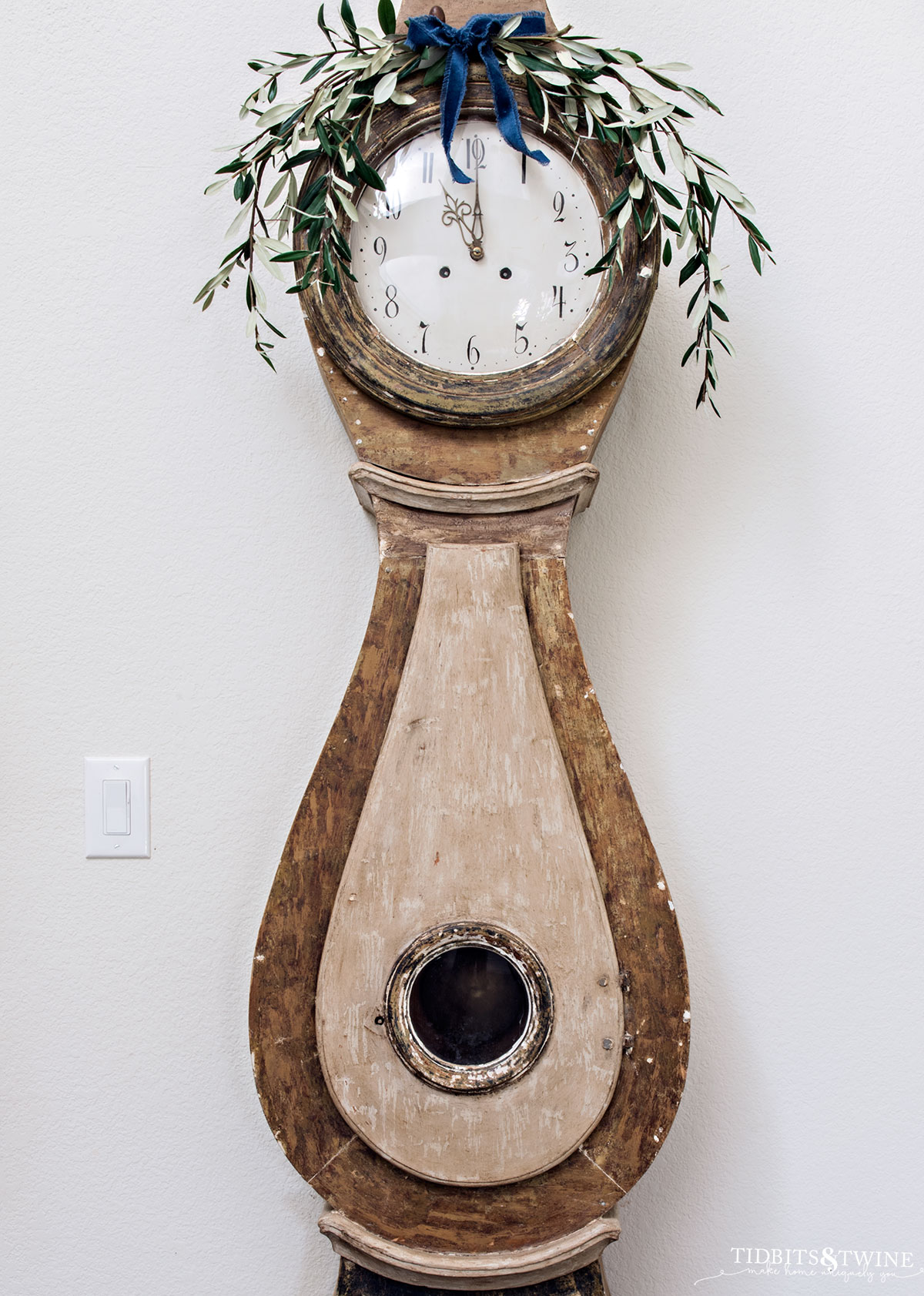
5. Create Contrast
Antiques look their best when they have something to play off of. If everything has the same tone or level of detail, the room can start to feel flat.
Contrast is what keeps antiques from feeling dated. That might mean:
- something dark next to something light
- something ornate next to something simple
- something worn next to something clean
You don’t need extremes but just enough difference so everything doesn’t blend together.
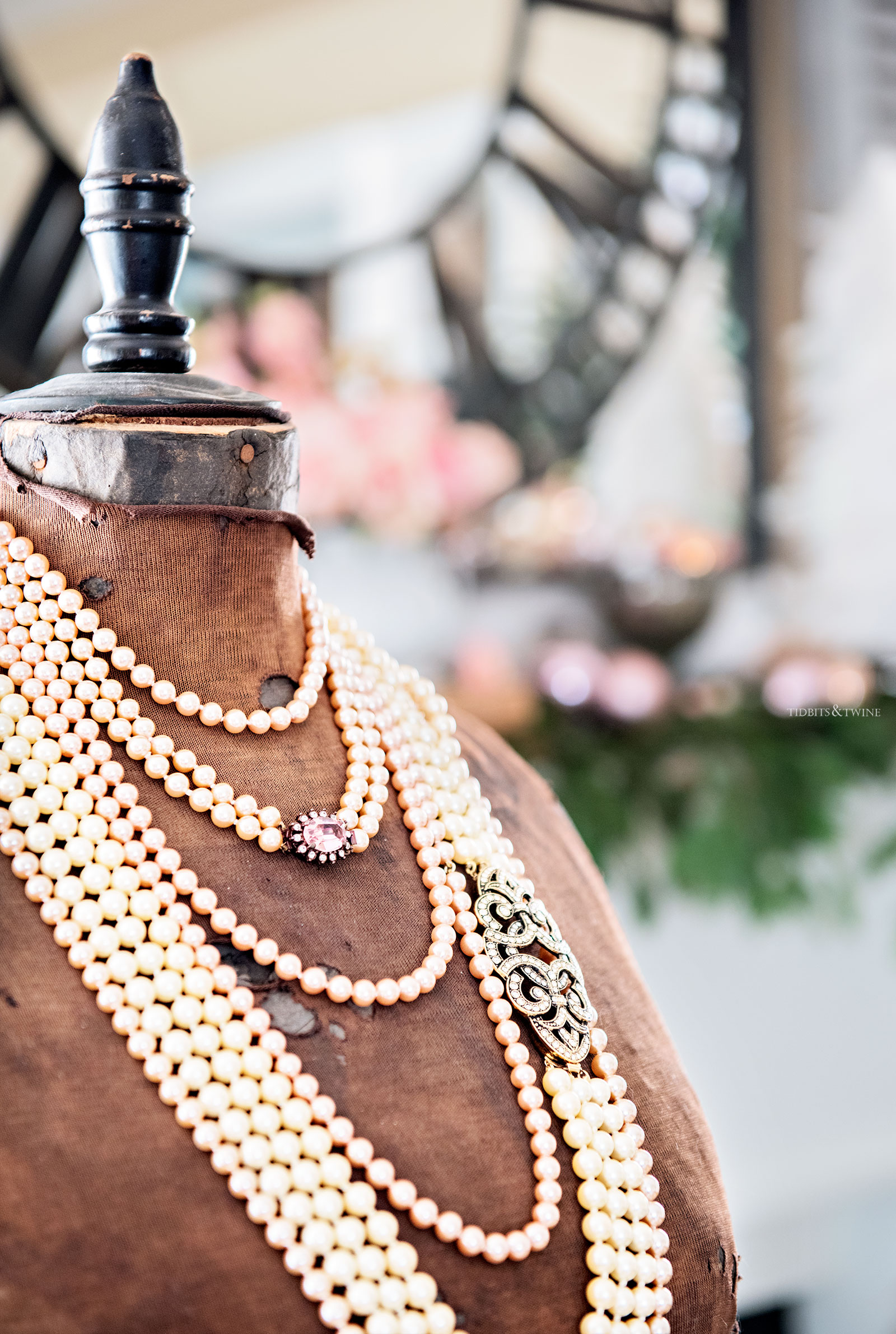
6. Consider Using Antiques in Unexpected Ways
You also don’t have to use everything the way it was originally intended.
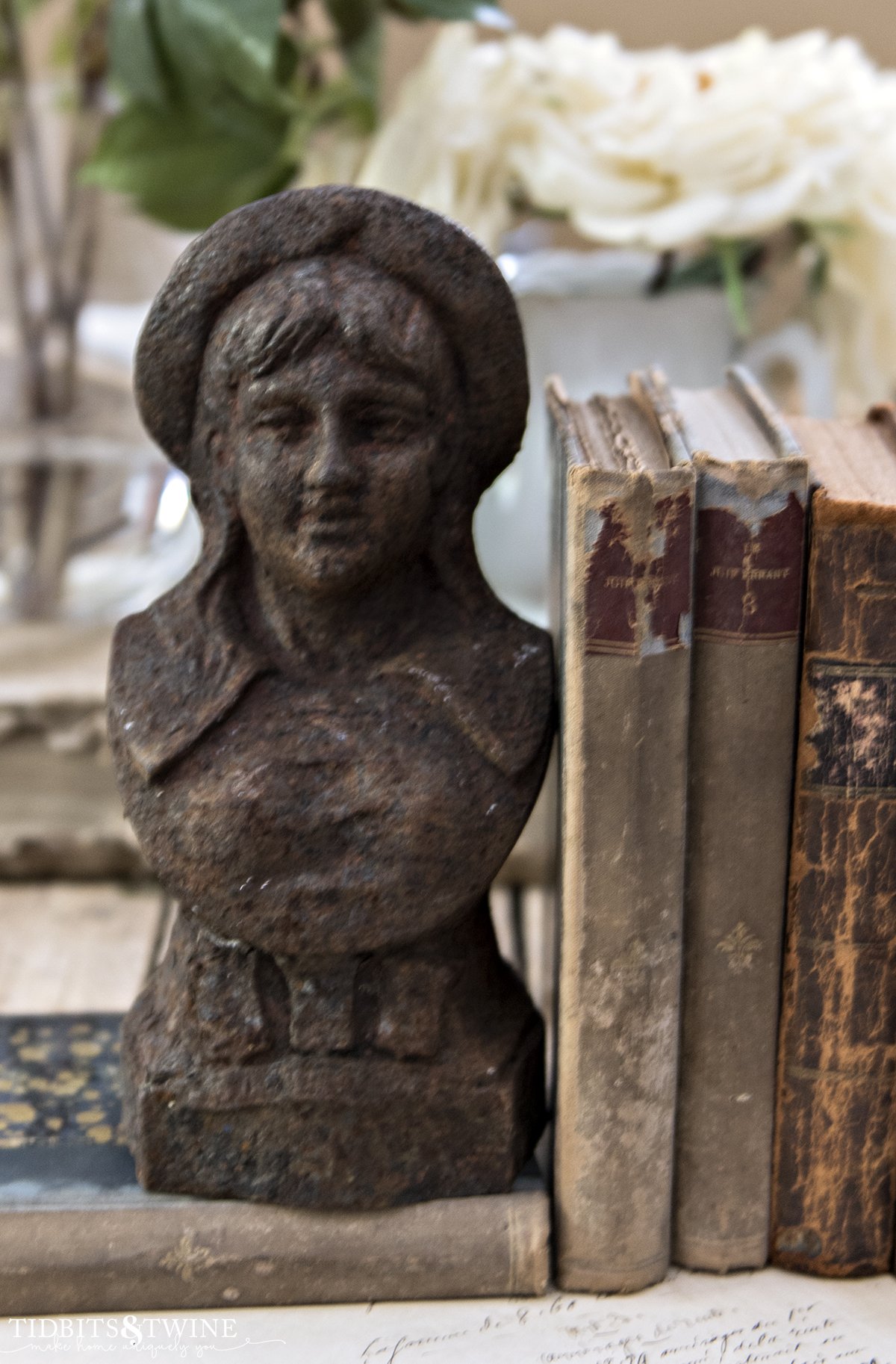
Sometimes it’s just about putting a piece somewhere you wouldn’t normally expect. A bowl on a nightstand. A basket under a console. A small container on a shelf. Even an old andiron as a bookend!
It doesn’t need to be complicated. You’re just finding a place where it works in your home.

Common Mistakes That Make Antiques Look Dated
Even with the best intentions, it’s easy for antiques to start working against a room instead of adding to it.
Here are a few things to watch for:
Using too many antiques in one space
If everything is old, the room can start to feel heavy. Try pulling a few pieces out and letting the rest stand on their own.
Matching everything too closely
If pieces all feel like they came from the same era, mix in something newer or simpler to break it up.
Too many small items spread everywhere
This usually comes down to editing. Group what you want to keep and remove the rest.
No contrast
If everything blends together, add something lighter, darker, or simpler to create balance.
Trying to recreate a specific look
Instead, focus on what you actually like and what works in your home.
Most of the time, the fix is simple. Remove a few things, create more space, and let the pieces you love stand out.
Final Thoughts
Antiques don’t make a room look dated. It’s how they’re used that makes the difference. You don’t need a lot, just a few good pieces that actually work in your space. When you mix them in with newer things and don’t try to fill every spot, they stop feeling heavy and start to feel like part of the room.
More Antique Decorating Ideas
- 10 Expert Antique Fair Shopping Tips
- How to Collect and Decorate with Antique Bread Boards
- The Ultimate Guide to French Bergère Chairs

DECORATING MADE EASY
Get my free 5-day decorating course and learn how to define your style, make better decisions, and create a home that feels like you.
After the course, you’ll receive my latest decorating tips, antique finds, and new posts.